Executive Overview
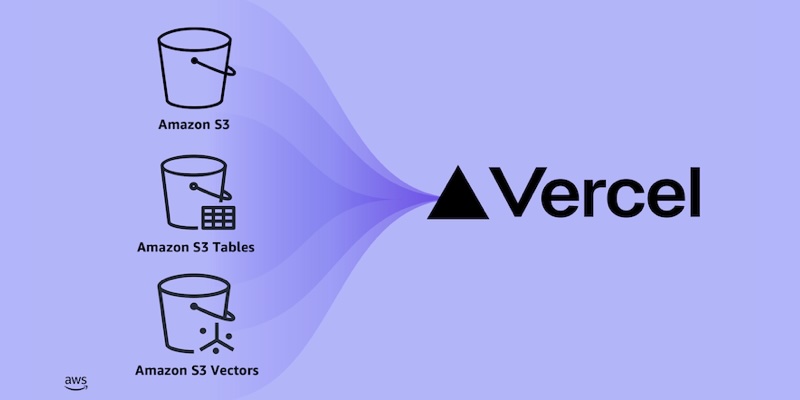
In a development that promises to significantly reshape the cloud-native application landscape, Vercel and Amazon Web Services (AWS) have announced a powerful new integration that brings Amazon Simple Storage Service (Amazon S3)—including advanced capabilities like S3 Tables and S3 Vectors—directly into the Vercel Marketplace and v0 by Vercel.
For years, developers building high-performance web and artificial intelligence applications on Vercel faced a minor friction point: while frontend deployment and serverless compute were remarkably streamlined, provisioning backend storage required context-switching. Developers had to venture out of the Vercel ecosystem into the AWS Management Console, manually configure security policies, set up cross-account access roles, and securely handle long-lived static credentials.
Today, that friction is a thing of the past. By natively embedding Amazon S3 into the Vercel dashboard and v0, the two tech giants have eliminated the administrative overhead of cloud storage provisioning. Developers can now instantiate general-purpose object storage, analytics-ready tables, and vector embeddings in seconds. Crucially, this integration relies on short-lived OpenID Connect (OIDC) tokens exchanged securely via AWS Security Token Service (AWS STS), ensuring that no static keys ever touch your codebase or environment variables.
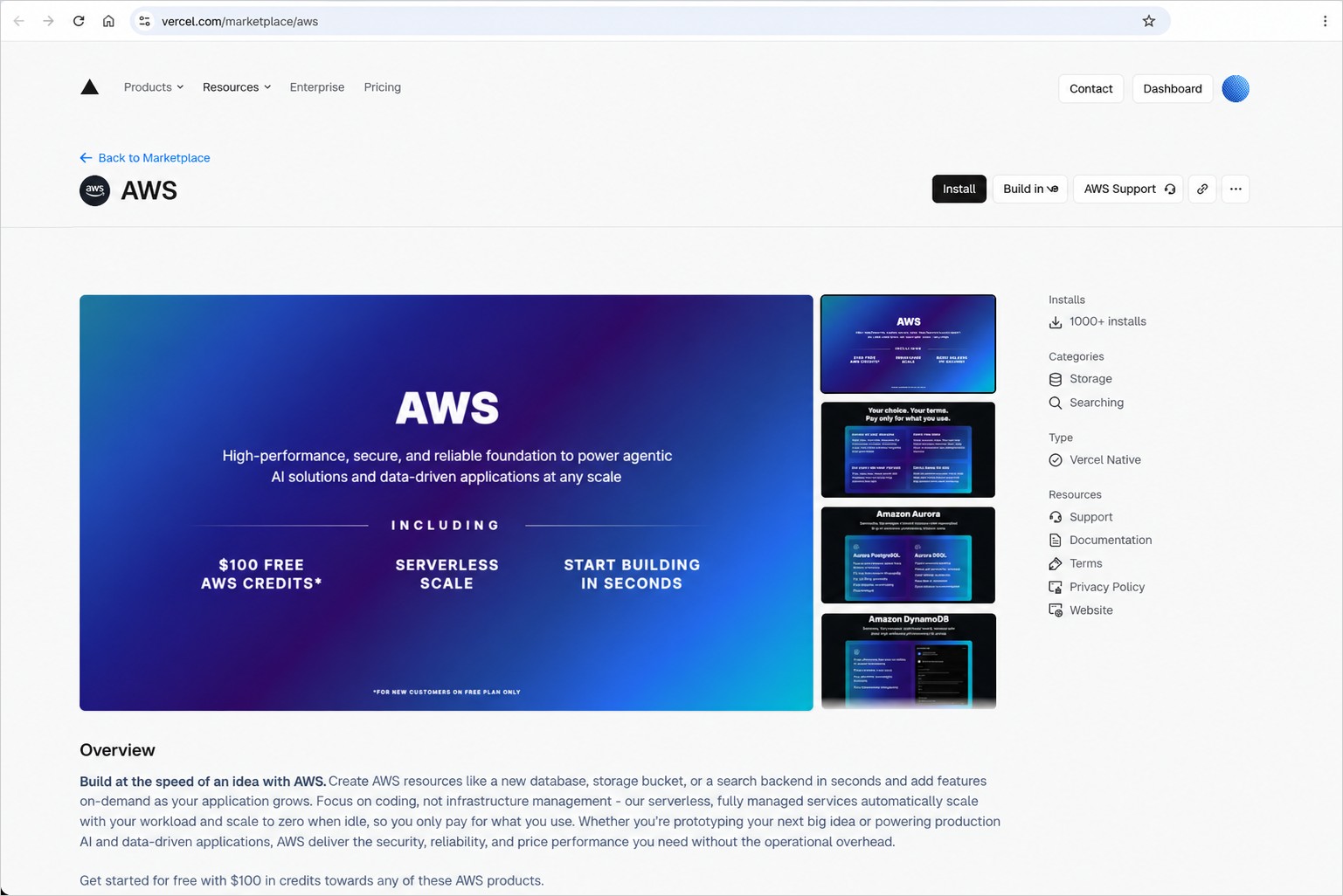
Combined with existing Vercel integrations for Amazon Aurora, Amazon DynamoDB, and Amazon OpenSearch Serverless, developers now have access to a complete, end-to-end AWS application stack within a single developer experience. Whether you are constructing a high-speed photo gallery, a complex analytics engine using Apache Iceberg, or a Retrieval-Augmented Generation (RAG) system powered by AI agents, this integration unifies database, object, vector, and open table storage under one roof—all billed directly through your preferred AWS account.
Detailed Chronology: Bridging the Frontend-Backend Divide
To fully understand the significance of this release, it helps to examine the architectural evolution of modern web development and the persistent barriers between developer-centric frontend platforms and enterprise-grade cloud backends.
The Rise of Frontend-First Development
Over the past half-decade, platforms like Vercel revolutionized how developers ship web applications. By abstracting away server management, continuous integration, and global content delivery networks (CDNs), Vercel enabled teams to iterate faster than ever before. However, as web applications evolved into sophisticated, data-driven systems powered by generative AI, the demand for robust backend infrastructure skyrocketed. Applications needed more than just static assets; they required scalable object storage, real-time analytics on massive datasets, and specialized vector databases for semantic search.
The Traditional Provisioning Bottleneck
Historically, connecting a Vercel-hosted Next.js application to AWS S3 involved a multi-step orchestration process:
- Logging into the AWS Management Console.
- Navigating to the S3 service and manually creating a bucket, configuring block public access settings, and setting up CORS policies.
- Creating an Identity and Access Management (IAM) user or role, generating static access keys and secret keys.
- Copying those sensitive credentials and pasting them manually into Vercel’s environment variable settings.
- Writing custom boilerplate code to initialize the AWS SDK and manage authentication signatures.
While manageable for seasoned DevOps engineers, this manual workflow introduced security vulnerabilities (such as leaked static credentials) and slowed down rapid prototyping.
The Native Integration Breakthrough
Recognizing the need for a seamless developer experience, engineering teams at AWS and Vercel collaborated to bridge the gap. The result is a native provisioning workflow accessible directly from the Vercel dashboard and the AI-powered v0 development environment.
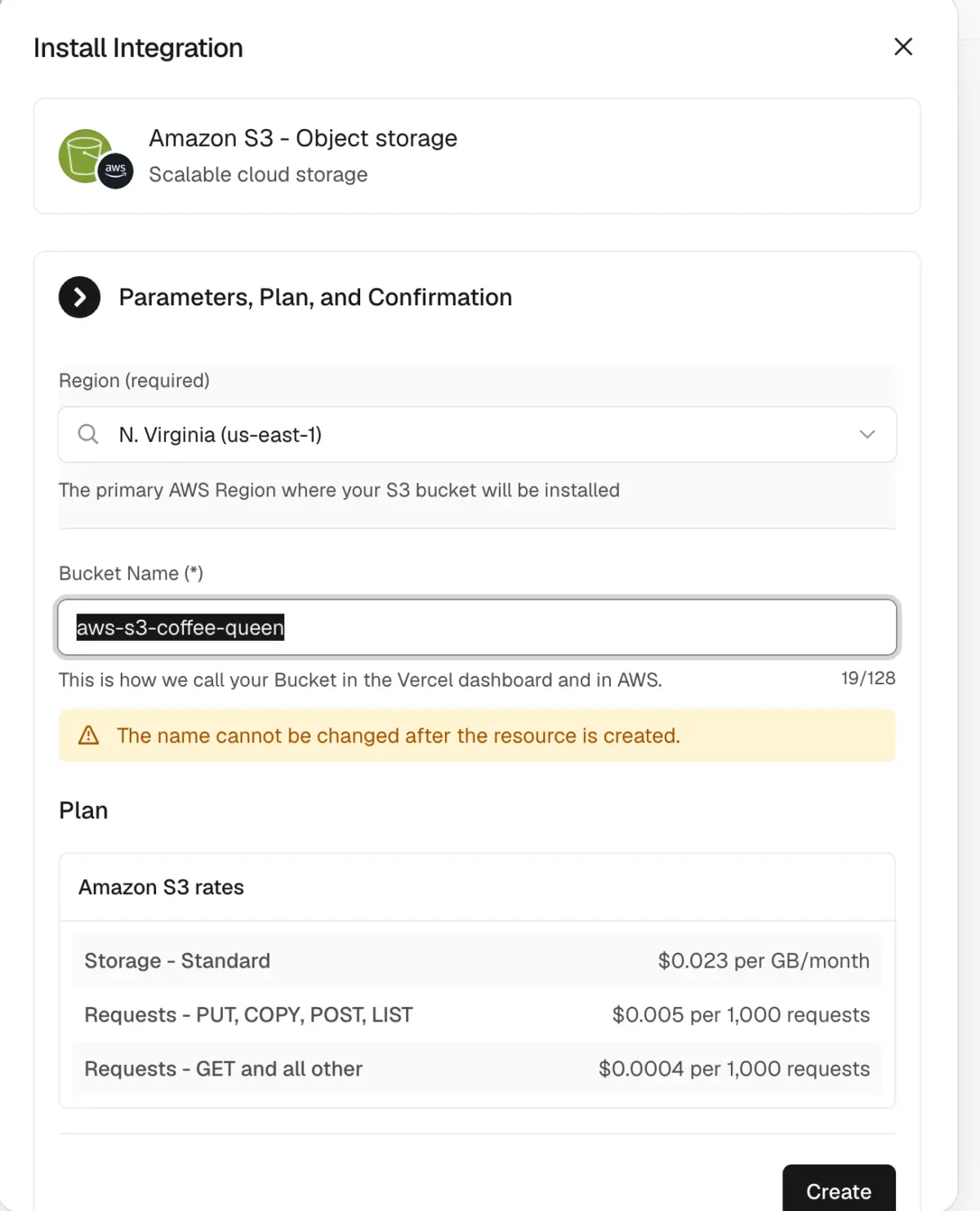
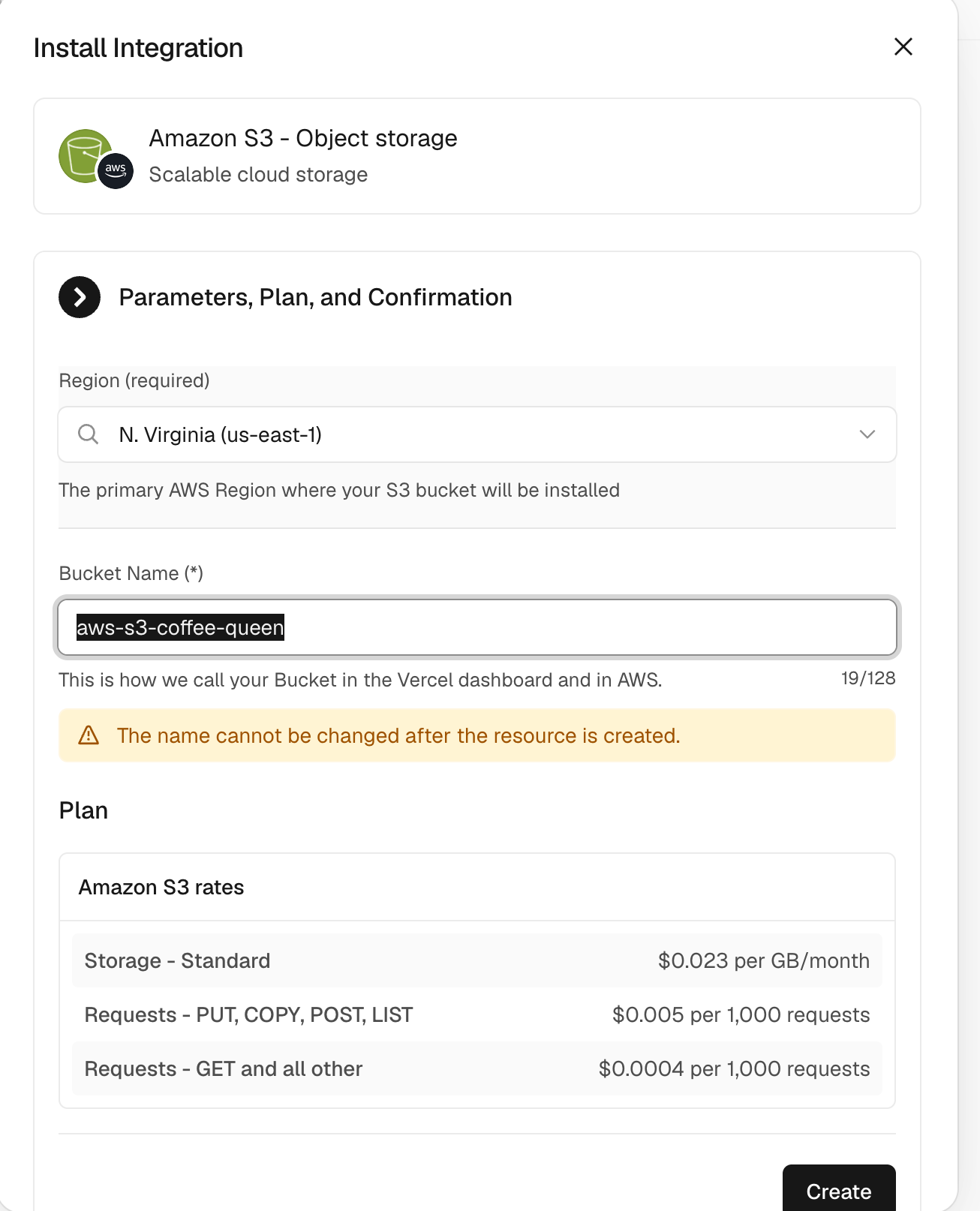
By selecting the AWS provider within Vercel’s Storage tab, developers can spin up a production-ready S3 bucket in seconds. The platform automatically handles the underlying networking, resource naming, and IAM role bindings. At runtime, Vercel’s @vercel/functions/oidc utility leverages OIDC to securely exchange identity tokens for temporary, scoped AWS credentials via AWS STS. This architecture establishes a new gold standard for secure, zero-credential-management cloud development.
Supporting Context & Metrics: Three Workloads, One Unified Platform
The new integration is not limited to basic file storage. It spans three distinct storage workloads designed to cater to modern application demands: everyday storage, advanced analytics, and AI semantic search.
+-----------------------------------------------------------------+
               Vercel Marketplace / v0 by Vercel
+-----------------------------------------------------------------+
                                |
                  (OIDC / AWS STS Authentication)
                                |
        +-----------------------+-----------------------+
        |                       |                       |
        v                       v                       v
+---------------+       +---------------+       +---------------+
|  Amazon S3    |       |  S3 Tables    |       |  S3 Vectors   |
| (General Ops) |       |  (Analytics)  |       |  (AI / RAG)   |
+---------------+       +---------------+       +---------------+
        |                       |                       |
   File Uploads           Apache Iceberg          Vector Search
   & Asset Hosting        & DuckDB Queries        & AI Agents
1. General-Purpose Object Storage
At its core, Amazon S3 remains the industry standard for durability, scalability, and performance. Through Vercel, developers can instantly provision general-purpose buckets to handle user-generated content, media libraries, and document uploads.

Using the @aws-sdk/client-s3 package alongside Vercel’s OIDC credential provider, writing an image upload route in Next.js requires just a few lines of clean, secure code:
import  S3Client, PutObjectCommand  from "@aws-sdk/client-s3";
import  awsCredentialsProvider  from "@vercel/functions/oidc";

const s3 = new S3Client(
  region: process.env.AWS_REGION,
  credentials: awsCredentialsProvider(
    roleArn: process.env.AWS_ROLE_ARN,
  ),
);

export async function POST(request)
  const formData = await request.formData();
  const file = formData.get("file");

  await s3.send(new PutObjectCommand(
    Bucket: process.env.S3_BUCKET_NAME,
    Key: file.name,
    Body: Buffer.from(await file.arrayBuffer()),
    ContentType: file.type,
  ));

  return Response.json( success: true );
2. Analytics with S3 Tables
Modern web applications generate petabytes of operational telemetry and user interaction data. Analyzing this data traditionally required spinning up complex, dedicated data warehouses. S3 Tables change the equation by offering purpose-built S3 storage optimized for analytics, featuring fully managed Apache Iceberg tables with automated maintenance and compaction.
Developers can now leverage lightweight query engines like DuckDB directly inside Vercel Functions to query massive datasets stored in S3 Tables without maintaining a heavy analytics cluster. By attaching the table bucket via its Amazon Resource Name (ARN), teams can execute high-performance aggregate queries directly on open table formats:
import  DuckDBInstance  from "@duckdb/node-api";
import  awsCredentialsProvider  from "@vercel/functions/oidc";

const creds = await awsCredentialsProvider(
  roleArn: process.env.AWS_ROLE_ARN,
)();

const db = await DuckDBInstance.create();
const conn = await db.connect();

await conn.run("INSTALL aws; LOAD aws; INSTALL httpfs; LOAD httpfs; INSTALL iceberg; LOAD iceberg;");

await conn.run(`
  CREATE SECRET s3cred (
    TYPE s3,
    KEY_ID '$creds.accessKeyId',
    SECRET '$creds.secretAccessKey',
    SESSION_TOKEN '$creds.sessionToken',
    REGION '$process.env.AWS_REGION'
  );
`);

await conn.run(`
  ATTACH '$process.env.AWS_RESOURCE_ARN' AS s3tables (
    TYPE iceberg,
    ENDPOINT_TYPE s3_tables
  );
`);

const rows = await (await conn.run(`
  SELECT town_city, AVG(median_price) AS avg_price
  FROM s3tables."$process.env.S3_TABLES_NAMESPACE".town_monthly
  GROUP BY town_city
  ORDER BY avg_price DESC
  LIMIT 10
`)).getRowObjects();
3. Vector Search with S3 Vectors
As generative AI and Retrieval-Augmented Generation (RAG) become core components of modern software architecture, the need for efficient vector storage has exploded. Amazon S3 Vectors provides cost-optimized, purpose-built vector storage directly within S3, eliminating the need to manage a separate vector database infrastructure.
By pairing S3 Vectors with Vercel, developers can build intelligent support bots, semantic search engines, and autonomous AI agents that query high-dimensional embeddings stored securely in the cloud:
import  S3VectorsClient, QueryVectorsCommand  from "@aws-sdk/client-s3vectors";
import  awsCredentialsProvider  from "@vercel/functions/oidc";

const vectors = new S3VectorsClient(
  region: process.env.AWS_REGION,
  credentials: awsCredentialsProvider(
    roleArn: process.env.AWS_ROLE_ARN,
  ),
);

export async function POST(request)
  const  embedding  = await request.json();

  const result = await vectors.send(new QueryVectorsCommand(
    vectorBucketName: process.env.S3_VECTOR_BUCKET_NAME,
    indexName: "documents",
    queryVector:  float32: embedding ,
    topK: 5,
    returnMetadata: true,
  ));

  return Response.json( matches: result.vectors );
Official Statements and Ecosystem Impact
Industry analysts and engineering leaders have greeted the announcement with considerable enthusiasm, viewing it as a major step toward unifying disparate cloud services into coherent, developer-first workflows.
"Developers want to focus on building features that delight their users, not on stitching together cloud infrastructure and wrestling with static credentials," said a senior product spokesperson close to the launch. "By bringing Amazon S3, S3 Tables, and S3 Vectors directly into the Vercel Marketplace and v0, we are removing the friction between frontend deployment and enterprise-grade cloud storage."
The introduction of natural language provisioning via v0 by Vercel represents another leap forward. Instead of manually navigating menus or writing boilerplate configuration scripts, developers can prompt v0 using everyday language. Asking for "a photo gallery where users upload images using AWS" automatically provisions a general-purpose bucket. Requesting "a support bot that answers questions from my PDFs" instantiates S3 Vectors. Asking for "an analytics dashboard for my clickstream data" sets up S3 Tables. v0 then configures the necessary connections and generates production-ready code instantly.
Furthermore, because all AWS services integrated with Vercel share a unified account and authentication model, developers can effortlessly combine storage layers. Metadata can be stored in Amazon Aurora while raw files reside in S3; document chunks can live in Amazon DynamoDB while their vector embeddings are indexed in S3 Vectors for instantaneous RAG retrieval.
Future Outlook: The Unified Cloud-Native Horizon
The launch of native Amazon S3 integration on Vercel signals a broader industry trend: the relentless abstraction of infrastructure complexity in favor of frictionless, intent-driven development.
As enterprises accelerate their migration toward serverless and edge computing architectures, the boundaries between frontend rendering, backend compute, and scalable storage continue to blur. Developers no longer wish to operate as siloed infrastructure administrators and application programmers; they expect their tools to interoperate natively, securely, and intelligently.
Flexible Account Management and Pricing
To accommodate organizations of all sizes, the integration supports dual account management pathways. Developers can instantly create a brand-new AWS account directly through the Vercel platform—complete with a promotional $100 credit valid for six months to help teams build and test without immediate overhead. Alternatively, organizations can link their existing enterprise AWS accounts, retaining their current billing structures and enterprise agreements while utilizing Vercel to provision new S3 buckets. Because every resource resides within the customer’s own AWS account, teams retain full ownership, governance, and access to native AWS tooling.
Getting Started
There is no additional charge for using the Vercel-AWS integration; developers simply pay standard Amazon S3 pricing for the resources they consume. The feature is available immediately in all commercial AWS Regions supported by Vercel.
To explore the new capabilities, developers can visit v0 by Vercel or navigate to the AWS page on the Vercel Marketplace. For those seeking advanced troubleshooting, API references, and regional availability data, AWS has also made available the AWS Model Context Protocol (MCP) Server and associated plugins to assist AI-driven development workflows. As the cloud-native ecosystem continues to mature, integrations of this caliber ensure that building powerful, scalable, and secure applications remains faster and more intuitive than ever before.