By Investigative Tech Desk
Published: Special Legal & Technology Report
Executive Overview
For decades, the anatomy of corporate espionage followed a predictable, albeit illicit, script. A disgruntled employee or ambitious junior manager would orchestrate a quiet exit, perhaps pausing to copy confidential customer spreadsheets onto a physical thumb drive, forward sensitive PDF contracts to a personal webmail account, or print proprietary product roadmaps before handing in a laptop. While damaging, these legacy breaches left a clear digital and physical paper trail, making them relatively straightforward to detect, audit, and prosecute under established federal and state trade secret laws.
Those days are officially over.
The rapid proliferation of agentic artificial intelligence and sophisticated machine learning models has birthed an entirely new, insidious class of corporate theft. Today, bad actors no longer need to painstakingly siphon client lists or memorize proprietary workflows to launch a competing venture. Instead, they can feed stolen enterprise data directly into custom-trained AI systems, essentially cloning the institutional knowledge, strategic methodologies, and operational brilliance of seasoned executives in a matter of minutes.
This terrifying new reality was brought to the forefront of American jurisprudence in a landmark federal trade secret case litigated in the U.S. District Court for the Northern District of California. Handled by Seth Kugler, a partner at Grellas Shah LLP, the lawsuit exposed a chilling scenario: a former senior employee with barely six months of industry experience attempted to bypass years of professional development by using stolen proprietary information to train an AI agent. The goal? To replicate his former boss’s expertise, automate high-level marketing agency services, and poach clients overnight.
As courts scramble to grapple with the algorithmic fallout of agentic AI, founders, startup executives, and general counsels face an existential threat. Traditional digital forensics, standard IT audits, and legacy confidentiality agreements are proving woefully inadequate against the invisible, irreversible contamination of machine learning models. This report investigates the mechanics of this groundbreaking case, analyzes the profound legal and operational vulnerabilities exposed by modern AI, and outlines the critical steps organizations must take to survive in an era where data theft has gone automated.
Detailed Chronology: The Anatomy of a High-Tech Corporate Heist
The case—docketed in the U.S. District Court for the Northern District of California—began like many routine employment transitions. The defendant, a senior employee at a prominent marketing agency with a mere half-year tenure in the sector, resigned to purportedly pursue other professional horizons. In a traditional environment, an employee with such a limited track record would be deemed structurally incapable of immediately establishing a rival agency capable of servicing high-end enterprise clients.
However, the defendant was banking on a force multiplier: generative AI.
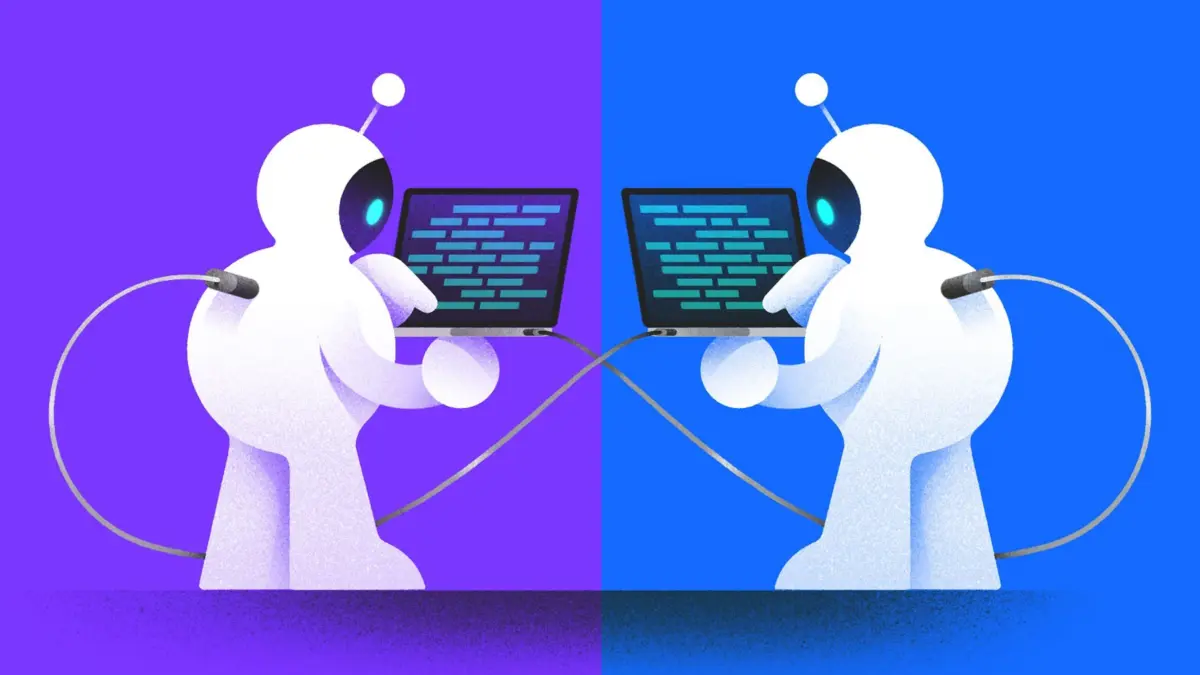
Rather than manually copying isolated client spreadsheets, the individual leveraged unauthorized access to proprietary company repositories, strategic blueprints, and internal operational playbooks. Instead of utilizing these documents for legitimate business purposes, the defendant directed them into an advanced, localized AI framework. The objective was not merely data retention, but data ingestion—using the company’s crown jewels to train and fine-tune a specialized AI agent designed to emulate the exact analytical frameworks, decision-making processes, and client management strategies of the agency’s leadership. In effect, the defendant engineered a digital clone of his former boss to handle the heavy lifting of a competing enterprise.
When the marketing agency discovered the breach and initiated legal proceedings, the defense deployed a novel, albeit deeply flawed, argument. Counsel for the defendant asserted that no legal harm had materialized because the stolen proprietary files had been promptly isolated within a designated "quarantine folder" on a local hard drive. Furthermore, the defense emphasized that no active clients had yet been successfully poached, implying that the status quo remained undisturbed.
Federal judges, however, are beginning to see through the veneer of algorithmic sophistry. Recognizing the profound hazards of algorithmic contamination, the presiding judge rejected the defense’s superficial containment strategy. The court promptly issued a temporary restraining order (TRO) followed by a preliminary injunction, explicitly characterizing the defendant’s custom-built AI agent as an "existential threat" to the plaintiff’s business.
The ruling sent shockwaves through the tech and legal communities, establishing a vital precedent: attempting to "un-ring" the AI bell by placing stolen files in a digital quarantine box is legally and technically meaningless once those files have already interacted with a machine learning pipeline.
Supporting Context & Metrics: The Paradigm Shift in Intellectual Property
To fully grasp the gravity of the Northern District of California ruling, one must examine the fundamental divergence between legacy trade secret theft and modern AI-driven misappropriation.
Under the Defend Trade Secrets Act (DTSA) and the Uniform Trade Secrets Act (UTSA), a trade secret is defined as information that derives independent economic value from not being generally known, and for which the owner has taken reasonable measures to keep secret. Traditionally, "reasonable measures" included password-protected servers, non-disclosure agreements (NDAs), and restricted physical access.
Today, those metrics of security are being entirely upended by three distinct technological realities:
1. The Irreversibility of AI Contamination
In traditional intellectual property litigation, if an employee steals a physical document or digital file, a court can order its return, issue an injunction against its use, and verify compliance through standard data recovery tools. If the files are deleted, the misappropriated material is removed from circulation.

AI operates on an entirely different architectural paradigm. When proprietary data is fed into a machine learning model, a neural network, or an advanced retrieval-augmented generation (RAG) agent, that data is mathematically transformed into weights, biases, and latent vector embeddings.
- The Contamination Loop: Once a model ingests trade secrets—particularly during training or recursive fine-tuning—the proprietary information becomes inextricably baked into the algorithm’s operational logic.
- The Proving Problem: Even if an individual completely scrubs the raw source files from their hard drive, proving to a court of law that the AI model is not operating the way it does because of its prior exposure to stolen data is an immensely difficult, if not impossible, technical hurdle. The contamination is permanent, and the structural advantage gained by the wrongdoer persists.
2. The Invisible Threat of Personal Devices and Consumer AI
The modern startup ecosystem runs on remote work, BYOD (Bring Your Own Device) policies, and rapid scaling. Employees routinely sign Confidential Information and Invention Assignment Agreements (CIIAs) while operating on personal laptops, tablets, and home networks.
While enterprise-grade software platforms typically maintain strict data privacy boundaries, consumer-facing desktop AI agents and local LLM wrappers operate with dangerous autonomy. Unlike a static web browser interface, advanced desktop AI tools are engineered to scan local directories, auto-index hard drives, ingest file paths, and synthesize local documents to provide context-aware assistance.
- Inadvertent Misappropriation: Thousands of remote workers and startup employees may be unwittingly violating corporate confidentiality agreements simply by running background AI assistants on personal hardware that simultaneously houses sensitive employer intellectual property.
- Waiver of Protection: If corporate trade secrets are inadvertently ingested by third-party consumer AI models whose terms of service permit model training on user data, companies face a catastrophic legal risk: courts may rule that the trade secrets have lost their legal protection entirely due to public or third-party dissemination.
3. The Obsolescence of Traditional IT Audits
For decades, corporate legal teams have relied on standard digital forensics—such as checking browser histories, reviewing USB access logs, and running basic keyword searches—to investigate suspected data theft.
In the age of agentic AI, these traditional audits are alarmingly obsolete. AI tools make it effortless to disperse, fragment, alter, and synthetically recreate proprietary data across non-obvious folder structures and virtual environments. Furthermore, generative AI drastically reduces the friction required to reverse-engineer software code, proprietary algorithms, and business workflows, effectively erasing the classic "telltale signs" of copying that forensic examiners have relied on for years. Consequently, uncovering AI-based data theft now requires exhaustive, highly technical expert analysis, injecting unprecedented uncertainty and expense into IP litigation.
Official Insights & Expert Perspectives
Legal experts at the forefront of this emerging battlefield emphasize that corporate governance models must evolve rapidly to outpace algorithmic malfeasance.
Seth Kugler, partner at Grellas Shah LLP and lead litigator in the landmark California federal case, warns that the democratization of high-level capability via AI has fundamentally altered the risk profile for emerging companies.
"If you only have six months of experience in an industry, you usually aren’t equipped to poach your employer’s clients and start a competing business," Kugler notes. "Of course, you may believe otherwise if you plan to use your employer’s proprietary information to train an AI agent to do the heavy lifting for you."
Kugler underscores that the defense’s reliance on a "quarantine folder" demonstrates a profound corporate and legal misunderstanding of how machine learning models absorb information.
"An agreement not to touch just the stolen documents themselves is essentially irrelevant once AI gets involved," Kugler explains. "If a trade secret is used to develop a machine learning model or used to train an AI agent with recursive capabilities, it contaminates the model and the impact can be difficult to undo. Even if raw source files are completely scrubbed of any direct evidence of stolen materials, defendants will struggle to prove to courts that the AI isn’t operating a certain way precisely because it once had access to that proprietary information."
Industry analysts echo these concerns, pointing out that venture-backed startups—which prioritize speed, agility, and minimal bureaucracy—are uniquely vulnerable. Founders often foster open collaborative environments without realizing that the very tools empowering their teams to move faster are also lowering the barrier to entry for internal corporate espionage.
Future Outlook: Securing the Enterprise in the Age of Agentic AI
As artificial intelligence continues its aggressive integration into the daily workflows of white-collar industries, the legal and regulatory landscape will be forced to adapt. We are entering an era where intellectual property is no longer protected merely by locking digital doors, but by fundamentally rethinking how data flows through human-machine interfaces.
Legal scholars predict an impending wave of litigation testing the boundaries of trade secret law, specifically regarding AI model contamination, algorithmic derivation, and the liability of third-party AI platform providers. Courts will increasingly be forced to rely on court-appointed neutral technical experts to dissect neural network architectures and determine whether proprietary datasets served as the foundational bedrock for competing commercial algorithms.
For businesses navigating this volatile frontier, complacency is no longer an option. The convergence of inexperienced personnel, powerful agentic AI tools, and lax device governance creates a volatile recipe for corporate catastrophe. Founders, executives, and general counsels must shift from a reactive litigation mindset to a proactive, preemptive defense strategy.
By modernizing security protocols, restricting unauthorized AI execution on endpoints containing sensitive IP, and treating any suspected data exfiltration as an existential crisis from day one, organizations can fortify themselves against the invisible threats of the AI revolution—ensuring that their most valuable intellectual assets remain secure in a world where anyone, with the right algorithm, can attempt to clone a lifetime of expertise overnight.