Executive Overview
For the vast majority of iPhone users, Apple’s native Messages application serves as the undisputed digital hub of daily communication. Whether coordinating professional logistics, sharing media-rich memories with family, or maintaining group chats, Messages is arguably the most critical utility on iOS. Recognizing this core dependency, Apple has continuously refined the platform, rolling out transformative generational leaps designed to optimize usability, elevate performance, and bridge long-standing ecosystem divides.
Over the past two operating system cycles—namely the structural additions introduced in iOS 26 and the targeted, performance-centric refinements of iOS 27—Apple has systematically reshaped how millions interact with their devices. Simultaneously, mounting pressure and technological evolution have forced a paradigm shift in cross-platform messaging. Most notably, Apple’s landmark implementation of end-to-end encryption (E2EE) for RCS (Rich Communication Services) has effectively erased historical barriers between iOS and Android users.
This deep-dive investigation explores the chronological evolution of the Messages app, analyzing the profound impact of recent software updates, the technical maturation of cross-platform messaging protocols, and what these milestones signify for the future of mobile communication.
Detailed Chronology: From iOS 26 Innovation to iOS 27 Optimization
To truly understand the current state of the Messages app, one must evaluate the two-tier rollout strategy Apple has employed over consecutive software development lifecycles. Rather than resting on its laurels, Cupertino has balanced aesthetic and functional expansion with rigorous under-the-hood engineering.
The Generational Leap: iOS 26 and Feature Expansion
When Apple deployed iOS 26, the focus was squarely on expanding user agency, creative expression, and conversational organization. Historically, instant messaging applications have battled feature bloat, but iOS 26 threaded the needle by introducing tools that users genuinely integrated into their daily routines.
- Advanced Formatting and Expressive Typography: iOS 26 introduced nuanced text formatting options, allowing users to bold, italicize, underline, and strike through specific words within bubbles. Animated text effects graduated from novelty to practical communication tools, helping convey emotional subtext that flat text often fails to capture.
- Scheduled Messages: Long requested by the consumer base, iOS 26 brought native message scheduling. Users gained the ability to draft messages and queue them for delivery at a specific future date and time—ideal for international time zones, reminders, or time-sensitive greetings.
- Redesigned Tapbacks and Emoji Reactions: The Tapback menu received a complete overhaul, dropping the rigid constraints of the traditional six icons and opening the door to any emoji or sticker as a rapid reaction. This democratized the quick-response mechanic across conversations.
- Richer Group Management Tools: Group chats received advanced administrative controls, streamlining the process of adding or removing participants, muting specific threads without leaving them, and tracking shared media through dedicated content indexes.
The Refinement Phase: iOS 27 and Performance-Driven Engineering
Following the feature-heavy rollout of iOS 26, Apple pivoted its strategy with iOS 27. Recognizing that velocity and reliability matter just as much as new bells and whistles, the engineering teams placed system stability, bug eradication, and deep performance optimizations at the forefront.
- Under-the-Hood Velocity: iOS 27 drastically reduced app launch times and cold-start latency, particularly on legacy supported hardware. Database queries for fetching lengthy media histories were refactored, resulting in a noticeably smoother scrolling experience through image-heavy threads.
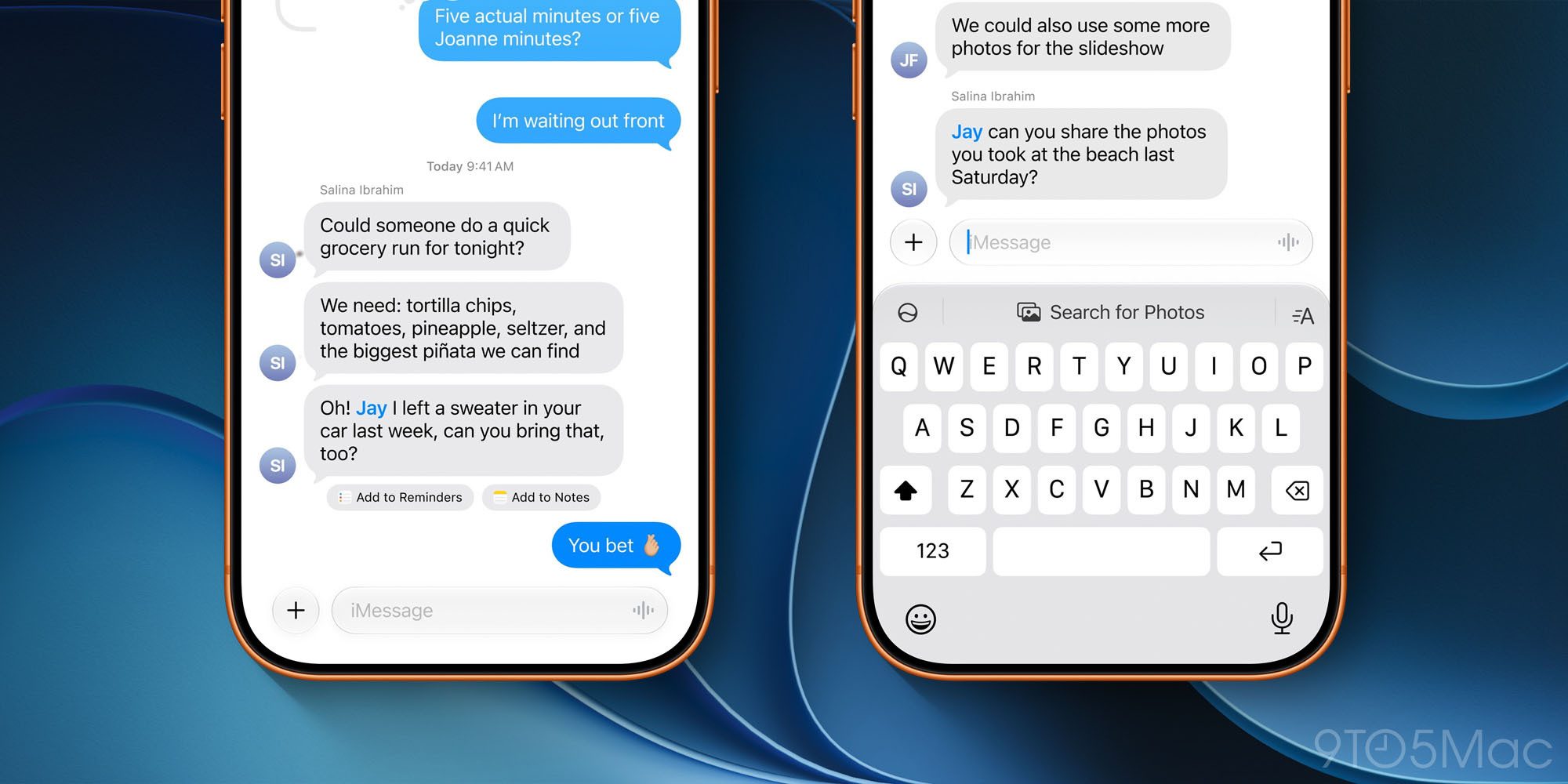
- One-Tap Intelligent Suggestions: Leveraging on-device machine learning, iOS 27 introduced context-aware one-tap suggestions directly above the keyboard. Whether responding to a logistical question, confirming an appointment, or acknowledging a multimedia file, the system accurately anticipates user intent, minimizing typing friction.
- Enhanced Battery and Memory Efficiency: Background sync processes for iCloud message storage were streamlined in iOS 27, mitigating the battery drain and thermal throttling previously reported by heavy users during intensive data synchronization tasks.
Supporting Context & Metrics: The Cross-Platform Revolution
While internal ecosystem improvements are vital, the most seismic shift in the history of the Messages app has been its forced—and eventual enthusiastic—embracing of open standards. For over a decade, the "green bubble vs. blue bubble" dichotomy served as a cultural touchstone, but technical realities demanded modernization.
The RCS Integration Timeline
Under sustained regulatory pressure, competitive momentum, and the global adoption of the GSMA’s Universal Profile, Apple confirmed its commitment to supporting RCS (Rich Communication Services). This modern communication protocol effectively replaces legacy SMS and MMS standards, bringing carrier-agnostic texting into the modern era.
The evolution of RCS within the Apple ecosystem has moved at a rapid pace:
- Initial Adoption: Apple first laid the groundwork for RCS to bring modern features—such as read receipts, typing indicators, high-resolution media sharing, and improved group chat functionality—to conversations between iPhone and Android users.
- The Security Breakthrough: The final piece of the puzzle fell into place when Apple officially integrated support for end-to-end encryption (E2EE) for RCS traffic.
Security Metrics and Privacy Implications
Historically, communication between iOS and Android defaulted to unencrypted SMS/MMS, leaving data vulnerable to interception by cellular carriers, third-party network operators, and malicious actors via signaling system vulnerabilities (such as SS7 exploits).
By implementing end-to-end encryption over RCS connections, Apple ensured that messages traversing the divide between iOS and Android are locked with cryptographic keys that only the communicating parties possess. According to privacy metrics released by security researchers, this transition drastically diminishes the surface area for metadata tracking and content surveillance during cross-platform communication.
While iMessage remains the gold standard for Apple-to-Apple hardware security—leveraging custom silicon and dedicated cryptographic enclaves—the extension of E2EE to RCS represents a monumental win for global consumer privacy, effectively raising the security baseline for billions of text messages sent daily.

Official Statements and Industry Response
The intersection of proprietary ecosystems and open standards has historically been contentious. However, Apple’s recent messaging updates have drawn mixed yet generally optimistic reactions from both industry analysts and privacy advocates.
During the structural rollouts of iOS 26 and iOS 27, Apple engineering representatives emphasized a dual philosophy: user-centric utility balanced with unyielding system reliability.
"Our goal with the Messages app has never been merely to add features for the sake of novelty," noted an anonymous software engineering lead during the iOS 27 technical briefs. "With iOS 26, we empowered users with unprecedented creative control and organizational tools. With iOS 27, we listened to our community, focusing relentlessly on the core mechanics—speed, stability, and intelligent assistance—that make daily communication feel effortless."
Industry analysts have similarly praised the pragmatic approach to RCS. For years, critics argued that Apple weaponized the friction of green bubbles to maintain device lock-in. By adopting RCS—and crucially, fighting for and implementing end-to-end encryption—Apple has mitigated antitrust scrutiny while simultaneously delivering a vastly superior, secure product to consumers who maintain mixed-device social and professional circles.

The Electronic Frontier Foundation (EFF) and other digital rights organizations issued cautiously optimistic statements regarding the E2EE RCS rollout, acknowledging that while proprietary protocols still offer deeper hardware integration, securing the global telecom fallback layer is an undeniable victory for digital safety.
Future Outlook: What Lies Ahead for Apple Messages?
As we look beyond the current software landscape, the roadmap for the Messages app points toward deeper artificial intelligence integration, augmented reality (AR) communications, and even more granular privacy controls.
1. Deep Generative AI Integration
Building upon the early foundations of one-tap suggestions and smart formatting, future iterations of iOS are expected to harness advanced on-device language models. Imagine an AI assistant capable of drafting contextual replies based on your historical conversational tone, automatically summarizing missed group chat threads numbering in the hundreds, or dynamically translating incoming foreign-language dialects in real time without sacrificing privacy.
2. Spatial Messaging and Mixed Reality
With the ongoing maturation of spatial computing hardware (such as Apple Vision Pro), the paradigm of a flat two-dimensional chat window is rapidly evolving. Future updates to Messages will likely lean heavily into spatial interfaces, allowing users to pin floating chat threads in their physical environments, share 3D spatial memories, and collaborate within immersive, interactive canvases.

3. Continued Protocol Harmonization
As global regulatory bodies (such as the European Union’s Digital Markets Act) continue to scrutinize gatekeeper platforms, interoperability will remain a defining theme. Apple will likely be pushed to further open its messaging APIs, potentially allowing third-party messaging networks to hook into native iOS features while maintaining rigorous end-to-end security standards.
Community Discussion & Conclusion
Apple’s Messages app has evolved far beyond a simple text-messaging utility; it is the central nervous system of the modern mobile experience. Through the creative features of iOS 26, the performance-driven stability of iOS 27, and the revolutionary security upgrades brought to cross-platform RCS, Apple continues to demonstrate its commitment to redefining how the world communicates.
What are your personal favorite features in the current iterations of the Messages app? Are you utilizing scheduled messages and advanced text formatting, or are you most excited about the security implications of encrypted RCS? Share your thoughts, experiences, and feature wishlists in the comments section below.