Executive Overview
Autonomous vehicle operations face an escalating crucible of climate-induced challenges, infrastructural limits, and tightening regulatory oversight. Waymo, the autonomous driving subsidiary of Alphabet Inc., has officially announced a temporary yet comprehensive pause of its commercial robotaxi service in San Francisco.
The suspension comes in the wake of torrential downpours and severe urban flooding that swept across the San Francisco Bay Area, turning streets into hazardous obstacle courses for self-driving fleets.
The decision to pull its autonomous vehicles off the streets of San Francisco marks yet another turbulent chapter for the company. Waymo’s fleet was captured on video by multiple bystanders stalling in flooded intersections, blocking crosswalks, and idling unpredictably.
These incidents created localized traffic congestion and safety hazards, prompting swift intervention from municipal leaders and app-based user notifications informing customers that operations are halted until weather conditions stabilize.
[Severe Weather Event: Atmospheric River]
       │
       ▼
[Robotaxis Encounters Flooded Roads] ──► [Inability to Navigate / Stalling]
       │
       ▼
[Public Disruption & Traffic Gridlock] ──► [Municipal & Regulatory Scrutiny]
       │
       ▼
[Temporary Service Suspension in San Francisco]
This sudden disruption does not exist in a vacuum. It follows hot on the heels of a significant regulatory blow delivered by the California Department of Motor Vehicles (DMV), which recently restricted Waymo from operating on state freeways, citing public safety concerns.
Coupled with past recalls and software vulnerabilities tied to water hazards in other major metropolitan areas, this latest crisis exposes deep-seated technical hurdles in training autonomous navigation systems to safely negotiate extreme weather environments.
As cities brace for increasingly volatile meteorological patterns—exacerbated by a developing El Niño winter—the incident forces a critical reevaluation of whether current autonomous architecture is genuinely robust enough to handle the unpredictable realities of urban infrastructure under duress.
Detailed Chronology of the San Francisco Flooding Crisis
The sequence of events that culminated in Waymo’s service suspension unfolded rapidly as an atmospheric river system battered Northern California, dumping inches of heavy rain across downtown San Francisco and surrounding neighborhoods in a matter of hours.
The Breakdown of Operations
By mid-morning, meteorological conditions had deteriorated past the threshold of safe urban transit. According to local reports and social media documentation shared widely on the platform X (formerly Twitter), Waymo’s autonomous fleet began experiencing navigational failures when confronted with pooled water and localized flooding.
District 5 Supervisor Bilal Mahmood was among the first public officials to draw attention to the municipal disruption, highlighting the growing danger posed by stalled vehicles in the middle of active traffic routes.
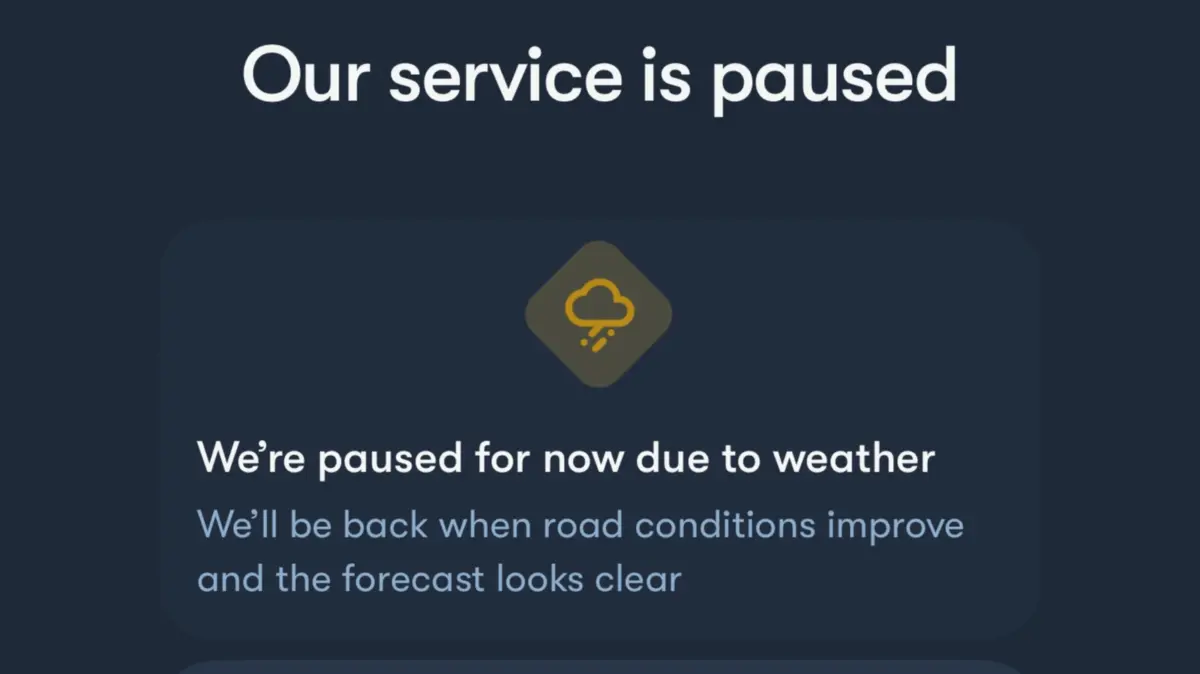
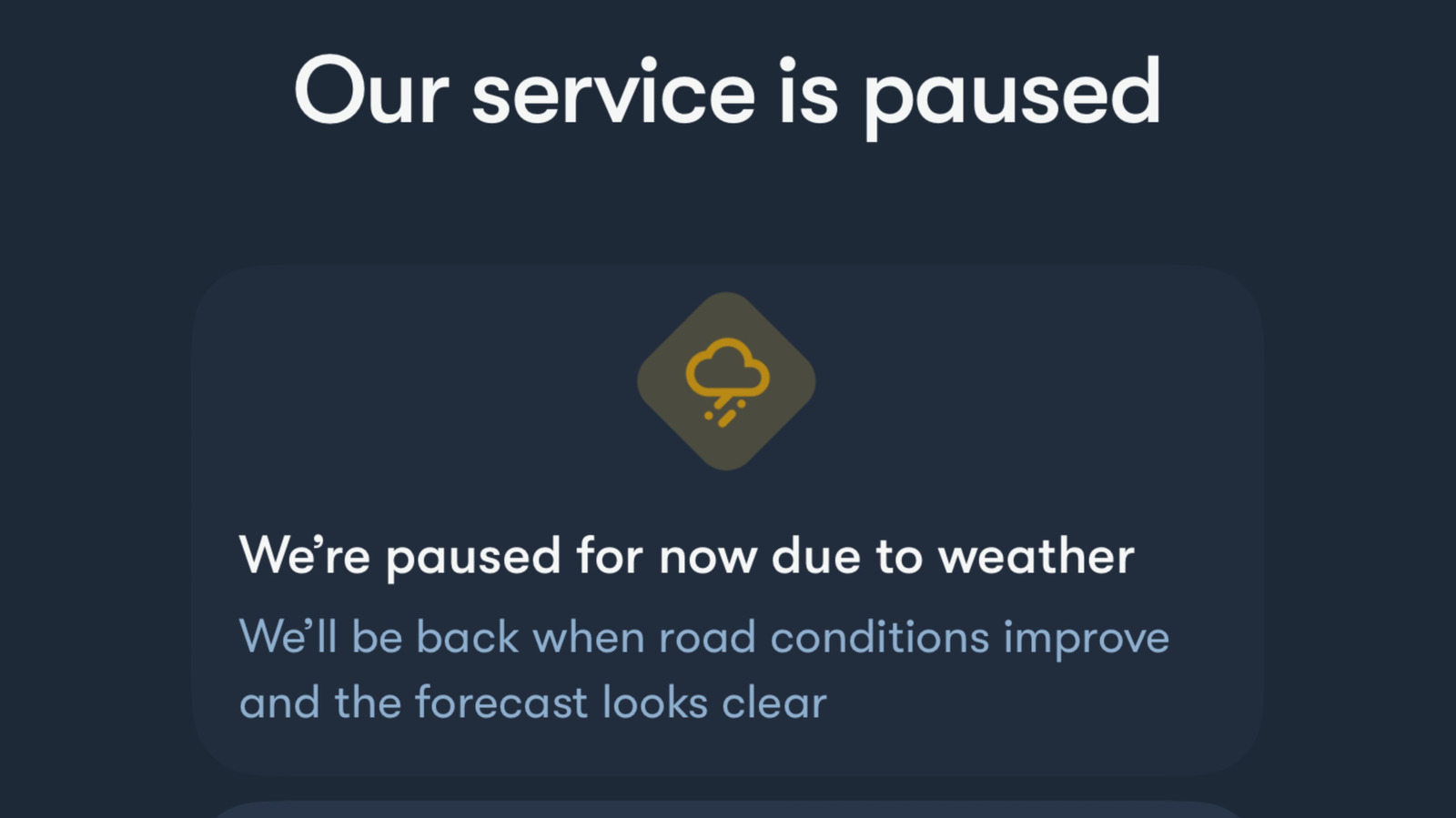
Riders attempting to hail a vehicle through the Waymo application were met with an abrupt service message: "We’re paused for now due to weather." The application interface further clarified that operations would only resume once road conditions significantly improved and weather forecasts cleared up.
Visual Evidence and Public Frustration
Footage captured by residents and commuters underscored the erratic behavior of the autonomous vehicles when confronted with adverse elements:
- The Flooded Crosswalk Incident: A Waymo vehicle was filmed completely stranded in the middle of a heavily flooded crosswalk. Lacking human intuition to gauge the depth of the water or safely creep through it, the vehicle simply halted, forcing human drivers behind it to maneuver dangerously around the immobilized pod.
- The Idling Passenger Scenario: In a separate incident, a robotaxi idled in the active lane of a partially submerged roadway. The onboard system instructed its bewildered passenger to remain inside the vehicle while it attempted to process conflicting sensor data, effectively trapping the rider in the middle of a rising hazard zone.
These localized bottlenecks compounded the general chaos of the storm, transforming stranded autonomous vehicles into static road hazards that required manual intervention or forced other motorists to take evasive actions.
Technical Vulnerabilities: Water, Software, and Autonomous Navigation
The challenges Waymo faces in San Francisco highlight a foundational engineering hurdle in autonomous vehicle (AV) development: sensory interpretation of fluid environments. While human drivers rely on contextual reasoning, intuitive estimations of water depth, and visual cues regarding road integrity, automated systems depend heavily on a complex matrix of LiDAR, radar, cameras, and pre-mapped high-definition data.
The Physics of Sensor Blindness and Water
When roads flood, traditional lane markings disappear, potholes become masked by murky water, and the reflective properties of standing water scatter LiDAR beams. This sensory feedback loop often leads to extreme caution within autonomous software architectures.
When a Waymo vehicle’s software encounters conditions outside its operational design domain (ODD)—such as water exceeding a predetermined depth safety threshold—the vehicle is programmed to safely stop rather than risk hydroplaning, engine water ingestion (in hybrid models), or electrical short-circuiting.
However, stopping in situ creates an entirely new set of safety risks. An immobilized vehicle on a flooded street not only blocks emergency vehicles and public transit but also exposes passengers to secondary accidents as human-driven cars navigate around the obstruction in poor visibility conditions.
A Pattern of Incidents Across Multiple Markets
This is not an isolated anomaly. Waymo’s software struggles with water hazards have manifested nationwide:
- San Antonio and Atlanta (2024–2025): Waymo was forced to issue a recall affecting nearly 4,000 robotaxis after an autonomous vehicle drove directly into a severely flooded road in San Antonio. Despite deploying a subsequent software patch designed to improve water hazard detection, the company experienced a nearly identical failure in Atlanta, where vehicles repeatedly drove into flooded corridors, triggering mandatory regional service pauses.
- San Francisco Power Outage (December 2025): A massive municipal power grid failure left dozens of Waymo vehicles stranded at major intersections across San Francisco, freezing traffic signals and paralyzing automated navigation systems that relied on synchronized city infrastructure.
The recurring nature of these software-induced gridlocks suggests that algorithmic risk aversion—while prioritizing the immediate physical preservation of the vehicle—frequently conflicts with the fluid, dynamic demands of emergency urban traffic management.
Regulatory Pressures and Broader Industry Fallout
The timing of Waymo’s weather-related service pause could hardly be worse for the company’s public relations and regulatory standing. It arrives directly on the heels of a major disciplinary action taken by the state of California.
The California DMV Freeway Ban
Just one day prior to the San Francisco weather shutdown, the California Department of Motor Vehicles (DMV) officially restricted Waymo from operating its robotaxis on state freeways. Regulatory authorities labeled the autonomous vehicles an "imminent hazard to public safety" following a series of erratic maneuvers, phantom braking incidents, and merge miscalculations at high speeds.
The ruling forced Waymo to execute an immediate, nationwide withdrawal of its robotaxi services from freeway systems across all active markets, dealing a blow to the company’s long-term commercialization strategy, which depends heavily on efficient, high-speed arterial transit.
| Incident / Event | Date / Period | Location | Regulatory / Operational Impact |
|---|---|---|---|
| Freeway Restriction | November 2026 | Statewide (California) | DMV bans Waymo from state freeways, citing public safety hazards. |
| San Antonio Flooding | May 2025 | San Antonio, TX | Recall of ~4,000 vehicles after a robotaxi drives into deep water. |
| Atlanta Water Incisions | Mid-2025 | Atlanta, GA | Service paused following repeated navigation errors in flooded streets. |
| Grid Power Outage | December 2025 | San Francisco, CA | Citywide traffic disruption as vehicles strand at unlit intersections. |
| Atmospheric River Pause | Current | San Francisco, CA | Full temporary suspension of robotaxi service due to severe rain and flooding. |
Mounting Scrutiny from Municipal Leaders
Local politicians and urban planners in San Francisco have grown increasingly vocal about the unvetted externalities of private autonomous testing on public infrastructure. While proponents argue that autonomous fleets will eventually reduce human-error accidents, municipal authorities are tasked with managing the immediate, tangible disruptions caused when AI systems fail in real-world emergencies.
District supervisors and emergency response agencies have repeatedly pointed out that when robotaxis fail, they do not simply pull over to the shoulder; they often freeze in travel lanes, requiring specialized towing services or manual override protocols that drain municipal emergency resources during already critical weather events.
Official Statements and Corporate Response
As of press time, Waymo’s corporate communications team has faced mounting inquiries from national media outlets, including Engadget, regarding the technical failures of its fleet during the atmospheric river event.
The Corporate Stance
Waymo representatives have maintained a cautious defensive posture, emphasizing that safety remains the core guiding principle behind every operational pause. The company’s official statements reiterate that automated systems are intentionally programmed to err on the side of caution when encountering unverified road conditions, such as deep standing water.
However, critics point to a widening chasm between corporate assurances of technological maturity and the messy, unpredictable reality of daily deployment. While software updates are routinely deployed to patch specific vulnerabilities—such as the post-San Antonio water-detection updates—the frequency of edge-case failures indicates that artificial intelligence models are still struggling to replicate the adaptive common sense of human drivers.
Consumer and Public Relations Impact
For everyday riders in San Francisco, the suspension represents an inconvenience, but for the broader autonomous vehicle industry, it represents a credibility test. The loss of service during a heavy rainstorm reinforces the perception that robotaxis are "fair-weather technologies"—capable of operating efficiently under pristine sunlit conditions, but fundamentally brittle when faced with the messy realities of climate disruption.
Future Outlook: The Road Ahead for Autonomous Urban Transit
The convergence of climate volatility, stricter state regulation, and persistent software vulnerabilities marks a pivotal inflection point for the autonomous vehicle sector. As meteorological experts warn of increasingly severe winter seasons—including record-breaking El Niño patterns characterized by intense atmospheric rivers—AV developers must fundamentally rethink how their fleets interact with environmental extremes.
Engineering Challenges for the Next Generation
To survive and scale in urban environments prone to extreme weather, the autonomous vehicle industry must address several critical architectural limitations:
- Advanced Environmental Sensing: Developing multi-modal sensor arrays capable of accurately differentiating between wet pavement, shallow puddles, and deep, impassable floodwaters without relying solely on vulnerable optical or LiDAR feedback.
- Dynamic Remote Assistance: Enhancing teleoperations infrastructure to allow human operators to seamlessly take over remote driving paths or guide stranded vehicles out of hazard zones during system freezes, rather than leaving them idling in active traffic lanes.
- Adaptive ODD Thresholds: Refining software logic so that vehicles can execute safer, more adaptive fallback maneuvers (such as pulling completely onto sidewalks, shoulders, or parking strips) rather than freezing in the middle of intersections and multi-lane roadways.
The Regulatory Horizon
Looking forward, regulatory bodies like the California DMV are unlikely to grant leniency. The combination of freeway bans and municipal pressure means Waymo and its competitors will face rigorous scrutiny before receiving clearance to resume normal operations—not just in San Francisco, but across every major metropolitan market in the United States.
Ultimately, Waymo’s temporary suspension in San Francisco is more than a localized weather delay; it is a stress test for the entire autonomous vehicle paradigm. Until developers can prove their systems can navigate the chaotic, flooded, and unpredictable realities of modern urban climate change with the resilience of human drivers, the widespread dream of truly driverless, all-weather mass transit remains stuck in the water.