Executive Overview
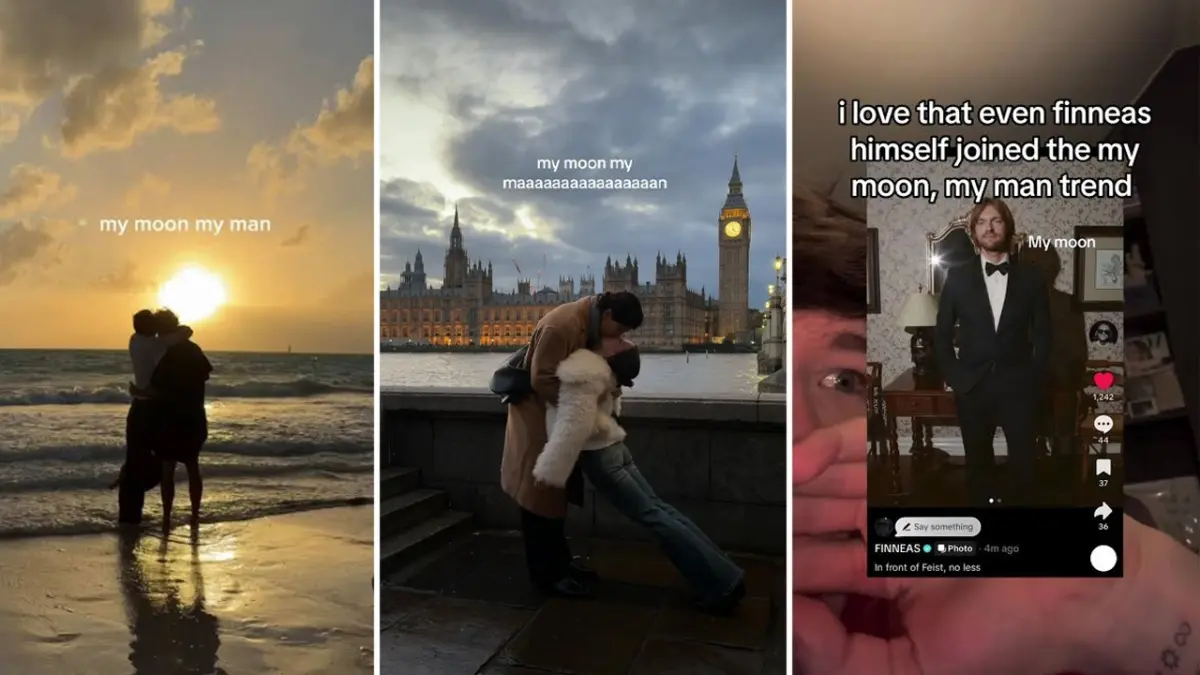
In the fast-paced ecosystem of modern social media, virality often operates on unpredictability, breathing new life into forgotten cultural artifacts through unexpected formats. In November 2026, TikTok became the epicenter of one such revival with the emergence of the "My Moon My Man" trend. Characterized by a deceptively simple two-photo slideshow mechanism, the trend features romantic partners sharing images bridged together by a continuous, split text caption reading "My moon, my man."
Set to a poignant, emotionally charged live cover performed by producer and singer FINNEAS at the Canadian Songwriters Hall of Fame, the trend quickly expanded beyond TikTok’s borders, bleeding into Instagram, Facebook, and mainstream music charts. Within weeks, the track experienced a massive resurgence in on-demand streaming, proving once again that short-form video platforms hold the unprecedented power to rewrite commercial music history.
However, like many internet phenomena, the trend has not been without its internal contradictions. While millions of users have embraced the audio as a wholesome anthem for modern romance, music purists and long-time fans of Canadian singer Feist have pointed out a stark irony: the actual lyrical narrative of "My Moon My Man" deals heavily with the complex friction of an unpredictable, mercurial relationship—far from the idealized domestic bliss projected in thousands of relationship highlight reels. This deep dive examines the origin, evolution, cultural friction, and measurable impact of the "My Moon My Man" trend as it captured the global digital consciousness in late 2026.
Detailed Chronology: From Indie Roots to Viral Omniprescence
The Precursor Phase (Mid-September 2026)
Long before the trend cemented itself into a standardized format, early iterations began quietly circulating on TikTok in mid-September 2026. These foundational posts relied primarily on the original 2007 recording by Feist rather than the contemporary FINNEAS cover.
On September 12th, 2026, TikTok user @blvvxt_042 uploaded an experimental two-photo slideshow. The first image featured a solo selfie with the simple caption "my moon," while the second image transitioned to a picture of the creator alongside her boyfriend, accompanied by the full text "my moon my man." While this early post failed to generate significant immediate traction or spark a broader movement, it laid the foundational blueprint for the visual storytelling mechanics that would later define the trend: the utilization of Instagram-style multi-image photo carousels to create a seamless sentence across frames when swiped.
The Spark and Codification (Early November 2026)
The definitive turning point for the trend occurred during the first week of November 2026, catalyzed by a shift in audio selection. Users began pairing the photo slideshow mechanic with a newly prominent live acoustic cover of the song performed by FINNEAS (brother of global pop superstar Billie Eilish) at the Canadian Songwriters Hall of Fame.
The stylistic presentation also evolved. Rather than simple, isolated captions, creators standardized a playful, drawn-out typographic gimmick: placing the fragmented text "My Moon My Maaaa-" over the first image (often a solo shot or a teasing setup), which then visually completed itself into "—aaaaaan" on the second slide, dramatically unveiling their romantic partner.
The earliest widely recognized viral catalyst of this specific iteration was posted by TikToker @grwelibelly on November 7th, 2026. The post juxtaposed a casual solo selfie with a second slide showing her holding her boyfriend’s hand, locked into the transitioning caption format. The algorithm quickly favored the post, propelling it past 229,800 likes and hundreds of comments within 12 days, signaling to the wider creator community that a viable, high-engagement template had been born.
Mainstream Expansion and Cross-Platform Migration (Mid-November 2026)
By the second week of November, the trend achieved escape velocity. On November 8th, user @k8yzin posted a variation that amassed over 99,200 likes, while creator @marnie_s04 posted a version on November 9th that exploded across the platform, securing roughly 1.6 million likes and over 6,300 comments in just ten days.
As saturation on TikTok reached its peak, the phenomenon migrated horizontally to Meta-owned platforms. On November 16th, Instagram user @albaorta_ shared a romantic Reel capturing a kiss in front of the historic Palace of Westminster in the United Kingdom, pulling in more than 386,000 views and tens of thousands of comments. A day later, lifestyle influencer @daniklaric published a localized variant on Instagram, further cementing the trend as a cross-demographic lifestyle staple for couples looking to publicly showcase their relationships.
Supporting Context & Metrics: The Chart Renaissance
The true measure of a modern internet trend lies not just in view counts or likes, but in its tangible, real-world economic and commercial footprint. The "My Moon My Man" trend accomplished what record labels spend millions of dollars trying to engineer organically: it forced a legacy track back onto the mainstream music charts nearly two decades after its initial release.
On November 18th, 2026, music industry publication Billboard published a landmark investigative report titled "Wait, Feist’s ‘My Moon My Man’ Is Going Viral Again?" The piece quantified the sheer velocity of the track’s streaming resurrection, pulling data from music analytics firm Luminate.
According to the data:
- The Surge Period: For the seven-day tracking window spanning November 10th through November 16th, 2026, the song accumulated over 4.3 million official on-demand U.S. streams.
- Percentage Growth: This represented a staggering 61% increase compared to the previous week (November 3–9), during which the track registered approximately 2.7 million streams.
This sudden spike illustrates the immense predictive power of algorithmic curation. Even though the viral videos featured a live cover by FINNEAS, the psychological association drove thousands of curious listeners back to the core catalog, lifting the original streaming ecosystem of Feist’s master recording alongside it.
Cultural Friction: The Lore vs. The Aesthetic
Despite its widespread adoption and romantic framing, the "My Moon My Man" trend quickly drew sharp critiques from music historians, indie sleaze purists, and literary-minded TikTokers who pointed out a glaring thematic mismatch.
While thousands of couples utilized the song as a pristine soundtrack for domestic stability, anniversary montages, and soft-launching new partners, the actual narrative subtext of Feist’s 2007 composition tells a vastly different story. "My Moon My Man" is lyrically rooted in the delicate, often anxious balancing act of loving someone who is simultaneously a safe harbor ("my man") and an erratic, unpredictable force of nature ("my moon"). The song deals with insomnia, late-night emotional disarray, relationship friction, and the exhausting cognitive dissonance of trying to ground an unstable partner.
This disconnect did not go unnoticed. On November 10th, 2026, TikTok creator @kirstennreads posted a viral video critiquing the collective cultural amnesia of the internet, pointing out that virtually none of the romantic creators utilizing the sound understood the complex emotional lore behind the lyrics. The video resonated deeply, pulling in over 195,500 likes and sparking discourse threads across digital communities regarding the dilution of indie music meanings for mainstream aesthetic purposes.
Concurrently, a vocal contingent of music fans expressed frustration over the preference for the FINNEAS live cover over Feist’s original, crisp electro-pop production.
Subversive Humor and Parody
True to the natural lifecycle of any internet meme, the earnest romance of the trend soon invited self-aware satire. Creators began subverting the format to mock the high-stakes nature of internet relationship reveals. On November 14th, 2026, TikToker @zizigoeazy uploaded a parody variation that immediately went viral, garnering over 1.9 million likes. Instead of a picturesque portrait of a romantic partner, the second slide revealed her boyfriend clumsily slipping and falling, subverting the romantic tension built up by the sweeping typography of the text.
Future Outlook: The Fleeting Life Cycle of Algorithmic Nostalgia
The "My Moon My Man" trend serves as a premier case study in how contemporary pop culture consumes legacy media. By marrying a frictionless, interactive UI mechanic (the multi-slide photo reveal) with high-emotional-resonance audio (FINNEAS’s evocative live vocal delivery), the trend engineered a foolproof formula for algorithmic engagement.
As we look toward the future of short-form content ecosystems, the legacy of this trend will likely be twofold. Commercially, it stands as a testament to the viability of catalog revitalization, proving that classic indie tracks from the late 2000s are ripe for rediscovery by Gen Z and Gen Alpha audiences who consume music primarily through visual micro-narratives. Culturally, it highlights the perpetual tension between authentic artistic interpretation and the flattening effect of social media trends, where complex emotional narratives are routinely streamlined into universal, highly polished aesthetic packaging.
Whether the trend permanently embeds itself into the digital relationship handbook or fades into obscurity as the next audio trend takes center stage, it has firmly etched Feist’s evocative lyricism back into the modern cultural lexicon—proving that whether you view your partner as a steady anchor or an unpredictable lunar force, a good hook will always find its way back to the top of the charts.