Executive Overview
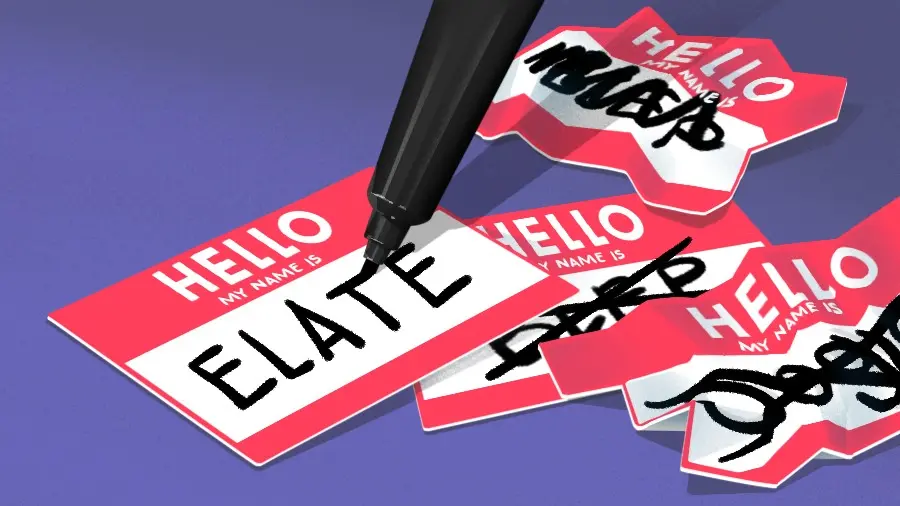
Startup naming has always been a high-stakes psychological game. For founders, a company’s moniker is the ultimate first impression—a linguistic anchor meant to convey vision, attract venture capital, and spark consumer curiosity. Yet, the philosophy guiding how startups choose their names is deeply cyclical.
Over the past two decades, the venture capital ecosystem has swung wildly between distinct naming paradigms. We have lived through eras dominated by silly monikers, hyper-literal compound words, creative misspellings (the ubiquitous dropping of vowels), and hyper-simplistic descriptors designed to telegraph a business model instantly.
Today, the pendulum has settled somewhere in the middle, albeit heavily influenced by the seismic disruption of the artificial intelligence boom. According to recent Crunchbase data analyzing startups founded over the past three years, heavily funded companies are increasingly opting for names that are distinctive yet purposefully vague. In an era where AI evolution moves at breakneck speed and a startup’s original business model may look entirely different in eighteen months, founders need semantic breathing room. They are deliberately selecting names that can survive inevitable pivots.
Simultaneously, branding experts point to a mounting crisis of linguistic real estate: the global trademark registry is nearly depleted. This scarcity has forced founders to look for unexpected, playful, or bizarre combinations that cut through the noise, bypass trademark minefields, and stick in the memory of investors and users alike. From industrial-era motifs to humanized first names, the contemporary startup naming playbook has evolved far beyond the simple tech tropes of yesteryear.
Detailed Chronology: The Evolution of Tech Naming Paradigms
To understand where startup naming stands today, it is essential to trace how the digital economy shaped corporate identity over successive technological waves.
The Dot-Com Era and the Birth of Creative Misspellings
In the late 1990s and early 2000s, the initial internet boom sparked a land grab for domain names. As .com addresses featuring exact dictionary words grew scarce or prohibitively expensive, founders turned to linguistic gymnastics. This period birthed the era of creative misspellings—dropping vowels (e.g., Flickr, Tumblr), adding suffixes like "-ly" or "-ify" (e.g., Bitly, Spotify), and inventing whimsical, bouncy words that sounded friendly yet carried no literal meaning.
The Hyper-Literal and Descriptive Swing
As the venture landscape matured following the 2008 financial crisis, investors and founders grew fatigued by whimsical names that required heavy explanation. A counter-trend emerged: the hyper-literal startup name. Companies adopted nomenclature that left zero room for ambiguity. If a startup delivered food, it was called "Food Delivery Co." If it scheduled meetings, it was "Meeting Scheduler." The goal was instant cognitive clarity, assuring enterprise buyers and traditional venture capitalists that the enterprise understood its own utility down to the pixel.
The AI-Driven Pivot Era
By the mid-2020s, the hyper-accelerated rollout of generative AI and deep-tech automation threw out the traditional playbook. Startups founded today rarely stay in their original lanes. A company launched as a specialized text-summarization tool might pivot three times in two years to become an enterprise workflow security agent or a foundational robotics platform.
Consequently, naming has shifted toward strategic ambiguity. Athol Foden, founder of the naming consultancy Brighter Naming, notes that the reality for modern tech startups is relentless reinvention. "A lot of these companies, in seven or eight years, they’ve done at least one or two major pivots," Foden observes. In an ecosystem where adaptability is the ultimate survival metric, choosing a hyper-literal name is a strategic liability. Founders now demand names that transcend specific product iterations.
Supporting Context & Metrics: The Mechanics of Modern Branding
The pressure cooker of modern venture capital has transformed naming from a creative branding exercise into a rigorous risk-mitigation strategy. Behind every newly funded AI lab or cloud infrastructure provider lies a complex matrix of trademark availability, psychological positioning, and linguistic economics.
Running Out of Words: The Trademark Crisis
The primary catalyst for unorthodox startup naming is not necessarily a stroke of avant-garde genius, but a sobering logistical reality: the dictionary is effectively full.
Bruno Benedini, co-founder of branding consultancy Taillight, points to trademark exhaustion as a defining constraint of contemporary entrepreneurship. "We’re running out of words. Everything is trademarked multiple times over," Benedini explains. "So we have to look for something unexpected."
When every clean, professional English noun or standard Greek root has already been claimed across international patent and trademark offices, founders are forced into creative corners. This scarcity paradoxically benefits the ecosystem by inspiring memorable, provocative nomenclature that stands out in a sea of sameness.
Consider Hugging Face, the AI model sharing and development platform. Long before tech giant Nvidia agreed to acquire the platform for a staggering $12.9 billion, its bizarre, deeply human, and slightly nonsensical name turned heads. While Hugging Face achieved stratospheric success through elite engineering, developer adoption, and strategic positioning, its quirky name ensured it was never confused with generic enterprise infrastructure providers like "DataFlow AI" or "ComputeCorp."
Similarly, the AI research lab Flapping Airplanes raised a remarkable $1 billion Series A funding round, capturing industry-wide attention not just for its deep-tech capabilities, but for its whimsical moniker. "It’s super playful, but you remember it, and you have this visual," Benedini notes. More importantly, it is a name that legal counsel can comfortably clear without running into pre-existing trademark squatters.
The Industrial and Foundational Aesthetic
Paradoxically, alongside playful absurdity, another dominant trend has emerged: the language of heavy industry and physical construction.
The AI boom is frequently framed as a foundational industrial revolution—the laying down of bedrock digital infrastructure that will electrify the global economy for the next century. This macroeconomic narrative has inspired a surge of corporate monikers rooted in architecture, masonry, and heavy industry.
- Databricks, a longstanding titan in data infrastructure, pioneered an aesthetic that evokes digital data as raw material within a massive, structured building project.
- The term "Foundation" has become ubiquitous among newly minted AI and biotech ventures. A scan of recent cap tables reveals an abundance of variations, including Foundation Health, Foundation Industries, Foundational Industries, Foundational, and Foundation.
- Blacksmith, a cloud infrastructure startup founded in 2024 that quickly secured over $100 million in funding, adopts the visceral, maker-oriented aesthetic of a medieval forge.
- Standard Nuclear, an advanced nuclear energy upstart, cleverly channels the Gilded Age industrial titan Standard Oil, signaling institutional scale, immense power, and long-term reliability.
- Even consumer-facing platforms are experimenting with industrial motifs. Rivet, a two-year-old dating app that utilizes volunteer human matchmakers, uses a structural fastener metaphor to describe the human act of joining two lives together.
Humanizing the Algorithm
As automation and artificial intelligence infiltrate every facet of daily life, public apprehension regarding autonomous systems remains palpable. No venture-backed founder wants to market a product that sounds like a dystopian corporate overlord.
To combat this psychological barrier, startups are aggressively humanizing their brands. While using human names is a time-tested tradition in consumer goods and enterprise software alike, the trend has exploded within the AI and robotics sectors.
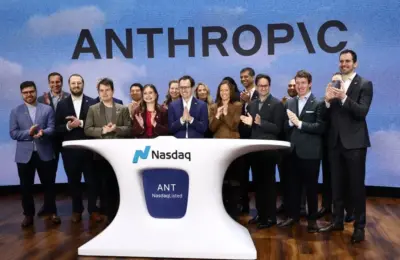
Anthropic captured massive enterprise market share and consumer mindshare with its flagship conversational AI model, Claude. Newer heavily funded AI upstarts are following suit, populating cap tables with human monikers like Theo, Henry, Clara, and Mira. Other companies, such as AI startup Humans&, take a more explicit structural approach, baking human centrality directly into their corporate identity to reassure users that technology remains subservient to human agency.
Official Statements & Industry Insights
To gain a deeper perspective on how naming strategies are shifting within top-tier venture capital circles, leading brand architects offer critical insights into the intersection of linguistics, funding, and artificial intelligence.
Athol Foden (Brighter Naming):
"Reality is a lot of these companies, in seven or eight years, they’ve done at least one or two major pivots. That makes it logical to pick a name that can still work afterward."
Foden emphasizes that as core underlying algorithms shift from natural language processing to multimodal reasoning, agentic workflows, and physical robotics, a startup tethered to a hyper-specific product name faces an expensive and confusing rebranding cycle down the line. Vague, evocative naming insulates a company against the volatility of technological progress.
Bruno Benedini (Taillight):
"We still use AI to see what it comes up with, and it’s like 99% garbage. Selecting a name is only the first step—one must also determine if it’s available for use."
Addressing the temptation for founders to outsource their corporate identity to large language models, Benedini remains skeptical of AI-generated naming agents. While generative models can spew thousands of portmanteaus and compound words in seconds, they lack the nuanced legal awareness, cultural context, and emotional resonance required to build an enduring brand. However, Benedini muses on the ultimate irony of the tech loop: "Perhaps in the future it will be AI naming AI companies to appeal to other AI agents. But hopefully there will still be a role for us to play going forward."
Future Outlook: What’s Next for Startup Branding?
As the venture capital ecosystem looks toward the remainder of the decade, startup naming will continue to reflect the tension between rapid technological acceleration and the eternal human desire for narrative connection.
- The Rise of Semantic Elasticity: Expect fewer descriptive names like "CloudInvoice" or "AIWriter." Founders will increasingly favor abstract, highly evocative words that hold their meaning across multiple industry verticals. A company starting as an AI-driven coding assistant will need a moniker robust enough to expand into enterprise cybersecurity, cloud orchestration, and autonomous hardware without requiring a multi-million-dollar rebrand.
- Aggressive Internationalization and Phonetic Simplicity: As venture funding becomes increasingly globalized from day one, startup names must transcend linguistic boundaries. Monikers that rely on complex English puns or regional idioms will lose ground to clean, phonetically straightforward words that can be easily pronounced by founders in Tokyo, London, São Paulo, and San Francisco.
- The Limits of Generative Naming: While AI tools will undoubtedly assist branding agencies in initial brainstorming phases, the legal bottlenecks of trademark exhaustion will ensure that human strategic oversight remains indispensable. Navigating international trademark law, securing clean digital real estate, and forging authentic emotional connections with human consumers cannot be fully automated.
Ultimately, a startup’s name is much more than a label slapped onto a pitch deck; it is the first chapter of its corporate history. Whether channeling the grit of heavy industry, the playfulness of an absurd mental image, or the comforting familiarity of a human first name, today’s successful founders understand that a great name is one that leaves room for the future—no matter how unpredictable that future may be.