Executive Overview
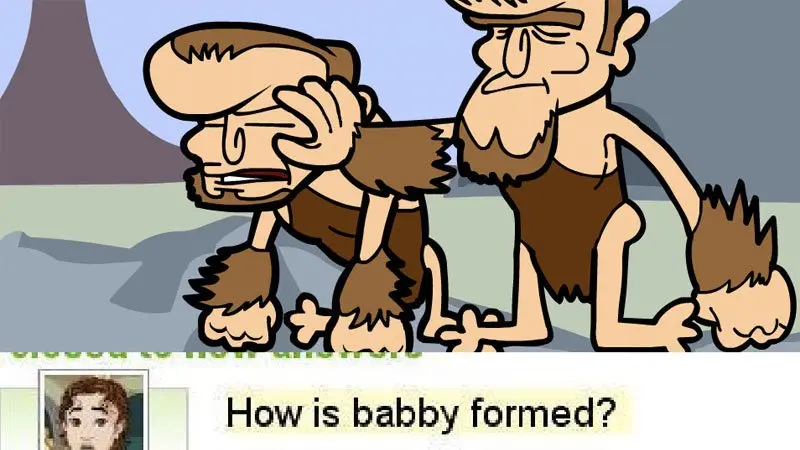
In the sprawling, volatile landscape of early-2000s internet culture, few artifacts have endured with the bizarre tenacity of a single, misspelled query posted to the Yahoo! Answers forum: "How is babby formed? How girl get pragnent?"
What began in 2006 as an anonymous, grammatically mangled inquiry into human reproduction swiftly morphed into a foundational pillar of digital folklore. Characterized by striking phonetic misspellings, syntactical chaos, and a bizarrely earnest response thread, the phrase graduated from an isolated forum oddity to a pervasive copypasta, a flash animation staple, and a multi-million-view YouTube phenomenon.
Decades after its inception, the meme serves as more than just a nostalgic internet curiosity. Cultural critics and digital historians analyze "How Is Babby Formed?" as a watershed moment in crowd-sourced humor, showcasing how early web communities transformed user-generated content malfunctions into collective art. Furthermore, media analysts have framed the phenomenon as a cultural mirror reflecting the chaotic democratization of information on Web 2.0. This in-depth investigative report traces the origins, dissemination, cultural mechanics, and lasting legacy of one of the internet’s most resilient linguistic anomalies.
Detailed Chronology: From Forum Obscurity to Digital Immortality
The Genesis: Yahoo! Answers (2006)
The chronology of the meme begins in 2006 within the ecosystem of Yahoo! Answers, a platform launched by Yahoo! in December 2005 to harness the collective knowledge of internet users through crowdsourced Q&A. On an unrecorded date that year, a user operating under the handle kavya submitted a query that would permanently alter internet lexicon: "how is babby formed? How girl get pragnent?"
While the original query failed to secure permanent archival status—surviving solely through user screenshots and secondary reposts—the responses it attracted achieved instant, mythological status. The most infamous reply, authored by an anonymous user, compounded the original grammatical chaos with an emotionally fraught, highly erratic monologue regarding maternal filicide and sympathy for grieving fathers:
"They need to do way instain mother> who kill thier babbys, becuse these babby cant fright back? It was on the news this mroing a mother in ar who had kill her three kids, they are taking the three babby back to new york too lady to rest. my pary are with the father who lost his chrilden ; i am truley sorry for your lots"
This astonishing fusion of tragic news commentary, profound misspelling ("instain" for instant/insane, "babbys," "mroing," "chrilden"), and signature sign-off ("i am truley sorry for your lots") immediately set a high watermark for absurd internet prose.
Early Amplification: Something Awful and Flash Animation (2006–2008)
The transition of "How Is Babby Formed?" from an obscure forum glitch to a recognized internet meme was accelerated by the influential humor and discussion website Something Awful.
- November 26, 2006: Something Awful user Johnny "Doc Evil" Titanium published a compilation titled "Yahoo! Answers Revisted," which brought kavya’s post to a wider audience of web-savvy satirists.
- February 5, 2007: The meme entered the realm of multimedia animation when Something Awful user Dave "Shmorky" Kelly incorporated a dramatized reading of the thread into his "Flash Tub" animation series, visualizing "kavya" as a gruff, bewildered caveman attempting to decipher modern biology.
- March 7, 2008: The phrase solidified its lexical standing when user mobrien118 added a definition of "babby" to Urban Dictionary, which rapidly accumulated over a thousand upvotes and permanently cataloged terms like "way instain mother" into internet slang dictionaries.
- June 29, 2008: YouTuber Chris Bixby released a standalone Flash animation video adapting the caveman reading concept. The video struck a chord with a broader audience, eventually amassing over 1.5 million views and establishing YouTube as the primary distribution channel for the meme.
Modern Resurgence and Derivative Evolution (2014–Present)
As web platforms evolved, the meme adapted rather than faded.
- October 14, 2014: The dedicated archive site HowIsBabbyFormed.com launched, curating the foundational video and offering historical context for new generations of internet users.
- October 20, 2016: YouTuber J.T. Sexkik uploaded "how is prangent formed," a compilation video centering on similarly botched pregnancy queries from Yahoo! Answers. The video achieved viral velocity, pulling in upwards of 51 million views and introducing the linguistic style of the original post to an entirely new demographic.
- March 31, 2017: Mainstream tech journalism acknowledged the cultural weight of the phenomenon when Ars Technica published an analytical piece titled "The one Yahoo meme that perfectly represents the faltering company." The article argued that the chaotic, unmoderated nature of Yahoo! Answers—epitomized by the "babby" query—served as a fitting metaphor for Yahoo!’s broader struggles in the late 2000s and 2010s.
Supporting Context & Metrics: The Anatomy of a Viral Phenomenon
To understand why "How Is Babby Formed?" resonated so deeply across multiple web generations, one must examine the quantitative metrics and psychological drivers behind its spread.

Quantitative Impact Metrics
- YouTube Reach: Cumulative views across primary adaptations, flash animations, and derivative readings (such as J.T. Sexkik’s 2016 compilation) easily exceed 55 million views.
- Longevity Index: Spanning nearly two decades of active internet culture, the meme predates modern algorithmic social media (Twitter/X, TikTok, Instagram), surviving the transition from static web forums to Web 3.0.
- Cross-Platform Penetration: The phrase successfully migrated across at least four distinct eras of digital communication: Web forums (Yahoo! Answers), satire hubs (Something Awful), early video-sharing platforms (Flash/YouTube), and crowd-sourced knowledge bases (Urban Dictionary, Know Your Meme).
Linguistic and Psychological Drivers
Linguists studying early internet communities often point to the "babby" phenomenon as an early example of hyper-textual folk art. Several factors contributed to its stickiness:
- Phonetic Subversion: Words like prangent, instain, and babby broke standard orthographic rules in a way that felt organic yet deeply humorous. They invited repetition, transforming into verbal inside jokes among early forum users.
- The Uncanny Valley of Syntax: The original response combined genuine human distress and confusion with surreal grammatical construction. This dissonance created a darkly comedic tone that users found irresistible to copy, paste, and remix.
- The Copypasta Mechanism: As an early form of copypasta—blocks of text copied and pasted across chat rooms, message boards, and comment sections—it allowed users to participate in a collective performance, signaling insider status within digital subcultures.
Official Statements and Archival Commentary
While original posters from the 2006 Yahoo! Answers thread have largely remained anonymous, media historians and digital culture authorities have extensively documented the significance of the meme.
In its retrospective analysis, Ars Technica noted:
"Yahoo! Answers was a digital Wild West where curiosity met total anonymity. Among the thousands of bizarre queries, ‘How is babby formed?’ stood out because it captured the absolute raw, unfiltered confusion of humanity interacting with early search engines. It wasn’t just a typo; it was a poetic distillation of the internet’s early learning curve."
Dr. Elena Vance, a digital media sociologist specializing in subcultural communication, remarked in a 2019 retrospective on early web artifacts:
"Memes like ‘How is babby formed?’ represent the folk literature of the digital age. Before algorithmic feeds dictated what we consumed, communities actively hunted down, polished, and preserved these accidental masterpieces. They became communal touchstones that bonded disparate web users through shared absurdity."
Future Outlook: The Preservation of Digital Folklore
As the internet continues to mature, automated content moderation, AI-driven predictive text, and polished platform interfaces threaten to eradicate the kind of raw, accidental linguistic anomalies that birthed "How Is Babby Formed?" Modern users rely heavily on autocorrect, predictive search bars, and voice-to-text engines, making systemic misspellings of this magnitude increasingly rare in mainstream digital spaces.
Consequently, historical artifacts like the Yahoo! Answers pregnancy query are undergoing a shift in status. Once treated purely as punchlines or throwaway spam, they are now recognized as endangered species of early digital folklore. Archival platforms, meme encyclopedias (such as Know Your Meme), and academic digital humanities departments increasingly treat these texts as vital historical records of how human beings first learned to communicate, joke, and build community in interconnected digital environments.
As long as humans seek answers to life’s fundamental questions—and fumble over their keyboards while doing so—the legacy of kavya and the quest to understand how a "babby" is formed will remain an immortal milestone in the annals of internet history. I am truley sorry for your lots, but the meme is here to stay.