Executive Overview
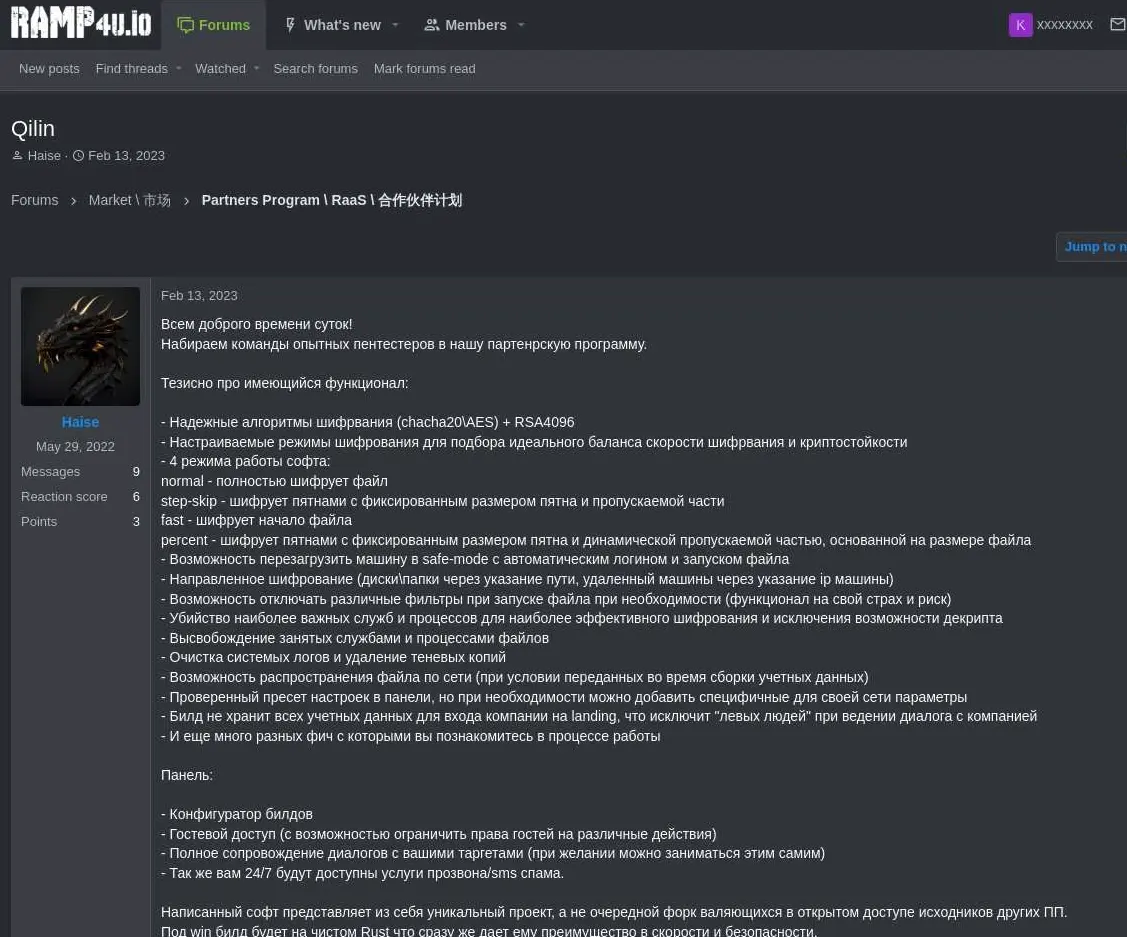
In the shadowy ecosystem of international cybercrime, operational security (OpSec) is the thin red line separating untouchable phantom operators from indicted defendants. For years, the administrator steering Qilin—currently the world’s most prolific and aggressive ransomware-as-a-service (RaaS) affiliate program—believed he had successfully obscured his digital footprint. Operating under the pseudonym "Haise," this cybercriminal kingpin presided over a sprawling network of digital extortionists responsible for crippling at least 365 victim organizations in a mere three-month window.
However, a meticulous multi-year digital paper trail, bolstered by cyber intelligence platforms, forum leaks, and a major state database breach, has shattered this illusion of anonymity. Behind the moniker of Haise lies Aleksey Mikhailovich Yakovtsev, a 36-year-old computing and information systems graduate residing in St. Petersburg, Russia.
This investigative report chronicles the forensic tracing of Yakovtsev’s digital evolution—from a low-level credit card fraudster and traffic arbitrageur a decade ago to the helm of a multi-million-dollar ransomware empire. By piecing together historical username changes, forum application records, leaked government databases, and familial data associations, cybersecurity researchers have unveiled the real-world identity of one of the cyberunderworld’s most elusive figures.
Detailed Chronology: The Evolution of a Cybercriminal
The unraveling of Qilin’s leadership underscores a fundamental axiom of digital investigations: cybercriminals can continuously adapt their aliases, but they rarely escape the compounding weight of their historical digital artifacts. Haise’s journey from minor fraudster to international ransomware titan spans nearly a decade, marked by strategic rebranding punctuated by fatal OpSec missteps.
Phase 1: The Formative Years (2018–2019)
Long before adopting the persona of a ransomware administrator, Yakovtsev cut his teeth in the murkier corners of Russian-language cybercrime forums. Cyber intelligence platforms, including Intel 471 and Flashpoint, trace his early activities back to 2018. During this period, he operated primarily as a novice arbitrageur, dabbling in credit card fraud, purchasing compromised data, and trafficking in stolen Facebook logs and Google Ads accounts. These assets were heavily leveraged to fuel fraudulent advertising networks and illicit gambling schemes.
Operating under early monikers, Yakovtsev established accounts across legacy Russian cybercrime forums such as Darkmarket, Verified, and Zloy. To manage these accounts, he consistently utilized a foundational email address: [email protected]. Security analysts note that this early phase was characterized by high-volume, low-sophistication transactional crime—a far cry from the complex, high-stakes world of enterprise-level network encryption.
Phase 2: Professionalization and the "Rjun" Era (2020)
By 2020, Yakovtsev’s technical acumen and operational reach had expanded significantly. Operating under the handle "Rjun," he entrenched himself deeper into the Russian cyberunderworld, gaining prominence on high-profile forums like Exploit and XSS.
During this timeframe, Rjun’s operations scaled from simple log trading to the orchestration of complex botnet infrastructures, malware distribution networks, and payment systems. Crucially, it was during this era that Rjun shared his primary Telegram account handle—Alexbigboss44—across multiple forum posts and private chats. This single cross-platform linkage would ultimately become the critical anchor point connecting his past criminal identities to his future enterprise.
Phase 3: The Birth of Qilin and the "Haise" Rebrand (2022)
By mid-2022, the threat landscape shifted dramatically, driven by law enforcement crackdowns and changing geopolitical dynamics. Recognizing the lucrative potential of targeted enterprise extortion, Yakovtsev transitioned into the ransomware ecosystem, ultimately helping to launch Qilin in September 2022.

Anticipating scrutiny, Yakovtsev executed a classic OpSec maneuver: he dropped his older monikers and adopted the handle "Haise." Cybercriminals frequently cycle through aliases to sever ties with historical accounts that may have compromised real-world information.
However, operational necessity often undermines this isolation. In June 2022, while attempting to secure an invitation to RAMP—an elite, closely guarded Russian cybercrime forum established specifically as a sanctuary for ransomware affiliates—Haise was forced to verify his pedigree. Reviewing historical direct messages from the forum (which was later seized by the FBI in January 2026), intelligence analysts discovered that the RAMP administrator approved Haise’s application by explicitly acknowledging his continuity with the Telegram username Alexbigboss44.
With that single administrative record, the bridge between Rjun and Haise was permanently established.
Supporting Context & Metrics: Qilin’s Operational Model and Threat Landscape
To understand the gravity of Yakovtsev’s identification, one must examine the operational scale of Qilin as an enterprise. According to a comprehensive third-quarter threat intelligence report published by cybersecurity firm NCC Group, Qilin has cemented its status as the most industrious ransomware-as-a-service gang operating globally.
The RaaS Business Model
Qilin’s market dominance is fueled by an aggressive incentive structure designed to attract top-tier affiliate hackers. The core administrative team provides the ransomware payload, negotiation frameworks, and infrastructure, while affiliates infiltrate target corporate networks. In exchange for their operational efforts, affiliates retain a staggering 80 percent or more of any extortion demands paid by victims.
Unlike many Russian-speaking cybercrime syndicates that enforce strict linguistic or geographic boundaries, Qilin actively courts English-speaking affiliates. Haise himself has openly boasted via Telegram about collaborating with elite, highly disruptive hacking factions, including Scattered Spider and affiliates associated with the RansomHub ecosystem.
The Double Extortion Tactic
Qilin practitioners rely heavily on the "double extortion" model. Rather than merely encrypting a victim’s servers and demanding a ransom for the decryption keys, affiliates systematically exfiltrate gigabytes of sensitive proprietary data—ranging from intellectual property and financial records to employee personally identifiable information (PII). If a victim refuses to negotiate, Qilin publishes the stolen data on public leak sites, applying maximum regulatory, reputational, and operational pressure.
De-anonymizing the Mastermind: The Digital Forensics Trail
The convergence of advanced artificial intelligence-driven analytics, historic data breaches, and open-source intelligence ultimately brought Yakovtsev out of the shadows. The breakthrough came via IntelHawk, an AI-driven platform specializing in the de-anonymization of threat actors through stylometry, behavioral analysis, and historical username correlation.
Connecting Usernames to Real-World Identities
Following the initial linkage between Haise, Alexbigboss44, and Rjun, investigators mapped the associated digital footprints backward through institutional leaks:

- The Forum Email: Intel 471 records confirmed that Rjun registered on forums like Darkmarket, Verified, and Zloy using the email address
[email protected]. - Password Reuse: Identity threat protection firm Spycloud identified that this specific email address had utilized the weak password
Rjun132in past credential breaches. - The State Database Breach: Querying this email address against breach tracking repositories revealed its presence within records originating from Gosuslugi.ru—the official digital portal for state and municipal services in the Russian Federation. A massive breach of the platform in late 2025 exposed upwards of 20 million citizen records.
- The Legal Identity: The leaked Gosuslugi data directly linked
[email protected]to Aleksey Mikhailovich Yakovtsev, born August 18, 1990, residing in St. Petersburg.
Corroborating the Profile
Independent verification efforts by other intelligence outfits and open-source investigators—most notably the anonymous OSINT tracker GangExposed—corroborated these findings using alternative data pivots:
- Telegram Metadata: Flashpoint identified that the Telegram account tied to Haise (User ID
118329521) had logged over 5,000 messages since 2018. Constella Intelligence cross-referenced this user ID, linking it to the Russian mobile number+79602347275. - Familial Proxies: IntelHawk established that the phone number
+79602347275officially belongs to Yakovtsev’s biological sister. Investigation into his registration habits revealed that Aleksey frequently utilized his sister’s email addresses ([email protected]and[email protected]) to set up accounts across various web services. - Educational Background: Records retrieved from Russia’s federal education oversight agency, Rosobrnadzor, indicate that Yakovtsev completed his early grade school education in Murmansk before ultimately earning a master’s degree in computing and information systems—providing him with the precise technical foundation required to orchestrate sophisticated malware campaigns.
- Travel and Movement: Russian airline passenger manifest databases, exposed in past domestic travel agency data breaches, place Aleksey Yakovtsev on multiple flights between St. Petersburg and Murmansk between 2013 and 2014. More recent transit logs indicate that while international travel has remained off his itinerary, he frequently commutes between St. Petersburg and Sochi, Russia’s premier Black Sea resort city.
Official Statements and Industry Impact
As of the publication of this report, attempts by cybersecurity journalists and independent researchers to reach Aleksey Yakovtsev via his known email addresses and phone numbers have met with silence.
The exposure of Qilin’s administrator highlights a growing vulnerability among high-ranking Russian cybercriminals. While shielded by geopolitical safe havens that historically prevent extradition to Western law enforcement agencies, these individuals are increasingly vulnerable to domestic data leaks, platform seizures, and advanced AI-driven de-anonymization techniques.
Major cybersecurity providers whose threat intelligence platforms contributed to this de-anonymization—including Intel 471, Flashpoint, Spycloud, and IntelHawk—emphasize that the exposure of figures like Yakovtsev severely curtails their freedom of movement, disrupts affiliate trust, and places immense pressure on the operational continuity of underground enterprises.
Future Outlook
The unmasking of Aleksey Yakovtsev as the mastermind behind the Qilin ransomware syndicate marks a watershed moment in the ongoing battle against ransomware-as-a-service operations. It demonstrates that despite multi-layered aliases, compartmentalized communication channels, and years of calculated obfuscation, the cumulative footprint of digital life eventually betrays even the most disciplined operators.
Moving forward, the identification of Haise as a St. Petersburg native with a background in information systems will have immediate repercussions within the cybercrime underground:
- Affiliate Flight: Affiliates operating within the Qilin framework may experience a crisis of confidence, fearing that law enforcement agencies or competing syndicates possess deeper intelligence regarding the group’s infrastructure and financial flows.
- Operational Paralysis: To evade potential domestic scrutiny or retaliatory foreign intelligence operations, Yakovtsev will likely be forced to submerge further, pause administrative duties, or restructure Qilin under entirely new leadership—disrupting the momentum that made them the world’s most active RaaS provider in late 2026.
- Heightened International Scrutiny: With a verified legal identity, date of birth, and known residential nodes in St. Petersburg and Sochi, Yakovtsev joins an increasingly populated roster of identified Russian cybercriminals whose names are tied to international law enforcement watchlists and sanction databases.
While Yakovtsev currently remains insulated within the borders of the Russian Federation, the walls of digital anonymity have officially crumbled. The case of Qilin serves as an enduring reminder to the cybercriminal underworld: in an era of big data analytics and AI-assisted attribution, absolute operational security is a persistent myth.