Executive Overview
In an era dominated by synthetic media, algorithmic curation, and the creeping omnipresence of generative artificial intelligence, the definition of visual truth has fractured. Into this digital uncertainty steps legendary British photographer and Dazed co-founder Rankin, armed with a deeply tactile antidote: his new photobook and global exhibition, Contact.
Synthesizing never-before-seen contact sheets pulled directly from 14 wall-to-wall filing cabinets of deep archival storage, Contact transports viewers back to the raw, unvarnished golden age of 1990s and early-2000s magazine photography. Featuring iconic, unretouched shoots of cultural titans—including Madonna, Eminem, Björk, Mick Jagger, and Thom Yorke—the project serves dual purposes. It is both a historical time capsule of a more collaborative, human-centric creative industry and an urgent, philosophical manifesto against the erosion of authentic human connection.
Spurred by a moment of existential crisis prompted by his own experimentations with generative AI, Rankin has curated a collection that acts as physical "proof" in a world sliding into a post-truth reality. Far from a mere nostalgic retrospective, Contact is a rallying cry. It challenges contemporary creators to escape the algorithm, reject hyper-curated self-surveillance, and reclaim the messy, collaborative magic of being in a room with another human being to make art.
Detailed Chronology: From AI Rage to Archival Revelation
The genesis of Contact is rooted in a moment of profound artistic disruption that occurred in May 2026. As generative AI began to fundamentally alter the landscape of visual culture, Rankin sat down to write an essay titled The Absurdity. The text grappled with an unthinkable proposition for a master of traditional portraiture: working alongside generative algorithms to understand their implications for the medium.
Reflecting on the writing process, Rankin describes the experience as akin to navigating a personal bereavement. “It was almost like going through a death,” he recalls. “I was trying to understand what the technology means for the medium I love so much. I was so fucking angry, but I realised the answer was always right there, staring at me: what I love about photography is getting in a room with someone and making something together. That’s what my work has always been.”
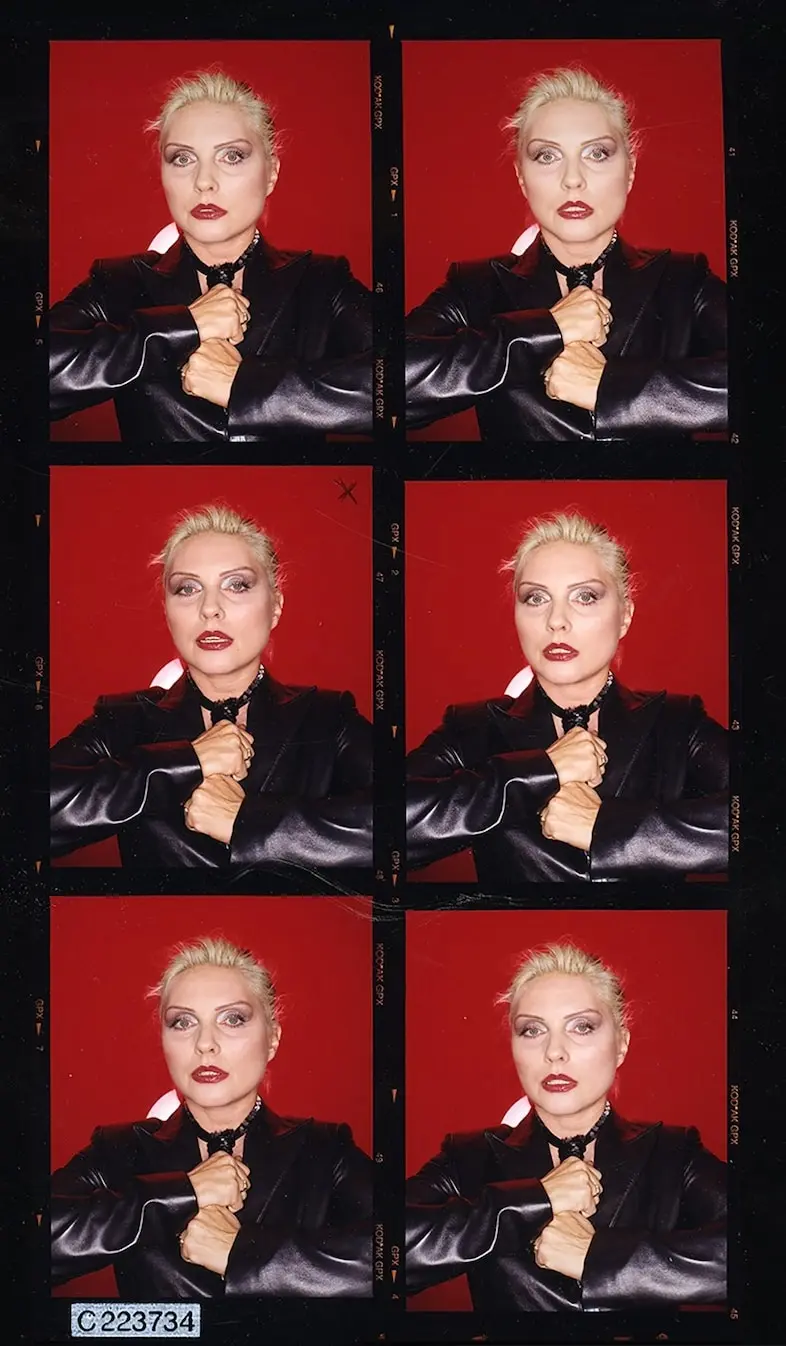
This epiphany served as the catalyst for Contact. Driven by a desire to reconnect with the physical roots of his practice—having abandoned film photography two decades prior due to industry pressures favoring digital immediacy—Rankin dove headfirst into his expansive archives. Hidden within small, unopened envelopes tucked away inside 14 floor-to-ceiling filing cabinets were decades-old contact sheets: the raw, sequential previews of film rolls that recorded every fleeting micro-expression, failed experiment, and unguarded moment before a final image was chosen.

Unsealing these envelopes opened a portal to a bygone era of image-making. Among the forgotten frames were unpublished shots of turn-of-the-millennium icons. Yet, more than a historical excavation, the review of these contact sheets yielded a profound personal revelation for the photographer.
“I never thought I had a style as a photographer,” Rankin admits. “But, looking at these shots, a lot of them are of people touching the lens. I used to tell them, ‘Imagine you’re looking at a window into the future’. I realised, ‘Oh shit, that’s my style!’ What’s going on with AI sort of saved me in a way; it reminded me that I want to take more pictures and connect with people again.”
Supporting Context & Metrics: The 90s Counterculture and the Mechanics of Film
To understand the weight of Contact, one must understand the environment that birthed it. The 1990s counterculture—anchored in the UK by the explosive rise of Dazed & Confused—was defined by a spirit of raw rebellion. Alongside co-founder Jefferson Hack, Rankin helped build a publication that operated as a cultural megaphone for a generation chafing under right-wing political constraints.
It was an era supercharged by subcultural shifts, underground music scenes, and the communal euphoria of the ecstasy-fueled club landscape. It fostered a distinct idealism. Rankin vividly recalls booking Thom Yorke and Jonny Greenwood of Radiohead to perform at the magazine’s fifth birthday party, noting with reverence, “They were like Gods to us.”
This anti-establishment ethos was mirrored by the magazine’s original creative vanguard—luminaries like Katie Grand, Katy England, Alister Mackie, and Phil Poynter—who collective-channeled an outsider energy into high fashion and portraiture. “We felt like we were part of the resistance,” Rankin sums up. “We were resisting Thatcher. We were resisting the right-wing. We need to bring that back.”
The Tangible Proof of the Contact Sheet
In the analog darkroom era, the contact sheet was the ultimate arbiter of truth. Before Photoshop layers, digital masking, and neural filters, the contact sheet recorded every second of an interaction between photographer and subject. It captured the discarded frames marked with rejection, the blurred experiments, and the accidental brilliance that occurs when human beings collaborate in real time.

This tactile reality stands in stark contrast to contemporary practices. As Rankin points out, the marks found on his archival sheets—such as the handwritten red crosses left by Björk on her 1994 shoot—represent a completely different era of editorial integrity.
“These photos are really authentic because there’s no retouching, there’s no post-production,” Rankin explains, noting that those bold red markings were likely made by Björk herself as she weeded through proofs to find the most expressive, unpolished frames. “Back then, it was always a big news story when a magazine retouched an image. It was a big issue. Now, people are doing it to themselves; the industry is full of people trying to control their image.”
Official Statements & Anecdotes from the Archives
Contact is rich with oral history, preserving the spontaneous interactions between Rankin and some of the 20th century’s most formidable cultural figures. The book’s pages act as a stage where iconic personalities shed their media-trained personas in favor of genuine, unscripted collaboration.
Mick Jagger: “Be More Mick”
During a high-profile shoot with Rolling Stones frontman Mick Jagger, Rankin attempted to direct the rock legend by offering a classic photographer’s prompt: “Be more Mick.”
Jagger’s response subverted the dynamic entirely. Refusing to perform on command, the singer wrestled the camera out of Rankin’s hands and began snapping photographs of the photographer himself, mimicking Rankin’s own directions in a playful role-reversal that captured the anarchic humor underpinning their session.
Björk: The 12-Hour Collaborative Marathon
Rankin’s first encounter with Icelandic polymath Björk similarly rewrote the rules of editorial image-making. When presented with the photographer’s initial concept—which drew heavy reference from an existing piece of visual art—Björk firmly rejected it.

“She doesn’t realise how much she influenced me that day,” Rankin reminisces. “She said, ‘Don’t do that, do what you’re doing.’ It ended up being one of those amazing shoots where we just did shot after shot—it was a good 12-hour day. She’s a very kind and beautiful human being.”
Future Outlook: Escaping the Algorithm in a Post-Truth World
The dialogue sparked by Contact inevitably stretches beyond the nostalgia of the 1990s, landing squarely on the shoulders of the contemporary generation. Gen Z and younger creatives have been raised in an optimized, hyper-connected digital ecosystem where authenticity is routinely commodified, and genuine human optimism often feels like a legacy handed down by exhausted predecessors.
When confronted with this generational chasm, Rankin is quick to deflect blame away from the youth. “I feel terrible because it’s not your fault, it’s not,” he responds. “I feel like sometimes some of your generation blame our generation, but, actually, it’s fucking Mark Zuckerberg, Elon Musk, and Sam Altman who have no accountability because they don’t have to. We’ve let them get away with murder.”
As society accelerates down a path that increasingly substitutes genuine human friction with frictionless synthetic technologies, projects like Contact offer a vital point of resistance. They cannot single-handedly alter the trajectory of global tech conglomerates, but they serve as essential proof-of-life documents. They remind us of what was—and what can still be—when creators step out from behind the screen and into the same room.
Exhibition and Publication Details
For those eager to experience the tactile reality of Rankin’s archive firsthand, Contact is available for pre-order via Rankin’s official platforms.
The launch of the photobook is paired with two major international exhibitions:
- London, UK: Annroy Studio, Kentish Town (December 2, 2026 – February 2, 2027)
- Stockholm, Sweden: House of Photography (December 3, 2026 – February 2, 2027)