Executive Overview
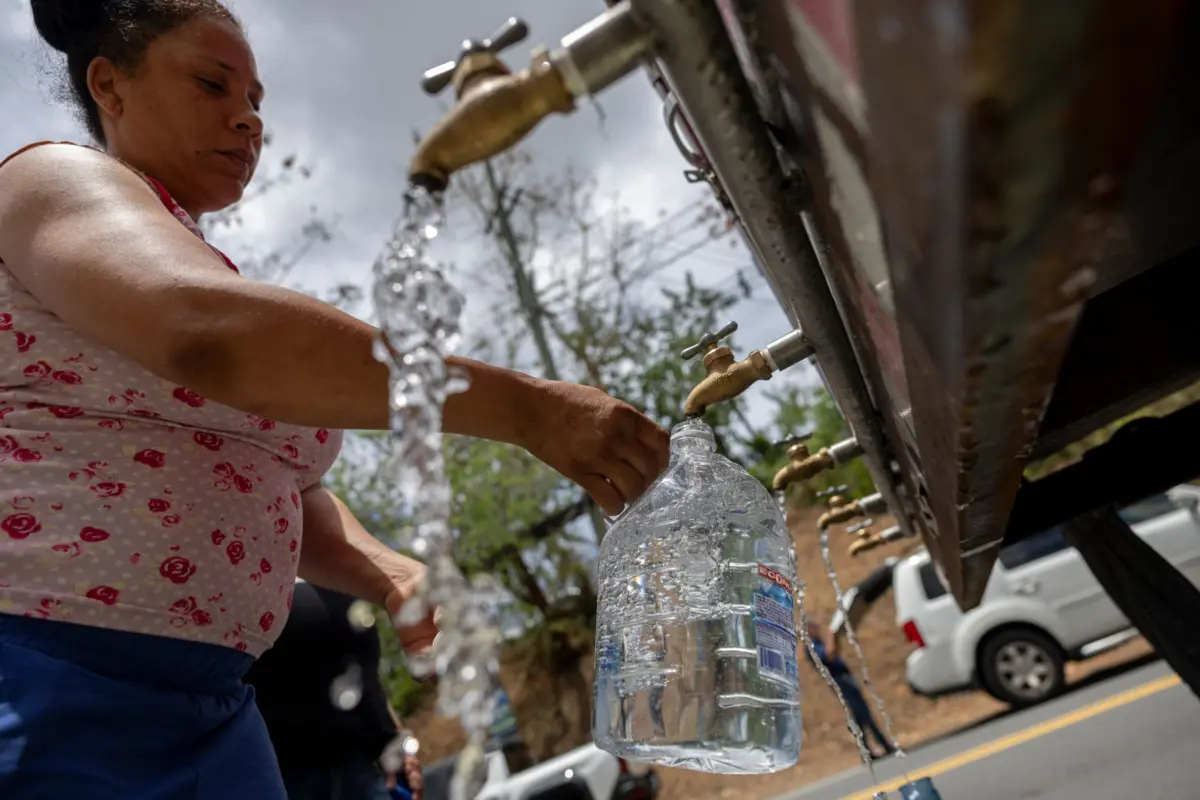
Puerto Rico is currently mired in a severe, historic water crisis. Following the driest July on record, the island territory has been subjected to aggressive water rationing, leaving hundreds of thousands of households grappling with intermittent service or complete dry taps. While a severe dry spell driven by shifting climatic patterns is a primary catalyst, environmental experts, architects, and local advocates agree that the island’s emergency is fundamentally compounded by a deeper, man-made failure: chronic government mismanagement and decaying centralized infrastructure.
Despite receiving between 30 and 169 inches of annual precipitation, the territory fails to capture this abundant, free natural resource. Unlike neighboring Caribbean islands such as the US Virgin Islands and Barbados—where stringent building codes mandate cisterns and rainwater harvesting systems—Puerto Rico lacks the decentralized infrastructure necessary to weather climate-induced dry spells. The Puerto Rico Aqueduct and Sewer Authority (PRASA) loses an astonishing 60 percent of its treated drinking water to cracked pipes and antiquated distribution networks before it ever reaches a consumer’s home.
As climate change accelerates, amplifying the severity of both droughts and tropical storms, grassroots organizations and select policymakers are demanding an urgent pivot. By embracing decentralized rainwater collection, Puerto Rico could capture tens of billions of gallons of water annually, easing the burden on a failing grid and providing immediate relief to vulnerable residents. Yet, legislative inaction, systemic enforcement failures, and a historical over-reliance on centralized freshwater systems continue to stand in the way of a resilient water future.
Detailed Chronology of the Crisis
The unfolding water emergency in Puerto Rico is not an isolated event; it represents the boiling point of a long-standing infrastructure crisis that has steadily eroded the quality of life for residents across the territory.
- Early Indicators and Chronic Disruption: Long before the current emergency dominated headlines, structural failures plagued the island’s water network. For years, numerous families across rural and urban municipalities have routinely gone without consistent, reliable running water for stretches exceeding 100 days.
- The Historic July Dry Spell: Precipitation levels plummeted to historic lows during July, marking the driest month ever recorded in Puerto Rico. This meteorological shock depleted local reservoirs, setting the stage for an acute water shortage that quickly overwhelmed the island’s fragile distribution network.
- The Superaqueduct Rupture: The crisis was violently accelerated by a series of major structural failures along the 72-inch Superaqueduct—a critical industrial artery designed to supply major metropolitan centers along Puerto Rico’s northern coast. These catastrophic ruptures crippled the flow of treated water, plunging the region into an immediate emergency.
- Emergency Rationing Orders: In response to the rapidly depleting reserves, newly appointed Governor Jenniffer González ordered municipal governments in the island’s northeast to implement rolling shutoffs. Under these mandates, water service is systematically cut off for two days at a time, severely restricting access for approximately 180,000 households and upending daily life, commerce, and sanitation.
- June Legislative Push Fails: Recognizing the mounting vulnerability, at-large House Representative José Pérez Cordero introduced a resolution in June demanding that the Puerto Rican Natural Resources Committee conduct a formal feasibility study on widespread rainwater harvesting. Modeled after successful Caribbean frameworks, the proposal stalled immediately, joining a growing graveyard of environmental reform initiatives as water insecurity intensified.
- The Unenforced Public Buildings Mandate: The legislative deadlock follows a familiar pattern. Despite a 2024 law explicitly mandating that all public agencies install rainwater collection systems on government-owned buildings, the legislation has been entirely ignored. Government agencies have failed to comply, and executive enforcement has been non-existent, highlighting a pervasive lack of political will to prioritize climate resilience.
Supporting Context & Metrics: Infrastructure, Waste, and Potential
To understand why Puerto Rico is running dry amid torrential downpours, one must examine the staggering metrics governing the island’s water economy, structural losses, and alternative capture potentials.
The 60 Percent Loss Margin
The single most damning indictment of Puerto Rico’s centralized water system lies in its distribution efficiency. The Puerto Rico Aqueduct and Sewer Authority loses approximately 60 percent of all drinking water before it reaches a customer’s tap. This catastrophic loss is attributed to decades of deferred maintenance, aging pipelines, and unaddressed leaks in the primary and secondary distribution grids. Water that is treated at great public expense literally leaks back into the earth, rendering the centralized system structurally incapable of meeting basic societal needs during a crisis.
The Mathematical Potential of Rooftop Catchment
Environmental architect Fernando Abruña, a partner at the local architecture firm Abruña & Musgrave and a fellow with the American Institute of Architects, has long advocated for decentralized water strategies. Abruña points out that Puerto Rico’s rooftops represent one of the largest, entirely unused water reservoirs in the Caribbean.
- Household Consumption: The average Puerto Rican resident consumes roughly 62 gallons of water per day, totaling slightly more than 72 billion gallons of residential water usage annually.
- Harvesting Yield: Abruña calculates that if just 1 million households on the island installed basic rainwater collection technology, the territory could successfully gather 30 billion gallons of water a year—offsetting a massive portion of residential demand and drastically reducing the strain on municipal reservoirs.
Cost and Complexity of Decentralized Units
While industrial systems require heavy capital investment to cool power plants and manage commercial runoff, residential systems are remarkably straightforward. Gravity-fed systems rely on rooftop gutters that divert rainwater directly into sealed canisters connected to indoor non-potable lines, such as toilet flushing systems or outdoor spigots.
Local environmental nonprofits, such as Plenitud Puerto Rico operating out of the western mountainous municipality of Las Marías, have stepped in to fill the institutional void. Since 2010, the organization has privately funded, donated, and installed 73 rainwater harvesting systems for vulnerable neighbors. According to executive co-director Owen Ingley:
- Small, Simple Units: Cost between $500 and $2,000, providing immediate non-potable relief for single households.
- Advanced Units: Cost up to $5,000, incorporating electric pumps and enhanced filtration for more complex household applications.
- Maintenance Realities: Units require ongoing monitoring for water quality and structural integrity, particularly given the threat of severe tropical storms that can damage exposed piping and gutter arrays.
Official Statements and Expert Perspectives
As the social and economic costs of the water crisis mount, experts from legal, academic, and political spheres are sharply criticizing governmental inertia while championing decentralized alternatives.
Ruth Santiago, a prominent environmental lawyer associated with the Comité Diálogo Ambiental (Environmental Dialogue Committee), argues that framing the disaster purely as a drought is a misleading deflection of government responsibility.
"Even with the climate crisis and these droughts, we still have abundant water," Santiago asserts, gesturing toward the sky as a tropical storm abruptly opens up mid-conversation. "We could be harvesting rainwater right now."
Santiago emphasizes that while repairing and updating the island’s fractured distribution system remains a non-negotiable long-term priority, rainwater harvesting offers an immediate, cost-effective, and highly scalable safety net that can be deployed independently of centralized grid repairs.
Dr. Farah Nibbs, an assistant professor in the Department of Emergency and Disaster Health Systems at the University of Maryland Baltimore County, underscores the regional necessity of this technology.
"There is nothing that can help the Caribbean region as quickly and as reliably as rainwater harvesting," Nibbs states.
She argues that regional governments must institutionalize the practice by treating captured rainwater "as part of the national water supply." Furthermore, Nibbs contends that governments have an ethical and logistical duty to subsidize these installations to prevent onerous economic burdens from falling squarely on low-income and vulnerable households—a stark contrast to Puerto Rico’s current policy of offering zero financial assistance or incentives.
From within the halls of government, frustration is mounting over the ruling class’s paralysis. Representative José Pérez Cordero candidly addresses the systemic reluctance of his own political peers:
"We are, right now, in the perfect moment to do it, because we are in the middle of a crisis. Sadly, we always wait for the reaction."
Pérez Cordero points directly to his party’s failure to enforce existing environmental legislation, noting that administrative inertia and a lack of political foresight continue to compromise public safety.
Future Outlook: Building Resilience in an Era of Climate Extremes
Looking ahead, Puerto Rico stands at a dangerous crossroads. Climate scientists project that anthropogenic warming will continue to intensify hydrological cycles across the Caribbean. For the island territory, this means future years will feature two simultaneous extremes: longer, harsher dry seasons accompanied by increasingly violent, erratic rainy seasons and tropical storms.
Rainwater harvesting is not a silver bullet. Urban centers characterized by high-density, multi-story apartment complexes face formidable structural and spatial hurdles when attempting to implement rooftop catchment systems. Furthermore, if climate disruptions shorten or destabilize the wet season entirely, reliance on precipitation alone carries inherent ecological risks.
Nevertheless, experts stress that decentralized infrastructure must become a foundational pillar of Puerto Rico’s emergency preparedness strategy. By looking to regional peers—such as the US Virgin Islands, where 90 percent of homes utilize cisterns backed by strict building codes, or Hawaii, where municipal programs actively distribute free rain barrels—Puerto Rico possesses clear, functional blueprints for reform.
To avert future catastrophes, policymakers must transition from reactive crisis management to proactive structural adaptation. By enforcing public building mandates, offering consumer subsidies for residential cisterns, and integrating decentralized catchment into the national water strategy, Puerto Rico can finally transform its abundant skies from a missed opportunity into a reliable lifeline.