Executive Overview
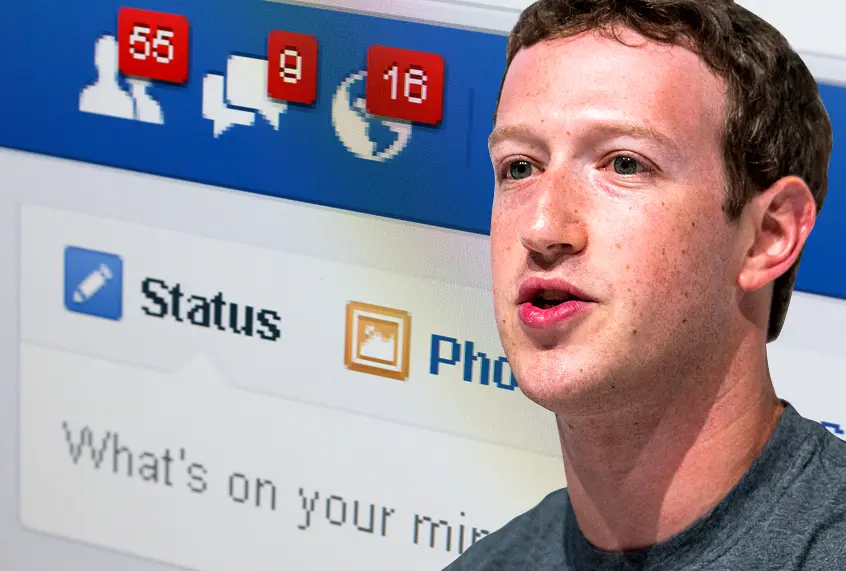
In early 2018, Facebook co-founder and Chief Executive Officer Mark Zuckerberg unveiled a sweeping initiative designed to fundamentally reshape the architecture of the world’s largest social network. Promising to "fix" the platform, Zuckerberg announced a major algorithmic overhaul centered on the News Feed—the primary interface through which billions of users consume news, personal updates, and cultural discourse. The core of this transformation was a deliberate de-prioritization of public content generated by brands, businesses, and media outlets in favor of posts from friends and family that "spark conversations and meaningful interactions."
While framed as a noble effort to improve user well-being and combat the well-documented psychological pitfalls of passive scrolling, the policy change sent shockwaves through the digital media landscape. Legitimate news organizations, which had spent years and substantial capital optimizing their operations to build massive audiences on Facebook, suddenly faced an existential threat to their referral traffic and revenue models.
Yet, a profound and dangerous paradox emerged from the restructuring: while professional journalism faced severe headwinds, purveyors of junk websites, clickbait, and politically polarized misinformation remained largely insulated. Because Facebook’s monetization model continued to welcome paid advertising without stringent editorial screening, financially lucrative fake news operations could easily adapt by purchasing visibility or hiring proxy accounts. This investigative analysis examines the mechanics of Zuckerberg’s 2018 overhaul, the immediate fallout for professional publishers, the structural immunity enjoyed by bad actors, and the profound implications of vesting a single technology monopoly with unchecked editorial power over global discourse.
Detailed Chronology: The Unfolding of the 2018 Facebook Overhaul
The transformation of the Facebook platform did not happen overnight; it was the culmination of mounting public pressure, academic disclosures, and internal soul-searching following the turbulent political events of 2016.
- January 1–5, 2018: Shortly after the New Year, Mark Zuckerberg published a personal manifesto on his official Facebook profile, declaring his annual personal challenge for 2018. He vowed to "fix" the systemic issues plaguing the social network, setting the stage for aggressive structural modifications.
- January 11, 2018: Zuckerberg formally announced the News Feed algorithm change. Public content from brands, nonprofits, and media organizations was officially relegated to a lower tier of visibility. In the same announcement, Zuckerberg cited academic research linking passive social media consumption to depression and feelings of wasted time, framing the pivot toward peer-to-peer interactions as a public health imperative. He explicitly acknowledged that overall time spent on the platform would likely decline in the short term.
- January 12–13, 2018: High-ranking Facebook executives scrambled to clarify the policy to the media and publishing partners. Adam Mosseri, Vice President of News Feed, explained in a Wired interview that published videos—inherently passive media—would be demoted, and posts generating long-form comment threads would be favored over simple "likes." Concurrently, Campbell Brown, Facebook’s head of news partnerships, held briefing sessions with major publishers, offering vague reassurances while admitting the company lacked a definitive strategy for how traditional outlets would survive the transition.
- January 15–19, 2018: Digital media outlets reacted with profound alarm. Industry publications like Digiday and Business Insider documented widespread publisher demoralization, with executives questioning the viability of building businesses reliant on third-party referral algorithms. Critics increasingly pointed out that while organic publisher reach was evaporating, paid advertising channels remained wide open.
- January 19, 2018: Pressured by ongoing criticism regarding misinformation, Zuckerberg issued a follow-up announcement acknowledging the prevalence of "sensationalism, misinformation and polarization." To address this without appointing Facebook as an arbiter of truth, he proposed a novel crowdsourcing initiative: a community surveying system where users would determine the credibility of news sources based on brand familiarity and broad societal trust.
Supporting Context & Metrics: The Digital Ecosystem and Publisher Vulnerability
To understand the gravity of Facebook’s 2018 algorithm shift, one must examine the platform’s towering dominance in the global information ecosystem. At the time of the announcement, statistics compiled by the Pew Research Center indicated that approximately 47 percent of all American adults relied on Facebook as a primary news source, with half of those users operating within a single-platform news diet. This created a hyper-centralized information bottleneck where a single line of code could alter the political and economic reality for thousands of independent and legacy media organizations.
The financial fallout for legitimate publishers was immediate and severe. For over a decade, digital media companies had invested heavily in pivoting their operations to satisfy Facebook’s shifting algorithmic whims—shifting from text to native video, and back again—only to watch their organic distribution vanish overnight. Anonymous interviews published across trade journals revealed a pervasive sense of exhaustion among media executives who had poured millions into platform-dependent distribution strategies, only to see their return on investment evaporate.
Simultaneously, the political dimensions of the information crisis came into sharp focus. Research from institutions like Harvard University’s Media Cloud project demonstrated that during the 2016 U.S. Presidential Election, low-quality, hyper-partisan, and fabricated "fake news" sites wielded greater influence among conservative audiences on Facebook than legacy institutions like Fox News.
Zuckerberg’s proposed solution—surveying users to rank news credibility—immediately ran into the wall of media polarization. Data from the Pew Research Center highlighted a profound asymmetry in media literacy and brand recognition:
- While mainstream outlets like Fox News enjoyed broad name recognition (despite high polarization), many conservative alternative outlets and aggregators operated entirely outside the general public’s awareness.
- A 2014 Pew poll revealed that only 45 percent of respondents recognized prominent prime-time anchor Sean Hannity, while just 35 percent knew the Drudge Report and a mere 15 percent recognized Breitbart News.
By attempting to outsource news evaluation to everyday users via popularity and familiarity surveys, Facebook risked penalizing niche or independent investigative outlets—particularly on the right—while simultaneously creating a fertile breeding ground for sensationalized content that appealed to localized, insular audience bubbles.
Official Statements and Corporate Rhetoric
The public relations strategy deployed by Facebook executives during the crisis relied heavily on balancing corporate social responsibility with calculated omissions regarding revenue protection.
Mark Zuckerberg framed the pivot strictly in terms of human psychology and community well-being:
"We feel a responsibility to make sure our services aren’t just fun to use, but also good for people’s well-being… By making these changes, I expect the time people spend on Facebook and some measures of engagement will go down. But I also expect the time you do spend on Facebook will be more valuable. And if we do the right thing, I believe that will be good for our community and our business over the long term too."
This high-minded rhetoric was met with widespread skepticism by industry veterans. Critics argued that the exemption of paid advertisements from the algorithmic downgrade exposed the true financial motives of the platform. A digital publishing executive, speaking anonymously out of fear of retribution from the social media giant, noted:
"The goal of Facebook for a very long time has been to keep users on its pages as long as humanly possible. These changes are really about forcing publishers to pony up."
Campbell Brown, heading news partnerships, acknowledged the turbulence during closed-door publisher briefings, noting that the monumental structural shift was still being figured out on the fly. Meanwhile, David Chavern, CEO of the News Media Alliance, highlighted the immense structural leverage held by the technology conglomerate:
"This change does highlight, however, the power of Facebook to decide (and alter) the kinds of information that people are exposed to. It is an incredible power that carries incredible responsibilities."
Future Outlook: The Unresolved Crisis of Misinformation
As the dust settled on the 2018 policy announcements, industry analysts and media watchdogs converged on a chilling conclusion: while legitimate, resource-intensive newsrooms would struggle to maintain visibility without paying exorbitant advertising fees, fake news sites were structurally positioned to survive and thrive.
Unlike professional journalistic enterprises burdened by high overhead, investigative reporting costs, and legal compliance teams, junk news operations often operated with minimal staffing and extraordinary profit margins. Generating millions of dollars a year through programmatic ad networks and sensationalized clickbait, these bad actors could easily afford to divert a fraction of their earnings toward Facebook’s unrestricted advertising and paid-boost mechanisms.
Furthermore, deceptive networks quickly learned to bypass organic algorithm demotions by employing proxy networks—such as coordinated clusters of authentic-seeming user profiles—to inject polarizing content directly into interpersonal peer feeds, perfectly mimicking the "meaningful interactions" Zuckerberg claimed to prioritize.
Ultimately, Facebook’s 2018 News Feed overhaul exposed the profound limitations of attempting to cure systemic political polarization and corporate addiction to engagement through superficial algorithmic tweaks. By prioritizing user emotional well-being over editorial accountability while leaving core monetization avenues open to bad actors, Facebook inadvertently reinforced an information ecosystem where sensationalism flourished, legitimate journalism starved, and the platform retained absolute, unquestioned sovereignty over the global flow of information.