Executive Overview
The landscape of digital communication is undergoing a seismic, irreversible shift. In what many industry analysts are describing as a radical monetization experiment, Twitter—now operating under the corporate umbrella of X Corp.—is systematically dismantling the traditional verification infrastructure that defined social media credibility for over a decade. Under the directive of owner Elon Musk, the platform is preparing to sunset its legacy verified program, stripping the iconic blue checkmarks from journalists, politicians, public figures, and institutions unless they enroll in the monthly subscription tier known as Twitter Blue.
This impending purge, slated to take full effect on April 1, represents far more than a simple housekeeping update or a corporate revenue-generation strategy. It is a fundamental redesign of how information flows, is prioritized, and is consumed on one of the world’s most influential real-time communication networks. Coupled with concurrent product developments—such as allowing paying subscribers to obscure their own checkmarks and restricting algorithmic amplification primarily to paid accounts—Twitter is actively engineering a new ecosystem. In this new digital reality, the algorithmic "For You" feed threatens to become a pay-to-play marketplace dominated by self-promoters, opportunistic marketers, and corporate brands bypassing traditional advertising funnels.
Conversely, unpaid users are increasingly being funneled back into a localized, chronological "Following" feed, effectively reverting to the platform’s original architecture. This report provides an exhaustive investigative analysis of these platform-wide changes, examining the chronological rollout, the strategic motivations behind the paywall, the broader implications for brands and organic creators, the official stances of affected entities, and the long-term outlook for digital discourse in a commercialized public square.
Detailed Chronology of the Twitter Blue Transition
To understand the magnitude of the current policy shift, one must trace the deliberate, often chaotic dismantling of Twitter’s legacy trust-and-safety mechanisms. The transition from an earned status symbol to a commodified feature has been marked by iterative policy changes, technical rollouts, and rapid course corrections.
The Genesis of the Paid Checkmark (Late 2022)
Following Elon Musk’s acquisition of Twitter in October 2022, the platform’s leadership immediately identified legacy verification—historically reserved for notable, authentic accounts at high risk of impersonation—as an elite "lords and peasants" system that needed democratization. In November 2022, Twitter launched the initial iteration of Twitter Blue at $8 per month (or $11 through mobile app stores), granting the blue checkmark to anyone willing to pay without verifying identity beyond phone number association and payment card validity.
The immediate aftermath was swift and chaotic. The platform experienced a wave of high-profile impersonations, where malicious actors purchased verified accounts to pose as pharmaceutical giants, defense contractors, politicians, and celebrities, causing billions of dollars in erased market value and widespread misinformation. This chaos forced a temporary suspension and redesign of the verification product, culminating in a tiered color-coding system: blue for individual subscribers, gold for verified organizations, and grey for government entities.
The Announcement of the Legacy Purge (March 2023)
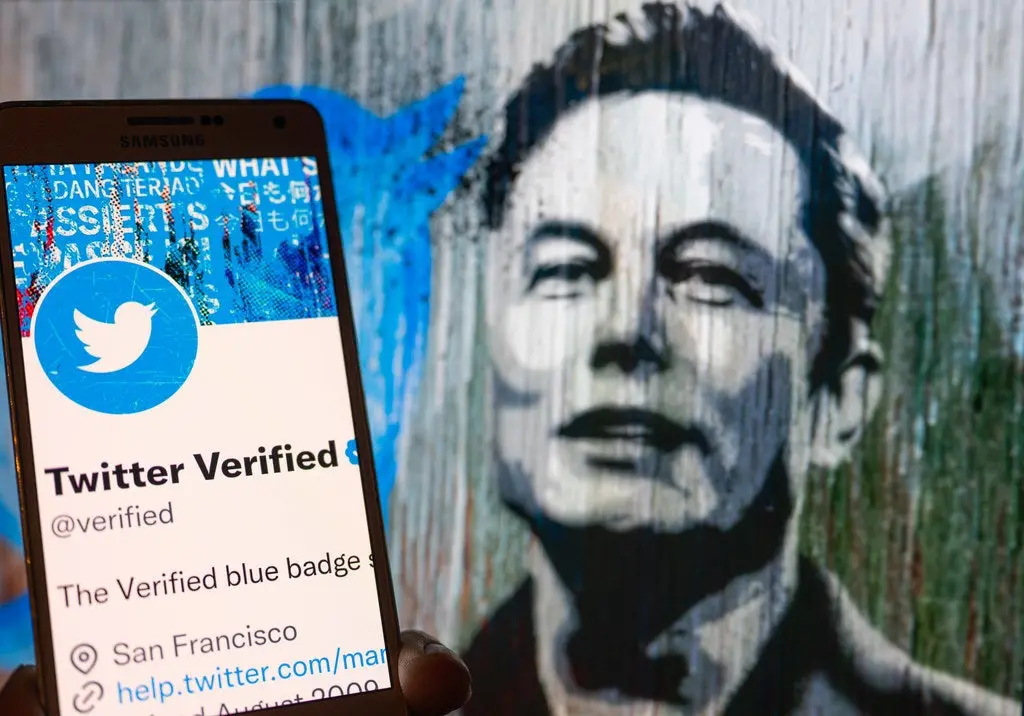
By early 2023, millions of legacy accounts still retained their checkmarks, creating a distinct visual divide between those who had earned verification under the old regime and those who had purchased it. On March 23, 2023, the official Twitter Verified account issued a definitive ultimatum:
"To keep your blue checkmark on Twitter, individuals can sign up for Twitter Blue… On April 1st, we will begin winding down our legacy verified program and removing legacy verified checkmarks. To keep your checkmark on Twitter, individuals can sign up here."
This announcement set a hard deadline, signaling that Twitter was prepared to strip status from high-profile accounts that refused to validate the subscription model, regardless of their institutional importance or historical contributions to the platform.
The Paradox of the "Hide Checkmark" Feature
Simultaneously, internal developer leaks and platform updates revealed an unexpected counter-feature: Twitter began developing functionality allowing paid subscribers to hide their blue checkmarks from their profiles and posts. Cybersecurity researchers and product analysts quickly pointed out the profound psychological irony of this development.
The introduction of an option to conceal the purchased badge strongly suggested that the blue checkmark had transitioned from a marker of prestige to a potential social liability. For many users, displaying a badge that signaled financial compliance with a controversial platform ownership model carried a distinct social stigma, prompting Twitter to engineer a stealth mode for its paying base.
Supporting Context, Platform Metrics, and Structural Shifts
The transition to a monetized verification system is not merely an aesthetic or symbolic change; it fundamentally alters the algorithmic plumbing of the platform, with profound economic and sociological consequences.
Algorithmic Stratification: The "For You" vs. "Following" Divide
At the core of Twitter’s new distribution strategy is the manipulation of visibility through the recommendation algorithm. Under the updated framework, the "For You" feed—the default landing page for millions of users—is heavily weighted to prioritize content originating from verified accounts and paying subscribers. Conversely, unverified, unpaid accounts face severe algorithmic suppression in public discovery metrics.
Industry analysts and digital marketers have mapped out the structural implications of this dual-feed system:
- The Pay-to-Play "For You" Feed: By restricting high-level algorithmic amplification to paying users, Twitter has effectively converted its primary discovery engine into a marketplace. Rather than purchasing formal digital advertisements through Twitter’s traditional ad manager, savvy marketers, brands, and digital hucksters can achieve broad organic traction and algorithmic distribution simply by maintaining a monthly Twitter Blue subscription. This creates an environment where volume and paid visibility displace authentic engagement and curation.
- The Gated "Following" Feed: Regular users who choose not to subscribe to Twitter Blue are increasingly relegated to the chronological "Following" feed. This feed exclusively displays content from accounts a user explicitly chooses to follow, stripped of algorithmic recommendations, cross-network discovery, and viral amplification. In essence, this mimics the original 2006 architecture of Twitter. While valued by purists who prefer a chronological timeline free of algorithmic manipulation, it effectively isolates non-paying accounts from organic growth.
Economic Motivations and Platform Sustainability
From a corporate standpoint, the shift toward subscription-driven verification is an aggressive attempt to diversify revenue streams away from traditional brand advertising, which experienced significant contractions following the platform’s change in ownership. By transforming hundreds of thousands of active users, creators, and small businesses into recurring subscribers, Twitter aims to establish a predictable, consumer-direct cash flow.
However, metrics from early adoption phases indicate a sluggish conversion rate among legacy verified users. Studies conducted by independent researchers and social media intelligence firms revealed that only a tiny fraction of legacy verified accounts voluntarily transitioned to paid subscriptions ahead of the initial deadlines, signaling widespread ideological and economic resistance to the paywall.
Official Statements and Industry Reactions
The announcement of the legacy verification purge and the restructuring of feed algorithms drew intense, polarized reactions from across the media, corporate, and digital advocacy landscapes.
Institutional Resistance and the "No-Pay" Stance
Major news organizations, cultural institutions, and high-profile public figures overwhelmingly signaled their refusal to participate in the Twitter Blue program. Prominent newsrooms across the globe—including The New York Times, The Washington Post, CNN, and the BBC—announced that they would not subsidize verification for their organizations or individual journalists.
The institutional consensus viewed the policy as a degradation of information integrity. Representatives for journalistic bodies argued that removing verified badges from accredited reporters opens the floodgates for coordinated impersonation campaigns, making it increasingly difficult for the general public to distinguish between verified reporting and malicious misinformation during breaking news events.
The Brand Perspective: Ad Spend vs. Subscription Arbitrage
For corporate brands, the policy change introduced a complex strategic calculation. Traditionally, reaching audiences on Twitter required substantial investments in targeted advertising campaigns. However, the new algorithmic reality allows brands to bypass traditional ad products. By paying a nominal monthly fee for organizational verification and subscribing to baseline services, brands can leverage their organic posting to secure disproportionate visibility within the "For You" feed.
Marketing executives interviewed by trade publications noted a dual sentiment: while the erosion of baseline trust creates a riskier brand-safety environment, the ability to game algorithmic distribution through low-cost subscriptions presents an immediate, cost-effective arbitrage opportunity for aggressive marketing agencies.
Future Outlook: The New Normal of Social Media Public Squares
As the dust settles on the initial rollout of the paid verification model, the long-term trajectory of Twitter—and the broader social media landscape—remains a subject of intense debate among technologists, sociologists, and digital economists.
The Commodification of Trust
The most profound legacy of Twitter’s experiment may well be the permanent dismantling of the concept of "digital trust." For over a decade, platforms utilized verification as an objective, centralized mechanism to certify authenticity and combat the spread of deepfakes, bots, and state-sponsored propaganda. By commercializing the checkmark, Twitter replaced an indicator of identity verification with an indicator of financial transaction.
This shift forces users to develop entirely new heuristics for evaluating online information. When a blue checkmark no longer guarantees that an account belongs to a verified expert, government agency, or reputable journalist, the burden of source evaluation shifts entirely to the end user, potentially accelerating institutional distrust across the digital ecosystem.
The Decentralized Horizon
The commercialization and centralized control of legacy social media platforms are already accelerating the migration of users toward decentralized, federated alternatives such as Mastodon, Bluesky, and ActivityPub-based protocols. As algorithmic feeds increasingly prioritize paid engagement and self-promotional content, communities of academics, journalists, and independent creators are actively building parallel infrastructure immune to corporate monetization mandates.
Ultimately, Twitter’s gamble represents a high-stakes stress test for the internet. Whether a platform can successfully monetize its core identity infrastructure without alienating its most valuable cultural producers will determine not only the financial future of X Corp. but the foundational economics of online discourse for the foreseeable future.