For decades, the physical wallet has been a staple of daily life—a worn leather fold stuffed with credit cards, debit cards, identification, loyalty punch-cards, and crumpled cash. Yet, as our society races toward a frictionless, cashless economy, the vulnerabilities of this traditional accessory have become glaringly apparent. Lost wallets, stolen cards, and physical skimming devices pose persistent threats to consumers worldwide.
Enter the digital wallet. Platforms like Apple Wallet, Google Wallet, and Samsung Pay are widely celebrated for their convenience, allowing users to breeze through checkout lines with a quick tap of a smartphone or smartwatch. However, beneath the surface of this everyday utility lies a robust, multi-layered security architecture that fundamentally outclasses traditional physical payment methods.
Driven by advanced cryptographic tokenization, mandatory biometric authentication, and seamless remote-deactivation capabilities, digital wallets have quietly transformed our mobile devices into veritable digital vaults. Far from being a security risk, keeping your credit cards on your phone offers a level of defense that physical plastic simply cannot match. This report explores the mechanisms that make digital wallets safer than their physical counterparts, examines how modern payment security works behind the scenes, and looks ahead to the future of mobile-first financial transactions.
Detailed Chronology: The Evolution of Payment Security
To understand why digital wallets represent a quantum leap in financial safety, it is helpful to trace the evolution of payment methods and the security milestones that led us to the smartphone era.
The Era of the Magnetic Stripe (Pre-2010s)
For generations, credit card security relied on the magnetic stripe on the back of the card. This static strip of magnetically encoded data contained the cardholder’s primary account number (PAN), expiration date, and CVV code.
The Vulnerability: The magnetic stripe was notoriously insecure. Because the data was static and unencrypted during transmission, fraudsters could easily "skim" the information using cheap, illicit hardware attached to ATM machines or gas station pumps. Once captured, this data could be effortlessly cloned onto counterfeit cards.
The Chip-and-PIN and Contactless Revolution (2010s–Present)
To combat magnetic-stripe fraud, the financial industry introduced Europay, Mastercard, and Visa (EMV) chip technology.
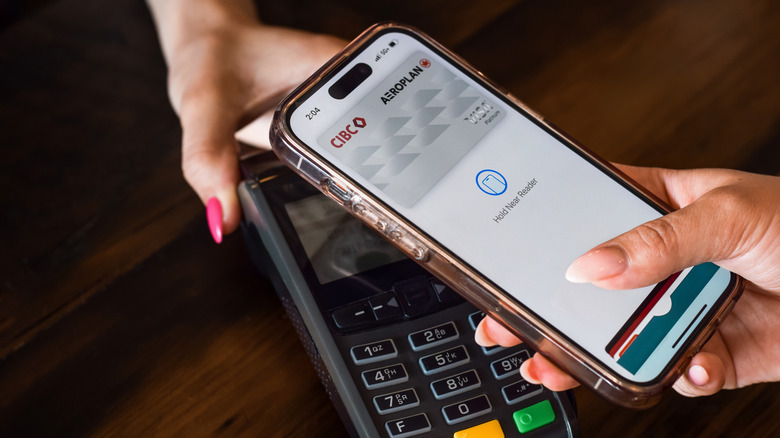
The Mechanism: When inserted into a terminal, the microchip generates a unique transaction code, making it vastly harder to clone than a magnetic stripe. Later, tap-to-pay (contactless) cards emerged, utilizing Near Field Communication (NFC) to transmit encrypted payment data safely.
The Shortcoming: While modern physical cards are safer than their predecessors, they still harbor vulnerabilities. Small physical purchases often require zero authentication (no PIN or signature required). Furthermore, if a physical card is lost or stolen, it can be used fraudulently until the owner notices and calls their bank—a window of vulnerability that can last for hours or even days.
The Rise of Digital Wallets (Mid-2010s–Present)
Apple Pay launched in 2014, fundamentally shifting the paradigm of mobile transactions. By integrating secure elements within hardware and leveraging device-level biometrics, tech giants created a system where the smartphone acts as a proxy for physical plastic.
Tokenization Takes Center Stage: Rather than transmitting actual card numbers, digital wallets introduced tokenization, ensuring that merchants never store or see a user’s real financial data.
Universal Integration: Over the past decade, Google Wallet, Samsung Pay, and proprietary banking apps have standardized these protocols, making high-level encryption accessible to billions of smartphone owners globally.
The Security Mechanisms Behind Digital Wallets
The superior security profile of digital wallets is not accidental; it is the result of a deliberate, defense-in-depth engineering strategy that combines hardware-level protections with advanced software protocols.
1. Mandatory Device Authentication
Unlike a physical wallet, which can be picked up and opened by anyone who finds it, a digital wallet is gated behind rigorous authentication barriers.
Smartphones: Setting up Apple Pay or Google Wallet requires an active device lock screen. More importantly, authorizing a transaction typically demands biometric verification—such as Apple’s Face ID, Touch ID, or Android’s equivalent facial recognition and fingerprint scanning. Even if a thief manages to bypass the lock screen, completing a payment without the user’s biological identifiers is virtually impossible.
Smartwatches: Wearables present an interesting security challenge because they lack continuous biometric sensors. Devices like the Apple Watch solve this by requiring a PIN code the moment the watch is strapped onto the wrist. Once authenticated, the watch remains unlocked—ready to make payments—only until it is removed from the user’s skin, at which point the secure state locks down automatically.
2. Tokenization: Rendering Stolen Data Useless
One of the most revolutionary aspects of digital wallets is tokenization. When you add a credit card to your phone, the app does not store your actual card number, nor does it transmit that number to the merchant during a transaction.
The Process: The payment network replaces your sensitive account details with a unique digital identifier, or "token."
Dynamic Cryptograms: Every single time you tap your phone at a register, the digital wallet generates a one-time cryptographic code (cryptogram) specifically for that transaction. If a malicious actor intercepts this data stream, the stolen code is completely useless for any future or past purchases. The merchant’s database never holds your real credit card information, drastically reducing the impact of retail data breaches.
3. Immunity to Traditional Skimming
Physical card skimmers remain a multi-million-dollar plague for consumers, particularly at self-checkout stands and automated fuel dispensers. These physical overlays read the magnetic stripe or intercept chip data as the card is inserted. Because digital transactions rely on contactless NFC technology and dynamic tokens rather than physical insertion or magnetic swipes, the threat of traditional card skimming is entirely neutralized.
4. Instantaneous Remote Deactivation
If a physical wallet goes missing, the recovery process is tedious and stressful: canceling multiple cards, updating automatic billing subscriptions, and waiting days or weeks for replacements to arrive in the mail.
Cloud-Connected Control: If a smartphone is lost or stolen, the owner can leverage tools like Apple’s Find My or Google’s Find My Device. These services allow users to track the device—even when it is powered off—and instantly wipe or freeze the digital wallet data remotely.
Crucially, disabling the digital wallet via cloud controls revokes the digital tokens without necessarily closing the underlying physical bank account. Users can continue using their physical cards (if safe at home) while ordering a replacement phone, completely bypassing the administrative nightmare of canceling primary bank accounts.
Supporting Context & Metrics: Digital Adoption vs. Fraud Trends
As digital wallet adoption accelerates globally, financial analysts and cybersecurity experts have closely monitored the correlation between mobile payment usage and fraud rates.
According to industry data from major credit bureaus and payment processors, traditional card-present fraud has steadily declined in regions with high smartphone payment penetration. Conversely, card-not-present (CNP) fraud—traditionally associated with online shopping—has driven most modern financial crime. However, digital wallets bridge this gap by introducing tokenized security to online checkouts as well. When users authenticate online purchases via Apple Pay or Google Pay within web browsers or apps, they bypass the need to type out vulnerable 16-digit card numbers, effectively immunizing those transactions against traditional keylogger and phishing attacks.
Furthermore, consumer surveys indicate a shifting psychological landscape. While older demographics once expressed hesitation regarding the safety of storing financial data "in the cloud" or on a portable device, younger generations view physical cards as archaic and unnecessarily risky. As biometric sensors become ubiquitous on budget and flagship devices alike, the friction of secure mobile payments has dropped to near-zero, driving unprecedented consumer trust.
Official Statements and Industry Expert Perspectives
Cybersecurity authorities and financial institutions have increasingly championed digital wallets as a critical tool in consumer protection.
In a recent advisory on consumer financial safety, a spokesperson for a leading global payment network noted:
"The migration from static plastic to dynamic digital credentials represents the single most significant leap forward in transaction security over the past thirty years. By removing the primary account number from the point of sale and replacing it with encrypted, single-use tokens, we have effectively stripped stolen data of its value to cybercriminals."
Tech sector analysts echo these sentiments, emphasizing that hardware-level security enclaves—such as Apple’s Secure Enclave or Android’s Trusted Execution Environment (TEE)—isolate payment credentials from the rest of the operating system.
A prominent digital security researcher stated:
"People often worry that hacking a phone compromises everything inside it. But modern smartphones isolate financial credentials inside hardware-level vaults that even the operating system cannot easily access without explicit biometric confirmation. Your physical wallet has zero cryptographic protection; your smartphone has military-grade isolation."
Future Outlook: The Total Eclipse of the Physical Wallet
As we look toward the future, the trajectory of personal finance points squarely toward a world where physical cards are relegated to emergency backup status—or phased out entirely.
The Convergence of ID and Finance
The evolution of the digital wallet is expanding far beyond credit and debit cards. Governments and tech companies are actively collaborating to integrate state-issued driver’s licenses, digital passports, transit passes, and healthcare credentials directly into smartphone wallet apps. As digital identification becomes legally recognized across more jurisdictions, the utility of carrying a bulky physical folding wallet will approach absolute zero.
Biometrics Beyond the Fingerprint
Future iterations of mobile security are poised to introduce continuous authentication models. Rather than relying solely on a momentary fingerprint or facial scan at the start of a transaction, upcoming devices may utilize behavioral biometrics—analyzing gait, typing cadence, and device-holding patterns—to ensure that the authorized user remains in control of the device throughout the day. If an unauthorized hand picks up the phone, the wallet will instinctively lock down.
The Verdict for Consumers
The modern smartphone has evolved from a simple communication device into an indispensable life hub. When weighed against the static vulnerabilities, physical loss risks, and skimming threats of traditional leather billfolds, the digital wallet stands out not merely as a convenience, but as a technological triumph in personal cybersecurity.
For those who have yet to make the transition, adding at least one primary card to an Apple or Google wallet is no longer just a step toward convenience—it is an upgrade to a vastly more secure financial lifestyle.