Executive Overview
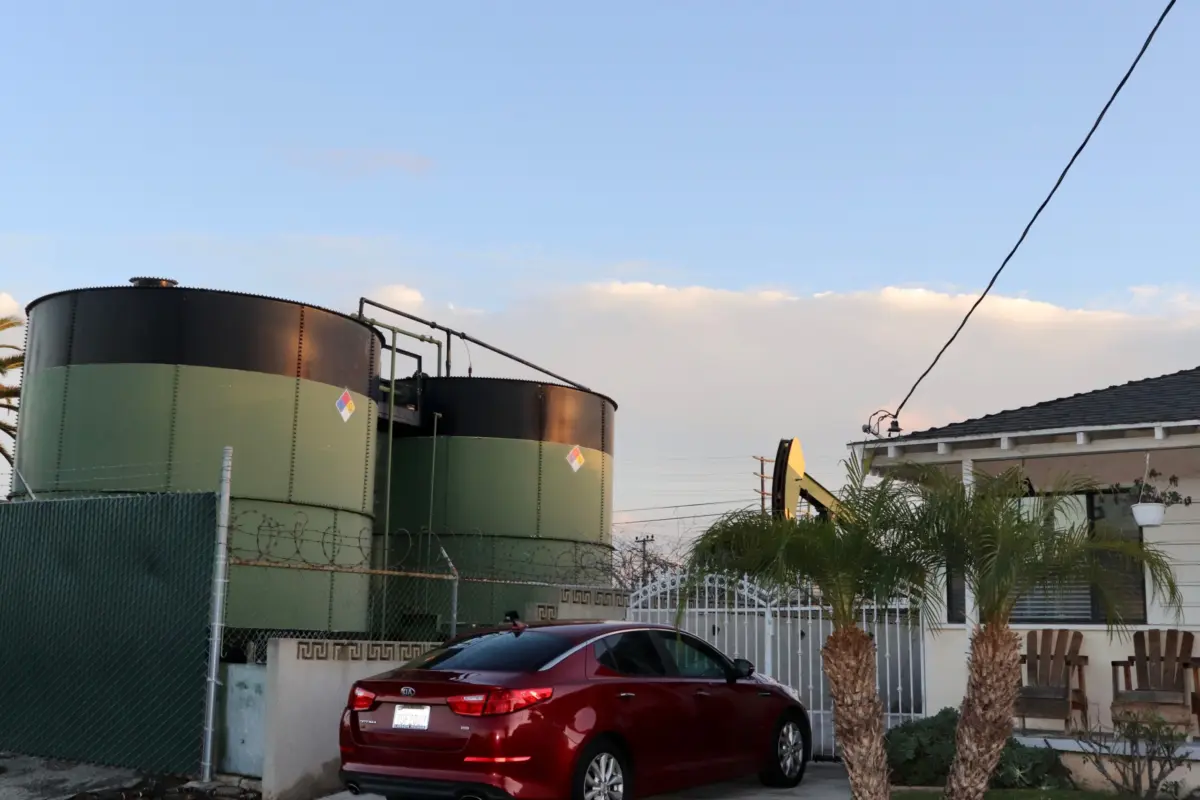
For generations, the residents of Black and low-income neighborhoods in Los Angeles County lived with a sensory constant they assumed was universal: the rhythmic, mechanical thumping of oil pumpjacks and the sulfurous, rotten-egg stench of petroleum processing. For Regina Martin, who grew up near the nation’s largest urban oil-drilling field during the 1950s and 1960s, the nausea-inducing air was simply part of childhood. It was only decades later, as she and her sister struggled with chronic respiratory illnesses, that she began to connect the invisible violence of her environment to the corporate extraction taking place literally in her backyard.
Now, a historic legislative shift in California is forcing a reckoning with this grim reality. Lawmakers have passed AB 1661, a pioneering measure that seeks to transform lived experience into actionable public policy. The law introduces a novel concept to American environmentalism: direct cash reparations funded by penalties levied against polluting fossil fuel operators.
Under the measure, $5 million collected from penalized wells at the Inglewood Oil Field will be funneled directly to approximately 1,000 nearby households suffering from documented respiratory or reproductive health impacts. Supported by a tapestry of grassroots organizations and spearheaded by state leaders, this policy asks a fundamental question for a nation grappling with its industrial past: What does a state owe communities exposed to toxic pollution for generations, and can financial restitution begin to heal wounds that span decades?
Detailed Chronology of a Century-Long Struggle
The intersection of race, geography, and industrial pollution in Los Angeles is not accidental; it is the legacy of deliberate urban planning and systemic disenfranchisement.
The Roots of Industrial Redlining (Early to Mid-20th Century)
Throughout the 20th century, discriminatory housing practices—commonly known as redlining—forced Black families into specific geographic corridors of Los Angeles, such as Inglewood, Ladera Heights, and Baldwin Hills. Concurrently, oil exploration boomed across the Los Angeles Basin. Driven by zoning laws that favored industrial extraction over minority health, wells, refineries, and pipelines were disproportionately sited in or immediately adjacent to these newly formed Black neighborhoods.
For decades, companies extracted immense wealth from the earth beneath these communities while leaving residents to absorb the biological collateral damage. Studies consistently show that Black and Latino populations in California face disproportionately high proximity to active and idle oil wells, exposing them to chronic air pollution, toxic chemical leaks, and volatile organic compounds.
The Legislative Turning Point: AB 2716 and the Path to Closure (2024)
The momentum toward accountability accelerated dramatically in recent years, largely driven by Assemblymember Isaac G. Bryan, the first Black legislator to chair the California Assembly’s Natural Resources Committee. Representing the communities surrounding the Inglewood Oil Field, Bryan championed AB 2716, a landmark bill signed into law by Governor Gavin Newsom in 2024.
This statute mandated the complete closure of the Inglewood Oil Field by 2030 and established a punitive regulatory framework for low-producing wells. Recognizing that abandoned or poorly maintained wells routinely leak methane, benzene, and other hazardous gases into surrounding air and groundwater tables, regulators imposed a steep penalty: $10,000 per well each month for continued low-level operation. Rather than vanishing into general state coffers, these punitive revenues were legally restricted to a community repair and reinvestment fund earmarked for neighborhoods within a 2.5-mile radius of the field.
The Birth of Direct Cash Restitution: AB 1661 (Present)
Building directly upon the framework of AB 2716, lawmakers advanced AB 1661 to bridge the gap between regulatory penalties and direct community benefit. Expected to be signed by Governor Newsom, the bill allocates $5 million from the fund to provide direct cash assistance—up to $5,000 per household—to 1,000 families living nearest to the Inglewood Oil Field who have suffered demonstrable health impacts. To ensure that recipients retain the full value of these funds, the state also advanced complementary legislation spearheaded by Assemblymember Tina McKinnor to shield state-level reparation payments from taxation.
Supporting Context & Metrics: The Human and Economic Toll
The implementation of AB 1661 arrives against a backdrop of stark statistical disparities regarding environmental health, generational wealth loss, and the mechanics of urban extraction.
Health Disparities in the Shadow of the Drill
The proximity of urban drilling sites to residential zones carries catastrophic health implications. Decades of epidemiological research link living near oil and gas operations to a surge in severe medical conditions:
- Respiratory Illnesses: Rates of asthma, chronic bronchitis, and decreased lung function are exponentially higher among children and adults living within three miles of extraction sites.
- Reproductive Complications: Studies consistently correlate exposure to volatile emissions with higher rates of premature births, low birth weights, and developmental delays in children.
- Oncology: Elevated cancer risks, particularly linked to benzene and other known carcinogens released by aging infrastructure, disproportionately plague fence-line communities.
Financial and Generational Wealth Drainage
The damage wrought by industrial pollution extends far beyond physical pathology. Families living adjacent to extraction sites face a compound economic crisis:
- Depressed Property Values: Homes situated near active oil wells or heavy industrial zones fail to appreciate at rates comparable to other suburban properties, suppressing family net worth and preventing generational wealth transfer.
- Medical Debt: Chronic illnesses require ongoing medical intervention, draining household savings for treatments, medications, and specialized care.
- The Cost of Living Crisis: As urban centers transition and push toward cleaner environments, the closure of oil fields often triggers rapid gentrification. Property values surge, threatening longtime residents with displacement just as the immediate environmental hazards begin to recede.
Official Statements and Grassroots Perspectives
The debate surrounding environmental reparations has mobilized a broad coalition of community organizers, lawmakers, and institutional advocates who view the California model as a blueprint for national reform.

Assemblymember Isaac G. Bryan on Corporate Accountability:
"The company has essentially just been extracting from the community with no investments in the community, no care in the community, and what feels like no regard at times for the broader community. The community [is] due this repair, and it’s been long overdue… We know one of the biggest tools against an increasingly unaffordable society is to just put more money in people’s pockets."
Tianna Shaw-Wakeman, Environmental Justice Program Director at Black Women for Wellness:
"Community members who have been deeply impacted, whose health have been deeply impacted, have never gotten restitution for that in any sort of way. We deserve more than we have been getting. And as we transition our city, as we transition our county, part of that story has to be addressing past harms… My hope has always come at the community level, at the grassroots level. I see how grassroots organizing has created long-term change in our local communities, and I see that that can be and is being replicated all over the country."
Assemblymember Tina McKinnor on Protecting Relief:
"California is actively preparing for the implementation of reparations programs. We must ensure that recipients receive the full benefit of these efforts."
Future Outlook: Challenges, Replicability, and the Road Ahead
While AB 1661 represents a monumental step forward, its long-term success—and its viability as a national template—hinges on several critical administrative and systemic factors.
The Implementation Hurdle: Bureaucracy vs. Accessibility
With tens of thousands of households residing within 2.5 miles of the Inglewood Oil Field, the initial allocation of funds for only 1,000 households creates an immediate logistical challenge. How Los Angeles County designs the application process will determine whether the program offers genuine relief or becomes bogged down by bureaucratic friction.
Grassroots organizations like Black Women for Wellness are aggressively pushing county administrators to adopt self-attestation models. Many low-income families suffering from chronic illnesses lack formal diagnoses due to systemic barriers to healthcare access. Forcing applicants to produce expensive or difficult-to-obtain medical records could inadvertently exclude the very people who need help the most. Furthermore, county officials are still weighing the disbursement structure—evaluating whether lump-sum payments, monthly stipends, or hybrid models will best serve vulnerable families.
Beyond the Check: The Threat of Eco-Gentrification
Environmental justice advocates emphasize that financial payouts and eventual site closures are merely the opening salvos in a much larger battle. True remediation requires comprehensive site cleanup, the proper plugging of thousands of idle wells to prevent long-term methane leaks, and community-led redevelopment.
The most pressing paradox of urban environmental revitalization is the threat of green gentrification. As toxic infrastructure is dismantled and parks, urban greening, and affordable housing initiatives are introduced, property values naturally rise. Without robust tenant protections and anti-displacement policies, the very residents who survived decades of toxic air face eviction by the rising tide of real estate speculation.
A National Blueprint for Industrial Justice
Despite these hurdles, California’s legislative experiment is being closely watched across the United States. As communities nationwide grapple with the legacy of industrial pollution—from chemical plants in the Gulf Coast to data centers and power plants in Texas—the demand for accountability is growing louder. By compelling polluting industries to fund direct cash reparations for fence-line communities, California has initiated a transformative paradigm shift: moving public policy beyond mere regulatory compliance and toward genuine, material restitution for historical harm.