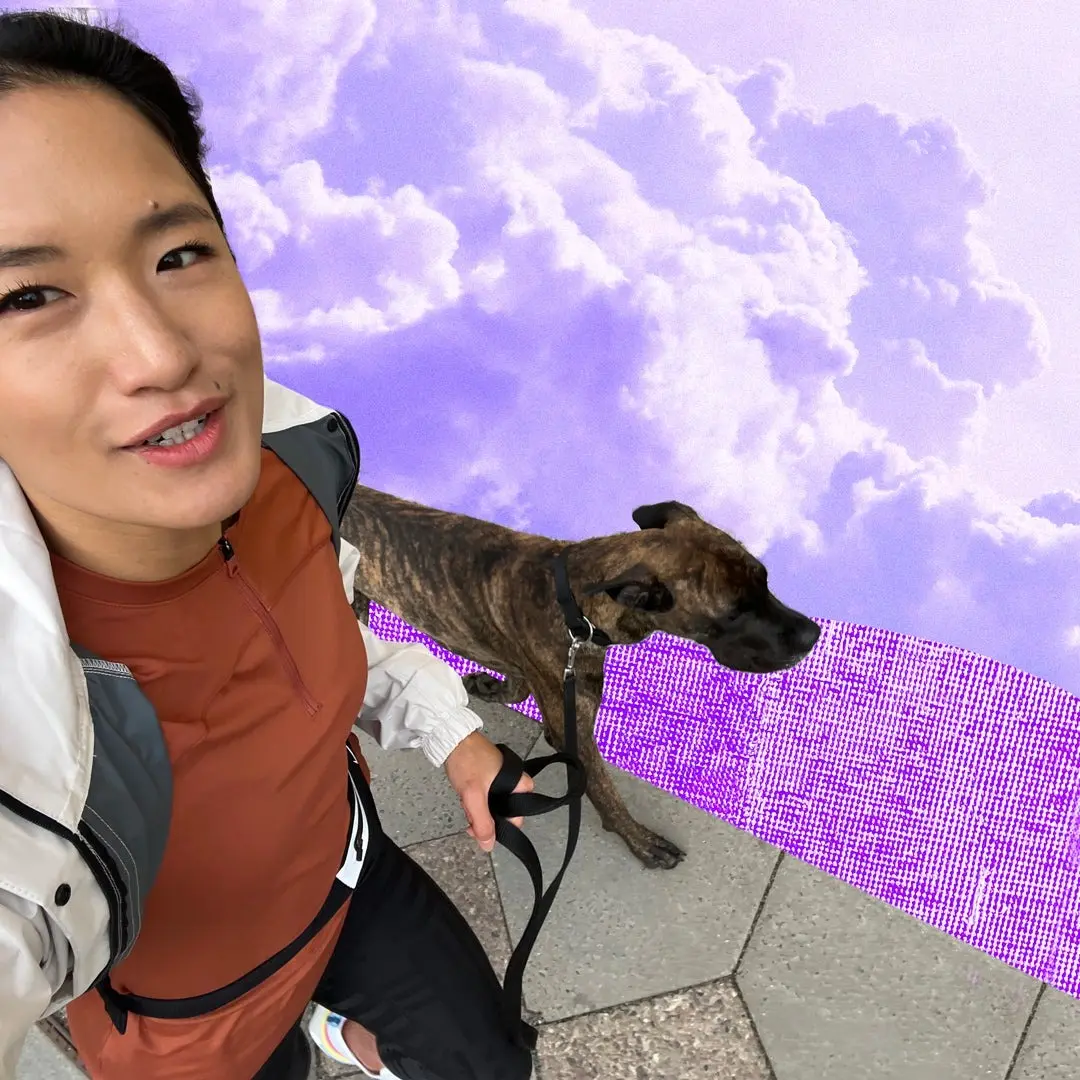
Berlin, Germany — The image of the modern marathon runner is often steeped in asceticism: a pre-dawn alarm at 4:30 AM, icy rain, relentless high-mileage blocks, and a singular, obsessive focus on pace per kilometer. Berlin-based designer and flight attendant Hong represents a definitive paradigm shift away from this punishing dogma. Once self-identified as definitively "not a runner," Hong is currently deep in preparations for her seventh official marathon.
Yet, her weekly routine does not read like a manual for suffering. Balancing an international career in aviation with creative design work in the German capital, Hong’s philosophy centers on an emerging movement within endurance sports: the conscious integration of comfort, community, mental wellbeing, and high-performance training. Through a balanced ecosystem of strength work, canine pacing, curated playlists, and social rituals, Hong proves that pushing human limits does not require sacrificing joy.
Executive Overview
The contemporary endurance landscape is undergoing a cultural recalibration. For decades, the prevailing narrative surrounding long-distance running relied heavily on grit, grind culture, and the outright dismissal of personal comfort. Hong’s journey offers a compelling counter-narrative. By refusing to let running dominate her life at the expense of her social well-being, professional ambitions, and psychological ease, she has cultivated a sustainable model for athletic longevity.
This case study examines Hong’s meticulously structured weekly training regime—a dynamic blueprint that bridges the gap between casual fitness and competitive readiness. Operating out of Berlin, a city renowned for its vibrant subcultures and sprawling green spaces, Hong utilizes a holistic framework comprising:
- Adaptive Pacing & Mental Hacks: Utilizing curated music, vocal modulation (singing), and canine companionship to regulate exertion and eliminate monotony.
- Cross-Disciplinary Conditioning: Integrating yoga, targeted strength training, and professional physiotherapy to bulletproof the body against high-mileage injuries.
- Social Architecture: Leveraging localized run crews (such as the Joy Run Collective) and shared culinary rituals to transform solitary physical suffering into communal celebration.
- Equipment as Infrastructure: Deploying advanced footwear technology (such as the Nike Invincible 3) not merely for speed, but as foundational ergonomic support designed to neutralize impact trauma across unpredictable urban terrain.
Detailed Chronology: A Week in the Life of a Balanced Marathoner
To understand how high-level endurance training can coexist with a demanding professional life and a rich social calendar, one must examine the micro-level execution of a typical training week. Hong’s schedule dismantles the myth that marathon preparation requires a monastic lifestyle.
Monday: The Sonic Lifeline and Canine Pacing
As a creative designer balancing unpredictable shifts as a flight attendant, Mondays often present a formidable mental hurdle. Transitioning from the high-stress environment of international aviation back to local routines requires strategic psychological scaffolding.
"I’m definitely someone who loves hitting the snooze button and is entirely useless before my morning coffee," Hong notes. To combat early-week lethargy, Monday serves as an introduction to her acoustic and environmental variables. When motivation runs dry, her running playlist—a dynamic pastiche of disco, house, and techno—acts as a vital stimulant.
Crucially, Hong employs a unique physiological regulator when fatigue threatens to derail her tempo: she sings.
"If I run out of breath during a run, I drop back a gear and start singing. It forces me to slow down and regain control of my breathing. Not only does it make the run infinitely more fun, but watching passersby crack a smile when I jog past singing to myself is an added bonus."
Adding another layer of unpredictability to Monday’s mileage, Hong frequently borrows a friend’s dog, Mia. An energetic canine companion transforms a standard recovery or base run into a dynamic interval session. "Mia has boundless energy, and it’s genuinely fun to race her. In the beginning, she pulls me; by the end, I’m pulling her. I might not match her raw top speed, but when it comes down to endurance, I take the win."
Tuesday: Injury Prevention and the Yoga Mat
A common pitfall for aspiring marathoners is the myopic focus on running volume alone. Tuesday’s schedule deliberately bypasses asphalt entirely, pivoting instead toward injury mitigation and somatic recovery.
Hong’s Tuesday regimen consists of dedicated yoga flows, targeted strength training sessions, and clinical physiotherapy. This multidisciplinary triad is not secondary to her running; it is the structural foundation that enables it. By building muscular symmetry and joint stability away from the pounding impact of the pavement, Hong ensures that her skeletal frame can withstand the immense stress of high-mileage blocks.
This holistic conditioning allows her to step to the starting line of strenuous track workouts without running the risk of catastrophic burnout. Crucially, it redefines rest not as a passive absence of activity, but as an active, mandatory component of athletic progression.
Wednesday: Global Horizons and Urban Culture
Operating as a flight attendant means Hong’s geographic coordinates are in a state of perpetual flux. When she is grounded in Berlin, her social capital is just as valuable to her athletic longevity as her VO2 max.
Wednesday is deliberately designated as a low-impact day, prioritizing interpersonal connection and cultural enrichment over physical output. Rather than cramming a double-session into an already demanding week, Hong opts to visit local art exhibitions and catch up with friends scattered across the city’s neighborhoods. This psychological decompression ensures that her nervous system remains regulated, preventing the chronic cortisol spikes frequently observed in over-trained endurance athletes.
Thursday: Pushing Boundaries and Track Mechanics
While comfort is a central pillar of Hong’s philosophy, the reality of training for her seventh marathon necessitates periods of acute physical discomfort. Thursday is track day—a crucible designed to test speed, lactate threshold, and mental fortitude.
"Some people assume marathoners bounce out of bed at 5:00 AM and effortlessly knock out 20 kilometers. The truth is, I sometimes need an extra dose of motivation. That’s why comfort is so non-negotiable for me, whether I’m facing an easy recovery jog or a brutal track session."
During these high-intensity intervals, equipment choice becomes paramount. Hong relies on the Nike Invincible 3, valuing its responsive, high-energy-return foam and structural stability. The "bouncy" underfoot sensation neutralizes the harsh shock of repeated high-speed laps on synthetic tracks, providing a psychological safety net that encourages her to lean deeper into her discomfort zone.
Friday: Reset, Recharge, and Reconnect
Following the physiological debt incurred during Thursday’s track workout, Friday functions as a physiological reset. Aside from a light, restorative mobility session or gentle yoga flow, Friday mirrors Wednesday’s emphasis on community.
Berlin’s vibrant social fabric offers an endless array of stimuli. By immersing herself in the city’s creative spaces alongside friends, Hong maintains a healthy identity outside of "runner." This psychological compartmentalization is widely recognized by sports psychologists as a primary defense against athletic identity crises and psychological burnout.
Saturday: The Landwehrkanal Ritual and Urban Observation
Saturday morning is anchored by a familiar geographic canvas: the scenic route along Berlin’s Landwehrkanal. This mixed-terrain course offers a sensory tapestry of asphalt, grass, and mud, testing proprioception and ankle stability.
Here, Hong practices mindful dissociation. Sometimes she listens to an immersive narrative podcast, letting her mind wander far away from her physical stride. Other times, she turns off her headphones entirely, tuning into the ambient audio landscape of the city—the hum of traffic, the rustle of leaves, the chatter of weekend pedestrians.
The run inevitably concludes with a sacred post-workout ritual: a specialized coffee and a pastry or snack from a local market stall in Kreuzberg. This intentional transition from active exertion to gustatory reward reinforces positive neurological feedback loops associated with training.
Sunday: Collective Endurance and the Dumpling Horizon
Sunday represents the zenith of the weekly training macro-cycle: the long run. Eschewing solitude, Sunday is executed in tight coordination with her running community, the Joy Run Collective.
Tackling extended mileage through the expansive, frost-kissed expanse of the Tiergarten requires cooperative pacing and shared psychological load. Running through changing weather conditions and accumulating fatigue is mitigated entirely by the collective momentum of the pack.
The structural climax of the week occurs immediately following the final kilometer: a communal brunch hosted by members of the collective. For Hong, the physical exertion of Sunday morning is inextricably linked to anticipated culinary joy. "This time, the host made homemade dumplings. I had been thinking about those dumplings all week long," she laughs.
Supporting Context & Metrics: The Paradigm Shift in Modern Endurance Culture
Hong’s journey reflects broader macroeconomic and cultural shifts within the global fitness industry. According to recent sports science research, the demographic profile of the modern endurance runner has shifted dramatically over the past decade. The archetype of the obsessive, pain-tolerant male athlete has been supplanted by a diverse, lifestyle-integrated community where women represent the fastest-growing segment of marathon participants globally.
| Metric / Parameter | Traditional Approach | The Balanced Modern Approach (Hong’s Blueprint) |
|---|---|---|
| Wake-up Time | 4:30 AM – 5:00 AM daily | Flexible, aligned with natural circadian rhythms and recovery needs |
| Training Philosophy | "No pain, no gain"; high mileage at all costs | Periodized volume combined with mandatory cross-training and yoga |
| Social Integration | Often solitary; isolating social life for training | Community-centric (Run Crews); integration of art, culture, and social dinners |
| Equipment Priority | Minimalist; rigid focus on raw speed | Ergonomic support; maximum cushioning (e.g., Nike Invincible 3) for injury prevention |
| Nutrition & Reward | Strict, clinical caloric restriction | Intentional culinary rituals (coffee, market snacks, weekend dumpling feasts) |
The Physiology of Comfort and Consistency
Sports physiologists increasingly validate the psychological dimensions of physical output. Chronic physiological stress—often exacerbated by rigid, joyless training protocols—elevates baseline cortisol levels, which in turn impairs muscular recovery and immune function.
By prioritizing comfort in her choice of footwear, auditory motivation (music and singing), and social framing, Hong optimizes her autonomic nervous system. Lower perceived exertion during baseline runs preserves vital psychological bandwidth for high-intensity intervals and race day execution.
Furthermore, data from physical therapy clinics shows that runners who integrate cross-training (such as Hong’s routine of yoga, targeted strength work, and physiotherapy) experience up to a 40% reduction in overuse injuries—including common ailments like patellofemoral pain syndrome, plantar fasciitis, and Iliotibial (IT) band syndrome—compared to runners relying exclusively on linear mileage accumulation.
Official Insights & Perspective
Reflecting on her evolution over the past four years, Hong emphasizes that running has fundamentally reconfigured her relationship with her own physical and mental agency.
"I started running four years ago. Now, at 30 years old, I am healthier and fitter than I ever was in my twenties. But running is so much more than physical training. As a runner, I’ve gained immense self-confidence because I now know precisely how hard I can push myself, even on days when I feel low."
This sentiment captures the democratizing power of modern endurance sports. It is no longer about proving toughness to an external audience; it is an intimate, highly personalized dialogue between the self, the environment, and the community.
Hong’s core realization serves as a manifesto for a new generation of athletes: Consistency and comfort do not have to be mutually exclusive.
"I’ve learned that I can set aggressive new boundaries for myself and still feel completely supported and comfortable along the way. Next stop: my seventh marathon."
Future Outlook: The Sustainability of Joy-Driven Endurance
As the marathon market continues to expand globally—with major races in Berlin, London, New York, and Tokyo experiencing historic demand—the cultural norms governing training methodologies will inevitably evolve. The era of the joyless, hyper-ascetic endurance athlete is giving way to a more nuanced, sustainable model.
Athletes like Hong demonstrate that peak human performance and holistic lifestyle integration are not contradictory forces. By dismantling the false dichotomy between hard work and personal enjoyment, the modern running community is writing a new playbook—one where high-performance metrics are achieved not through suffering alone, but through smart recovery, robust community support, elite ergonomic support, and the simple, profound joy of a post-run coffee and homemade dumplings.
For the running industry, this cultural shift signals an enduring demand for gear that prioritizes daily usability, multi-surface adaptability, and relentless comfort. For the individual runner, Hong’s blueprint offers an empowering invitation: lace up your shoes, find your community, curate your playlist, and remember that the road to 42 kilometers should be an adventure, not an endurance test of misery.