Executive Overview
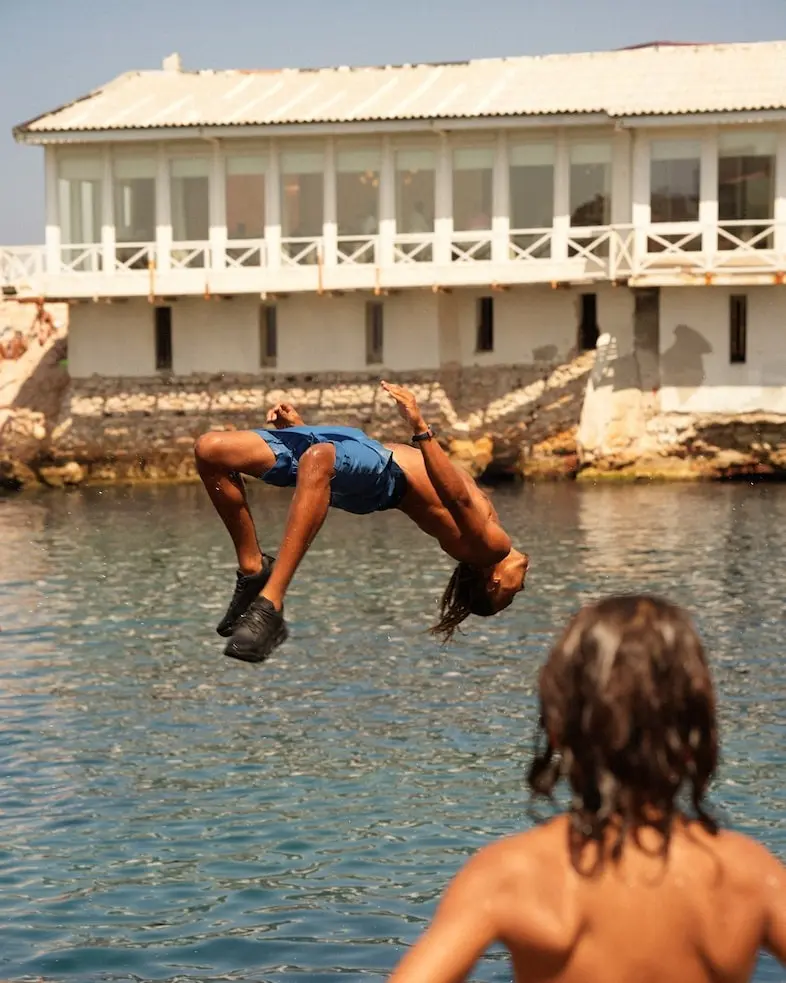
In an era dominated by curated digital aesthetics and hyper-individualized pursuits, a starkly contrasting reality thrives along the sunbaked, salt-crusted asphalt of Marseille. Here, away from the algorithmic gaze of social media feeds, a band of young men—Ismael (known as Bako), Fares, Mohamed, and Sheri—are carving out a blueprint for modern community. Their daily existence is not staged for ephemeral validation; rather, it is anchored in the raw, tactile experiences of Mediterranean life: a green dirt bike revving down a coastal avenue, a spontaneous skate session culminating in a breathless plunge into the glittering waves, and an unshakeable, foundational commitment to collective survival.
This feature explores the sociological mechanics of their brotherhood, examining how starkly divergent social and cultural backgrounds can collapse into a singular, cohesive family unit. Born out of chance encounters at neighborhood skate parks, stretches of Mediterranean coastline, and urban street corners, Bako and his peers have forged an intimate collective that redefines modern kinship. Part of Under Armour’s Rest Less initiative—a storytelling platform highlighting grassroots collectives manifesting restless energy in real life (IRL)—this group offers a compelling counter-narrative to the atomization plaguing contemporary youth culture.
Through structured rules of engagement, an abundance mindset, and an uncompromising philosophy of shared destiny, Marseille’s modern-day kinfolk demonstrate that true fulfillment is not found in solo achievements, but in the radical act of living, struggling, and succeeding together.
Detailed Chronology: From Strangers to Chosen Family
The Convergence: Marseille as the Great Equalizer
To understand the genesis of Bako, Fares, Mohamed, and Sheri’s bond, one must first examine the crucible that shaped it: Marseille itself. France’s oldest city and its vibrant, multicultural southern capital has long functioned as a demographic melting pot. It is a dense, undulating urban landscape where historic quarters rub shoulders with working-class housing estates and sun-drenched marinas.
For these four young men, the city served as an unwitting matchmaker. Coming from vastly different socioeconomic strata and cultural lineages, their individual trajectories should have theoretically kept them separated. In a stratified society, lives often run on parallel tracks that never intersect. Yet Marseille’s public infrastructure—its sprawling concrete skate parks, rugged coastlines, and open-air public squares—acts as a social equalizer.
"Marseille has influenced our relationship as a group because the city allowed all of us to meet even though our lives are all very different," reflects Bako. "It’s like a checkpoint that brings people together, no matter where they come from."
These initial encounters were entirely serendipitous. A nod across a half-pipe, a shared cigarette near the breakwater, or a casual conversation while fixing a dropped bicycle chain planted the seeds of connection. Over weeks and months, these random crossovers transformed into habitual gatherings. The boundaries separating them dissolved, replaced by a nascent trust that gradually hardened into something indistinguishable from blood kinship.
The Crucible of Adversity
A brotherhood forged in the glow of summer sunsets is easily romanticized, but the true mettle of Bako’s circle was tested away from the cameras and the coast, in the sobering quiet of genuine hardship.
When Bako faced a severe health crisis, the illusion of casual friendship was instantly stripped away, revealing an unyielding bedrock of mutual support. Chronic or acute medical struggles often isolate individuals, straining social circles that are built exclusively on leisure and recreation. For Bako’s crew, however, the response to his vulnerability was absolute solidarity.
"They never stopped being there for me throughout that difficult time," Bako recalls, his voice carrying the weight of deep gratitude. "Today I’m happy to be surrounded by them."

The crisis served as a watershed moment. It confirmed that their alliance was not merely a lifestyle accessory or a convenient way to pass sun-drenched afternoons, but a vital support system capable of weathering life’s harshest storms. By holding space for one another during profound vulnerability, the group crossed the threshold from a group of neighborhood friends into a genuine, protective family.
Supporting Context & Metrics: The Sociology of Modern Youth Collectives
The Crisis of Modern Loneliness and the Counter-Movement
The lifestyle practiced by Bako and his peers stands in stark defiance of broader socio-cultural trends. According to sociological data from organizations tracking European youth demographics, post-industrial urban centers face an escalating crisis of social isolation. Despite being hyper-connected via digital networks, Gen Z and younger millennial populations report record levels of loneliness, anxiety, and a pervasive lack of deep, meaningful offline relationships.
The "algorithmization" of daily life encourages transactional interactions and curated personal branding over messy, authentic community building. In contrast, grassroots collectives like the one in Marseille represent a reclaimed public commons. Urban studies experts note that skate parks, beaches, and public plazas function as essential democratic spaces where youth from marginalized or diverse backgrounds can negotiate identity and build social capital outside formal institutional frameworks.
The Economics of Abundance vs. Scarcity
At the core of the group’s philosophy is what can be termed the "abundance mindset." Traditional capitalist frameworks foster hyper-competition, viewing resources, success, and validation as finite commodities where one person’s gain inherently constitutes another’s loss.
Bako’s circle completely inverts this paradigm. Their collective practices—encapsulated by rules such as the "5-5 mentality"—challenge the neoliberal emphasis on rugged individualism. By pooling resources, emotional bandwidth, and social opportunities, they create a localized safety net that cushions individual shocks and amplifies collective momentum. This economic and social model mirrors historical working-class solidarity networks, updated for the complexities of 21st-century urban life.
Official Statements & Core Philosophy: Bako’s Rules for Sticking Together
The operational ethos of this Marseille collective is not left to chance. It is anchored in a strict, unwritten code of ethics articulated by Bako—a set of guiding principles that ensure the preservation of trust, unity, and mutual care within the group.
1. Never Lie
"We’re a family, and we trust each other. As we say: ‘A lie takes the elevator, and the truth takes the stairs.’"
Transparency is the non-negotiable currency of the group. In an environment where external societal pressures can be intense, the internal sanctuary of the collective relies on absolute honesty. Deception, even when intended to spare feelings, introduces friction that undermines the group’s foundational trust.
2. Always Stick Together
"Despite the ups and downs, we stay in the same car, and nobody jumps out while we’re on the road."
Loyalty in this collective is defined by resilience. Disagreements, financial strains, and personal flaws are treated as internal challenges to be resolved collectively rather than reasons to abandon ship. The metaphor of the car emphasizes shared destiny: the journey is undertaken as a unit, and the fate of one is inextricably linked to the fate of all.

3. Laughter as a Baseline
"Honestly, when we’re together, we do not even have to try."
While the group navigates serious obstacles and heavy personal baggage, joy is treated as an essential, renewable resource. Spontaneous humor, shared jokes, and lighthearted escapades—whether riding dirt bikes or executing backflips into the Mediterranean—serve as psychological ballast, neutralizing stress and cementing emotional proximity.
4. Move Forward Together
"For us, we like to lift each other up so that we can move forward together and see each other grow."
Progression in this collective is egalitarian. Individual ambition is celebrated only to the extent that it elevates the entire peer group. Mentorship, encouragement, and practical assistance flow freely among members, ensuring that no one is left behind as they navigate career aspirations, personal development, and life transitions.
5. The 5-5 Mentality (Sharing Everything)
"This is the most important one. The 5-5 mentality. It means that if I have something and you don’t, we have it. If you have something and I don’t, we have it. And if neither of has it, we figure it out. In our family, when one person eats, everyone eats. And it applies to everything. We make sure that nobody is missing anything."
Perhaps the most radical tenet of their creed, the 5-5 mentality eradicates possessive individualism. Material possessions, financial resources, and emotional support are viewed as communal assets. If one member secures a win, the benefits ripple outward. If another faces a deficit, the collective absorbs the impact. It is a practical, lived socialism of the streets.
Future Outlook: Manifesting Restless Energy IRL
As part of Under Armour’s Rest Less campaign, the visibility of Bako, Fares, Mohamed, and Sheri highlights a broader cultural hunger for authenticity. Brands and cultural observers alike are increasingly recognizing that the future of youth culture does not lie in sterile digital spaces or manufactured influencer content, but in authentic, self-organized collectives that generate their own momentum.
Looking ahead, the challenge for such groups is often balancing the purity of their local bond with the pressures of the modern world. Yet, grounded in their rigorous code of ethics—truth, loyalty, shared joy, mutual elevation, and radical sharing—Marseille’s brotherhood appears uniquely equipped to navigate what lies ahead.
Their story serves as an invitation and a challenge to a digitally fatigued generation. It whispers a reminder across the sunlit waters of the Mediterranean: escape the algorithm, seek out your people, and remember that when one person eats, everyone eats.