Executive Overview
The tropical Pacific Ocean is currently boiling. For months, an unrelenting accumulation of heat has laid the foundation for what climatologists are increasingly calling a "super" El Niño—a climate phenomenon that forms every few years with the potential to rewrite the history books on global weather extremes. This year’s iteration has broken daily heat records with alarming velocity, and meteorological forecasts project it will surge to unprecedented heights during the winter months. While El Niño is traditionally defined by a pooling of hotter-than-normal ocean waters in the eastern tropical Pacific, its ripple effects are undeniably planetary, disrupting atmospheric circulation, marine ecosystems, and human economies alike.
Yet, this colossal natural cycle does not occur in a vacuum. It is unfolding against the backdrop of an already overheated Earth, hyper-charged by decades of relentless fossil fuel combustion and greenhouse gas emissions. The intersection of a naturally occurring super El Niño and anthropogenic climate change represents a profound collision of systemic risks.
While the intuitive assumption is that a hotter climate automatically yields a fiercer El Niño, climate scientists urge caution, pointing out that the precise mechanics of this feedback loop remain an area of active, urgent research. What is certain, however, is that the superposition of these two monumental forces creates a compounding hazard. Historical climate models and traditional forecasting frameworks are rapidly losing their predictive edge, leaving scientists, policymakers, and communities bracing for generationally intense disruptions. As United Nations Secretary-General António Guterres bluntly warned, "El Niño conditions will pour fuel on the fire of a warming world. Impacts will hit even harder, travel even farther, and cross borders with devastating speed."
Detailed Chronology: The Rise of a Historic Climate Phenomenon
To understand the scale of the current crisis, one must trace the rapid acceleration of thermal anomalies across the Pacific basin over the past year.
- Early to Mid-2023: Oceanographers and climate monitoring agencies begin detecting abnormal subsurface warmth in the equatorial Pacific. Early predictive models signal a transition out of a stubborn, multi-year La Niña phase, pointing rapidly toward the development of a classic El Niño pattern.
- Late Summer 2023: Sea surface temperatures (SSTs) climb steeply, far outpacing the development rates of previous historical events, including the legendary 1997–1998 and 1982–1983 El Niño episodes. Researchers note that daily temperature anomalies are breaking records almost as soon as they are logged.
- August 2023: Landmark paleoclimate research published in scientific journals utilizes ancient coral records to look back over the last 1,000 years. The data reveals an unmistakable uptick in El Niño amplitude that mirrors the timeline of industrial greenhouse gas emissions, confirming that the current baseline of El Niño activity is historically elevated.
- Autumn 2023: The US National Oceanic and Atmospheric Administration (NOAA) issues a 100 percent probability forecast for an extremely strong El Niño lasting through December, with odds remaining above 80 percent that the extreme conditions will persist through February. Daily heat records peak at an astonishing 3.4 degrees Celsius above normal in specific zones of the eastern tropical Pacific.
- Late Autumn 2023: Preemptively recognizing the compounding threats of heavy precipitation, coastal erosion, and infrastructure strain, state authorities in California declare a state of emergency, signaling a shift toward proactive disaster risk reduction.
- Winter 2023–2024: Scientists record rolling three-month average temperature anomalies that threaten to shatter all-time records set more than four decades ago, cementing this event as a critical stress-test for global climate resilience.
Supporting Context & Metrics: The Physics of a Compounding Crisis
The mechanics of El Niño resemble a atmospheric domino run. When a massive slug of thermal energy pools in the eastern tropical Pacific, it acts less like a light flick on the global atmospheric circulation and more like a heavy shove. These changes in the ocean surface trigger "teleconnections"—far-reaching atmospheric shifts that alter weather patterns across continents.
The Numbers Behind the Monster
The statistical footprint of the current El Niño event underscores its extraordinary nature:
- Peak Anomaly Forecast: NOAA’s three-month rolling average predicts that ocean heat could peak at 2.7 degrees Celsius above normal for the October-to-December window, with a non-zero possibility of breaching the 3-degree Celsius threshold.
- Historical Benchmarks: If the current forecast holds, it will comfortably surpass the previous record of 2.4 degrees Celsius established during the devastating 1982–1983 El Niño.
- Daily Heat Extremes: The event has already shattered multiple all-time daily heat records, highlighted by a startling local peak of 3.4 degrees Celsius in targeted monitoring zones.
- Economic Toll: Severe historical El Niño events have historically shaved trillions of dollars off global Gross Domestic Product (GDP) through agricultural disruptions, infrastructure damage, and lost productivity.
Untangling Climate Change and El Niño
For decades, climatologists have debated the chicken-and-egg dynamic between natural climate cycles and global warming. Francisco Estrada, coordinator of the Climate Change Research Program at the National Autonomous University of Mexico, argues that framing the issue as a choice between a "natural El Niño" and an "anthropogenic El Niño" is fundamentally flawed.
"You can’t separate El Niño from global warming—they’re inextricably linked," Estrada asserts.
While climate models consistently indicate that El Niño amplitude should increase in a warming world, researchers like Christopher Callahan, a climate scientist at Indiana University, note that modeling long-term temperature trends in the eastern tropical Pacific remains notoriously difficult. Many climate models struggle to accurately capture regional dynamics in the tropics, prompting scientists to look backward to move forward.

Paleoclimate data—gleaned from the chemical composition of ancient coral skeletons—provides a millennium-long perspective. These records demonstrate that the Earth is currently experiencing a more active and high-amplitude El Niño period than at any point over the past thousand years.
However, Callahan highlights a secondary, equally perilous concern: even if one sets aside the debate over whether climate change caused this specific El Niño to be stronger, the mere presence of these extreme sea surface temperatures in a baseline atmosphere already altered by global warming guarantees unprecedented impacts.
"Even if the SST anomalies are totally natural, the presence of those anomalies in a climate that has been changed by global warming might produce unprecedented impacts," Callahan explains.
Official Statements and International Alarm
The convergence of the super El Niño with ongoing global heating has triggered alarm bells across international organizations, prompting urgent calls for systemic adaptation.
- United Nations Secretary-General António Guterres: Addressing the global community, Guterres offered a stark assessment of the compounding threats: "El Niño conditions will pour fuel on the fire of a warming world. Impacts will hit even harder, travel even farther, and cross borders with devastating speed." Guterres emphasized that vulnerable populations in the Global South, agricultural supply chains, and fragile marine ecosystems face immediate jeopardy.
- Francisco Estrada, UNAM: Emphasizing the collapse of traditional risk management models, Estrada warned: "Surprises are the last thing you want when you’re trying to manage risk. We can no longer place as much confidence in the knowledge we’ve gathered from data regarding how El Niño manifests in terms of weather and climate in different parts of the planet."
- Christopher Callahan, Indiana University: Underscoring the broader socioeconomic consequences, Callahan noted that the combination of systemic warming and extreme climate oscillations presents a direct threat to global economic stability: "The majority of climate models say that El Niño amplitude shall go up in a warming climate, and all of our paleoclimate records say that we’re currently in a more active period of El Niño than the last several thousand years."
Future Outlook: Navigating Uncharted Risk
As the world confronts the full manifestation of this super El Niño, the overarching paradigm of disaster preparedness must evolve. Historically, emergency management agencies relied on historical baselines—decades of meteorological data that described how an El Niño typically altered weather in specific regions. For instance, forecasters could reliably predict that an El Niño would increase drought risks in the Amazon and Indonesia, while juicing precipitation in the American Southwest and suppressing Atlantic hurricane frequency.
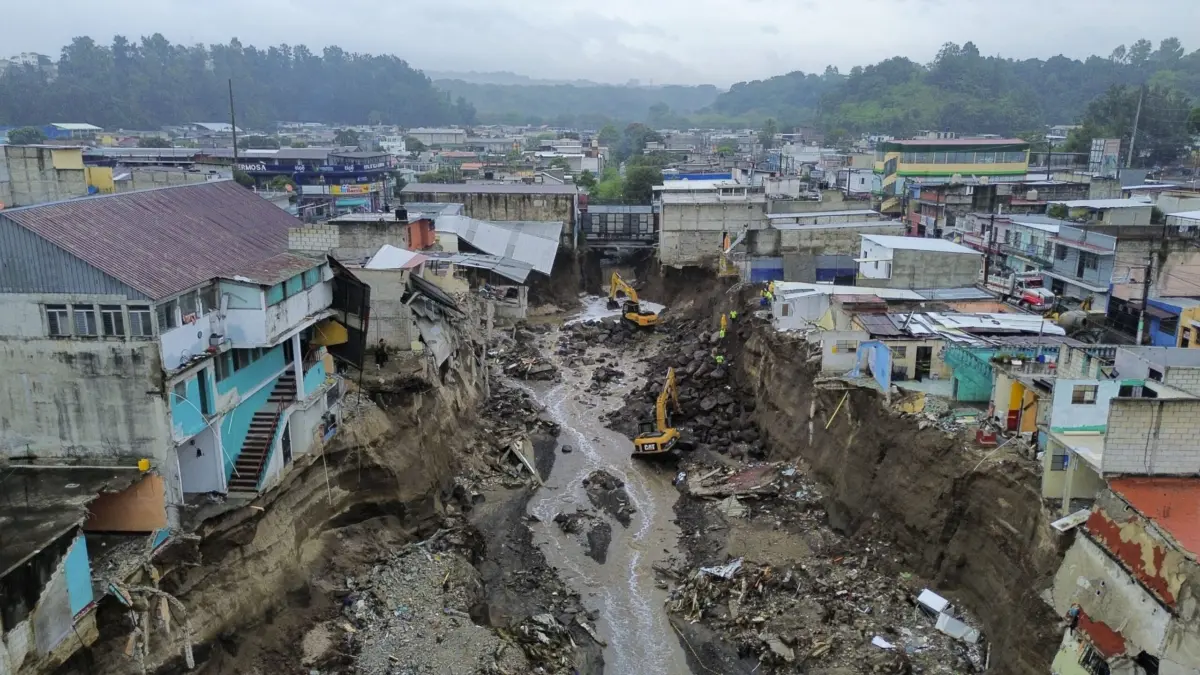
Today, those legacy playbooks are increasingly unreliable. Teleconnections are being warped by a warmer, more energetic atmosphere. Regional weather shocks are intersecting with chronic climate trends, transforming localized droughts into compounding agricultural crises and normal seasonal storms into catastrophic floods.
Marine ecosystems are facing an equally dire prognosis. In the eastern Pacific, commercial fishermen are already bearing the brunt of the phenomenon, as vital fish species migrate to deeper, cooler waters, leaving nets half-empty. Simultaneously, coral reefs worldwide face the threat of severe, widespread mass bleaching events as elevated ocean temperatures stress delicate symbiotic organisms to their biological limits.
Ultimately, this super El Niño serves as a glaring preview of the future. It demonstrates how natural climate variability and human-induced global heating can amplify one another, generating extremes that outpace both scientific models and societal adaptive capacity. Managing risk in this new era requires a fundamental pivot from reactive disaster response to proactive, cross-border resilience planning. As scientists continue to mine the data generated by this historic event, the clear and urgent message from the scientific community is that the era of climate surprises has arrived—and humanity must adapt with equal speed.