Executive Overview
For decades, the stop-motion animation medium has occupied a rare, almost sacred niche in the cinematic landscape. It demands a level of obsessive, manual craftsmanship that borders on the monastic, with artists moving physical puppets millimetre by millimetre across elaborate miniature sets, frame by painstaking frame. Few studios have elevated this punishing art form to the technological and artistic heights achieved by Laika. Following critically acclaimed and visually groundbreaking features such as Coraline, ParaNorman, The Boxtrolls, Kubo and the Two Strings, and Missing Link, the Oregon-based studio returns with its most ambitious, sprawling, and visually arresting project to date: Wildwood.
Slated for theatrical release on October 23, Wildwood—directed by Laika CEO Travis Knight—serves as an adaptation of the first novel in the celebrated Wildwood Chronicles fantasy series, written by Colin Meloy (frontman of The Decemberists) and illustrated by Carson Ellis. The film achieves a historic milestone for the studio and the medium at large, clocking in as the longest-ever stop-motion animated feature film with a staggering 131-minute runtime.
Yet, Wildwood is far more than a technical flexing of stop-motion muscle. It is a surprisingly dark, emotionally complex, and richly textured fantasy epic that comfortably earns its PG-13 rating. By blending the portal-fantasy archetypes of Spirited Away, The Chronicles of Narnia, and Labyrinth with a distinctly gothic sensibility, Knight and his army of craftspeople have constructed a living, breathing world.
While the film occasionally stumbles under the weight of its own narrative ambitions—particularly regarding the pacing of secondary character arcs and the depth of its primary protagonists—the sheer jaw-dropping artistry, world-building scope, and stellar voice cast ensure that Wildwood remains a monumental achievement in modern animation.
Detailed Chronology and Narrative Structure
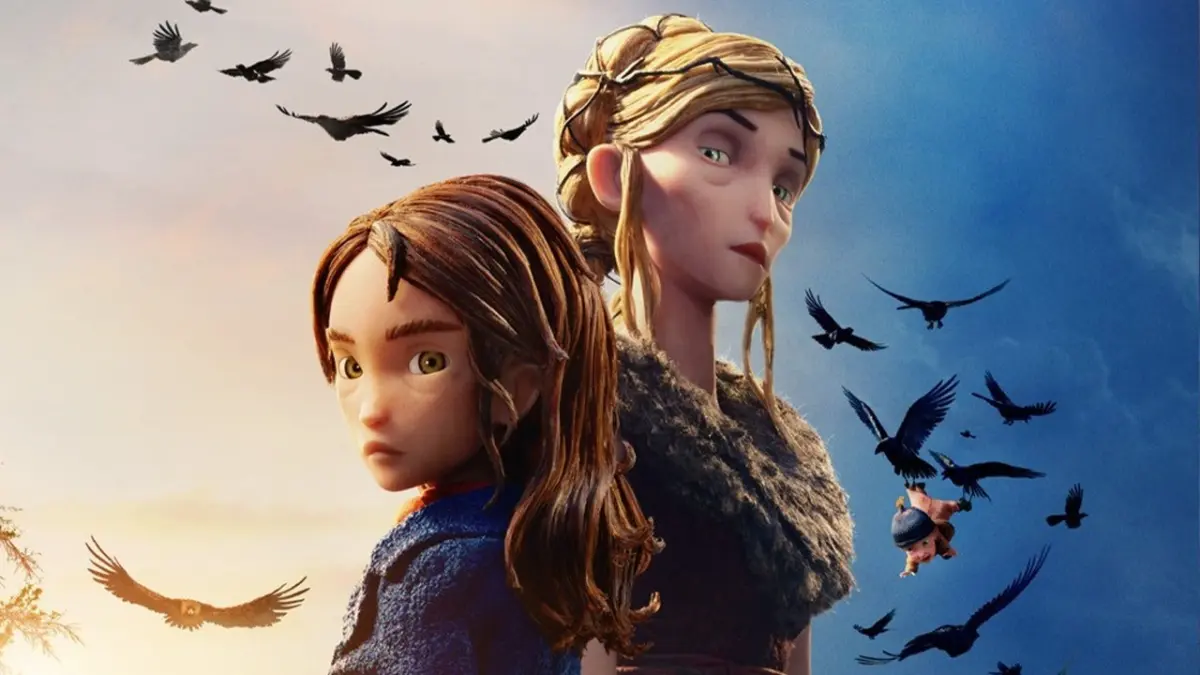
The narrative engine of Wildwood begins in the damp, moss-draped reality of Portland, Oregon—a city rendered with astonishing, localized authenticity by Laika’s model makers. The story centers on 13-year-old Prue McKeel (voiced with dynamic, high-stakes energy by Peyton Elizabeth Lee). Prue is a quintessential modern teenager, bristling against the well-meaning, granola-lifestyle rigidity of her parents (voiced by Maya Erskine and Jake Johnson).
The inciting incident strikes with shocking, unyielding brutality. While visiting a local park, a menacing murder of crows—acting under the mysterious orders of external forces—descends upon the area and kidnaps Prue’s baby brother, Mac. Refusing to accept local police inaction and shouldering the crushing guilt of the abduction, Prue resolves to track the avians into their point of origin: the forbidden, myth-shrouded wilderness that looms at the edge of the city, known simply as the Wildwood.
Crossing the Threshold: Into the Mystic Forest
Prue is soon joined by her tabletop RPG-loving classmate, Curtis (Jacob Tremblay), whose endearing awkwardness—typified by his stubborn loyalty to hot chocolate while his peers transition to coffee—provides a grounded human anchor. Once the duo crosses the perimeter into the Wildwood, the film sheds its contemporary aesthetic and unfurls a vast, medieval-style fantasy realm that is as terrifying as it is magnificent.
The forest is not a monolithic backdrop; it is a hyper-complex ecosystem of warring factions, subterranean societies, and anthropomorphic creatures. Prue and Curtis quickly trigger a cascading series of geopolitical conflicts simply by breaching the border. As they navigate ivy-ridden ruins, sun-dappled valleys, and heavily guarded enemy territories, the stakes elevate dramatically. Losses are real, setbacks have irreversible consequences, and characters die with a frequency that catches the viewer off guard. This is no sanitized children’s fable.
The Antagonist and the Gothic Undercurrent
Deep within the South Wood operates Alexandra (voiced by Carey Mulligan), a grieving governess whose traumatic backstory is established in the film’s macabre opening sequence. Mulligan delivers a quavering, edgy, and deeply vulnerable performance that anchors Alexandra’s descent into increasingly dark, authoritarian choices.
While Alexandra’s overarching schemes to quell her grief occasionally border on convoluted, her psychological motivation gives the film a poignant, gothic edge. Late-stage attempts to draw thematic parallels between Alexandra and Prue’s parents add layers to the narrative, even if those connections would have benefited from more deliberate seeding in the film’s first act.
The Epic Quest and Pacing Challenges
As the 131-minute runtime presses forward, the narrative splits. Curtis is separated from Prue for significant stretches, crossing paths with a band of heroic, outlaw woodland creatures. While Jacob Tremblay handles Curtis’s "zero-to-hero" progression with adept comedic timing, these extended narrative detours cause the film’s pacing to occasionally drag. Similarly, while Prue’s raw determination is palpable, the script sometimes leaves her defined purely by her mission to rescue Mac, missing opportunities to flesh out her internal world beyond her immediate guilt.
Despite these occasional structural stumbles, the sheer velocity of the action sequences rescues the pacing. From the frantic early crows’ kidnapping to large-scale military engagements between animal armies and Alexandra’s forces, Travis Knight orchestrates the camera movements with dizzying dexterity. The film effortlessly shifts between tightly grounded, intimate coverage and sweeping, gonzo tracking shots that utilize every inch of the meticulously populated miniature frames.
Supporting Context, Metrics, and Technical Craft
To understand the magnitude of Wildwood, one must examine the production metrics and the sheer logistical nightmare that Laika’s artisans conquered. At 131 minutes, Wildwood shatters previous industry benchmarks for stop-motion length, surpassing even Laika’s own previous epics like Kubo and the Two Strings (101 minutes) and modern stop-motion milestones from studios like Laika, Aardman, and Laika’s European contemporaries.
The Illusion of Life
The most striking aspect of Wildwood is its tactile authenticity. Long stretches of the film achieve such a high degree of visual immersion that viewers will routinely forget they are watching physical puppets on miniature sets. Every single blade of grass, weathered stone wall, and rustling canopy of leaves was physically sculpted, painted, and lit.
The film relies heavily on a dual-identity visual style:
- The Real World: The opening sequences set in Portland feature meticulous, hyper-realistic representations of Pacific Northwest architecture, streetscapes, and domestic interiors.
- The Fantasy Realm: The Wildwood itself transitions from vibrant, sun-drenched pastoral valleys to oppressive, shadow-drenched gothic citadels governed by Alexandra’s forces.
A Masterclass in Voice Acting
What Wildwood occasionally lacks in internal protagonist complexity, it more than compensates for with an elite, perfectly curated supporting voice cast. The animal characters are imbued with fierce personality, balancing base animalistic instincts with human-like eloquence:
- Mahershala Ali & Amandla Stenberg: Portray fierce, badass woodland bandits who command the screen.
- Richard E. Grant: Imparts regal gravitas as Owl Rex, the avian sovereign.
- Tom Waits & Charlie Day: Deliver a masterclass in dynamic contrasts as a rage-filled coyote soldier and a cowardly turncoat coyote soldier, respectively.
- Angela Bassett: Commands respect as General, a towering, majestic giant eagle.
- Awkwafina: Brings spunky, energetic charm to Septima, a clever and resourceful rat.
These vocal performances, combined with composer Dario Marianelli’s versatile orchestral score—which alternates seamlessly between rustic folk string arrangements and modern, electric guitar-driven soundscapes depending on the environment—cement the film’s immersive atmosphere.
Official Statements and Industry Insights
In promotional materials and interviews surrounding the release, director and Laika CEO Travis Knight has emphasized the thematic weight of grief, resilience, and maturity that anchors Wildwood.
"When you look at portal fantasies like Narnia or Spirited Away, they don’t just ask children to be brave; they ask them to look inward and confront the darkness of the adult world," Knight notes regarding the tonal maturity of the film. "With Wildwood, we didn’t want to pull our punches. The forest is beautiful, but it is dangerous, unforgiving, and deeply psychological. We wanted our audiences—young and old alike—to feel the genuine weight of those consequences."
Colin Meloy, co-creator of the source material, has frequently praised Laika’s dedication to retaining the atmospheric texture of the novels.
"Carson [Ellis] and I built this world out of a deep love for the Pacific Northwest and old-school folklore," Meloy stated. "To see Travis Knight and the artists at Laika take those pen-and-paper ideas and forge them into a physical, breathing, tactile reality is nothing short of miraculous. They didn’t just adapt our story; they gave it a beating heart."
Industry analysts have noted that Wildwood represents a crucial litmus test for the commercial viability of high-budget, hand-crafted animation in an era dominated by computer-generated imagery and artificial intelligence. By pushing the runtime past the two-hour mark, Laika is aggressively challenging the industry assumption that family-oriented stop-motion must remain short and bite-sized.
Future Outlook and Cinematic Legacy
As Wildwood prepares to land in theaters on October 23, its implications for the future of animation are profound. Laika has proven once again that stop-motion is not a dying, nostalgic relic of early cinematic history, but a dynamic, evolving medium capable of competing toe-to-toe with any CGI blockbuster in terms of scale, spectacle, and emotional resonance.
Critical Reception and Box Office Projections
Early critical consensus positions Wildwood as a frontrunner for awards season consideration, particularly in technical categories such as production design, score, and visual effects (integration of practical and digital enhancements). While the 131-minute runtime and the PG-13 gothic intensity may require audiences to adjust their expectations for a "family film," the sheer word-of-mouth power of its visual splendour is expected to drive strong theatrical longevity.
Expanding the Franchise
Given that Wildwood adapts only the first novel of the Wildwood Chronicles trilogy (which includes its sequels Under Wildwood and Wildwood Imperium), the film’s box office and critical performance will likely determine whether Laika embarks on its first-ever feature film franchise. Should Wildwood perform to expectations, the studio has laid a robust, intricately detailed foundation upon which future cinematic expeditions into the magical forest can be built.
Ultimately, Wildwood stands as a triumph of human stubbornness over digital convenience. In an age of algorithmic shortcuts, Travis Knight and his team have spent years building a world out of resin, wire, fabric, and sweat. The result is an arresting, flawed, yet undeniably monumental fantasy epic that invites viewers to step off the beaten path and get lost in the brambles.