Executive Overview
In an era dominated by hyper-optimized athletic subcultures, grueling pre-dawn wake-up calls, and rigid, data-obsessed training regimens, the modern endurance landscape can often feel intimidating to the everyday fitness enthusiast. Enter Hong, a Berlin-based designer, international flight attendant, and seasoned endurance athlete currently preparing for her seventh full marathon. Hong shatters the conventional, punishing stereotype of the long-distance runner. Her approach proves that achieving elite-level athletic milestones—such as running 42.2 kilometers consistently—does not require sacrificing comfort, social connection, or the simple pleasure of hitting the snooze button on a sluggish morning.
Hong’s journey is a compelling case study in modern athletic lifestyle integration. Balancing a demanding, globetrotting career in aviation with creative design work and an intensive marathon training block, she has engineered a philosophy where consistency and comfort are not mutually exclusive. Rather than viewing rest as a weakness, Hong incorporates holistic cross-training, deliberate recovery days, community engagement, and sensory rewards directly into the core of her training manifesto. This article provides an in-depth, day-by-day examination of Hong’s weekly routine, analyzing how contemporary runners can build sustainable performance metrics while maintaining psychological well-being, joy, and a vibrant social life.
Detailed Chronology: A Week in the Life of a Balanced Marathoner
To understand how a busy professional manages high-mileage training without burning out, one must look closely at the architecture of her week. Hong’s schedule is a masterclass in periodization, seamlessly weaving together high-intensity track work, long aerobic efforts, active recovery, and deliberate downtime.
Monday: Combating Fatigue with Rhythm and Canine Companionship
The working week begins under the heavy weight of a dual career. Juggling design deadlines and long-haul flights means Hong’s Monday mornings are rarely met with instant, boundless energy.
"I am a designer and also work as a flight attendant. Together with my training volume, my weeks are pretty packed. I must not lose the joy of running if I want to stay consistent. What I absolutely need for this is my running playlist," Hong explains.
When motivation dips, music serves as an immediate psychological reset. Furthermore, Hong employs clever behavioral tactics to manage mid-run fatigue. If breathlessness sets in during a session, she deliberately slows her pace and begins to sing aloud. This unconventional technique forces her to regain control of her breathing apparatus while injecting humor into the workout, regularly drawing amused smiles from passing pedestrians.
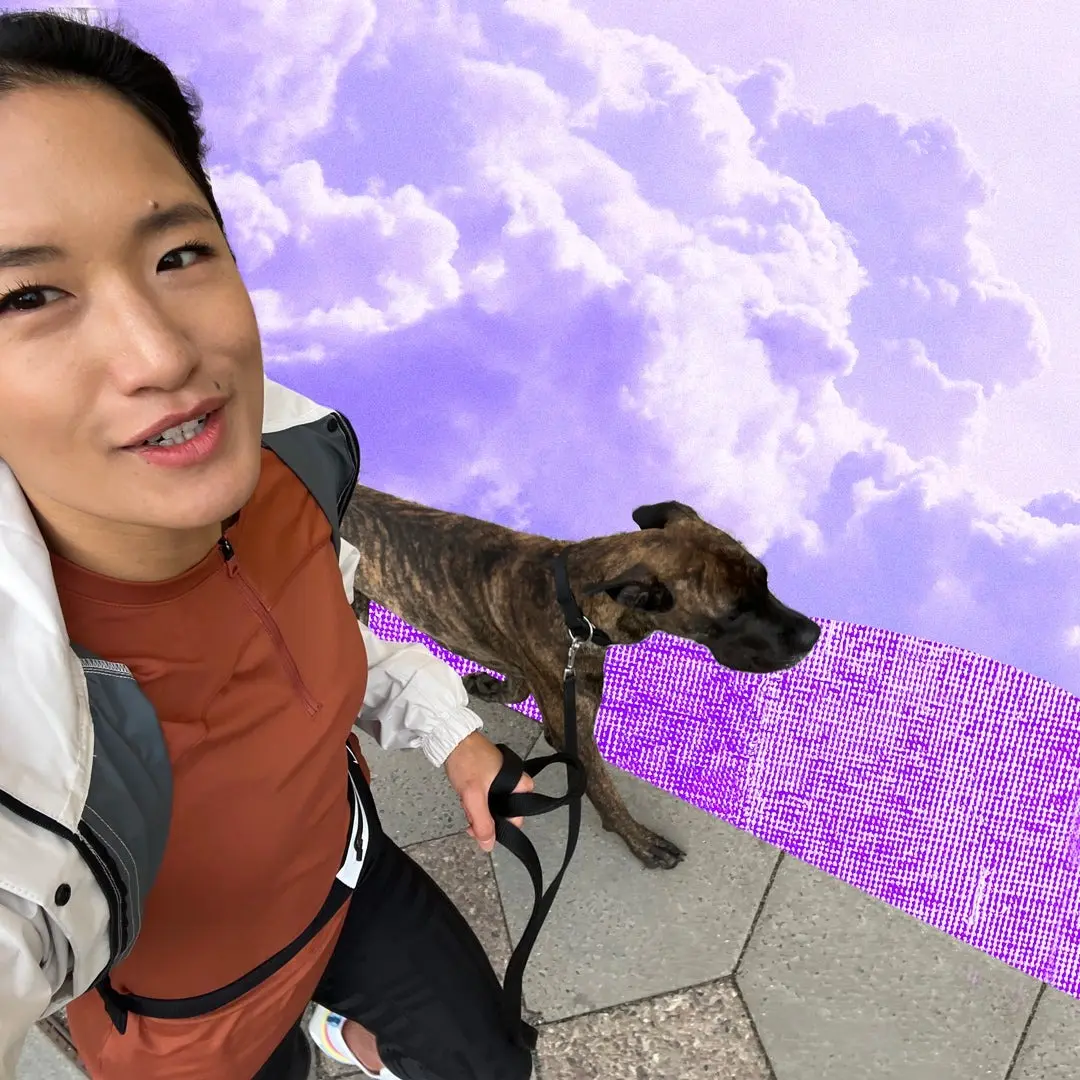
To spice up her Monday aerobic base-building, Hong enlisted the help of a friend’s dog, Mia. High-energy canine companions offer an unpredictable, dynamic element to standard training runs. "At the beginning, she pulls me; at the end, I pull her. I might not be as fast as her, but when it comes to sheer endurance, I win," Hong notes with a laugh.
Tuesday: The Pillars of Longevity—Yoga, Strength, and Physical Therapy
True marathon preparation extends far beyond logging miles on asphalt. On Tuesday, Hong completely bypasses running in favor of a structural integrity day. Her routine incorporates targeted strength training designed to bulletproof joints against repetitive impact injuries, complemented by mobility-focused yoga flows and regular physiotherapy sessions.
This multidisciplinary approach forms a protective foundation. By building muscular resilience and flexibility, Hong ensures that when she does step outside her comfort zone during intense runs, her body absorbs the shockwaves efficiently. Crucially, this prevents the debilitating post-workout exhaustion that plagues many amateur athletes, allowing her to transition smoothly into scheduled rest periods.
Wednesday: Navigating the Intersection of Social Life and Aviation Recovery
As a long-haul flight attendant, Hong’s circadian rhythm is constantly tested by time zones and cabin pressure. Wednesdays are purposefully designated as active rest days focused on mental decompression and human connection. Rather than forcing a recovery jog, Hong prioritizes her social ecosystem, meeting friends in Berlin and visiting local art exhibitions.
This deliberate disconnect from training metrics highlights a vital tenet of her philosophy: athletic longevity is inextricably linked to mental stimulation and community roots. Rest days are treated with the same sacred discipline as interval sessions.
Thursday: Pushing the Limits on the Track
Thursday shatters any lingering illusions that Hong’s routine is merely casual. This is high-intensity track day—a crucible designed to test anaerobic thresholds and pace management. Preparing for a marathon requires structured discomfort, and Hong approaches these sessions with a competitive, focused mindset.
"Today is one of those days where I push myself to the limit on my run. After all, I am training for a marathon right now. I love competitions. It gives me incredible joy to challenge myself," she states.
During these demanding track workouts, gear selection becomes paramount. Hong relies on footwear engineered for maximum energy return and structural security. "During running training, I like to wear the Nike Invincible 3 because they give me a secure feeling on every surface and I love the bouncy sole," she notes. The cushioning helps mitigate the brutal impact forces of high-speed track repetitions, ensuring her joints remain protected even as her heart rate climbs.
Friday: Cultural Re-entry and Active Decompression
Following Thursday’s punishing track session, Friday is characterized by profound physical fatigue. Aside from a gentle, restorative yoga session, Hong leans heavily into recovery mode. Because her aviation career keeps her away from the German capital for days at a stretch, she uses her time back home to soak in Berlin’s vibrant cultural offerings, rendezvousing with friends for gallery visits and casual strolls. This holistic recovery strategy ensures that her nervous system unwinds alongside her muscular tissue.
Saturday: The Meditative Urban Long Run
Saturday morning belongs to the Landwehrkanal—Hong’s signature testing ground. This route offers a dynamic, mixed-terrain canvas featuring asphalt, packed dirt, and grass.
Wearing noise-canceling headphones playing an engaging narrative podcast or ambient electronic music, Hong slips into a flow state. On certain days, she foregoes audio entirely, preferring to tune into the ambient symphony of the city.
Crucially, the Saturday run concludes not with immediate depletion, but with sensory indulgence. Her post-run ritual involves visiting a local market stall in Kreuzberg to treat herself to an artisanal coffee and a carefully chosen snack, proving that athletic dedication and culinary pleasure can happily coexist.
Sunday: Collective Endurance and Cultural Rewards
The culmination of the training week is Sunday’s long slow distance (LSD) run, executed in lockstep with her local running community, the Joy Run Collective.
Long runs performed in sub-optimal weather conditions require psychological fortification. Hong combats the winter chill and grueling distance through collective morale and thorough preparation. Following a successful multi-kilometer trek through Berlin’s historic Tiergarten park, the collective transitions from physical exertion to communal celebration.
Sunday afternoon centers around a long-awaited ritual: homemade dumplings prepared by a group host. "I’ve been looking forward to these dumplings all week," Hong admits, emphasizing that food should never be restricted or viewed purely as fuel, but rather as a celebration of hard work and community bonds.
Supporting Context & Metrics: The Science of Sustainable Mileage
Hong’s trajectory from self-proclaimed non-runner to sub-elite marathon enthusiast underscores a broader paradigm shift in contemporary sports science. For decades, the dominant cultural narrative surrounding endurance sports was rooted in puritanical austerity: high mileage, restrictive dieting, and a complete dismissal of personal comfort. However, modern physiological research increasingly supports Hong’s intuitive approach.
The Physiology of Consistency Over Intensity
Sports medicine data consistently demonstrates that overtraining syndrome (OTS) and overuse injuries account for the vast majority of dropped entries in marathon training blocks. By embedding yoga, strength training, and strict recovery windows into her schedule, Hong optimizes her tissue adaptation cycles.
- Structural Protection: Integrating weekly strength sessions directly combats the muscular imbalances inherent in linear running motions, reducing shin splint and patellofemoral pain syndrome risks by up to 50% in recreational runners.
- Psychological Sustainability: Burnout is as much a neurological phenomenon as it is a muscular one. By treating her runs with sensory enrichment—playlists, canine pacing partners, singing breath-control checks, and post-run market snacks—Hong maintains high dopamine levels associated with exercise, lowering perceived exertion rates.
Official Statements and Personal Philosophy
Reflecting on her four-year transformation from a hesitant novice to an experienced marathoner gearing up for her seventh 42K finish, Hong offers perspective on what the sport has truly given her:
"I started running four years ago. At 30, I am healthier and fitter than I ever was in my twenties. But running is so much more than physical training. I have gained a lot of self-confidence as a runner because I now know how much I can push myself, even when I feel a bit low. I have learned that consistency and comfort do not have to be mutually exclusive. I can set new limits for myself and feel good while doing it. Next stop: my 7th marathon."
This mindset challenges the "no pain, no gain" dogma that has historically alienated prospective runners—particularly women juggling demanding professional careers and creative pursuits. Hong’s philosophy champions autonomy, self-compassion, and structural joy.
Future Outlook: The Road to the Seventh Marathon and Beyond
As Hong zeroes in on the starting line of her seventh marathon, her training methodology offers a blueprint for the future of urban endurance sports. The modern runner is no longer willing to sacrifice lifestyle, mental health, or professional ambitions on the altar of athletic performance. Instead, the future belongs to integrated athletes who view training as a complementary pillar of a rich, multidimensional life.
Hong’s 3 Golden Rules for Joyful Endurance Running:
- Prioritize Ergonomic Comfort: Invest in footwear like the Nike Invincible 3 that provides dependable multi-surface traction and high-energy cushioning to protect joints during high-mileage blocks.
- Curate Your Auditory Environment: Build a dynamic playlist spanning disco, house, and techno to rescue motivation during low-energy slumps—or use conversational breath control techniques like vocalizing to reset pacing.
- Engage the Senses Post-Run: Combine scenic, varied urban routes with rich community rituals and intentional post-run culinary rewards to anchor exercise in positive reinforcement.
As Hong continues her training across the streets of Berlin, her journey serves as an enduring reminder: greatness on the marathon course does not require misery on the way there. With the right community, a balanced schedule, and an appreciation for the journey, anyone can trade the snooze button for the starting line.