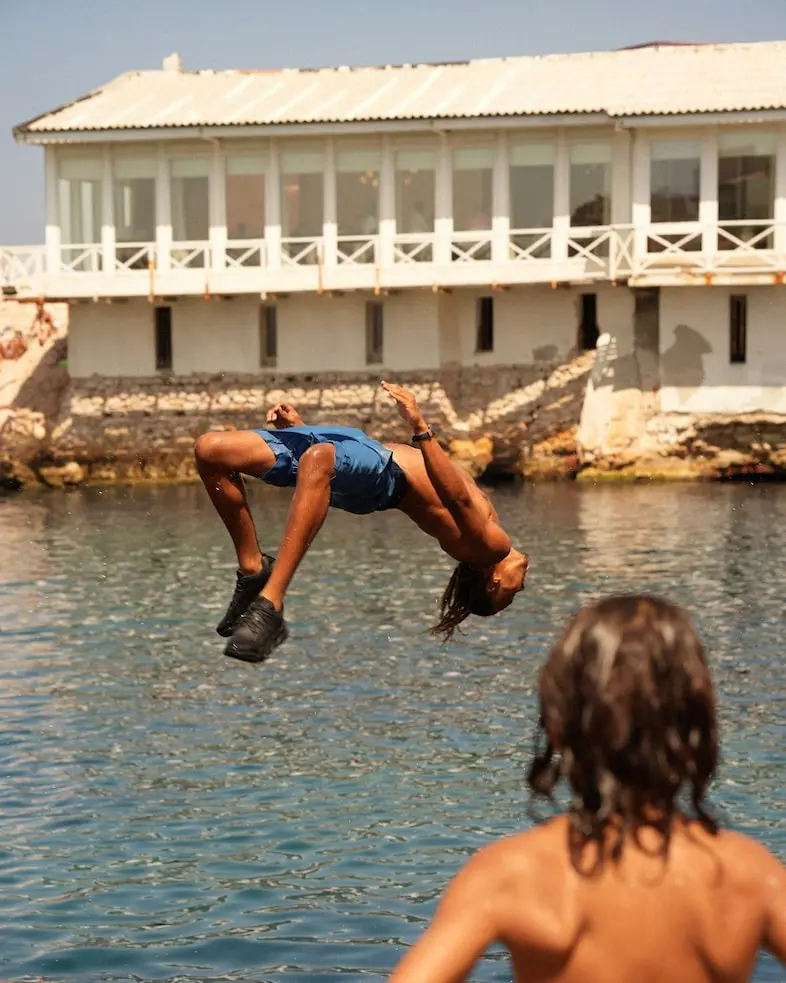
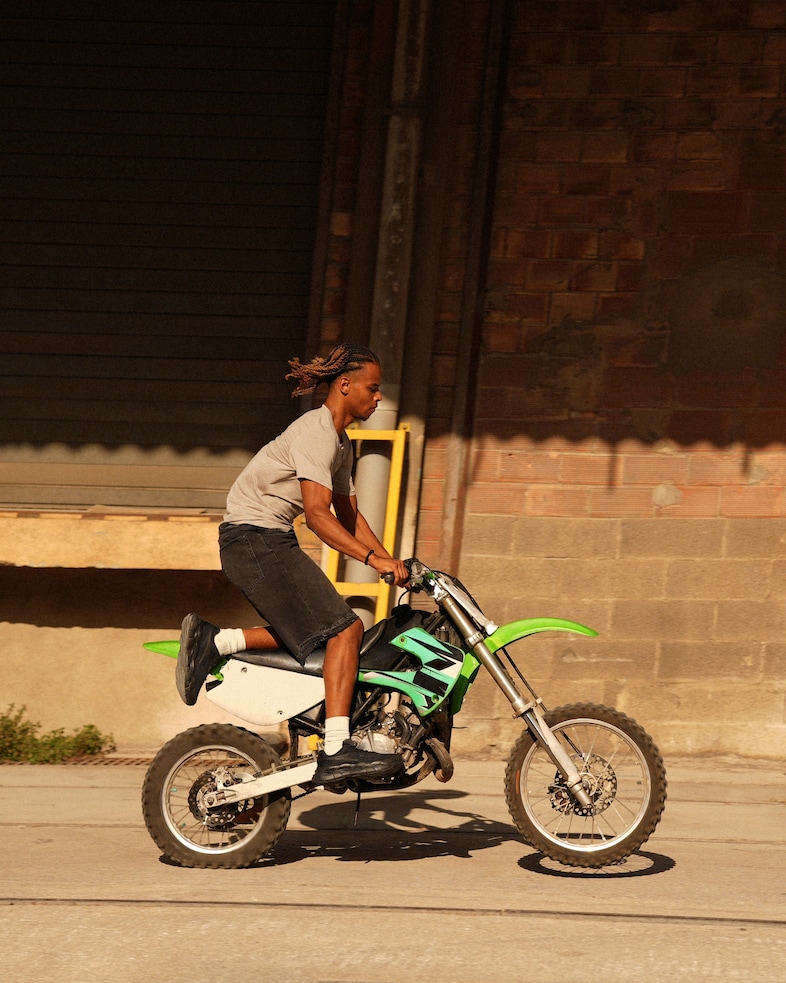
In an era defined by hyper-individualism, digital atomization, and the curated isolation of the social media feed, genuine human connection often feels like an artifact of a bygone era. We scroll through Instagram stories—watching strangers skate down sun-drenched boulevards, pop wheelies on dirt bikes, and launch themselves into glittering Mediterranean waves—experiencing a fleeting pang of envy before swiping to the next distraction.
Yet, for Ismael (known to all as Bako), Fares, Mohamed, and Sheri, these sun-baked cinematic vignettes are not digital content; they are Tuesday.
Hailing from wildly diverse social, economic, and cultural backgrounds, this tight-knit collective calls Marseille—France’s vibrant, gritty, and fiercely independent port city—their home. What began as a series of chance encounters at neighborhood skate parks, rocky Mediterranean beaches, and neighborhood corners has steadily evolved into something far more profound than a casual friend group. They have forged a family untethered by bloodlines or socioeconomic markers.
Part of Under Armour’s ongoing Rest Less series—an initiative spotlighting collectives that manifest restless, creative energy in real life (IRL)—the story of Bako and his friends offers a compelling blueprint for modern community. Eschewing competition in favor of radical solidarity, this Marseille crew demonstrates that the antidote to modern alienation is an abundance mindset rooted in mutual care, radical honesty, and a shared refusal to let anyone fall behind.
Detailed Chronology: From Strangers to Symbiosis
The Catalyst of Coincidence
Sociologists often study how physical environments dictate social structures, and few cities exert as magnetic a pull on their inhabitants as Marseille. As France’s oldest and most ethnically diverse metropolis, it acts as a cultural melting pot where different worlds inevitably collide. For Bako and his eventual brothers, the city functioned as an involuntary matchmaking service.
Bako recalls how the group’s formation was entirely organic. None of them planned to meet; there was no algorithm matching their shared interests or social graphs. Instead, they crossed paths the old-fashioned way: organically, through the friction and flow of urban life. One might be nursing a bruised elbow at a municipal skate park; another might be cooling off by the water’s edge after a long afternoon under the Provençal sun.
Gradually, recurring encounters birthed recognition, recognition birthed conversation, and conversation forged a deep, enduring bond. In a metropolis known for its social stratification, these public spaces served as egalitarian checkpoints, erasing the superficial barriers that typically segregate urban youth.
Testing the Edges: Health, Hardship, and Loyalty
A brotherhood forged in the sunlight is easily tested when the clouds roll in. For this Marseille collective, the true measure of their bond arrived not during celebratory beach days or high-speed motorcycle rides, but in the crucible of genuine adversity.
When Bako faced a severe health crisis that threatened his well-being and stability, the illusion of casual friendship evaporated, revealing the sturdy infrastructure of a true family. Rather than offering superficial sympathies or distancing themselves from the gravity of the situation, Fares, Mohamed, and Sheri closed ranks.
"They never stopped being there for me throughout that difficult time," Bako reflects, looking back on the period with visible gratitude. "Today, I’m just happy to be surrounded by them."
This trial by fire cemented a collective ethos: individual struggles are shared burdens. In a culture that often encourages people to weather hardships in isolation, Bako’s crew operates on the inverse principle—that vulnerability is the price of admission to true community, and that carrying weight together makes it exponentially lighter.
Supporting Context & Metrics: The Anatomy of Modern Urban Collectivism
To understand the resonance of Marseille’s youth culture, one must examine the broader socioeconomic and psychological landscape of contemporary European urban centers.
[The Modern Urban Dilemma vs. The Marseille Model]

 ├── Digital Isolation ──► Algorithmic curation & curated loneliness
 ├── Urban Stratification ──► Socioeconomic bubbles & gated socializing
 └── The Antidote (Bako's Crew) ──►
       ├── Radical Interdependence (The "5-5 Mentality")
       ├── Geographic Convergence (Marseille as an egalitarian hub)
       └── Resilience through Adversity (Collective crisis management)
The Crisis of Urban Loneliness
According to various sociological studies across the European Union, feelings of chronic loneliness and social isolation have risen sharply over the last decade, disproportionately affecting young adults. The shift toward remote work, gig economies, and digital-first socializing has transformed cities from vibrant public forums into collections of isolated bubbles.
In this context, collectives like the one in Marseille represent a counter-cultural movement. They are resisting what cultural critics term "the loneliness epidemic" by reclaiming physical public space. Skateboarding, swimming, and cruising down sun-baked streets are not merely recreational activities; they are intentional acts of spatial reclamation and social bonding.
Marseille as a Sociological Crucible
Marseille holds a unique position in the French cultural imagination. Historically a gateway to North Africa and the Mediterranean, the city is a mosaic of immigration, working-class resilience, and distinct regional identity.
Demographic Diversity: Marseille’s neighborhoods boast some of the highest multi-ethnic concentrations in France, creating a natural laboratory for cross-cultural dialogue.
Geographic Proximity to Nature: The juxtaposition of dense urban fabric with the immediate accessibility of the Calanques and the open sea encourages outdoor, communal living styles rarely possible in cities like Paris or London.
The "Cheaper, Grittier" Creative Boom: While rising living costs push artists and youth out of major Western capitals, Marseille has retained pockets of affordability that foster grassroots creative collectives, DIY skate scenes, and independent youth cultures.
Official Statements & The Five Pillars of Community
The philosophy governing Bako and his friends is neither accidental nor unarticulated. The group operates by an unwritten yet rigorously observed code of conduct—a set of principles that elevate their friendship from a social club into an unshakeable institution.
Below is the definitive breakdown of Bako’s rules for sustaining a community that feels like kinfolk:
1. Never Lie
"We’re a family, and we trust each other. As we say: ‘A lie takes the elevator, and the truth takes the stairs.’"
Trust is the bedrock of any sustainable collective. In a world where personal branding and performative authenticity dominate social media, Bako’s crew demands absolute transparency. Deception, however small, introduces friction into a system that relies on frictionless mutual support.
2. Always Stick Together
"Despite the ups and downs, we stay in the same car, and nobody jumps out while we’re on the road."
Loyalty in this collective is non-negotiable. It rejects the transactional nature of modern relationships, where people cycle through friends based on convenience or social utility. "Staying in the car" means weathering disagreements, personal failures, and external pressures as a unified front.
3. Laughter as Glue
"Honestly, when we’re together, we do not even have to try."
Joy is treated as an essential nutrient rather than a fortunate byproduct. The effortless nature of their collective humor acts as a pressure valve, relieving the accumulated stress of navigating life in an often unforgiving economic climate.
4. Move Forward Together
"For us, we like to lift each other up so that we can move forward together and see each other grow."
This principle dismantles the zero-sum game of modern ambition. Instead of viewing a peer’s success as a comparative failure, the group champions collective upward mobility. When one member advances professionally, creatively, or personally, the baseline for the entire group rises.
5. Sharing (The 5-5 Mentality)
"This is the most important one. The 5-5 mentality. It means that if I have something and you don’t, we have it. If you have something and I don’t, we have it. And if neither of us has it, we figure it out. In our family, when one person eats, everyone eats. And it applies to everything. We make sure that nobody is missing anything."
Perhaps their most radical doctrine, the "5-5 mentality" is an explicit rejection of capitalist scarcity models. It imports ancestral traditions of communal resource-pooling into the context of modern youth culture. Food, shelter, opportunities, and emotional labor are distributed according to need rather than individual capital generation.
Future Outlook: Escaping the Algorithm to Build Real-World Futures
As brands like Under Armour increasingly turn their lens toward grassroots collectives through campaigns like Rest Less, a broader cultural question emerges: How do localized, authentic expressions of community scale without losing their soul?
For Bako, Fares, Mohamed, and Sheri, the answer lies in refusing to commodify their brotherhood. Their momentum is driven by an abundance mindset that prioritizes raw self-expression, mutual accountability, and real-world presence over digital metrics. They are not curating an aesthetic for algorithmic consumption; they are living out a localized resistance strategy against modern isolation.
Looking ahead, the challenge for urban youth collectives across Europe will be maintaining these spaces of radical hospitality amidst the pressures of gentrification, economic precarity, and digital distraction. Yet, if Marseille’s history is any indication, resilient communities have a way of taking root precisely where the soil is roughest.
As the sun sets over the Vieux-Port, casting a golden hue across the concrete skate parks and the salt-sprayed promenades, Bako and his brothers are likely already mapping out tomorrow. They aren’t worrying about the algorithm, the economy, or the loneliness metrics. They are in the car, moving forward together, ensuring that when one of them eats, everyone eats.
And if you don’t already know what that feels like, you’d better hope you can find it—because as this Marseille crew proves, this is what life is truly all about.