Executive Overview
For decades, the conventional wisdom surrounding YouTube creation has pointed toward a singular, hyper-specific archetype: the high-energy, camera-natural digital native who has spent years mastering the craft of fast-paced editing and theatrical presentation. For midlife professionals, corporate executives, seasoned consultants, and established business owners, this prevailing narrative has functioned as an invisible barrier to entry. Convinced that the platform is an exclusive domain for the young and vivaciously charismatic, millions of domain experts sit on the sidelines, watching less-informed competitors capture market share and convert their digital footprints into sustainable business pipelines.
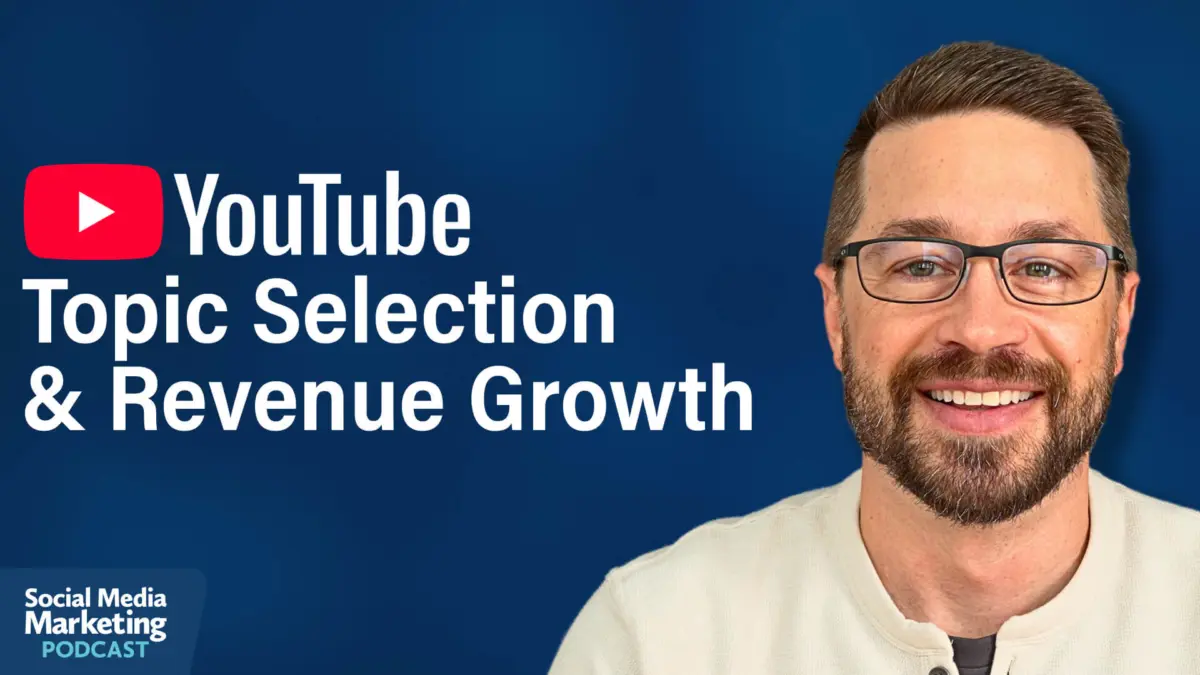
However, a fundamental shift is redefining the YouTube ecosystem. According to insights shared by YouTube growth strategist Ty Myers in a comprehensive co-creation with Michael Stelzner, the attributes that actually dictate long-term success on the platform are not inherited performative quirks, but rather hard-earned professional competencies. Skills honed over decades in sales, consulting, teaching, and executive leadership—specifically, the ability to diagnose a client’s core problem and communicate a clear, actionable solution—translate seamlessly into modern video formats.
This in-depth investigative feature outlines a definitive, data-driven framework for launching, scaling, and monetizing a business-focused YouTube channel from scratch. By prioritizing strategic pre-production, algorithmic alignment, and audience retention loops over raw technical polish, late-starting professionals can bypass years of obscurity and build robust, lead-generating media assets.
Detailed Chronology: The Four-Phase Business Blueprint
Building a sustainable YouTube channel requires treating the platform not merely as a repository for video files, but as a top-of-funnel distribution system for a broader enterprise. Ty Myers structures the initialization process into four distinct phases, emphasizing that the most critical work occurs entirely away from the recording studio.
Phase 1: Defining Strategic Goals and Core Mission
The foundational misstep for most new creators is ambiguity. Channels that attempt to appeal to a broad, generalized audience invariably fail to engage anyone. The starting point for any viable YouTube strategy is absolute clarity regarding why the channel exists. Is the primary objective to generate direct consulting inquiries, capture inbound B2B leads, sell a digital product, establish authoritative domain expertise, or secure a long-term professional legacy?
This singular choice dictates every subsequent decision down the line, including content strategy, keyword targeting, pacing, and how key performance indicators (KPIs) are evaluated. Without a defined mission, creators drift into reactive content creation, chasing fleeting viral trends rather than building a durable business asset.
Phase 2: Constructing the Viewer Avatar
Once the business mission is crystallized, the focus shifts to hyper-targeting the end consumer—the viewer "Avatar." Creators must interrogate the specific fears, latent desires, operational roadblocks, and desired transformations of their ideal client.
Crucially, this psychological specificity must be embedded into video metadata. The YouTube algorithm parses every spoken word within a video’s transcript while simultaneously analyzing the deep behavioral history of logged-in users. When titles, thumbnails, and verbal hooks explicitly signal who the content is designed for, the algorithmic recommendation engine can efficiently pair the asset with high-intent viewers.
Phase 3: Committing to Initial Reps (Quantity Over Perfection)
Professionals entering YouTube from successful corporate or entrepreneurial backgrounds frequently succumb to perfectionism, spending months fine-tuning their first video concept while never hitting publish. Myers advocates for a "reps-first" philosophy.
Early videos will inevitably feel wooden and lack polish, and that is entirely expected. Statistical analysis of creator trajectories indicates that around the 15-video mark, individuals typically cross a psychological threshold. Muscle memory takes over, anxiety dissipates, and their authentic professional personality begins to translate naturally through the lens.

Phase 4: Pivoting From Reps to Platform Leverage
Once a creator has published roughly 15 videos and established a reliable production workflow, the operational mandate shifts. The goal is no longer simply generating content; it is mastering YouTube as a sophisticated distribution architecture. Creators must study high-performing competitors within their niche, reverse-engineer outlier videos, and understand how the platform rewards sustained session duration. This is where exponential leverage is unlocked.
Supporting Context & Metrics: Mastering Pre-Production and Algorithmic Mechanics
A widespread misconception among emerging creators is that the production phase—scripting, recording, and editing—deserves the lion’s share of weekly time commitments. Myers turns this convention on its head, asserting that topic ideation, title formulation, and thumbnail design collectively account for 80% of a video’s ultimate performance.
The 60/40 Time Allocation Rule
For a creator dedicating 10 hours a week to YouTube, fully 6 hours should be relegated strictly to pre-production. This phase involves testing title variations, sketching out visual concepts for thumbnails, and pressure-testing whether a chosen topic has genuine market demand before investing 15 hours into recording and editing a polished video that nobody clicks on.
Data-Driven Topic Validation
Pre-production starts with the viewer avatar and works backward using rigorous keyword and trend validation tools.
- VidIQ Integration: Entering a core topic idea into growth tools like VidIQ surfaces vital metrics, including monthly search volume and exact phrasings preferred by active searchers.
- Outlier Analysis: By installing browser extensions for analytics tools, creators can scan established niches for "outlier videos"—content pieces that dramatically outperformed a channel’s historical average view count. Evaluating the recency and sustained view trajectory of these outliers reveals whether audience interest is compounding or flatlining.
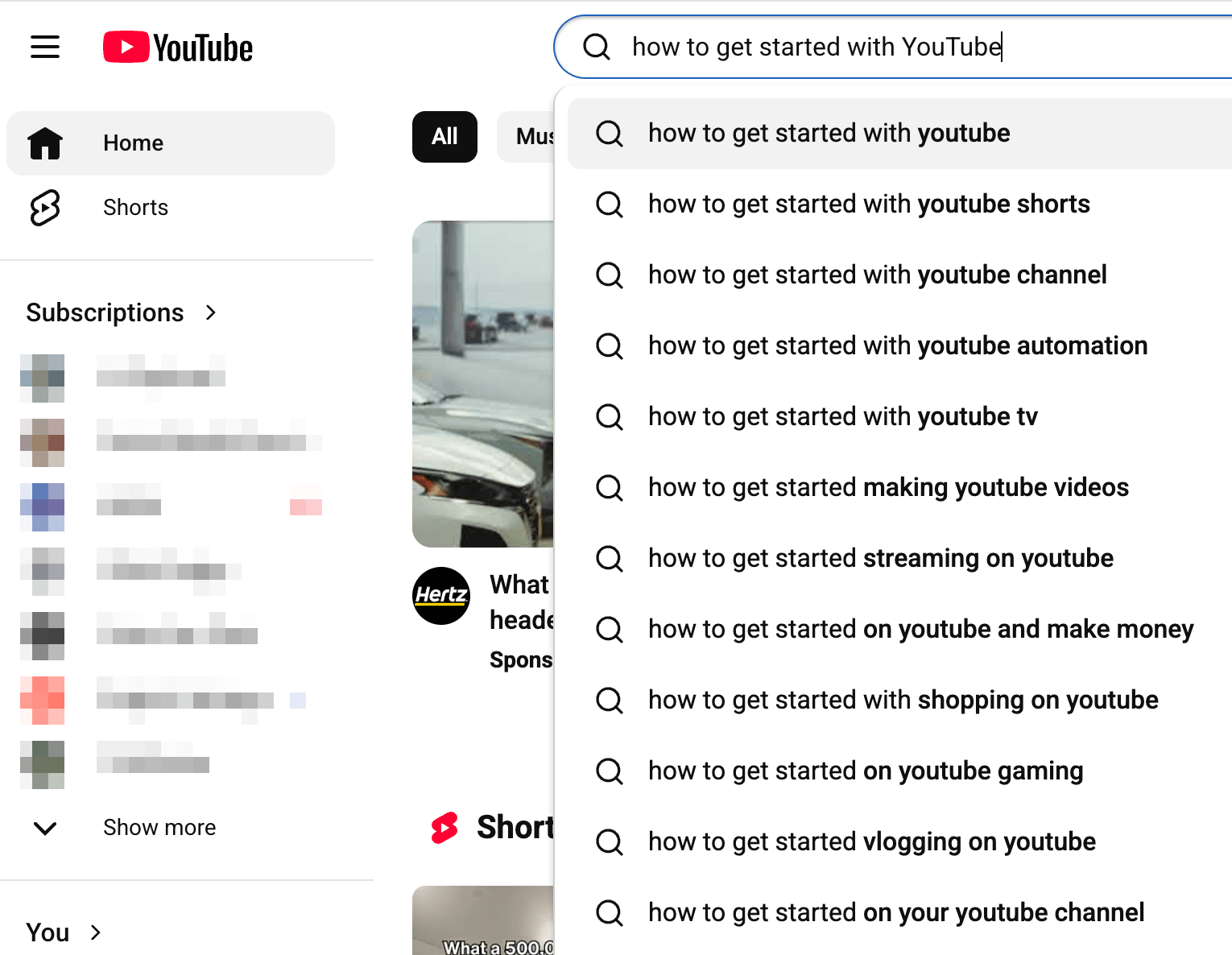
- Autocomplete Intelligence: YouTube’s native search bar autocomplete feature serves as a real-time focus group. Every suggested phrase populated while typing represents active, high-volume search intent, providing immediate guidance on how prospective clients naturally articulate their questions.
Emulation Versus Plagiarism
When analyzing high-performing outlier videos, creators must master the art of ethical emulation. Rather than blindly copying content, successful creators reverse-engineer the structural framework—observing how a hook is structured, how the narrative flows, and how the visual pacing is maintained—and fill that framework with their own proprietary stories, professional experiences, and industry analogies.
For instance, Kevin, operator of the Ask PawPaw YouTube channel, initially struggled to gain traction while producing educational content on retirement budgeting and Health Savings Accounts (HSAs). By conducting outlier research, Myers identified that simple walkthroughs of tiny home shed conversions at hardware store parking lots were drawing hundreds of thousands of views. Adapting the structural format while retaining his financial expertise, Kevin successfully pivoted his channel toward tiny home logistics and land acquisition, transforming an unviable niche into a high-demand business engine.
Official Strategies: Scripting, Hooks, and Revenue Funnels
Leveraging modern artificial intelligence tools can dramatically streamline the pre-production and scripting pipeline without sacrificing authenticity.
AI-Assisted Research and Conversational Scripting
For data-heavy industry topics, research platforms like Google NotebookLM allow creators to synthesize academic whitepapers, executive interviews, and industry reports into structured summaries. For script development, tools like Claude can be paired with keyword research integrations.
Rather than commanding an AI to write a generic script from scratch, Myers utilizes a conversational interview methodology. By prompting the AI to ask him questions one at a time about his personal experiences, client anecdotes, and specialized perspectives, the resulting script retains the raw, unvarnished context necessary to establish genuine professional authority.
The Anatomy of a High-Retention Hook
The opening 15 to 30 seconds of a video dictate its retention curve. A bulletproof hook comprises three core pillars:

- Direct Avatar Callout: Explicitly naming the target viewer within the opening seconds so they immediately recognize they are in the right place.
- The Curiosity Gap: Introducing a counterintuitive premise or challenging an entrenched industry assumption, creating an unresolved cognitive itch that compels the viewer to keep watching.
- Upfront Credibility: Briefly citing verifiable results or professional accomplishments before delivering the core content, assuring the viewer that their invested time will yield a high return.
Blended Monetization: Direct CTAs vs. Passive Trust Signals
For B2B creators and coaches, direct ad revenue (AdSense) is rarely the primary financial driver. Monetization happens through a strategic hybrid of explicit and implicit calls-to-action (CTAs):
- Explicit Mid-Roll CTAs: Placing a natural, unforced mention midway through a video connecting the current instructional topic to deeper work handled within a coaching program, directing viewers to the description link.
- Implicit Trust Signals: Casually referencing real-world client engagements and tactical observations throughout the narrative. Over time, these passive mentions demonstrate constant, hands-on industry experience, building a reservoir of trust that a traditional sales pitch can never replicate.
Future Outlook: Session Duration Loops and Minimalist Production
As the YouTube algorithm continues to evolve, platform architects increasingly prioritize session duration—the total aggregate time a user stays on the platform after clicking a video. Creators who engineer content to extend these sessions are disproportionately rewarded with algorithmic distribution.
Redesigning the Outro for Maximum Retention
Traditional creators often undermine their own channels by utilizing wrap-up music, summaries, or explicit goodbye signals, prompting viewers to click away. Myers advises completely eliminating traditional outros. Instead, creators should transition directly from the final piece of instructional value into an unresolved question or logical bridge that can only be satisfied by clicking the on-screen end-screen card leading to the next video. This seamless handoff initiates a compounding loop of session duration and distribution.
The Lean Production Paradigm
A common psychological roadblock for professionals is the perceived necessity of expensive, studio-grade production equipment. In reality, the barrier to entry has never been lower. High-definition recording requires nothing more than a modern smartphone mounted on an inexpensive tripod, paired with natural window light diffused by a curtain.
The single non-negotiable hardware investment from day one is audio fidelity. Utilizing a professional USB-C microphone—such as the Shure MV7+—directly plugged into a mobile device eliminates the friction of poor sound quality, which remains the number-one driver of audience drop-off. Everything else, from lighting arrays to dedicated cinema cameras, can be systematically upgraded as the channel generates revenue and business momentum accelerates.