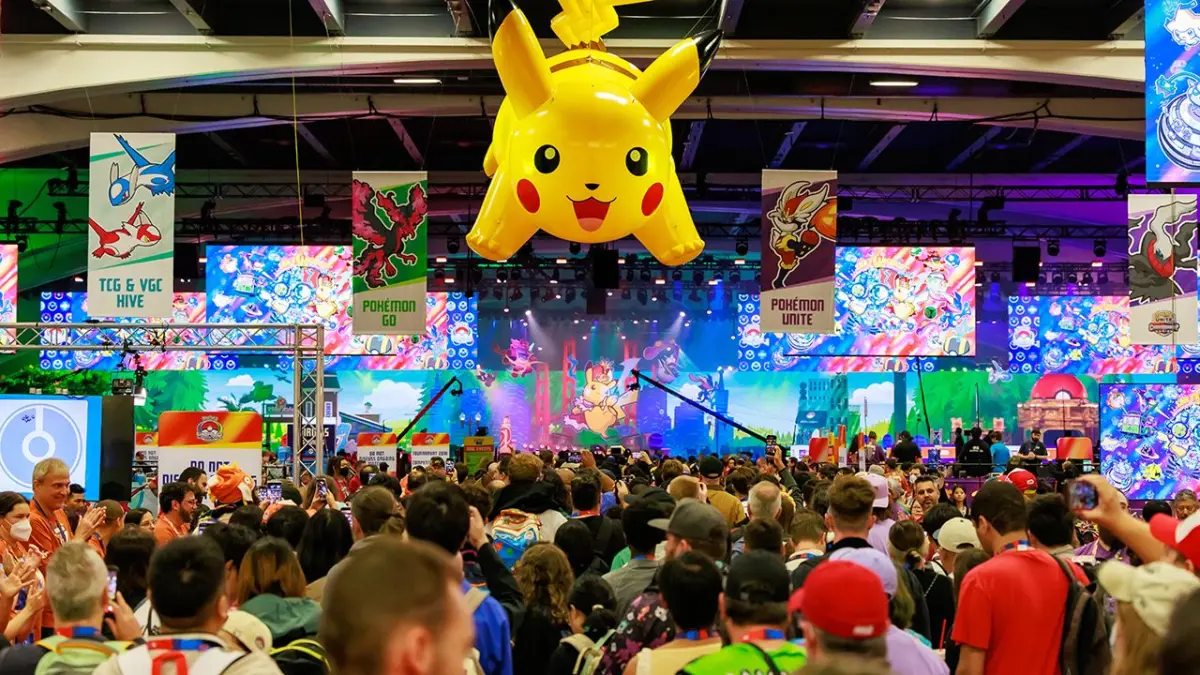
SAN FRANCISCO — That is certainly no way to catch ’em all.
What was supposed to be a triumphant celebration of competitive gaming and community camaraderie quickly devolved into a logistical nightmare over the final weekend of August 2026. The Pokémon World Championships, descending upon the Moscone Center in San Francisco, California, attracted tens of thousands of enthusiastic fans from across the globe. However, persistent inventory shortages in retail markets combined with a severely mismanaged exclusive merchandise event transformed a premier pop-culture gathering into a glaring case study in convention overcrowding, structural unpreparedness, and inadequate accessibility support.
With an estimated 50,000 attendees converging on the convention center, the three-day event—highlighted by high-stakes Pokémon Trading Card Game (TCG) tournaments, video game showdowns, and exclusive first-look opportunities—pushed the venue’s infrastructure to its absolute breaking point.
Executive Overview
The 2026 Pokémon World Championships arrived at a precarious time for The Pokémon Company and its extensive network of licensed retailers. For months leading up to the late-August convention, collectors and players faced widespread retail inventory shortages, driving up secondary market prices and inflating consumer demand. When thousands of dedicated fans learned that the San Francisco event would feature exclusive merchandise drops and interactive participation incentives, the psychological pressure to secure these items reached a fever pitch.
Chief among the attractions was the Pokémon XP "Pin Rally," a multi-station scavenger hunt designed to encourage attendees to explore the breadth of the Moscone Center by collecting 12 exclusive enamel pins. However, a profound mismatch between supply and demand—roughly 50,000 enthusiastic attendees vying for a pool of only 8,000 exclusive pins per day—triggered a cascading series of safety hazards, crowd-control failures, and public relations crises.
By the time the dust settled, multiple pin stations had been shuttered prematurely, the entire Sunday rally program had been canceled, and event organizers were facing intense public scrutiny over their handling of crowd safety and Americans with Disabilities Act (ADA) compliance.
Detailed Chronology: From Anticipation to Cancellation
The descent into chaos was swift, unfolding across the three-day span of the convention through escalating bottlenecks and communication breakdowns.
Friday: The Early Warning Signs
On Friday, August 28, the convention doors opened to eager crowds. Almost immediately, the fundamental flaws of the Pin Rally’s layout became apparent. By 11:00 AM—mere hours after the opening bell—at least half of the 12 designated pin-collection stations were forced to close their doors following reports of dangerously large, unmanageable crowds.
Staff members stationed throughout the Moscone Center found themselves unequipped to handle the overwhelming volume of participants. Attendees attempting to join queues were frequently told to disperse, clear out, and return later, creating an inefficient loop of milling crowds who had nowhere to go within the congested hallways.
Saturday: The Breaking Point
Recognizing the high stakes of limited-edition inventory, dedicated fans escalated their efforts on Saturday, August 29. Long before the exhibition hall opened its doors, lines began forming outside the Moscone Center as early as 6:00 AM.
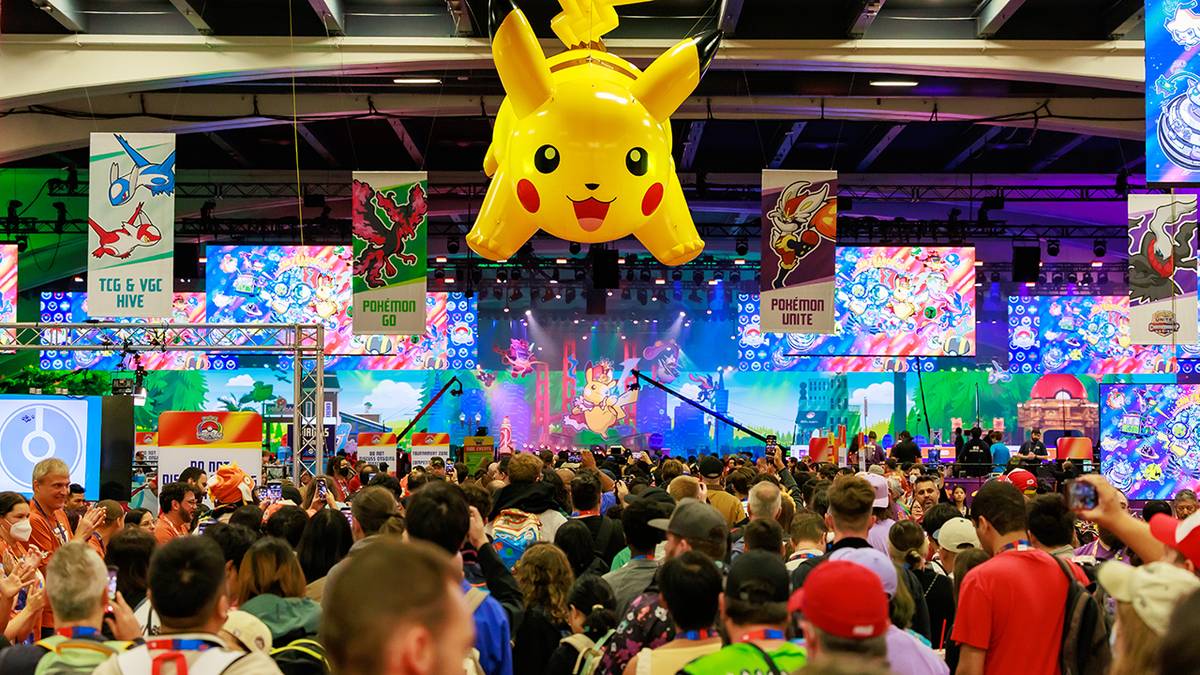
As doors swung open, the massive influx of people quickly spilled past designated queuing zones and out into the surrounding public spaces and streets. Videos shared widely across social media platforms depicted dense mobs pressing inward from all sides of the queue boundaries, overwhelming the capacity of the venue corridors.
When the queue for the high-demand Umbreon pin finally opened, physical pushing and shoving erupted within the crowd. Floor staff, desperately trying to establish order, lacked the physical space required to construct safe, orderly switchback lines. The corridor dimensions were simply too narrow to accommodate the sheer density of bodies funneling toward a single point of distribution.
Sunday: The Retreat and Shutdown
Recognizing the untenable nature of the crowds and the rising tension on the convention floor, event organizers—following consultations with local emergency safety teams—made the executive decision to pull the plug.
Late Saturday evening, attendees received official notifications via automated alerts. The message read: "Hello Trainer, Pin Rally is canceled for Sunday, August 30, 2026. Please check the schedule for other activities to enjoy!"
While the sudden cancellation successfully mitigated further safety risks for Sunday, it left thousands of disappointed fans empty-handed, turning social media into an outlet for widespread indignation. Veteran convention-goers took to platforms like X (formerly Twitter) to voice their outrage, with user @justintelmo writing: "Pokémon XP Pin Rally is probably the worst con experience I have ever had, and I’ve been attending cons since 2006."
Supporting Context, Metrics, and Public Reaction
To understand the friction points of the 2026 Championships, industry analysts point to a confluence of structural metrics and operational missteps that alienated a significant portion of the attendee base.
Supply and Demand Disparities
The core catalyst of the weekend’s friction was a stark imbalance in resource allocation. Industry insiders estimate that roughly 50,000 badge-holders attended the San Francisco event. In contrast, official allocations provided a mere 8,000 exclusive pin sets per day across the 12 stations.
Basic mathematics dictated that only a fraction of the attendees could ever hope to complete the rally legitimately. When combined with months of retail droughts affecting products across the wider Pokémon ecosystem, fans viewed these exclusive pins not merely as souvenirs, but as rare commodities whose acquisition carried significant social and financial capital. This perception supercharged the urgency, turning a casual convention activity into a high-stakes competitive scramble.
The Emergency Services Response
Rumors quickly circulated across digital forums claiming that the San Francisco Fire Department (SFFD) had aggressively stormed the convention center and forcefully shut down the event. However, official clarifications from municipal authorities painted a more measured picture.
A spokesperson for the San Francisco Fire Department confirmed to press outlets that fire prevention crews had indeed assessed the situation on-site due to overcrowding concerns spilling into public thoroughfares. Rather than issuing a unilateral shutdown mandate, fire officials engaged in collaborative risk assessments with event organizers. Following these safety consultations, the organizers voluntarily elected to shutter the pin stations to maintain compliance with local occupancy and egress regulations.

The Human Cost: Accessibility and ADA Failures
While the operational chaos surrounding the Pin Rally drew widespread headlines, perhaps the most damaging aspect of the weekend was the reported systemic failure regarding accessibility for disabled attendees.
Convention spaces are legally and ethically obligated to provide robust accommodations under the Americans with Disabilities Act (ADA), ensuring that all participants—regardless of physical or neurological ability—can navigate the environment safely. However, numerous testimonials from the 2026 World Championships highlighted a stark absence of these vital protections.
One attendee, Hayley (known online as @bugcatcherhay), shared a harrowing firsthand account of her experience with Polygon. Hayley, who manages a mental disability, found herself trapped within the dense, volatile mob forming around the Espeon and Umbreon pin queues on Friday morning.
"The ADA at Pokémon Worlds is essentially nonexistent. I’ve had like 3 breakdowns today (especially when caught in the Espeon pin rally line disaster) and all the staff have to say is ‘sorry please move along.’"
According to Hayley, when she attempted to escape the crushing press of the crowd, her body’s natural "fight, flight, fawn, or freeze" response took over due to acute anxiety and sensory overload. Immobilized by the panic of the surrounding mob, she had to rely on a companion to extract her from the hallway.
When she subsequently approached convention staff to explain her medical vulnerability and seek guidance on alternative accommodations, the response exposed a severe training gap. Staff members reportedly admitted that no specific protocols were in place for neurodivergent or panic-prone attendees. In a misguided attempt to be helpful, a staff member ushered her back into the very queue from which she had just fled, compounding her distress.
Other attendees echoed these grievances, reporting that elevators were arbitrarily restricted or closed to general crowds without clear prioritization for mobility-impaired individuals, and that on-site personnel routinely offered conflicting or uninformed guidance regarding ADA access routes.
Future Outlook and Industry Implications
As the dust settles on San Francisco and the global Pokémon community reflects on the weekend’s events, significant questions remain regarding the future management of premier organized play events.
The 2026 World Championships served as an uncomfortable wake-up call for The Pokémon Company and its event operations partners. Moving forward, large-scale geek culture and gaming conventions must reckon with several critical imperatives:
- Inventory Scarcity Management: Manufacturers must address root supply chain vulnerabilities to prevent artificial scarcity from driving hyper-aggressive consumer behavior at physical events.
- Virtual Queuing Architecture: Physical-only lines for limited-edition items are increasingly obsolete for events of this scale. Implementing digital lottery systems, virtual queue numbers, or timed-entry passes can eliminate dangerous morning stampedes.
- Comprehensive ADA Training: Accessibility accommodations cannot be treated as an afterthought. Event organizers must mandate rigorous, baseline ADA training for all security, hospitality, and floor staff to ensure vulnerable attendees are protected rather than dismissed.
- Venue Capacity Redundancies: As fandoms grow, selecting venues with expansive corridor widths, robust HVAC capacities, and dedicated crowd-staging zones outside main traffic arteries will be paramount to passing local fire inspections.
Until organizers implement these structural reforms, future gatherings risk repeating the mistakes of San Francisco—proving once again that treating fans like wild Pokémon trapped in a cramped cage is a surefire way to alienate the very community that sustains the franchise. At the time of publication, The Pokémon Company has not responded to requests for comment regarding the logistical and accessibility failures of the weekend.