Executive Overview
The global climate system has reached a troubling new milestone. According to newly released data from Copernicus, the European Union’s climate agency, August closed out a planetary summer of unprecedented warmth, earning the title of the hottest month ever recorded in human history. This alarming climate marker capped a brutal season of extreme weather characterized by back-to-back heat waves, devastating wildfires, and agricultural strain across multiple continents.
The crisis is driven by a compounding convergence of long-term anthropogenic climate change—primarily fueled by the relentless burning of fossil fuels—and a strengthening El Niño cycle unfolding across the eastern Pacific Ocean. Together, these forces are pushing global atmospheric and marine systems into uncharted territory.
As scientific agencies across the globe sound the alarm, the implications extend far beyond abstract temperature anomalies. From tens of thousands of excess heat-related fatalities in Western Europe to historic agricultural droughts and smoke-choked skies spanning North America, the real-world costs of a warming planet are mounting rapidly. With the full warming effects of the current El Niño cycle expected to peak in the coming months, climate scientists warn that the records set this summer may soon be broken, bringing humanity closer to irreversible ecological tipping points.
Detailed Chronology of a Scorching Season
The summer of 2026 rewrote the meteorological history books across both hemispheres, leaving a trail of broken temperature records that spanned from early spring through the end of August.
A Summer That Broke the Mold
The grim trajectory of the season became clear as early as June, which Copernicus data confirmed was the second-hottest June ever recorded globally. This momentum continued into July, which tied with July 2024 as the second-hottest July in modern observation history, trailing only the historic spike of July 2023.
However, it was August that ultimately pushed the system to its breaking point. Copernicus satellites and surface stations confirmed that August tied with July 2023 for Earth’s hottest single month on record. Traditionally, July holds the statistical peak for annual global warmth, making August’s record-shattering temperatures an extraordinary deviation from historical climate norms.
North America and the Dust Bowl Benchmark
The planetary trends were mirrored at the regional level with terrifying precision. On the first Wednesday of September, the National Oceanic and Atmospheric Administration (NOAA) released a definitive assessment declaring the summer of 2026 to be the hottest ever recorded in the United States.
In a stark indicator of the severity of the crisis, the season surpassed the United States’ previous long-standing heat benchmark, which had been set during the catastrophic Dust Bowl era of the 1930s. Unlike the localized, drought-driven heat waves of the Dust Bowl, however, the 2026 heat dome spanned the entire North American continent, bringing relentless triple-digit temperatures from coast to coast and overwhelming regional energy grids.
Ecological and Human Toll in Europe
While North America baked, Western Europe endured a summer of catastrophic environmental and human consequences. Researchers estimate that at least 35,000 excess deaths occurred across Germany, France, and Spain due to prolonged, back-to-back heat waves that overwhelmed healthcare infrastructure and targeted vulnerable populations, particularly the elderly.
The excessive heat also turned vast swaths of European terrain into tinderboxes. Unprecedented wildfires raged through the continent, forcing emergency evacuations and triggering terrifying meteorological phenomena. In France, firefighters and meteorologists documented the nation’s first-ever pyrocumulonimbus cloud—a massive fire-generated thunderstorm created by the intense heat of a wildfire that can propagate its own lightning and erratic winds. Meanwhile, in Spain, raging fires threatened a critical NASA deep-space observatory, forcing emergency interventions to save billions of dollars in vital scientific infrastructure.
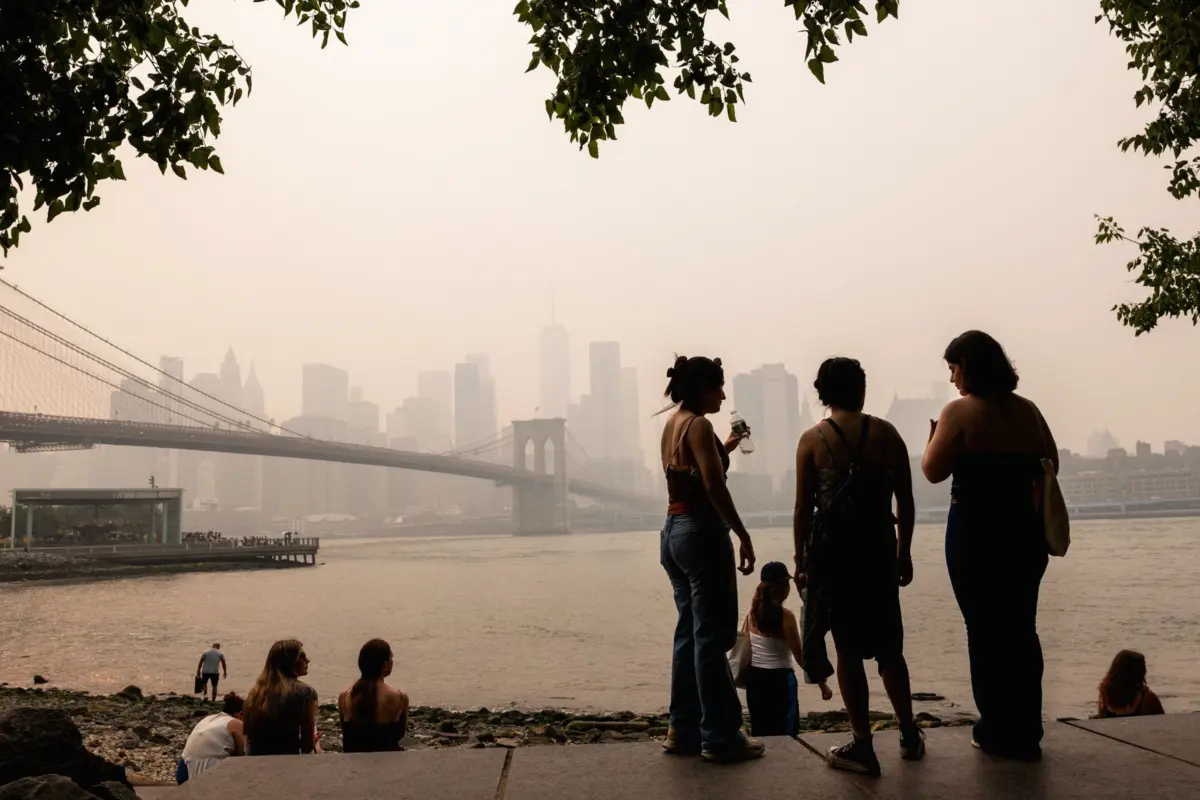
Across the Atlantic, the North American continent fared no better. A relentless series of wildfires in Canada and the northern United States pumped millions of tons of particulate matter into the atmosphere, blanketing the northeastern United States in apocalyptic, smoke-choked hazes that grounded flights and triggered hazardous air quality alerts for millions of citizens.
Supporting Context & Metrics: The Science Behind the Heat
To understand the mechanics of the 2026 climate crisis, researchers point to a dangerous feedback loop between oceanic warmth and atmospheric greenhouse gas concentrations.
The Numbers: 1.65 Degrees Above Preindustrial Levels
According to Copernicus data, the global average temperature for August 2026 soared to 1.65 degrees Celsius (3 degrees Fahrenheit) above the preindustrial average (calculated using the 1850–1900 baseline).
While individual monthly spikes do not represent a permanent breach of global climate stabilization targets, they act as flashing warning lights. Climate scientists have long warned that humanity must prevent the long-term average global temperature from permanently breaching the 1.5-degree Celsius threshold established by the Paris Agreement. Breaching this threshold increases the statistical likelihood of triggering catastrophic tipping points, such as the collapse of major ice sheets, the die-off of coral reef ecosystems, and the permanent destabilization of critical ocean currents.

Oceans on the Boil
The atmosphere was not the only system under stress. Global sea surface temperatures reached historic highs throughout the summer, driven by the dual pressures of oceanic heat absorption and atmospheric warming.
Samantha Burgess, the strategic lead for climate at the European Center for Medium-Range Weather Forecasts (ECMWF), emphasized the interconnected nature of these anomalies:
"Combined with record global sea surface temperatures and the warmest summer on record for Western Europe, these observations show how climate change is driving extremes across both the atmosphere and the oceans. The impacts of these conditions are increasingly being felt by communities, economies, and ecosystems across the world."
The El Niño Accelerator
Supercharging these baseline climate trends is a powerful, strengthening El Niño event. El Niño is a naturally occurring climate pattern originating in the tropical Pacific Ocean that typically results in a temporary global temperature increase of 0.1 to 0.2 degrees Celsius.
However, the 2026 El Niño has proven to be an anomalous, supersized event. Forecasted to reach record strength, its full thermal impact on the planet’s average temperature typically lags by several months. Consequently, climate modelers warn that the peak atmospheric warming effects of this El Niño will not fully manifest until well into next year, setting the stage for an even hotter summer in 2027.
Official Statements and Global Reactions
The convergence of statistical milestones and human tragedies has galvanized international bodies, prompting stark warnings from global leaders and scientific organizations.
United Nations Secretary-General António Guterres delivered a sobering assessment of the summer’s events, tying the seasonal extremes directly to systemic policy failures regarding fossil fuel dependency:
"This summer’s scorching heat, raging wildfires, and deadly floods are a warning of what lies ahead. We must make the overshoot above 1.5 degrees as small and short as possible. That demands an overshoot of ambition."
Guterres’s remarks echoed warnings published in a recent UN synthesis report, which concluded that the global community is on a trajectory to permanently cross the 1.5-degree Celsius warming threshold within the decade unless immediate, aggressive decarbonization policies are enacted.
Scientific leaders have similarly abandoned cautious diplomatic language in favor of urgent calls to action. In briefing notes accompanying the Copernicus data release, European climate researchers stressed that the incremental policy adjustments currently pursued by major industrial nations are wholly inadequate for managing the pace of planetary warming. The data demonstrates that climate change is no longer a slow-moving, theoretical projection; it is an active, destabilizing force reshaping the global economy, straining municipal water supplies, reducing agricultural yields, and claiming tens of thousands of lives annually.
Future Outlook: Navigating the Uncharted Anthropocene
As the Northern Hemisphere transitions into autumn and the Southern Hemisphere braces for its own warming season, the long-term outlook remains fraught with risk.
The immediate future hinges on two critical variables: the duration and intensity of the current El Niño cycle, and the global commitment to curbing greenhouse gas emissions. Because greenhouse gases—chiefly carbon dioxide and methane—remain trapped in the atmosphere for centuries, the planet is locked into a baseline of warming that will continue to intensify weather extremes regardless of immediate mitigation efforts.
However, scientists emphasize that every fraction of a degree matters. Halting the escalation of global temperatures requires an immediate, managed phaseout of fossil fuels, a massive scaling-up of renewable energy infrastructure, and investments in global climate adaptation frameworks to protect vulnerable urban and rural populations from recurring heat domes.
The summer of 2026 will likely be remembered not as an isolated meteorological anomaly, but as the moment humanity officially crossed into a volatile new chapter of the Anthropocene—a warning that the safety margins of the Earth’s climate system have officially been exhausted.