Executive Overview
In the era of hyper-abundant generative intelligence, the economic cost of producing content, code, and reports has plummeted toward zero. Today, virtually anyone can prompt an artificial intelligence model to instantly spin up one hundred short-form content ideas, execute exhaustive market analyses, or draft comprehensive technical documentation. However, this democratization of output has created an unprecedented paradox: while the volume of available material has exploded, its average quality has plummeted.
Because generic models draw from generalized parameters, default AI output invariably sounds, reads, and looks the same. Audiences, consumers, and corporate decision-makers have developed a collective radar for unrefined machine-generated work. When a deliverable—whether it be a client-facing strategy document, a weekly executive update, or a digital marketing asset—bears the unmistakable hallmarks of unedited AI, it triggers an immediate erosion of trust and perceived value. In modern business communications, average is no longer acceptable; average is invisible.
To solve this dilemma, professionals must shift their operational paradigm. The objective of leveraging generative tools should no longer be merely to accelerate production speed, but rather to fundamentally elevate quality across every consequential deliverable.
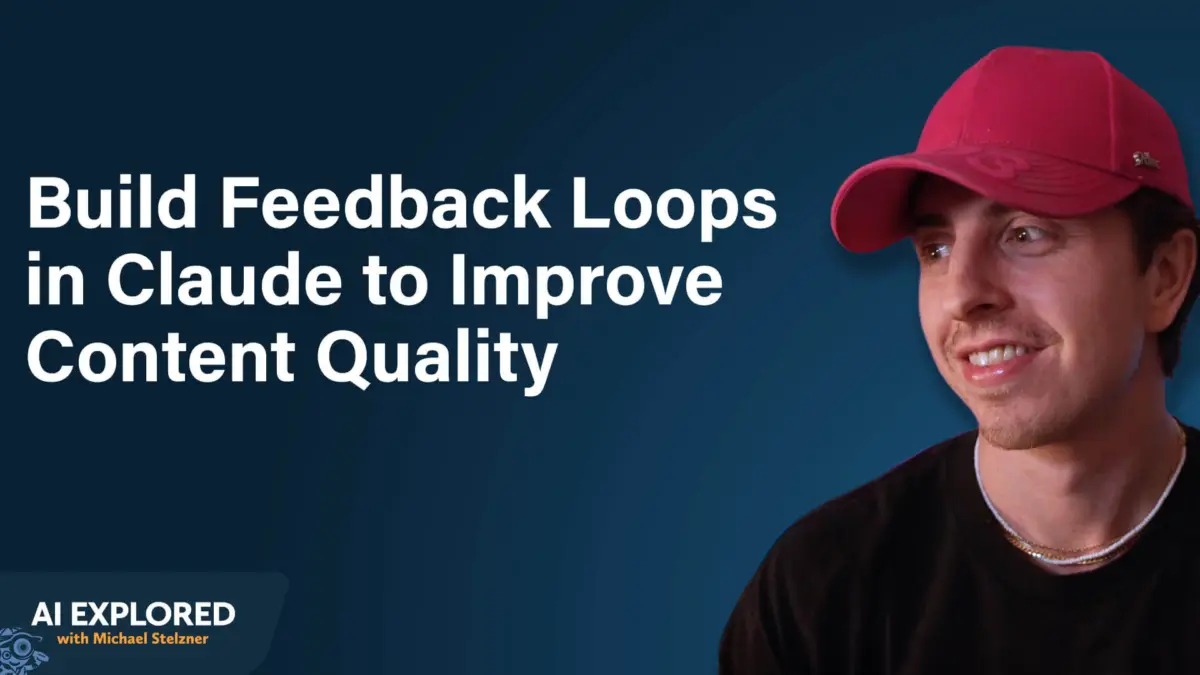
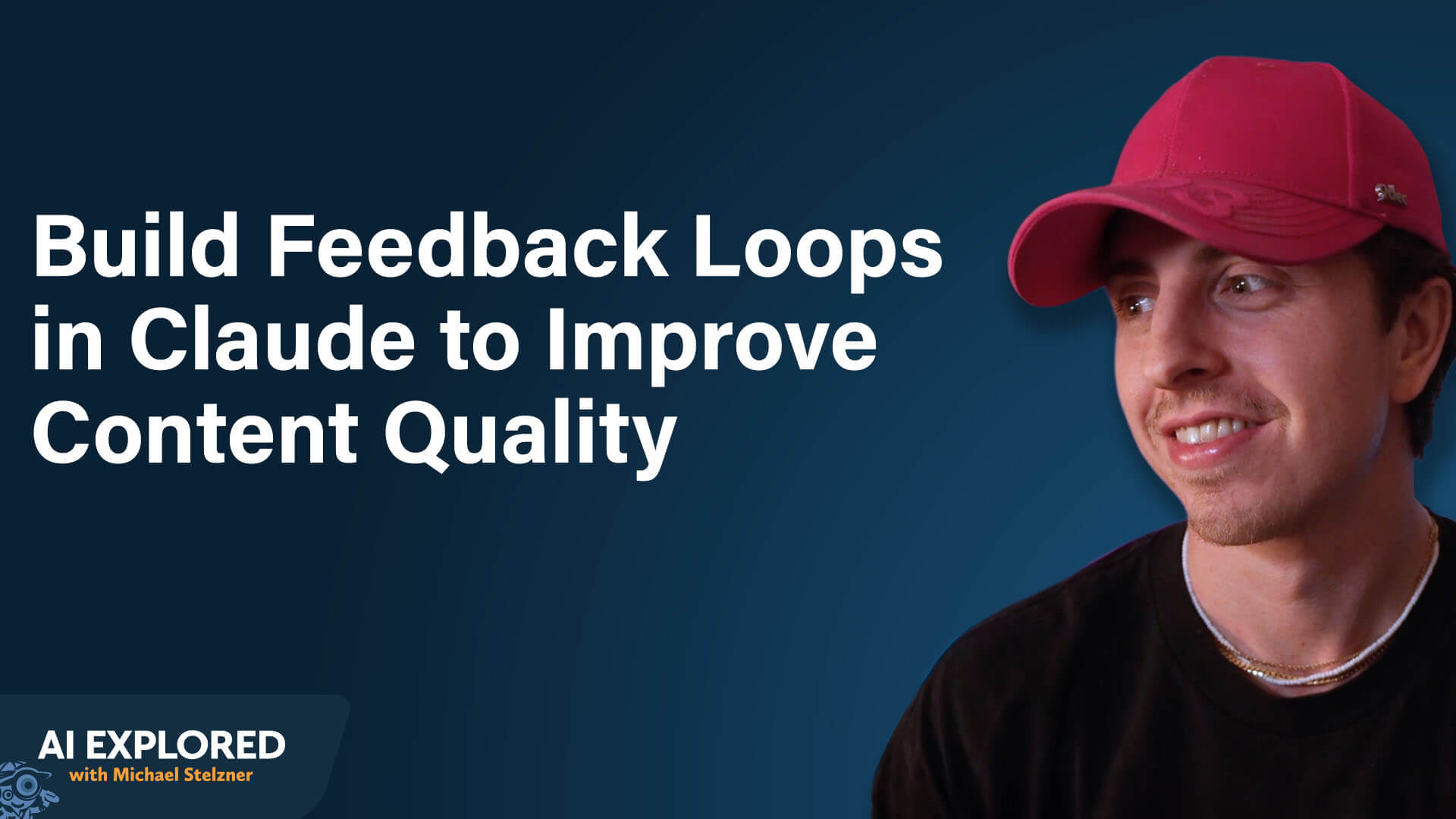
Drawing from insights recently shared by expert strategist Austin Marchese alongside Michael Stelzner on the AI Explored podcast, this report details a systematic framework for achieving superior AI quality. By establishing a robust local knowledge base, leveraging voice-driven workflow skills, and training specialized internal AI personas to simulate real-world feedback loops, professionals can effectively catch up to 100% of critical content gaps before a human eye ever sees the final product.
Detailed Chronology: The Evolution of AI Quality Control
The methodology of transforming baseline generative outputs into high-tier, highly differentiated deliverables requires a deliberate, multi-tiered technical architecture. Rather than relying on single-shot prompting, elite practitioners approach AI configuration as an engineering problem divided into five distinct operational phases.
Phase 1: Structuring the Technical Foundation
The journey toward elite AI content quality begins with setting up an isolated, context-rich environment. According to Marchese, the most accessible entry point for most professionals is a dedicated project workspace within platforms like Claude. By uploading granular audience preferences, historical communications, and past feedback directly into a project’s contextual memory, users ensure that subsequent conversations draw from a proprietary baseline rather than generic web data.
For advanced technical users working inside local-first ecosystems like Claude Cowork or Claude Code, this architecture expands to encompass local machine directories. Organizing information into a two-tier knowledge base—popularized by AI researcher Andrej Karpathy—solves the problem of contextual fragmentation:
- The "Raw" Layer: Contains completely unprocessed data files, including raw audio-to-text call transcripts, raw message exports, and unedited notes.
- The "Wiki" Layer: Holds AI-processed summaries, synthesized learnings, and distilled behavioral frameworks.
When a specialized workflow runs, the system queries the wiki layer for maximum speed and efficiency, automatically falling back to the raw directory whenever it requires a specific direct quote or granular data point. This architecture marks the definitive boundary between "renting intelligence" via ephemeral cloud prompts and "owning intelligence" as proprietary corporate and personal intellectual property.
Phase 2: Identifying High-Impact Force Multipliers
Not every task within a professional workflow warrants deep optimization. Applying the Pareto principle (the 80/20 rule) is essential for identifying the vital 20% of tasks where dramatic quality improvements yield 80% of the aggregate strategic impact.
- For a digital creator, this might involve hyper-optimizing YouTube video packaging, titles, and visual thumbnails.
- For a corporate executive, it could mean perfecting the weekly risk-assessment report delivered to the C-suite.
- For a consultant, it centers on refining high-stakes client deliverables.
By isolating these force-multiplier tasks, teams avoid the trap of trying to optimize every low-value operational workflow simultaneously.
Phase 3: Synthesizing AI Personas from Empirical Data
The cornerstone of advanced quality control is replacing slow, human-to-human review cycles with lightning-fast, highly accurate human-to-AI-clone feedback loops. In a legacy corporate environment, submitting a report to a manager initiates a painful sequence of revisions, delays, and credibility-draining corrections.
The AI persona methodology introduces an automated quality assurance gate. By feeding historical interaction data—such as Slack threads, email exchanges, text-message transcripts, and direct critique patterns—into a dedicated AI persona, creators can simulate how a specific decision-maker will evaluate a piece of work. The goal is to catch and remediate 90% to 100% of potential objections before the real recipient ever opens the file.
Phase 4: Constructing an Internal AI Focus Group
Moving beyond a single reviewer, advanced practitioners build an entire "internal focus group" comprised of multiple distinct AI personas. Each persona embodies a different target archetype—such as the risk-averse financial decision-maker, the hyper-technical developer, or the price-sensitive consumer.
When a draft deliverable is processed through this multi-agent focus group, the system outputs a structured benchmark evaluation, scoring the work across standardized criteria. Furthermore, creators can establish an auxiliary "board of advisors" by cloning the strategic frameworks of recognized industry thought leaders to evaluate high-level positioning and conceptual integrity.
Phase 5: Calibration and Iterative Refinement
The true test of any AI quality system lies in its calibration against reality. Marchese demonstrated this iterative loop by generating content titles, running them through an AI clone of an actual colleague, and then testing the output against the real human’s actual reactions.
When discrepancies arose, the exact conversational context of the real-world feedback was fed back into the system to update that specific persona’s behavioral skill instructions. After a series of micro-corrections, the AI clone achieved such high fidelity that the human feedback loop became entirely redundant.
Supporting Context & Metrics: The Modern AI Landscape
The urgency surrounding content differentiation and quality control is underscored by empirical data from the broader marketing and business intelligence sectors.
According to data highlighted in comprehensive industry evaluations, the vast majority of professionals are navigating the generative AI revolution entirely on their own terms:
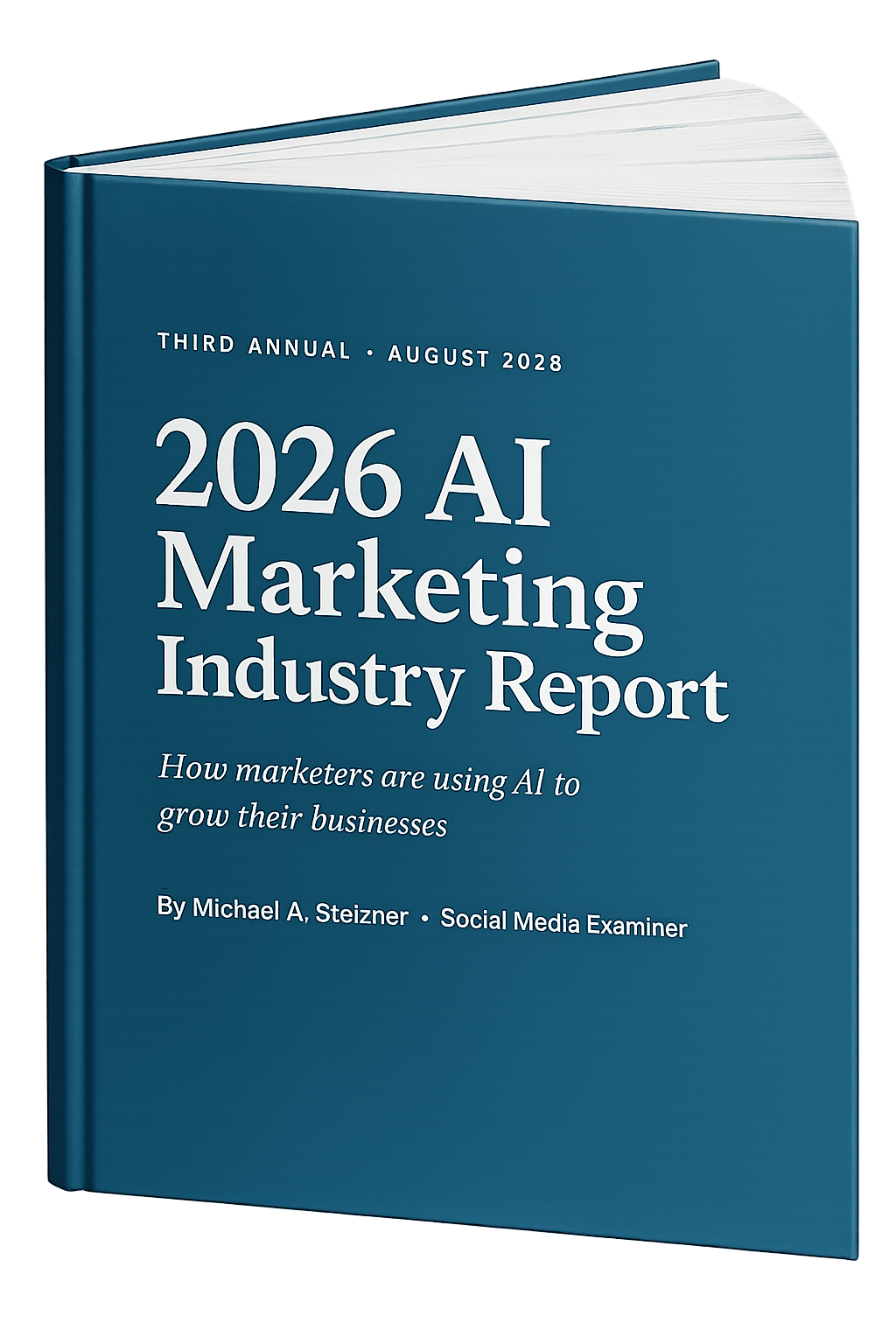
- 85% of marketers learn how to leverage artificial intelligence through independent, ad-hoc experimentation rather than formal institutional instruction.
- Only 7% of organizations provide structured, comprehensive internal training programs for generative tools.
- Over 50% of practitioners personally finance their own enterprise AI software subscriptions out of pocket to maintain a competitive edge.
Simultaneously, empirical case studies validate the extraordinary ROI of implementing structured quality control systems. For instance, creators who have integrated multi-agent AI focus groups and iterative persona calibration into their content workflows have documented staggering growth trajectories, with some reporting up to a 10x expansion in audience acquisition metrics over compressed operational timelines. This metric confirms a fundamental truth: when output quality crosses a critical threshold of resonance, organic distribution scales exponentially.
Expert Insights and Operational Guidelines
To operationalize these strategies effectively, industry leaders recommend discarding manual prompt-writing in favor of conversational, voice-driven architecture.
The Power of Voice-Driven Prompt Engineering
Typing out complex system instructions often causes users to omit subtle structural nuances, formatting constraints, and tonal markers. Elite practitioners utilize voice-to-text engines—such as Claude’s native voice interface or specialized applications like Wispr Flow—to dictate detailed workflow instructions naturally. Speaking aloud captures conversational depth and contextual richness, which advanced language models can seamlessly translate into pristine, reusable system skills.

Establishing Repeatable "Skills"
Rather than reinventing prompts for every new project, users should codify workflows into persistent "skills." A skill functions as a saved set of executable instructions. Initiating an automated skill creation process requires a collaborative dialogue rather than manual coding:
"Interview me to create an internal focus group skill where I want to take a raw output, have a curated audience set review it, and provide structured qualitative feedback. Ask me any diagnostic questions necessary to build this skill and identify blind spots I might not be considering."
Letting the artificial intelligence interview the creator to construct its own governing parameters consistently outperforms human-authored prompts, ensuring zero logical gaps in the execution layer.
Future Outlook: Owning Your Intelligence Infrastructure
As foundational model providers continue to update their public-facing interfaces, the competitive advantage in the knowledge economy will no longer belong to those who merely know how to query an LLM. Instead, the ultimate differentiation will lie in system architecture and proprietary knowledge ownership.
Professionals and enterprises that transition from "renting intelligence" via fragile web prompts to "owning intelligence" through localized knowledge bases, modular project structures, and self-correcting persona clones will insulate themselves against platform shifts. If a better foundational model is released tomorrow, system owners can effortlessly port their structured knowledge bases, custom skills, and calibrated feedback loops to the new environment without missing a beat.
Ultimately, the future belongs to those who view artificial intelligence not as a replacement for human thought, but as an uncompromising quality-control mirror. By forcing every output to survive rigorous simulated critique before it meets the world, creators and executives can ensure that their work consistently rises above the noise of an automated age.