Executive Overview
The science fiction landscape in video games has long yearned for a successor to the throne once occupied by BioWare’s original Mass Effect trilogy. While numerous titles have attempted to capture the precise blend of squad-based tactical combat, deep socio-political world-building, and intimate character-driven storytelling, few have come close to replicating that classic formula. Enter Owlcat Games, a studio celebrated for its densely layered role-playing titles, which is now turning its considerable ambitions toward the hard-science universe of James S.A. Corey’s The Expanse.
During a hands-on preview session at Gamescom 2026, industry observers spent 90 uninterrupted minutes immersed in a mid-game slice of The Expanse: Osiris Reborn. Slated for release in the spring of 2027 for PlayStation 5, Windows PC, and Xbox Series X, the third-person sci-fi epic immediately channels the spirit of its spiritual predecessors. Yet, it grounds itself firmly in the brutal, Newton-abiding realities of The Expanse universe.
Set alongside the volatile geopolitical events of the franchise’s first three seasons (or the initial novels, Leviathan’s Wake and Caliban’s War), Osiris Reborn trades the glamorous heroics of James Holden and the crew of the Rocinante for a more personal, localized perspective. Players assume the role of a customizable protagonist accompanied by their identical twin, J, and a ragtag roster of companions bound by duty, survival, and desperation.
With an estimated 30-hour campaign ahead, the project faces a unique set of challenges: navigating the hurdles of a licensed property years after the television series concluded, while delivering the high-caliber mechanical depth and narrative resonance that modern RPG fans demand. If the early preview is any indication, Owlcat is well on its way to crafting one of the most faithful and satisfying media adaptations in recent memory.
Detailed Chronology: A Hands-On Journey Through Ganymede Station
The 90-minute demo dropped players directly into “Beetle in the Anthill,” a mission estimated to sit roughly ten hours into the overarching narrative. The setting: Ganymede Station, a celestial body orbiting Jupiter, operating in the messy aftermath of the catastrophic destruction of Eros Station. The player’s party operates under a contract with Pinkwater, a notorious private military corporation, dispatched to extract deeply compromising intelligence on Protogen—the sinister corporate entity responsible for orchestrating much of the systemic devastation that plagues the solar system.
From Political Intrigue to Immersive Simulation
Crucially, the mission challenged expectations by prioritizing atmospheric exploration and problem-solving over immediate violence. True to the ethos of The Expanse, which treats conflict as a systemic failure of politics rather than a mere video game mechanic, the first half hour of the demo was entirely combat-free.
Instead, players were thrust into an immersive-sim environment reminiscent of immersive titles like Hitman. In one standout sequence, accessing a high-security storage container required cutting through a bureaucratic web of red tape. A Protogen guard refused entry without explicit clearance from the local shipping officer. The shipping officer, in turn, demanded a valid invoice. Lacking the necessary documentation or even a baseline template, the player was forced to hack a nearby terminal to generate a falsified manifest. However, completing the form required the specific serial number of the target container, necessitating a careful sweep of the docks to find an optimal vantage point for a visual scan.
While this multi-layered objective demands far more mental effort than simply clearing a room with a rifle, it rewards the player with a profound sense of agency and world immersion. It underscores a fundamental truth about Owlcat’s design philosophy: pacing is everything, and letting a world breathe makes the ensuing violence all the more impactful.
Tactical Combat and the Return of the Classic Shooter
When the shooting finally commenced, Osiris Reborn delivered on its frequent comparisons to the original Mass Effect trilogy. The third-person, cover-based mechanics are crisp, responsive, and demanding. Players must actively direct two squadmates, issuing strategic orders to suppress enemy advances, flank positions, and trigger specialized abilities.
There is a frenetic tension to the shootouts that evokes the golden age of third-person action games. Navigating the firefights requires a delicate balance of tactical planning and instinctual repositioning. Every piece of cover matters, and a poorly timed push can spell disaster against well-armed corporate mercenaries.
Interestingly, eagle-eyed players will notice a subtle design choice that bridges gameplay and lore: you cannot jump. While developer representatives at Gamescom declined to officially confirm the rationale on record, the creative implication is unmistakable. The vast majority of The Expanse takes place within spaceships, rotating stations, or low-gravity celestial ports where characters rely heavily on magnetic boots to maintain traction. In such an environment, uninhibited leaping is both impractical and lethal. Whether this is an intentional narrative restriction or a structural gameplay choice, it serves as a brilliant nod to hard sci-fi physics.
Supporting Context & Metrics: Building the World of The Expanse
The Expanse: Osiris Reborn is designed to be a substantial single-player experience, boasting an estimated run time of roughly 30 hours, fluctuating depending on player exploration habits and side-content completion.
Production Design and Environmental Storytelling
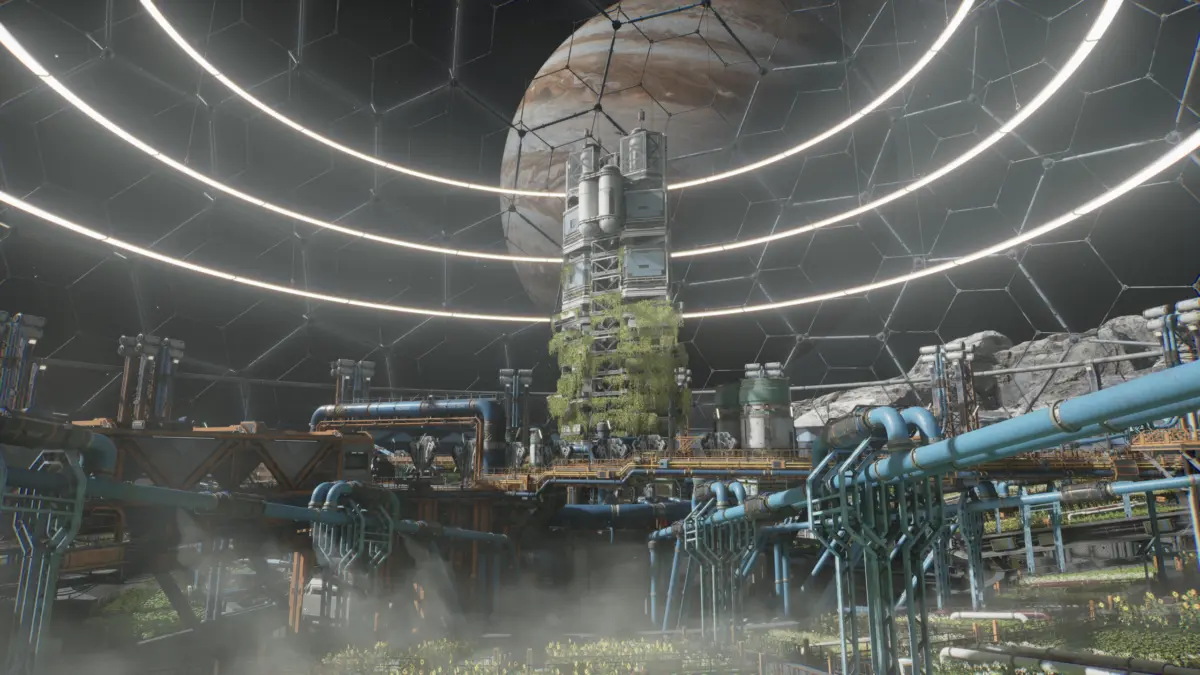
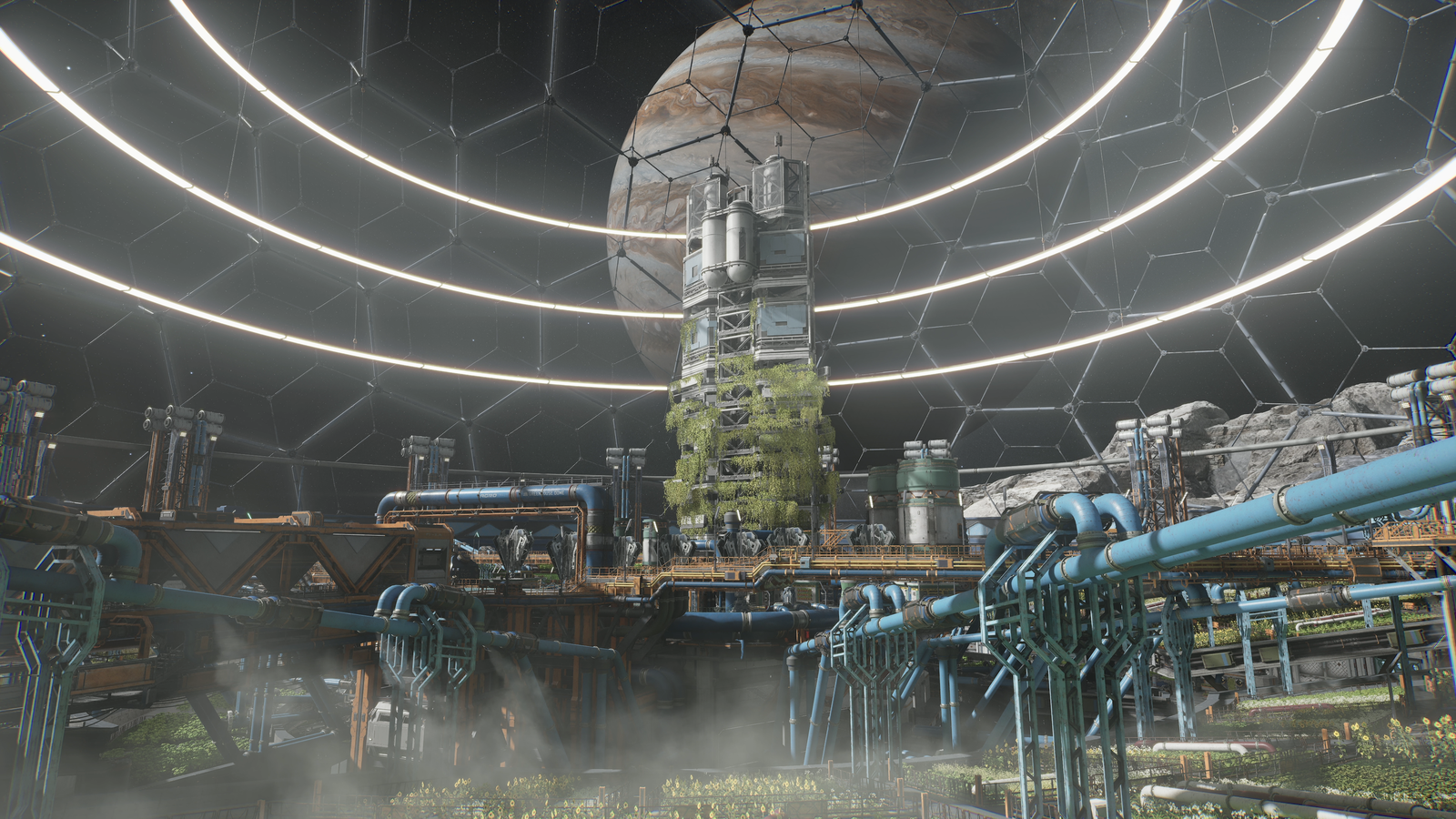
The artistry on display in Osiris Reborn relies heavily on restraint rather than blatant fan service. During the Ganymede mission, players navigate the sprawling dockyards and towering agricultural domes—massive spherical greenhouses that fans of the television adaptation will instantly recognize as the backdrop for major narrative disasters.
Rather than relying on clunky, self-aware dialogue or heavy-handed exposition to remind the player of the setting’s significance, Owlcat renders these locations with architectural fidelity and narrative weight. For veterans of the books and show, walking through these environments serves as a haunting harbinger of famine and catastrophe. For newcomers unfamiliar with the lore, they simply stand as breathtaking monuments of engineering perched on the edge of the Jovian system.
The Climax of the Demo
The preview culminated in a heart-pounding chase sequence. The crew found themselves hunted through a labyrinth of industrial tunnels by a Hybrid—a terrifying human transformed into an unyielding, blue-hued monster via exposure to the Protomolecule.
The escape led the party back into one of the massive agricultural domes. Here, the game presented a high-stakes tactical dilemma: the player had to choose one squad member to herd vulnerable civilian scientists to safety, while assigning another to hack a mainframe terminal to open an escape route. The demo cut to black just as the player was sealed into a circular containment room alongside the terrifying bio-weapon, leaving the immediate consequences of the squad choice hanging in the balance—a classic hallmark of choice-driven RPG design.

Official Statements and Industry Reception
Adapting a beloved intellectual property carries inherent risks, a reality that Owlcat Games is acutely aware of. Speaking around the preview events, the development team has emphasized their commitment to preserving the hard-sci-fi integrity that made The Expanse a cultural touchstone.
While specific details regarding cameo appearances by legacy characters—such as James Holden—have been teased by producers, the focus remains squarely on the original narrative carved out by the customizable protagonist and their twin, J. The studio’s primary objective is to prove that a licensed video game can transcend the limitations typically associated with multimedia tie-ins.
Industry analysts tracking the project note that Owlcat’s pedigree in deep, complex role-playing systems provides a sturdy foundation for Osiris Reborn. By leaning into mature themes, intricate factional politics, and realistic physics, the studio aims to position the title not merely as a placeholder for fans, but as a premier science fiction RPG in its own right.
Future Outlook: Challenges and Opportunities on the Horizon
As The Expanse: Osiris Reborn marches toward its scheduled spring 2027 launch on PlayStation 5, Windows PC, and Xbox Series X, it faces a fascinating uphill battle.
The television adaptation famously concluded its run on a frustrating cliffhanger, leaving several books of the literary series unadapted. By the time Osiris Reborn hits store shelves, nearly five years will have passed since the show wrapped up. While Telltale’s episodic spin-off attempted to keep the flame alive, it failed to leave a lasting seismic impact on the broader gaming ecosystem, despite winning praise for its narrative execution.
Consequently, Osiris Reborn must perform a delicate balancing act. It needs to satisfy longtime enthusiasts who have yearned for a digital playground that accurately mirrors the books and television show, while simultaneously functioning as an accessible, standalone entry point for a new generation of gamers who may not know a "Beltalowda" from a Martian marine.
If Owlcat Games can maintain the meticulous equilibrium demonstrated in the Ganymede demo—blending immersive simulation, tactical combat, and uncompromising sci-fi world-building—Osiris Reborn could pull off a legendary feat. Much like The Witcher or Metro series before it, it has the potential to serve as both a dream destination for veteran fans and a revelation for newcomers, proving once again that well-crafted storytelling always finds a way to anchor itself in the cultural zeitgeist.