Executive Overview
Federal law enforcement agencies are closing in on the upper echelons of ShinyHunters, a notorious cybercriminal syndicate responsible for high-profile data breaches and tens of millions of dollars in corporate and government extortion. In a sweeping international investigation that has triggered alarms across the cybersecurity sector, U.S. and European investigators have uncovered an unprecedented web of corruption involving rogue ransomware negotiation firms.
According to sources close to the sprawling federal probe, investigators have identified executives at two separate ransomware remediation firms who allegedly maintained unusually close, illicit ties with the extortion group. Most alarmingly, authorities believe a U.S.-based consulting executive went so far as to actively help operate shinywire[.]com, a now-defunct pressure site designed to coerce victims into paying ransoms.
The investigation exploded into public view following a series of coordinated international arrests—most notably the apprehension of Dutch hacker Pepijn van der Stap in the Netherlands and the subsequent arrest of Canadian cybersecurity executive Edward Dubrovsky. Encrypted communications recovered from Van der Stap’s devices have laid bare a dark ecosystem where the boundaries between corporate cyber defense and criminal enterprise have become dangerously blurred. With the FBI itself recently falling victim to a high-stakes breach orchestrated by the group, the crackdown signals a zero-tolerance approach toward individuals and intermediaries who cross the line from remediation to active criminal collaboration.
Detailed Chronology: The Fall of Key Players and the Rise of "Rey"
Evolution of a Cybercrime Brand
Since 2019, hackers aligned with the ShinyHunters banner have claimed responsibility for dozens of enterprise-level data breaches. The collective was initially operated by cybercriminals residing in France. However, as law enforcement systematically dismantled the core group through targeted arrests, operational control of the brand migrated.
By late 2024 and into 2025, control had shifted to a teenage hacker based in Amman, Jordan, known online as “Rey.” According to FBI estimates, under Rey’s leadership, ShinyHunters managed to extort more than $70 million from victims globally within a single year.

The FBI Breach and Retaliation
The group’s brazenness peaked in late September, when hackers breached the FBI recruitment portal, fbijobs.gov. The cybercriminals taunted federal authorities by threatening to leak highly sensitive personnel files, which reportedly contained medical and psychological records, Social Security numbers, home addresses, and specific employee specializations.
This direct assault on federal infrastructure spurred an aggressive, high-speed response from the FBI. On October 3, Reuters reported that Rey had been detained by Jordanian authorities and was actively cooperating with federal investigators.
The Dutch Raid on Pepijn van der Stap
Rey’s ascension to leadership had been enabled by a vacancy at the top following a high-stakes law enforcement raid. On the evening of September 15, 2026, Dutch police—deploying flash-bang grenades to stun the suspect—arrested convicted hacker and ShinyHunters associate Pepijn van der Stap.
Authorities successfully seized Van der Stap while he was actively logged into his Signal instant messaging account. This tactical maneuver allowed investigators to capture real-time, unencrypted communications between the Dutch hacker and his frequent contacts, which included prominent ransomware negotiators based in both Canada and the United States. Furthermore, sources close to the investigation revealed that Van der Stap’s Signal chats contained evidence of a murder-for-hire plot directed abroad, pointing to an escalation of violence within the cybercrime underground (though there is no indication the contract killings were ever executed).
Arrest of Edward Dubrovsky
Building upon the digital footprint left in Van der Stap’s chat logs, the FBI struck on October 9, arresting 54-year-old Canadian cybersecurity executive Edward Dubrovsky. Dubrovsky, who had recently authored a book on cyber extortion management advocating for engagement with hackers, was charged in federal court with threatening to disclose stolen data and interfering with interstate commerce through extortion. Prosecutors quickly moved to seal records related to the case and requested that Dubrovsky be held without bail pending trial.

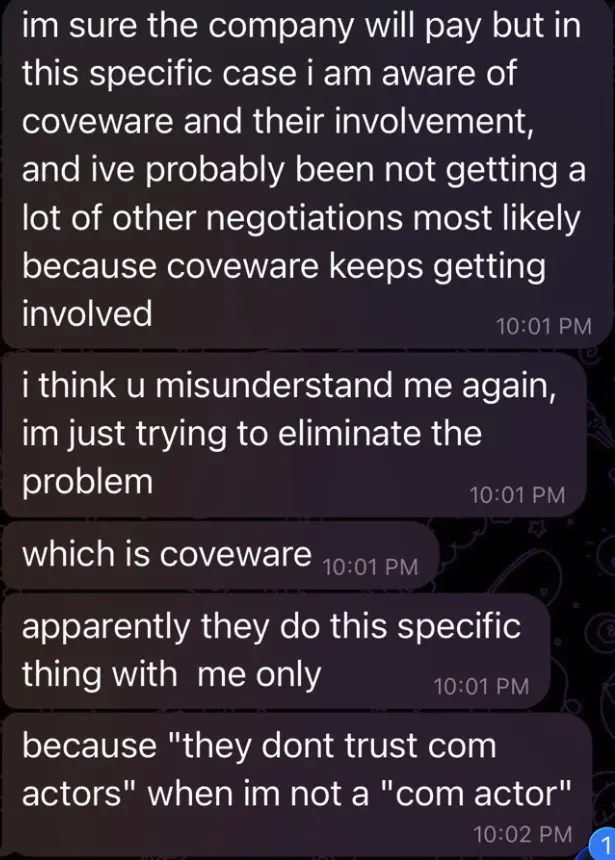
Investigative findings revealed that Van der Stap’s chats showed Dubrovsky was consistently tipped off about new ShinyHunters victims long before the target organizations even realized they had been breached. Most damningly, investigators discovered that Dubrovsky knew ShinyHunters had successfully compromised FBI servers yet deliberately withheld this information from the bureau, remaining silent until the hackers publicly threatened to publish the agency’s personnel records.
Supporting Context & Metrics: Operations and Inner Workings
The Anatomy of "Shinywire"
Federal investigators have pieced together the mechanics behind shinywire[.]com, an extortion platform active from May 3, 2026, until mid-October. The portal listed nearly 100 victim organizations compromised by ShinyHunters. Each listing featured samples of stolen data, explicit countdown timers, and direct calls to action urging corporate executives to negotiate ransom payouts.
A prominent example of this pipeline involved Intuitive Surgical, an American medical technology firm breached in March 2026 via a credential-harvesting phishing attack targeting an individual employee. Under the mechanics of the Shinywire platform, victim organizations given a strict seven-day window to negotiate found themselves facing immediate public data dumps on the group’s Tor-hidden leak blog if they failed to comply.
The "Ghostbyte" Connection
As investigators scrutinized the broader network of intermediaries, historical ties began to surface. Interviews with former colleagues of Daniel Tobok, former CEO of cybersecurity firm Cypfer, revealed that he had been known to ransomware syndicates years prior by the alias “Ghostbyte.”
In a 2018 extortion incident involving the Russian-language Dharma ransomware affiliate program, a victim attempting to negotiate terms was explicitly directed by the cybercriminals to contact an IT professional via the email address [email protected]. According to intelligence from Constella Intelligence, an email address frequently used by Tobok ([email protected]) shares digital fingerprints with online accounts—including Snapchat—operating under the username "ghostbyte."

While Tobok has faced no official criminal charges regarding the historical Dharma referral, the revelations underscore the deep, long-standing entanglements between certain commercial security intermediaries and the extortion economy.
Official Statements and Industry Conflict of Interests
Corporate Posturing and Restructuring
In the wake of Dubrovsky’s arrest, Cypfer issued a categorical denial of any institutional involvement in ransomware payouts or knowledge of its former partner’s alleged crimes. A Cypfer spokesperson stated:
"We had no prior knowledge of Mr. Dubrovsky’s arrest. CYPFER has not received any outreach from law enforcement and, to our knowledge, is not the target of any law enforcement investigation."
The firm emphasized that it operates independently from CyberSteward Inc.—the entity tied to Dubrovsky’s later ventures—and noted its recent acquisition by the Apros Group, a holding company led by former FBI special agent Jason Hogg.
Misaligned Financial Incentives
The unfolding scandals have cast a harsh light on the economic structure of the ransomware negotiation industry. Mark Camillo, CEO of CyberAcuView, an industry consortium of cyber insurance carriers, highlighted a fundamental conflict of interest inherent in many remediation firms’ fee structures. While some firms operate on flat retainers, others charge a percentage of the total ransom paid.

"It has come to the industry’s attention that many of the ransomware payers charge a percentage of the final payment which may or may not be disclosed," Camillo explained. "This makes no sense if they are also the negotiator. There needs to be more transparency in the process as no one in the ecosystem should be profiting purely on the size of the ransomware transaction or payment itself."
This perverse incentive structure rewards negotiators for yielding to exorbitant demands rather than beating down prices, creating an ecosystem where intermediaries financially benefit from corporate capitulation.
The DOJ Crackdown on Rogue Negotiators
Federal prosecutors are increasingly targeting this gray market. Beyond the Dubrovsky case, the U.S. Department of Justice has pursued multiple high-profile actions against corrupt negotiators:
- Zohar Pinhasi: On October 7, the DOJ charged the 50-year-old CEO of Florida-based MonsterCloud with wire fraud and conspiracy. Prosecutors allege Pinhasi secretly went behind his clients’ backs to pay hackers $8 million while billing customers $19 million for supposed remediation.
- Angelo Martino: In July, a federal judge sentenced 41-year-old ransomware negotiator Angelo Martino to 70 months in prison for conspiring with the Blackcat/ALPHV syndicate to funnel confidential client negotiation strategies directly to hackers to maximize payouts.
Future Outlook
The convergence of elite hacking syndicates, compromised corporate insiders, and corrupt remediation executives marks a critical inflection point in the global cybersecurity landscape. As the U.S. Department of Justice and federal investigators aggressively peel back the layers of syndicates like ShinyHunters, the traditional playbook for corporate cyber incident response is undergoing mandatory transformation.
Moving forward, regulatory bodies, cyber insurance underwriters, and enterprise boards are expected to demand radical transparency across the incident response ecosystem. The era of unchecked, backroom ransom negotiations facilitated by conflicted intermediaries is drawing to a close. For the cybersecurity industry, purging compromised actors and establishing strict ethical firewalls between defense consultants and threat actors will be essential to restoring institutional trust and turning the tide against enterprise extortion.