Executive Overview
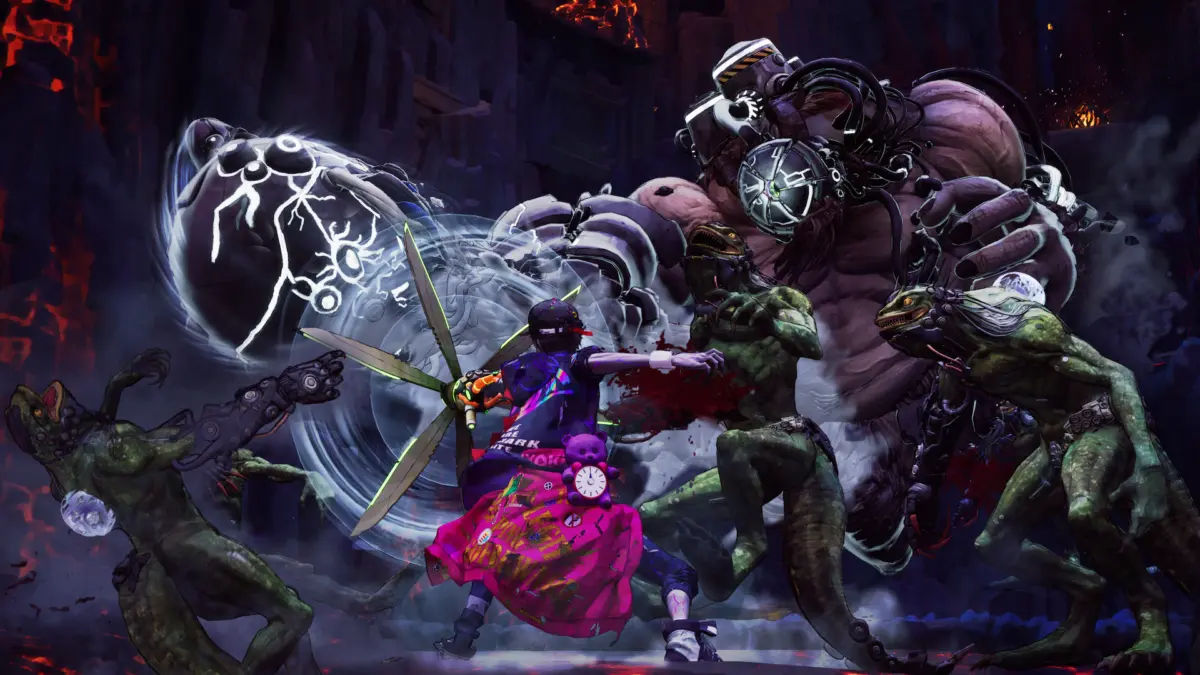
When GPTRACK50 Inc. was established by former Capcom producer Hiroyuki Kobayashi, industry onlookers anticipated a return to the golden age of stylized, high-octane Japanese action games. With an aesthetic blend of vibrant magazine collages, punk-rock iconography, and tongue-in-cheek monster tropes, the studio’s debut title, Stupid Never Dies, certainly looked the part. Set for release on PlayStation 5 and Windows PC, the game attempts to marry a rogue-lite structure with a bizarre, rom-com premise centered on a zombie protagonist attempting to revive his human love interest.
However, after spending 26 grueling hours with a pre-release build on the PlayStation 5 Pro, what emerges is not a triumphant throwback, but a deeply regressive and fundamentally broken experience. Stupid Never Dies collapses under the weight of its own structural contradictions. It pairs an unresponsive, sluggish combat engine with a transparently stretched-out faux-roguelike loop, all while anchoring its narrative to a profoundly tone-deaf and uncomfortable storytelling trope. Rather than serving up a celebration of mindless fun, the game offers a masterclass in how not to execute pacing, action mechanics, and narrative framing in modern game design.
Detailed Chronology & Narrative Framework
The narrative setup of Stupid Never Dies immediately signals trouble. In a dystopian future where a zombie outbreak triggered a broader supernatural war—leaving werewolves and vampires to rule over a subjugated class of the undead—players step into the rotting shoes of Davy. A low-ranking zombie holed up with a human-resistance group in a shopping mall, Davy is driven by a singular, obsessive motivation: love.
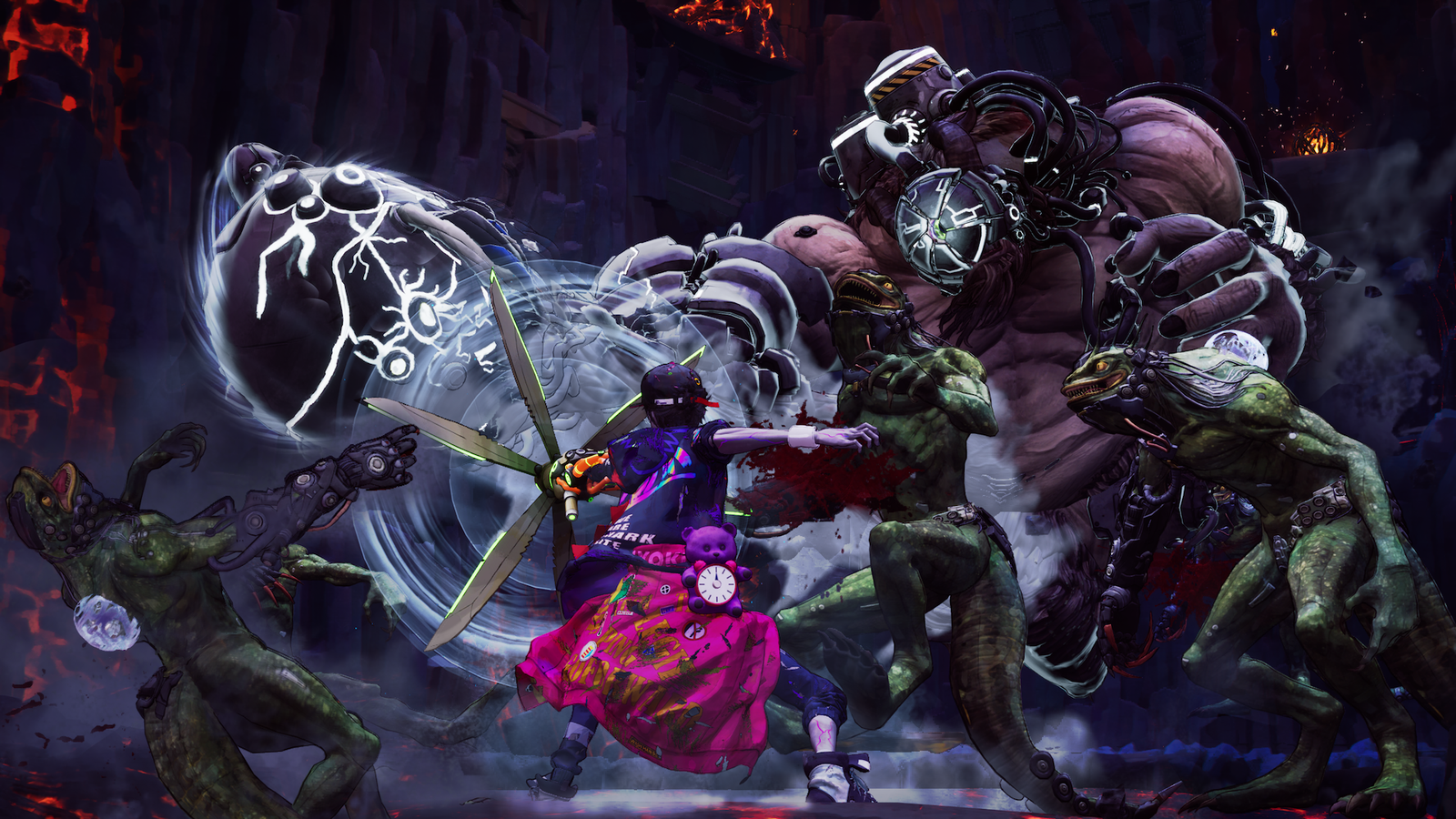
Borrowing heavily from the cinematic premise of the zombie romantic comedy Warm Bodies, Davy falls head-over-heels for a human woman. The catch? That woman, Julia, is dead, her body preserved as a literal human popsicle in the backroom of a mall restaurant.
Rather than subverting expectations, the game plays this grotesque setup entirely straight, leaning headfirst into what comics writer Gail Simone famously identified in 1999 as "fridging"—the practice of subjecting a female character to trauma or death purely to motivate a male protagonist. Davy’s progression systems actively reward this deeply unsettling fixation. Players can offer gifts to Julia’s frozen corpse, transforming her surroundings into a shrine that fills a "heart meter" and doles out skill points. Leveling this meter yields custom photos of Julia with Davy’s head crudely pasted into the frame. Players can even scroll through her pre-apocalypse social media profiles and "like" her old cheerleading photos.
While GPTRACK50 presumably intended this dynamic to read as a "cutely morbid" teen comedy, the execution crosses the line from dark humor into outright violation. Even when Julia later gains minor agency, she remains a one-dimensional damsel. The game attempts to validate this narrative through its thematic celebration of ignorance—summed up by a late-game line where a character sighs, "I wish I didn’t have to think so hard." Unfortunately, Stupid Never Dies takes this philosophy to heart, presenting a script that desperately required editorial oversight.

Gameplay Mechanics: A Faux-Roguelike Slog
Strip away the narrative discomfort, and the core gameplay loop offers little redemption. Stupid Never Dies masquerades as a fast-paced action brawler, but structures itself as a faux-roguelike to pad out its runtime to an exhausting 30-hour completion mark.
The Dungeon Crawl and Time Management
Davy accesses multi-layered dungeons via a series of toilets, descending into shifting floors themed around twisted European towns, icy tundras, and floating jungles. The moment-to-moment objective is simple: battle through standard-issue arenas filled with skeletons, harpies, and mermen; gather run-specific upgrades; and survive to the boss.
To add artificial tension, a ticking clock hangs over every run. While this forces quick decision-making—forcing players to choose between skipping floors or farming upgrades—it frequently backfires. Reaching a boss only to have the timer expire mid-fight, plunging Davy into a vulnerable, instant-death state, is a source of immense frustration.

RPG Depth vs. Structural Exhaustion
On paper, the progression systems feature genuine depth. Looter-shooter mechanics provide armor rarities with passive perks, and failed runs scale up earned experience, allowing high-level players to quickly skip early floors later in the game. Yet, the roguelike framework feels entirely tacked-on. Instead of organic procedural generation, missions feel like linear stages artificially stretched into repetitive runs.
This structural fatigue reaches its breaking point near the campaign’s conclusion, where the narrative abruptly halts momentum to force a grueling "boss rush" requiring five separate, consecutive runs. What should take a tight 10 hours instead drags on for three times as long, leaving players feeling like they have seen everything the game has to offer within the first hour.
Combat Analysis: Sluggish Mechanics and Missed Opportunities
The greatest indictment of Stupid Never Dies is its combat. Action games live or die by their responsiveness, but Davy moves with the sluggishness of a literal corpse.

The Input Delay Problem
Basic attacks—including a kick and a health-restoring bite—suffer from a staggering two-second input delay. While games like Dark Souls employ deliberate, heavy commitment to attacks to build tension, doing so in a fast-paced brawler surrounded by aggressive hordes creates a fatal gameplay mismatch.
Further compounding the issue is the complete lack of a lock-on system. Players are left flailing blindly in the general direction of enemies, a major issue when facing nimble foes like mermen who tunnel underground or flying harpies that effortlessly slip out of range. Airborne combat is similarly abysmal; launching into the air results in sinking back down like molasses before a combo can even be executed. Evasive options are virtually nonexistent, forcing players to simply tank telegraphed boss attacks.
The "Stupid Parry" and Monster Transformation
The lone bright spot in the defensive suite is the "Stupid Parry," which encourages players to lurch headfirst into incoming attacks to trigger a counter. It is mechanically satisfying and thematically appropriate.
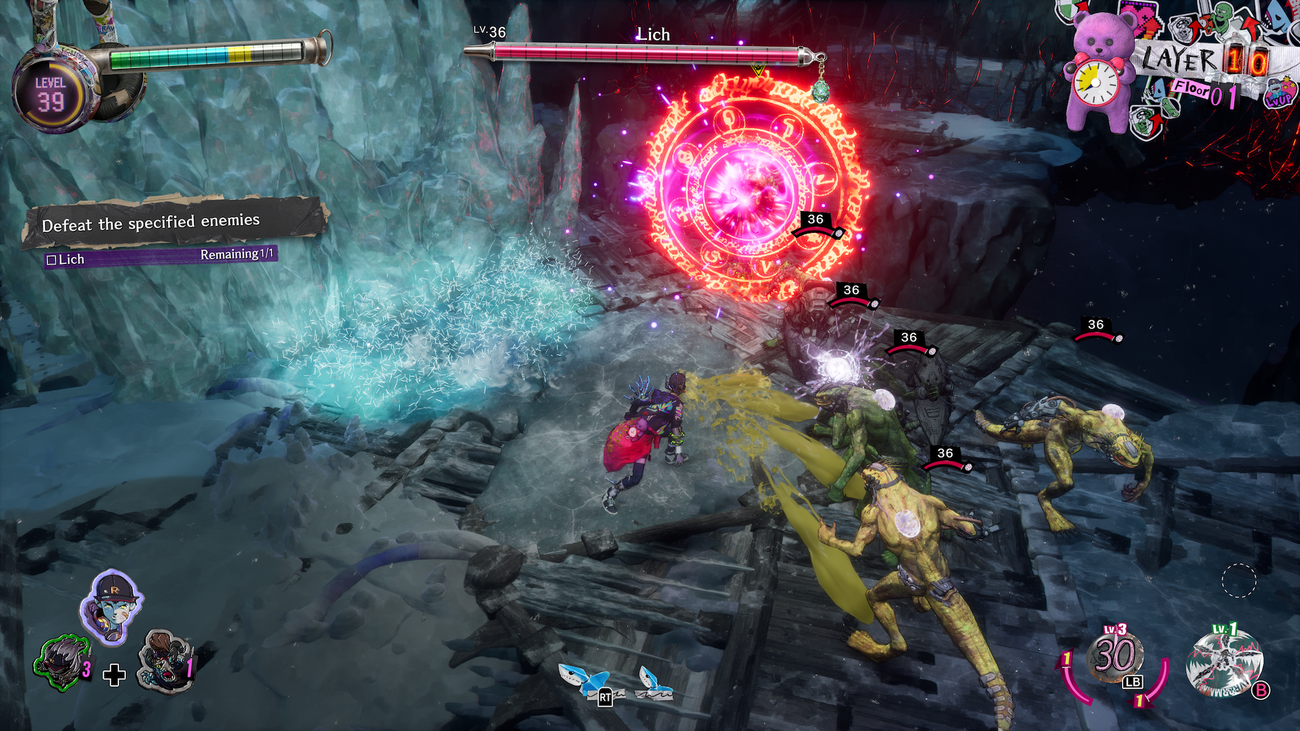
However, the game squanders its most unique mechanic: the monster-chomping system. Akin to Kirby, Davy can absorb monster cores to temporarily transform into a werewolf, a fire-spitting will-o’-the-wisp, or a massive golem. Unfortunately, these transformations suffer from the exact same sluggish animation speeds. Transforming into a golem, for instance, leaves the player vulnerable to dozens of hits before a single sluggish attack can be unleashed. Consequently, players are heavily incentivized to simply stay in their base zombie form.
Future Outlook & Conclusion
Stupid Never Dies is scheduled for release on October 21 for PlayStation 5 and Windows PC, published by GPTRACK50 Inc. While post-launch patches could theoretically address surface-level technical grievances, balance the combat timers, or smooth out input delays, the game’s core issues run far deeper than code optimization.
The title is foundationally and structurally irredeemable. Its pacing is artificially bloated, its combat engine is unresponsive and frustrating, and its narrative framework relies on a dehumanizing and tone-deaf premise that alienates the player at every turn. As the game’s own title screen bleakly reminds players upon death: "Rot happens." Unfortunately for GPTRACK50, that rot extends to the very foundations of their debut project.