Executive Overview
Earlier this year, Snap Inc. unveiled its long-anticipated augmented reality (AR) smart glasses—dubbed Specs—to a chorus of public mockery, investor panic, and industry skepticism. Unfavorable comparisons to scuba gear, coupled with an eye-watering $2,200 price tag, sparked immediate pushback online, spurred calls for CEO Evan Spiegel’s resignation, and sent Snap’s stock into a dramatic nosedive. The initial debut left industry observers asking a fundamental question: Why would casual consumers pay luxury-computer prices for a heavy, aesthetically polarizing piece of face-worn hardware?
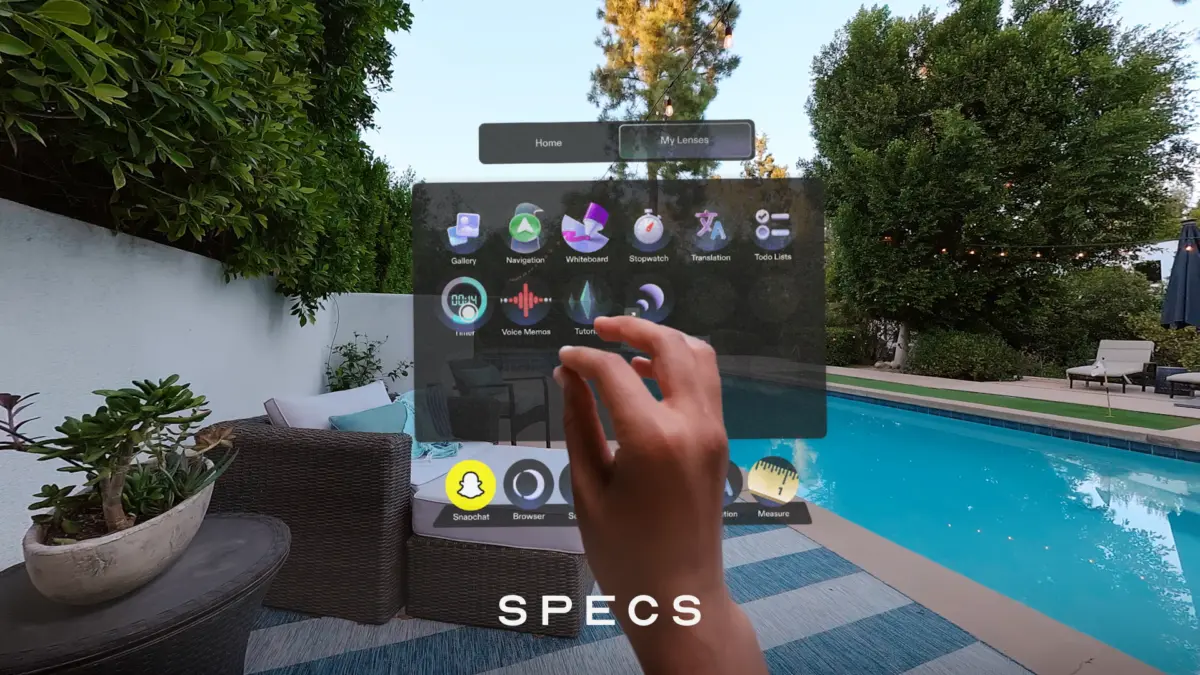
Recognizing the existential threat facing its hardware ambitions, Snap executed a high-stakes campaign to reframe the narrative. At a major showcase in Los Angeles, Spiegel and his executive team unveiled a series of software, artificial intelligence, and enterprise-focused updates designed to give Specs a tangible sense of purpose.
The strategy relies on three pillars: an "anticipatory AI" system called Specs Intelligence that syncs across mobile and desktop platforms; enterprise partnerships with tech behemoths like Amazon, Salesforce, and Nvidia; and expanded consumer entertainment ecosystems, including HBO Max, Spotify, and sports applications. By positioning Specs as a human-centric alternative to dystopian AI and immersive isolation, Snap is attempting a radical pivot: transforming a deeply flawed consumer gadget into an AI-native spatial computer for both enterprise workflows and daily productivity.
Detailed Chronology: From Scuba-Gear Debacle to Strategic Pivot
  +-----------------------------------------------------------------------+
  |                        INITIAL SPECS DEBUT                            |
  | - Revealed at $2,200 price point with heavy "scuba gear" aesthetics.  |
  | - Triggers online backlash, executive pressure, and stock nosedive.   |
  +-----------------------------------------------------------------------+
                                     |
                                     v
  +-----------------------------------------------------------------------+
  |                         STRATEGIC RETRENCHMENT                        |
  | - Snap pivots focus away from purely casual, consumer-facing AR.      |
  | - Focus shifts to enterprise workflows, AI OS integration, and media. |
  +-----------------------------------------------------------------------+
                                     |
                                     v
  +-----------------------------------------------------------------------+
  |                     LOS ANGELES SHOWCASE EVENT                        |
  | - Unveils "Specs Intelligence" cross-platform anticipatory AI.        |
  | - Launches "Specs for Enterprise" (Amazon, Salesforce, Nvidia).       |
  | - Announces Verizon cellular case & streaming partners (HBO Max).    |
  +-----------------------------------------------------------------------+
                                     |
                                     v
  +-----------------------------------------------------------------------+
  |                        ROADMAP & LAUNCH WINDOW                        |
  | - October: Interactive LA Pop-Up Experience.                          |
  | - Fall: Commercial shipping & cellular subscription rollout.          |
  +-----------------------------------------------------------------------+
The Initial Backlash and Market Rejection
Snap’s original reveal of the new Specs was intended to be a watershed moment for consumer augmented reality. Instead, it became a textbook corporate crisis. The device’s heavy frame and exaggerated front-facing optics were widely derided as resembling bulky diving goggles rather than sleek eyewear.
Compounding the aesthetic criticism was the $2,200 sticker price—a figure that priced out Snap’s core youth demographic and put the device in direct competition with high-end spatial computing hardware like Apple’s Vision Pro. Wall Street responded swiftly, causing Snap’s stock to plummet as investors questioned the company’s hardware capital expenditure strategy and leadership under Evan Spiegel.
The Strategic Retrenchment
In the months following the initial backlash, Snap went quiet, re-evaluating how to justify a device that few individual consumers seemed willing or able to buy. Internal teams shifted focus from framing Specs as a quirky social-camera accessory toward positioning it as an open, ambient computing platform. To make a $2,200 price tag remotely viable, the device needed to do more than overlay playful face filters; it had to manage personal productivity, interface with corporate IT infrastructures, and handle complex spatial AI workloads.
The Los Angeles Showcase
This week in Los Angeles, Snap staged a live demo event designed to reset public perception. Following an abstract, highly stylized promotional video, Spiegel took the stage to demonstrate how the glasses fit into a broader ecosystem of hardware and software. Rather than treating Specs as an isolated island, Snap showcased deep cross-platform interoperability with smartphones and computers, accompanied by specialized enterprise software stacks, dedicated cellular accessories, and high-profile content partnerships.
Supporting Context, Hardware Mechanics, and Key Metrics
To transform Specs from a target of internet ridicule into a viable commercial offering, Snap unveiled several software integrations, enterprise features, and connectivity options:

| Feature Category | Key Component | Strategic Focus / Functionality |
|---|---|---|
| Artificial Intelligence | Specs Intelligence | "Anticipatory AI" OS that builds context across Specs, iPhones, and Macs. |
| Enterprise Operations | Specs for Enterprise | MDM & security stack partnered with Amazon, Salesforce, and Nvidia. |
| Target Enterprise Use Case | Field IT & Maintenance | Hands-free AR overlays for hardware repair and remote guidance. |
| Media & Entertainment | HBO Max & Spotify Integration | Immersive streaming and audio playback within the spatial field of view. |
| Interactive AR Apps | NBA / WNBA Training App | Real-time AR overlays designed to analyze and improve basketball shot form. |
| Cellular Connectivity | Standalone Case Add-On | Verizon-backed charging case ($10/mo for Verizon users; $20/mo for others). |
The Software Stack: "Specs Intelligence"
At the core of Snap’s repositioning is Specs Intelligence, an system described by the company as an "anticipatory AI" framework. Unlike reactive voice assistants, Specs Intelligence is designed to run ambiently across connected user ecosystems—including iPhones and Mac computers—to map user routines, goals, priority projects, and personal relationships.
According to Snap, the system acts as an AI-native layer that unifies Snap’s signature "Lenses" (augmented reality overlays) into actionable productivity tools. By understanding what a user is looking at and cross-referencing it with their desktop or mobile applications, Specs Intelligence aims to surface relevant context without requiring manual prompts. Crucially, Snap made this system functional on non-wearable devices as well, framing it as an overarching software utility that works best—but not exclusively—when viewed through Specs hardware.
       +-------------------------------------------------------+
       |                  SPECS INTELLIGENCE                   |
       |             (Anticipatory AI OS Engine)               |
       +-------------------------------------------------------+
                                   |
         +-------------------------+-------------------------+
         |                         |                         |
         v                         v                         v
+-----------------+       +-----------------+       +-----------------+
|   Specs Wearable|       |   iOS Devices   |       |  macOS Systems  |
| (Spatial Lenses)|       |  (Mobile Hub)   |       | (Desktop Focus) |
+-----------------+       +-----------------+       +-----------------+
         |                         |                         |
         +-------------------------+-------------------------+
                                   |
                                   v
       +-------------------------------------------------------+
       |   Contextual Data Layer: Goals, Routines, Projects     |
       +-------------------------------------------------------+
"Specs for Enterprise" and Corporate Workflows
Acknowledging that individual consumers rarely purchase $2,200 experimental hardware, Snap formally introduced Specs for Enterprise. This initiative adapts the smart glasses for corporate environments by incorporating security features, Mobile Device Management (MDM) tools, and centralized administrative controls.
To establish enterprise credibility, Snap announced strategic partnerships with tech leaders including Amazon, Salesforce, and Nvidia. A key demonstration at the event highlighted a field-service technician using Specs to repair server rack hardware. By layering real-time, interactive schematics and diagnostics over physical machinery, Specs aims to provide hands-free visual instruction for field workers, remote support teams, and IT staff.
[Field IT Tech Wearing Specs]
       │
       ├─► (Scans Server Rack) ──► AR Schematic Overlay (Specs Display)
       │
       ├─► (Secure Data Sync)  ──► AWS / Salesforce / Nvidia Infrastructure
       │
       └─► (IT Management)    ──► Verified via Enterprise MDM & Security Controls
Cellular Independence and Hardware Ecosystems
One major critique of earlier smart glasses was their reliance on a tethered smartphone for data connectivity. To address this, Snap revealed an optional cellular connectivity package engineered in partnership with Verizon.
The solution comes in the form of a specialized charging case equipped with built-in cellular radios, enabling full internet access when out of range of Wi-Fi networks. Verizon subscribers can add the service to their plan for $10 per month, while non-Verizon customers must pay $20 per month. This pricing structure underscores Snap’s ambition to position Specs as a standalone spatial computer capable of functioning independently in the field.
Media Integrations and Niche Experiences
To balance its enterprise pivot with consumer appeal, Snap showcased media partnerships with HBO Max and Spotify, allowing users to stream video and audio directly inside the spatial display field.
More perplexing, however, was the announcement of an interactive sports app developed alongside the NBA and WNBA. The software uses AR guidance to help basketball players track and improve their shooting form in real time. While visually novel, the app drew immediate questions regarding practical ergonomics: whether athletes will comfortably play high-intensity sports while wearing a heavy, $2,200 headset remains a point of skepticism.

Official Statements and Narrative Framing
Throughout the showcase, CEO Evan Spiegel worked to shift the public narrative away from hardware limitations toward a broader ideological vision for computing. Framing Specs as a antidote to isolating digital experiences, Spiegel took aim at mainstream trends in virtual reality and generative AI automation.
"I will say it’s an interesting time to be launching a new computer because things in tech are pretty weird right now," Spiegel told the audience. "We’re being told that AI will take our jobs, that virtual worlds will replace the real one. Well, no, thank you. We do not accept that future. Making people irrelevant is not progress, and computers should make us more important, not less."
Spiegel’s comments reflect a deliberate marketing strategy designed to distinguish Snap’s augmented reality vision from competitors:
- Anti-Isolation: While headsets like Apple’s Vision Pro or Meta’s Quest fully enclose the user’s vision in passthrough or virtual reality, Snap emphasizes transparent, see-through optics that keep users tethered to their physical environment.
- Human-Centric AI: Rather than positioning AI as an automated replacement for human labor, Snap frames "Specs Intelligence" as a co-pilot designed to augment human focus and keep users engaged in real-world tasks.
- Hardware as a Spatial Computer: By repeatedly using the phrase "wearable computer," Snap seeks to reframe the $2,200 cost from an overpriced smartphone accessory to a full-fledged workstation replacement.
Future Outlook: Commercial Rollout and Market Reality
Snap faces a challenging path forward as it prepares to bring Specs to market. The company announced that it will host an interactive consumer and developer pop-up experience in Los Angeles in October, giving the public its first hands-on access to the updated software ecosystem before hardware units ship later this fall.
       +--------------------------------------------------------+
       |                    FALL ROADMAP                        |
       +--------------------------------------------------------+
                                   |
         +-------------------------+-------------------------+
         |                                                   |
         v                                                   v
+-----------------------------------+               +-----------------------------------+
|         OCTOBER 2026              |               |           LATE FALL 2026          |
|   Interactive Pop-Up Experience   |               |     Commercial Hardware Shipping  |
|       (Los Angeles, CA)           |               |   & Enterprise Rollout Begins     |
+-----------------------------------+               +-----------------------------------+
Despite the aggressive feature additions, Snap must navigate significant head winds:
- Price-to-Utility Ratio: At $2,200—plus an optional $10 to $20 monthly cellular fee—Specs remains an expensive proposition. Snap must prove that its enterprise workflows offer measurable return on investment for corporate IT departments.
- Ergonomics and Aesthetics: Software updates cannot alter physical hardware mechanics. The weight and industrial design of Specs remain a hurdle for extended daily wear, particularly during physical activities like the demonstrated NBA training exercises.
- Developer Ecosystem: The long-term value of Specs depends on third-party developers building custom Lenses and enterprise tools. Convincing software creators to build for a niche, high-cost platform will require sustained developer incentives and clear monetization pathways.
Snap’s pivot signals a mature recognition of today’s spatial computing realities. By grounding Specs in enterprise utility, cross-device AI orchestration, and strategic carrier partnerships, Snap is fighting to prove that its high-priced wearable is not a vanity project, but an early prototype for the future of human-centric computing. Whether businesses and consumers accept that vision will be put to the test when hardware begins shipping this fall.