Executive Overview
In an era dominated by sterile algorithms and passive consumption, the world’s leading audio streaming platform is pivoting back to the human element. On August 17, 2026, Spotify officially announced the launch of "Playlist Notes," a brand-new feature designed to transform playlists from simple compilations of tracks into living, narrative-driven social spaces. This feature allows users to annotate their self-created and collaborative playlists with personal thoughts, context, memories, and recommendations.
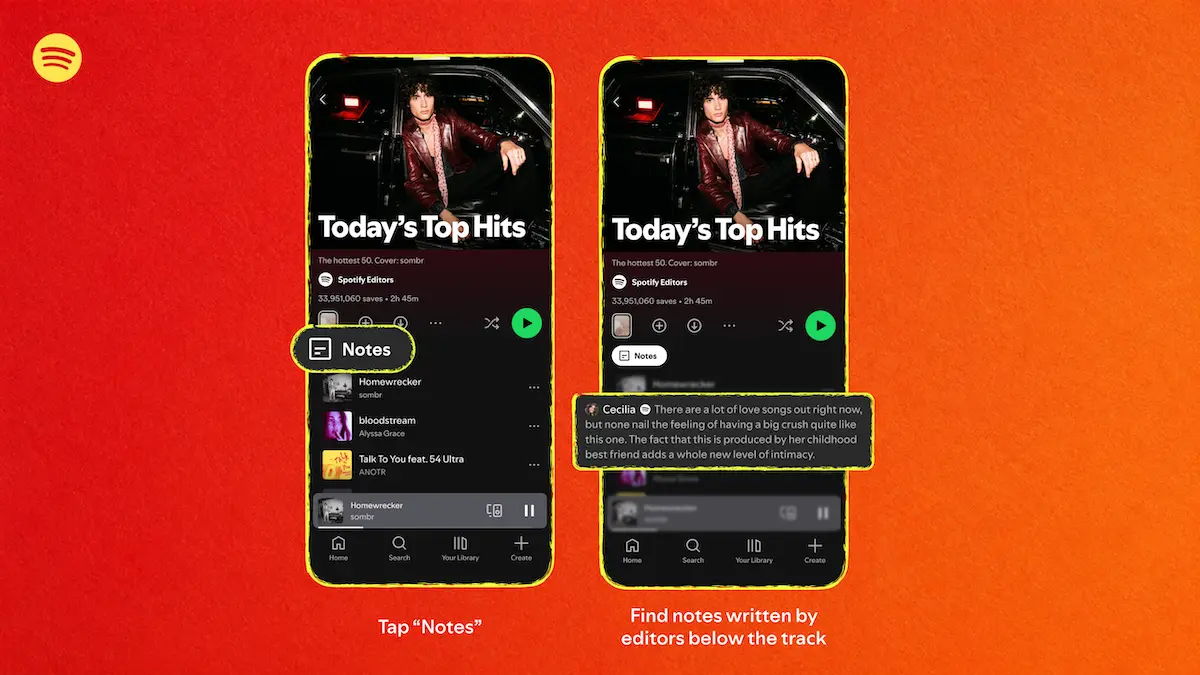
The launch represents a direct expansion of "User Notes," a feature introduced in July 2026 that enabled listeners to attach digital sticky notes to individual tracks. By scaling this concept to the playlist level, Spotify is attempting to bridge the gap between utility and community. Furthermore, the streaming giant is extending this storytelling capability to its own elite team of curators, introducing "Editor Notes" and "Editor Profiles" to demystify the minds behind some of the platform’s most influential flagship playlists, such as Today’s Top Hits and RapCaviar.
This strategic deployment arrives at a critical juncture. Despite reporting stellar Q2 2026 financial results—including surpassing the historic milestone of 300 million paid subscribers—Spotify faces intensifying competition from Apple Music, YouTube Music, and social-first platforms like TikTok, which has increasingly monopolized music discovery among younger demographics. By integrating social annotation directly into the playback experience, Spotify is aiming to deepen user engagement, cultivate platform loyalty, and reintroduce the nostalgic magic of physical liner notes to the streaming generation.
Detailed Chronology: From Static Libraries to Living Social Ledgers
To understand the significance of Playlist Notes, one must examine Spotify’s historically complex relationship with social features. Over the past decade, the platform has experimented with various social mechanics—ranging from the desktop-only "Friend Activity" feed to direct messaging integrations, most of which were eventually scaled back or deprecated in favor of algorithmic personalization.
[2021] Launch of "Blend" (Shared, algorithmically updated playlists)
  │
  ▼
[July 2026] Release of "User Notes" (Private/Personal annotations on individual tracks)
  │
  ▼
[August 17, 2026] Launch of "Playlist Notes" & "Editor Profiles" (Public/Collaborative social annotations)
The timeline of Spotify’s modern social renaissance began in earnest with the success of "Blend" in 2021, which allowed two or more users to merge their musical tastes into a single, dynamically updated playlist. Recognizing that users craved shared experiences, Spotify’s product teams began looking for ways to allow more active, verbal communication within the app.
In July 2026, Spotify quietly debuted "User Notes." This initial iteration acted as a digital diary, allowing users to write private reflections or memories alongside specific songs. The feature was warmly received, but its utility was largely insular.
On August 17, 2026, Spotify broke down these insular walls with the global rollout of Playlist Notes. No longer confined to a private journal, these notes are now fully public to anyone who has access to the playlist. Whether it is a collaborative playlist shared between close friends, a public curation shared with the world, or an official editorial playlist curated by Spotify’s staff, the music is now accompanied by text-based context. This rapid evolution showcases Spotify’s commitment to transforming its platform from a passive music utility into an active, dialogue-driven audio ecosystem.
Supporting Context & Metrics: Navigating the Streaming Arms Race
The introduction of Playlist Notes is not merely a creative design choice; it is a calculated business maneuver designed to protect Spotify’s market dominance.
The Growth Trajectory
In its Q2 2026 earnings report, Spotify demonstrated robust financial health and unprecedented scale:
- Premium Subscribers: Surpassed 300 million for the first time in company history.
- Monthly Active Users (MAUs): Reached a staggering 777 million.
Despite these industry-leading figures, the threat of user churn remains a constant pressure. In the streaming landscape, music catalog sizes are largely commodified; almost every major platform offers access to the same 100+ million tracks. Therefore, differentiation must be achieved through user experience (UX), personalization, and community lock-in.
| Platform | Premium Subscribers (Est. 2026) | Primary Product Differentiators | Social/Community Features |
|---|---|---|---|
| Spotify | 300M+ | Algorithmic personalization (Discover Weekly, Daylist), Podcasts, Audiobooks | Playlist Notes, Blend, Collaborative Playlists, Friend Activity |
| Apple Music | 100M+ (Est.) | Spatial Audio (Dolby Atmos), High-Fidelity Lossless, Apple Music Classical | Shared Playlists (Basic), Collaborative Playlists |
| YouTube Music | 90M+ (Est.) | Integration with YouTube video ecosystem, unmatched catalog of live/rare tracks | Comment sections on songs/videos, basic playlist sharing |
The Retention Play
By encouraging users to write, share, and read stories within playlists, Spotify is building high-value, user-generated metadata. A user who has spent years curating playlists adorned with personal memories, inside jokes with friends, and narrative context is far less likely to migrate their library to a competitor like Apple Music or YouTube Music.
Additionally, these social annotations serve to increase "session duration"—the amount of time a user actively spends looking at the app rather than letting it run in the background. Increased on-screen engagement opens up more lucrative advertising opportunities for Spotify’s free tier and drives higher engagement with non-music verticals, such as podcasts and audiobooks.
Operational Mechanics & Editorial Transparency
The rollout of Playlist Notes is divided into two distinct implementations: User-Generated Notes and Editorial Notes. Each has its own distinct user interface, target audience, and geographic availability.
How User-Generated Playlist Notes Work
For the general public, the feature is designed to be highly intuitive, living within the existing mobile user interface on both iOS and Android.
- Access: The user opens the Spotify mobile app and navigates to a playlist they own or one on which they are an active collaborator.
- Creation: By tapping the three-dot menu icon next to any track, podcast episode, or audiobook chapter, a new option labeled "Add Note" appears.
- Input: Users can type out their thoughts—ranging from a brief sentence explaining why the song was chosen to a longer paragraph detailing a specific memory associated with the audio.
- Visibility: Once saved, the note is pinned to the track within that specific playlist. Anyone who views or follows the playlist can read the note, creating a collaborative, conversational atmosphere.
[Open Playlist] ──> [Tap Three-Dot Menu on Track] ──> [Select "Add Note"] ──> [Save & Publish to Viewers]The Editorial Layer: Humanizing the Algorithm
Perhaps the most intriguing aspect of this update is how Spotify is applying the concept to its own curated properties. For years, critics have argued that streaming algorithms and faceless editorial teams have stripped music discovery of its human touch. Spotify is addressing this criticism head-on by launching Editor Notes and Editor Profiles.
Now, Spotify’s professional music editors can write public notes explaining the exact reasoning behind their curation choices. Why was a specific indie track placed at the top of Fresh Finds? What makes a new release fit the vibe of Hot Country? These questions will now be answered directly within the playlist interface.
To start, these editorial insights will be featured on some of Spotify’s flagship playlists, including:
- Today’s Top Hits (the platform’s most-followed playlist)
- RapCaviar
- Hot Country
- All New Pop
- Fresh Finds Hip-Hop
Accompanying these notes are Editor Profiles. Similar to public artist or user profiles, Editor Profiles showcase an editor’s top tracks, personal favorite albums, and the various public playlists they actively manage. This feature effectively turns anonymous Spotify employees into trusted taste-makers, giving listeners human personalities to follow and connect with.
Rollout, Geographic Limits, and Moderation
The global distribution of these features is being executed with a calculated, phased approach:
- User-Created Notes: Rolling out immediately on iOS and Android devices in more than 100 markets worldwide.
- Editor Notes & Profiles: Available to both Free and Premium users aged 16 and older in the United States, Canada, the United Kingdom, Ireland, Australia, and New Zealand.
The decision to restrict the Editorial features and place an age gate of 16+ on certain aspects highlights Spotify’s cautious approach to safety and moderation. Allowing open text fields in shared public spaces inevitably introduces the risk of harassment, spam, and inappropriate content. By limiting the initial rollout of public-facing social features to specific regions and age groups, Spotify can refine its automated content moderation filters and reporting systems before initiating a wider global release.
Future Outlook: Human-in-the-Loop Curation in an AI-Driven Era
The launch of Playlist Notes and Editor Profiles represents a fascinating philosophical counterweight to the prevailing trends in Silicon Valley. While competitors are doubling down on generative artificial intelligence, automated radio stations, and algorithmic feeds, Spotify is championing a "human-in-the-loop" philosophy.
While Spotify has successfully utilized AI—most notably through its popular personalized "AI DJ" and dynamically shifting "daylist"—the company recognizes that technology alone cannot replicate the emotional resonance of human recommendation. A computer program can analyze acoustic attributes, tempo, and key signatures to find a matching song, but it cannot explain the emotional weight of a track played at a high school graduation or a late-night drive.
The Rise of the "Curator Economy"
Looking ahead, this update could lay the groundwork for a formalized "Curator Economy" within Spotify. By elevating editors and users to the status of recognized taste-makers via profiles and annotations, Spotify is creating a framework where curation itself is celebrated as an art form.
In the future, we may see:
- Artist-Annotated Playlists: Musicians using Playlist Notes to walk fans through their influences, offering track-by-track commentaries on their own albums or curated guest playlists.
- Monetized Curation: Verified independent curators leveraging their profiles to build massive followings, potentially opening up new avenues for indie artist promotion and marketing.
- Deepened Podcast Integration: Podcast hosts using notes to provide reading lists, episode timestamps, or behind-the-scenes trivia directly alongside their audio episodes.
Ultimately, Playlist Notes is a small feature with massive implications. It transforms Spotify from a mere jukebox into a dynamic, social archive of human experience. By giving users and editors the tools to write their own stories directly onto the soundtrack of their lives, Spotify is ensuring that the future of music streaming remains deeply, undeniably human.