

Executive Overview
In the hyper-accelerated ecosystem of modern internet culture, viral trends often emerge from the mundane frustrations of everyday life. Porch piracy—the brazen theft of packages left on residential doorsteps—has long been a persistent grievance for online shoppers. However, as the spooky season reached its peak in mid-October 2026, this common urban nuisance was brilliantly subverted into one of the year’s most enduring and creative viral phenomena: the "Hope Whoever Stole My Amazon Package" meme.
Characterized by a deceptively simple phrasal template paired with fabricated or satirical Amazon delivery histories, the trend captures social media users lamenting the supposed theft of their Halloween costume supplies. What begins as a familiar complaint about porch piracy quickly pivots into an absurd, highly specific, and often surreal punchline revealing what the user supposedly intended to be for Halloween. From professional athletes and pop music album covers to inanimate video game geometry and hyper-niche internet ephemera, the meme has transformed a minor grievance into a canvas for collective internet wit.
This comprehensive report examines the genesis, evolution, cultural impact, and widespread dissemination of the "Hope Whoever Stole My Amazon Package" trend. Through a detailed chronology of key viral posts, an analysis of the psychological appeal underpinning the humor, and a look at the various iterations that have captivated platforms like X (formerly Twitter), we explore how internet users once again turned collective annoyance into high comedy.
Detailed Chronology
The Genesis: October 11, 2026
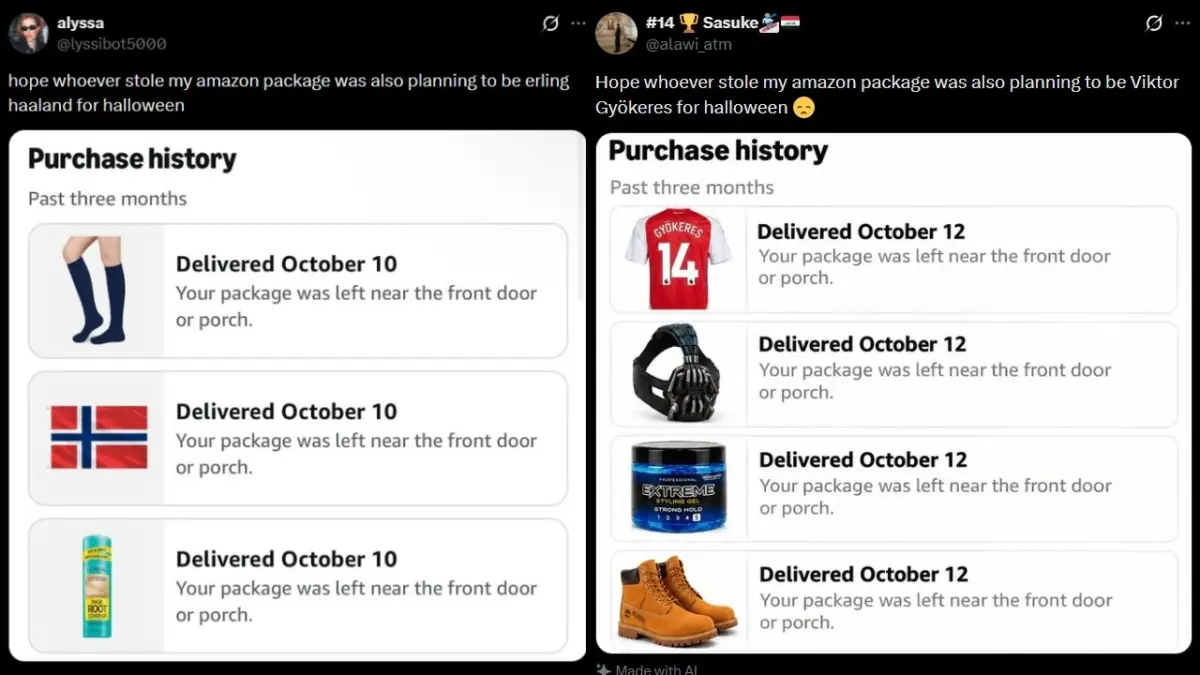
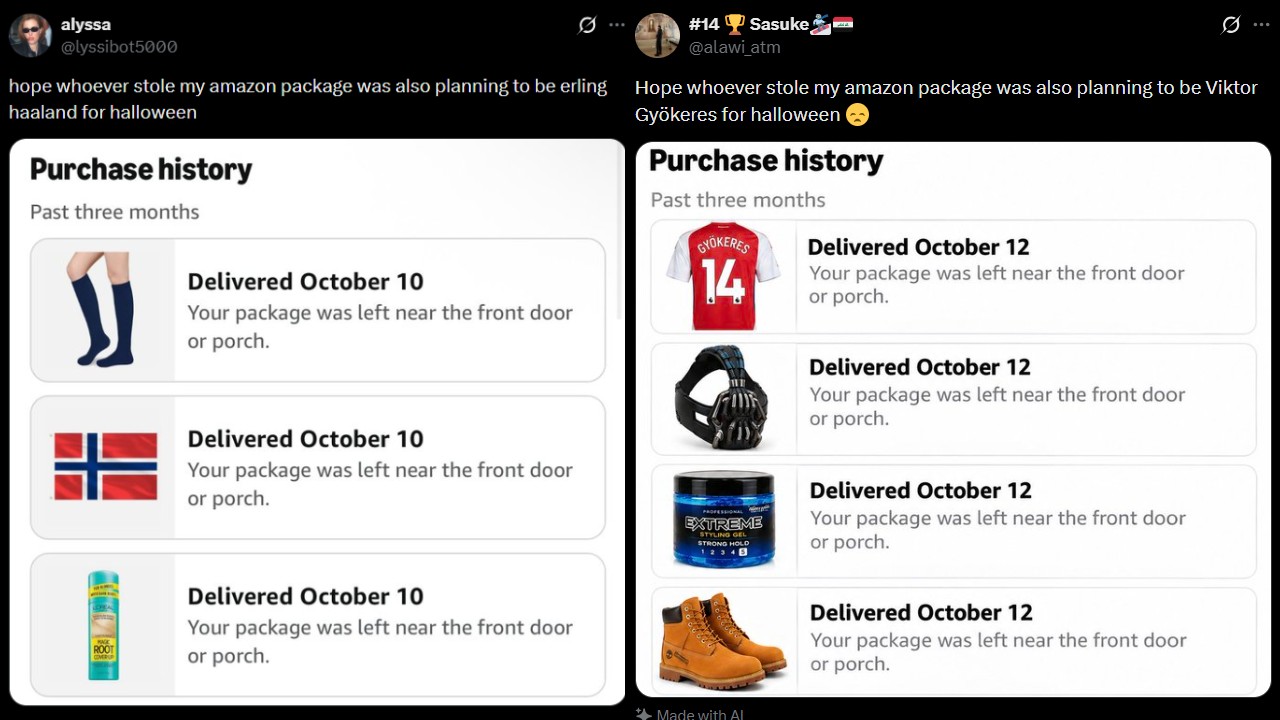
The phenomenon trace its roots back to October 11, 2026, when X user @lyssibot5000 uploaded a post that would inadvertently launch a digital wildfire. The tweet featured a screenshot of an Amazon purchase history displaying multiple items delivered on October 10 and left near the front door or porch.
Accompanying the image was a deadpan, seemingly genuine grievance that immediately captured the internet’s attention: "hope whoever stole my amazon package was also planning to be erling haaland for halloween."
The juxtaposition of a mundane porch theft notification with the hyper-specific, highly recognizable persona of Manchester City football star Erling Haaland struck an immediate chord. The post was lean, devoid of excessive punctuation or self-aware markers, allowing the dry humor of the premise to carry the weight. Within five days, the tweet amassed over 176,000 likes and millions of impressions, signaling to the wider digital community that a new template had been born.
The Spread: October 14–16, 2026
Following @lyssibot5000’s breakout success, the digital ecosystem did what it does best: it iterated, adapted, and escalated the joke. Over the subsequent 72 hours, the phrasal template—"Hope whoever stole my Amazon package [X]"—solidified into a standardized snowclone, with creators racing to devise the most absurd or creatively demanding costume plans.
Pop Culture and Album Art Saturation
On October 14, user @chaeryliv applied the format to contemporary pop culture, tweeting about an elaborate plan to dress up as the album cover for Olivia Rodrigo’s fictitious or stylized release, You Seem Pretty Sad for a Girl So in Love. The post struck a nerve with pop music stans and design nerds alike, pulling in over 50,000 likes in just 48 hours.
That same day, user @0NEMORETlME took the trend deeper into the digital rabbit hole by claiming their stolen package contained the components needed to dress up as "Why"—a viral meme format featuring a woman wearing a plague doctor mask alongside the single-word caption. The post earned over 150,000 views in two days, bridging the gap between physical retail purchases and abstract internet lore.
Gaming Geometry and Absurdist Escalation
As the week progressed, the constraints of reality were entirely abandoned. On October 15, user @SpaghettiSpace_ posted a variation detailing an Amazon order allegedly meant to transform them into the "Ascent B Site triple boxes" from the tactical shooter Valorant. The idea of an individual ordering bulk geometric shapes via Prime delivery to cosplay as static in-game architecture resonated deeply with the gaming community, securing over 10,000 likes within a single day.
By October 16, the trend had absorbed an eclectic mix of cultural touchstones. Submissions ranged from Lorde’s infamous 2017 MTV Video Music Awards outfit (shared by @gabosarchive) to fictional television characters like Digger Rockwell, Bravo reality TV fixtures like Nene, New York Yankees star Giancarlo Stanton, tech executive Alexandr Wang, and even the collective psychological despair of being a Chicago Cubs fan.
Supporting Context & Metrics: Anatomy of a Snowclone
To understand why the "Hope Whoever Stole My Amazon Package" meme resonated so powerfully, it is necessary to examine the structural mechanics of the snowclone itself.
The Formula
The template relies on a three-part comedic structure:
- The Premise: A universal, relatable modern anxiety (porch piracy, delivery notifications, waiting on online orders).
- The Setup: A genuine-looking screenshot of an Amazon delivery confirmation page, establishing a baseline of mundane reality.
- The Punchline: A hyper-specific, wildly impractical, or culturally saturated costume reveal that completely recontextualizes the purchase history.
The Psychology of Porch Piracy Humor
Porch piracy is an invasive, frustrating crime that affects millions of households annually, particularly during the ramp-up to the holiday shopping season. By weaponizing this annoyance into a vehicle for absurdist humor, internet users engage in a form of digital resilience. The joke plays on the mock-earnest grief of losing everyday household items (or in these cases, bizarre niche components) while imagining the utter confusion of a petty criminal opening a box to find materials destined to turn them into an obscure video game map feature or a specific pop star’s red-carpet moment.
Engagement Metrics and Reach
While official cross-platform search interest metrics remain unavailable due to the rapid, organic nature of the trend’s rise on X, individual post performances paint a clear picture of viral saturation. Top-tier iterations consistently crossed thresholds of 30,000 to 180,000 likes, with cumulative views running into the tens of millions. The meme demonstrated high "quote-tweetability" and replicability, two key drivers of longevity on modern social media networks.
Official Statements & Community Reactions
While major corporations and public figures have yet to issue formal public relations statements regarding the meme—largely due to its organic, decentralized nature on user-driven platforms—the community response has been overwhelmingly characterized by participatory delight.
On X and competing platforms like Bluesky and Threads, users began analyzing the "lore" of the fictional delivery histories. Commenters frequently pointed out the absurdity of the logistics required to build costumes like the Valorant triple boxes or Lorde’s 2017 VMA look using standard Amazon Prime shipping containers.
Furthermore, cultural commentators noted that the meme highlights the evolution of Halloween culture itself. Modern costumes are no longer restricted to traditional spooky archetypes (witches, ghosts, vampires) or mainstream cinematic releases; instead, they draw from micro-trends, deep-cut internet history, and hyper-specific cultural moments that require a shared digital literacy to fully appreciate.
Future Outlook: The Lifecycle of Seasonal Micro-Memes
As October draws toward its inevitable conclusion and Halloween festivities wrap up, the "Hope Whoever Stole My Amazon Package" trend is expected to follow the typical lifecycle of seasonal micro-memes.
Short-Term Evolution
In the immediate aftermath of Halloween, variations of the meme may pivot toward post-holiday themes—such as lamenting the theft of leftover candy bulk orders, leftover decorations, or early Black Friday purchases. The adaptability of the delivery-screenshot format ensures that it can easily be repurposed for other shopping-heavy cultural milestones, such as the upcoming winter holiday gift-giving season.
Long-Term Cultural Footprint
While the specific iteration tied to October 2026 Halloween costumes will likely fade as the calendar turns, the underlying structural template—using mundane digital interfaces (like tracking receipts, purchase histories, or customer service chat logs) to set up absurd comedic payoffs—has cemented its place in the modern meme canon.
Ultimately, the trend serves as a reminder of the internet’s unique ability to collectivize minor grievances, strip them of their sting through irony, and reconstruct them into shared cultural touchstones that unite millions in a single, well-timed punchline.




