Executive Overview
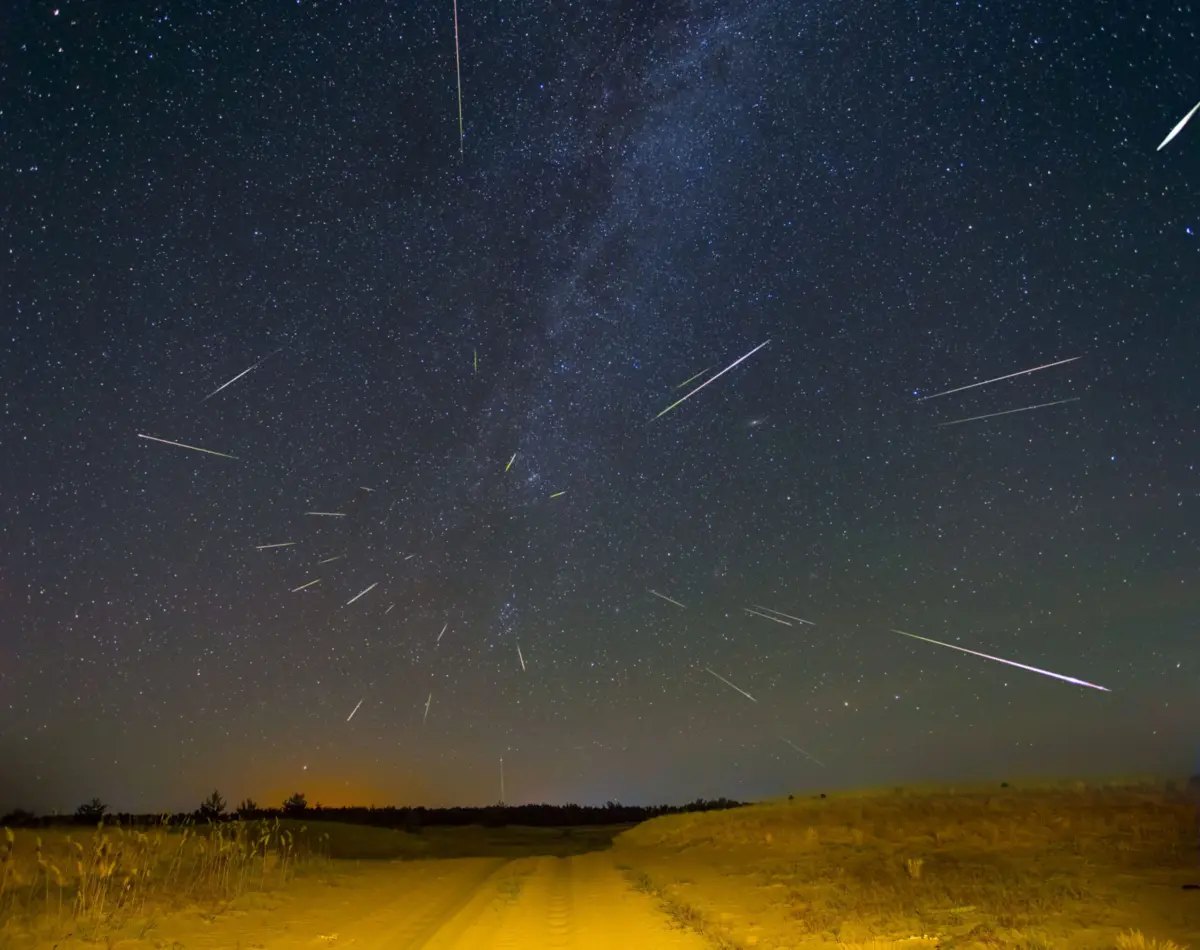
August 2026 is shaping up to be an absolute banner month for astronomical phenomena, anchored by a historic total solar eclipse and accompanied by one of the most prolific and reliable celestial fireworks displays of the calendar year: the Perseid meteor shower. On the night of August 12 and extending into the early-morning hours of August 13, astronomy enthusiasts across the northern hemisphere—and select regions of the southern hemisphere—will be treated to a masterclass in cosmic mechanics. Under uniquely pristine viewing conditions, spectators are poised to witness up to 100 shooting stars per hour slice through Earth’s upper atmosphere.
What elevates the 2026 Perseids from an ordinary annual event to a generational must-see is a rare alignment of lunar phases. The peak of the shower coincides precisely with a new moon, plunging rural and semi-rural nights into an inky darkness free from the wash of lunar interference. For stargazers, astrophotographers, and casual sky-watchers alike, this confluence of orbital mechanics offers an unprecedented viewing window.
This comprehensive report examines the scientific mechanics driving the Perseids, breaks down the exact timeline and optimal viewing conditions for August 2026, details official guidelines from space agencies like NASA and the ESA, and places this celestial event within the broader context of modern stargazing culture and future astronomical calendars.
Detailed Chronology: The Lifecycle of a Shooting Star
To fully appreciate the spectacle slated for the night of August 12, 2026, one must first understand the ancient and dynamic origins of the Perseids. Far from being random falling stars, these luminous streaks are the glowing calling cards of Comet 10P/Swift-Tuttle, a periodic celestial body that loops through the inner solar system on a roughly 133-year orbit.
The Trail of Swift-Tuttle
As Comet 10P/Swift-Tuttle journeys through the vacuum of space, it sheds millions of tons of dusty debris, ice particles, and stony fragments along its orbital path. Every year between late July and mid-August, Planet Earth, in its tireless 365-day revolution around the Sun, crosses this cosmic debris field.
When Earth plows through these microscopic comet remnants, the particles—many no larger than a grain of sand or a pebble—colliding with our atmosphere trigger a magnificent chain reaction. Traveling at blistering speeds of roughly 37 miles per second (60 kilometers per second), these tiny fragments slam into the molecules composing Earth’s thermosphere and mesosphere.
[Comet Swift-Tuttle Debris Field]
         │
         ▼ (High-speed entry: ~60 km/s)
[Earth's Upper Atmosphere]
         │
         ▼ (Kinetic Energy -> Extreme Friction)
[Atmospheric Heating & Ionization]
         │
         ▼
[Brilliant Luminous Streak (Meteor)]
The intense friction generated by this hyper-velocity impact instantly vaporizes the space dust and intensely ionizes the surrounding air molecules. To an observer standing safely on the ground, this rapid release of kinetic energy manifests as a brilliant, fleeting flash of light streaking across the heavens.
The 2026 Peak Window
While the Perseid meteor shower remains active for weeks—typically spanning from mid-July to late August—its crescendo occurs during a sharply defined multi-night window. In 2026, the zenith of this activity is mathematically modeled to occur during the overnight hours of August 12 to August 13.
During this peak window, the Earth dives deepest into the densest portion of the Swift-Tuttle debris stream. As our planet rotates throughout the night, the leading hemisphere—the side facing directly into our orbital trajectory—scoops up these particles with maximum efficiency. Consequently, the meteor rate climbs steadily past midnight, reaching its absolute maximum in the hours immediately preceding local dawn, when the observer’s viewing location is tilted squarely into the oncoming particle stream.
Supporting Context & Metrics: The Science of Stargazing
To measure the magnitude of the 2026 Perseid display, scientists rely on several key astronomical metrics and historical benchmarks that separate this shower from its celestial peers.
The Elite Tier of Meteor Showers
Meteor showers are not created equal. While Earth encounters numerous debris streams throughout its yearly orbit, only three major showers consistently deliver high-frequency, dependable displays year after year:
- The Quadrantids (January): Known for brief, intense peaks lasting only a few hours, frequently hampered by poor winter weather in the northern hemisphere.
- The Geminids (December): Originating from the asteroid 3200 Phaethon rather than a comet, this shower delivers high counts (up to 120–150 meteors per hour) but occurs during freezing winter conditions.
- The Perseids (August): Universally considered the crown jewel of the summer skies. Combining high hourly rates with warm summer nights, it offers the most comfortable and accessible stargazing conditions of the year.
The 2026 Moon Phase Advantage
The single most critical variable determining the visibility of any meteor shower is the Moon. Even a modest first-quarter or waxing gibbous moon can flood the night sky with ambient light, washing out faint meteors and reducing visible counts by up to 50% or more.
+--------------------+-----------------------------+-------------------------------+
| Year / Peak Date   | Moon Phase During Peak      | Impact on Visibility          |
+--------------------+-----------------------------+-------------------------------+
| August 12-13, 2026 | New Moon (0% illumination)  | Pristine, pitch-black skies   |
| August 12-13, 2025 | Waxing Gibbous (~80% lit)   | Moderate wash-out of meteors  |
| August 12-13, 2024 | Waxing Gibbous (~50% lit)   | Significant reduction in view |
+--------------------+-----------------------------+-------------------------------+
As detailed in the metrics above, the August 2026 event features a New Moon. With zero lunar illumination competing against the stars, sky-watchers positioned away from urban light pollution will experience the darkest possible canvas, allowing fainter, wispy meteors—which are normally swallowed by sky glow—to become starkly visible to the naked eye.
Why "Perseids"?
The shower derives its moniker from the constellation Perseus, because the radiant point—the optical illusion from which the meteors appear to originate—is located within the boundaries of this northern constellation. However, a common misconception among novice stargazers is that one must stare directly at Perseus to catch the action.
In reality, meteors burning up in the upper atmosphere can appear anywhere across the celestial sphere. While paths traced backward will point toward Perseus, looking exclusively at the radiant point will actually result in shorter, less dramatic streaks. The optimal strategy is to view a wide expanse of sky located 40 to 60 degrees away from the radiant.
Official Guidelines: Protocols from NASA and the ESA
To maximize the August 2026 viewing experience, major space agencies including the National Aeronautics and Space Administration (NASA) and the European Space Agency (ESA) have issued standardized protocols and recommendations for amateur astronomers and the general public.
1. Vanquishing Light Pollution
Urban and suburban light pollution remains the arch-nemesis of practical astronomy. Streetlights, architectural illumination, and vehicular glare scatter artificial light through the atmosphere, effectively raising the floor of natural night sky brightness.
- The Directive: Travel at least 30 to 50 miles outside major metropolitan areas. Seek out designated Dark Sky Parks, rural state parks, or remote countryside locations with unobstructed horizons.
2. Safeguarding Night Vision
The human eye is an incredible biological optical instrument capable of adjusting to extreme low-light environments, but the process requires time and biological recalibration.
- The Directive: Allow 20 to 30 minutes for your eyes to fully dark-adapt. During this window, strictly avoid looking at smartphones, tablets, flashlights, or vehicle headlights. Exposure to bright white or blue light immediately breaks down rhodopsin (visual purple) in the retina, resetting your night vision clock. If illumination is required to navigate, utilize a specialized dim red-light flashlight, which preserves dark adaptation.
3. Rejecting Magnification Devices
A persistent counter-intuitive truth of meteor watching is that optical aids are actively counter-productive.
- The Directive: Do not use telescopes or binoculars. While these instruments are essential for observing deep-space objects like nebulae, galaxies, and planets, their narrow fields of view severely restrict your window on the sky. Because meteors streak across random coordinates at unpredictable moments, magnification dramatically lowers your statistical odds of catching one. Trust your naked eye.
4. Embracing Post-Midnight Geometry
The timing of your observation session dictates your success rate due to the physics of Earth’s rotation.
- The Directive: While casual viewing can begin as soon as astronomical twilight ends (roughly 9:00 PM to 10:00 PM local time), the true harvest begins after midnight. Before midnight, an observer is on the trailing side of Earth, meaning meteors must catch up to us. After midnight, Earth’s rotation turns our location directly into the oncoming stream of Comet Swift-Tuttle debris, multiplying the impact frequency and visibility index.
5. Cultivating Radical Patience
Meteors do not arrive on a predictable railway schedule; they operate on the chaotic and organic timing of orbital debris fields.
- The Directive: Do not judge a viewing session by its first ten minutes. It is entirely normal to experience lulls lasting several minutes where the sky remains completely quiet, followed immediately by a rapid-fire cluster of three or four brilliant streaks. Commit to spending at least one uninterrupted hour under the stars to ensure you catch the dynamic ebbs and flows of the shower.
Future Outlook: The Evolution of Stargazing Culture
The convergence of the total solar eclipse and the pristine Perseid meteor shower in August 2026 highlights a broader cultural and scientific trend: the explosive democratization and popularization of practical astronomy.
The Rise of Dark-Sky Tourism
As urban sprawl continues to expand, swallowing rural horizons in artificial luminescence, pristine dark skies are rapidly becoming an endangered ecological and cultural resource. Events like the 2026 Perseids act as powerful catalysts for the global "Dark Sky" movement. Organizations such as DarkSky International are seeing record numbers of municipalities, parks, and private landowners petitioning for lighting ordinances that preserve nighttime ecosystems and nocturnal wildlife behaviors.
Furthermore, astrotourism—travel centered around celestial events—is experiencing exponential economic growth. Rural economies near designated dark-sky sanctuaries are reporting record bookings for mid-August 2026, demonstrating that humanity’s primal attraction to the cosmos remains as potent as ever.
Technological Integration in Modern Stargazing
Ironically, while space agencies advise putting away smartphones to protect night vision, technology is simultaneously enhancing how society interacts with meteor showers. Modern digital cameras equipped with high-ISO sensors and long-exposure tracking capabilities allow amateur photographers using modest equipment to capture faint meteor trails that elude the naked eye. Citizen science projects coordinated by NASA enable everyday observers to log meteor sightings via mobile apps, feeding crowdsourced data points directly into orbital mechanics databases to model debris stream density with unprecedented accuracy.
Looking Beyond 2026
While the 2026 Perseids represent a high-water mark due to the pristine lunar phase, the celestial calendar never rests. Space agencies and astronomical societies are already looking toward future highlights, including subsequent returns of Swift-Tuttle fragments and upcoming planetary alignments. Yet, for this decade, the August 12–13, 2026 window stands out as an unmissable appointment with the universe—an invitation to step away from illuminated screens, lie back beneath the sprawling vault of the Milky Way, and witness firsthand the ancient, kinetic poetry of our solar system.