Executive Overview
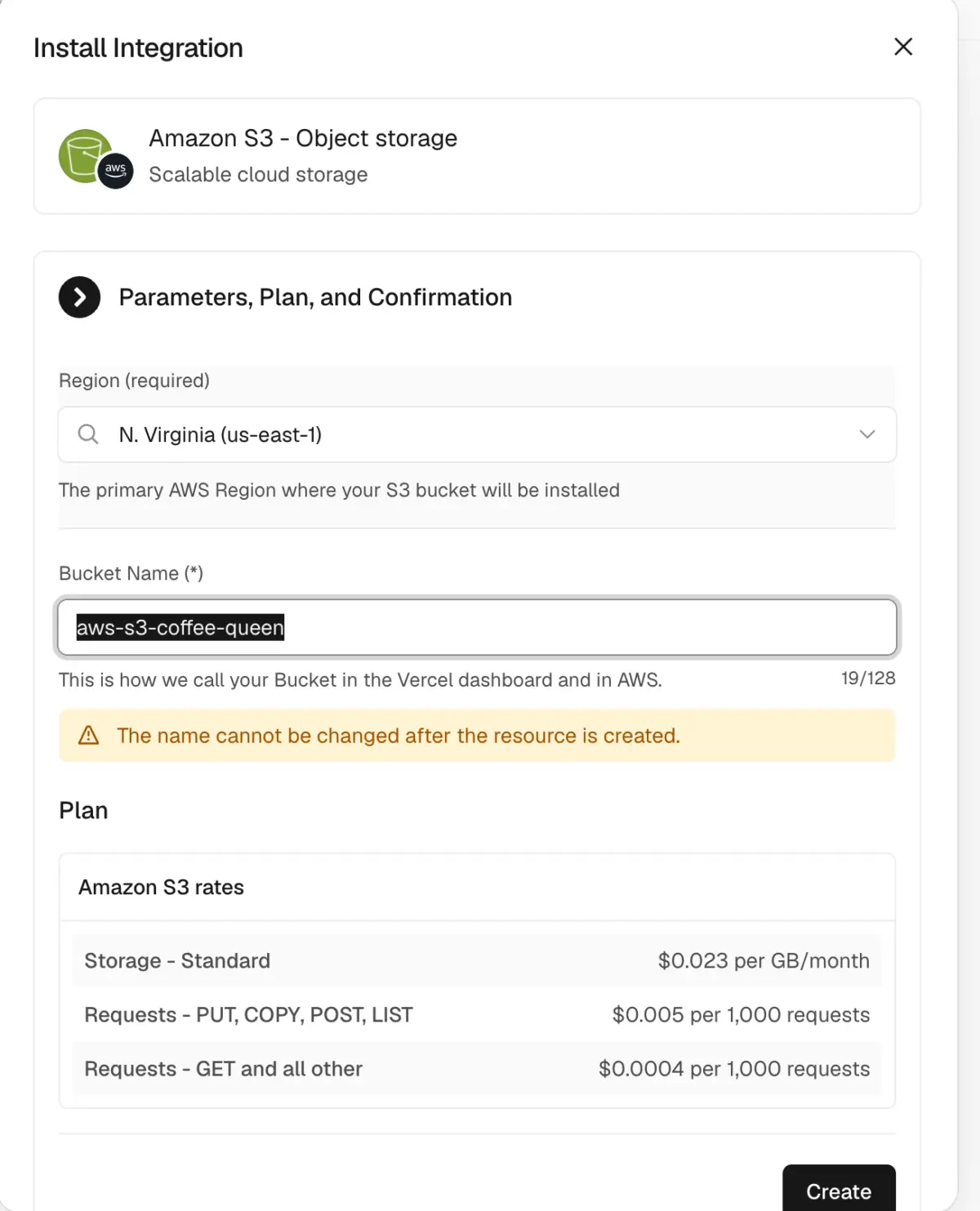
In a significant convergence of cloud infrastructure and frontend deployment ecosystems, Vercel and Amazon Web Services (AWS) have announced a powerful native integration that bridges the gap between high-performance web applications and enterprise-grade cloud storage. Developers building web applications and artificial intelligence (AI) workflows on Vercel can now provision and manage Amazon Simple Storage Service (Amazon S3) resources directly from the Vercel Marketplace and v0 by Vercel.
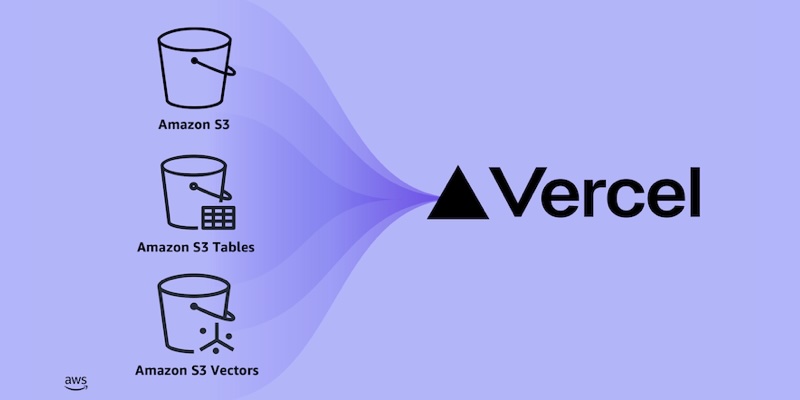
This strategic rollout covers three foundational data pillars: traditional general-purpose object storage, high-performance analytics via Amazon S3 Tables, and specialized vector storage through Amazon S3 Vectors. Previously, provisioning secure cloud storage required developers to step outside their frontend workflows, manually log into the AWS Management Console, meticulously configure Identity and Access Management (IAM) policies, generate static keys, and manually inject environment variables.
By abstracting this complexity into a seamless provisioning workflow, Vercel and AWS are eliminating friction points that have traditionally slowed down application development. The integration operates securely using short-lived OpenID Connect (OIDC) tokens exchanged via AWS Security Token Service (AWS STS), ensuring that no static credentials are ever stored or exposed.
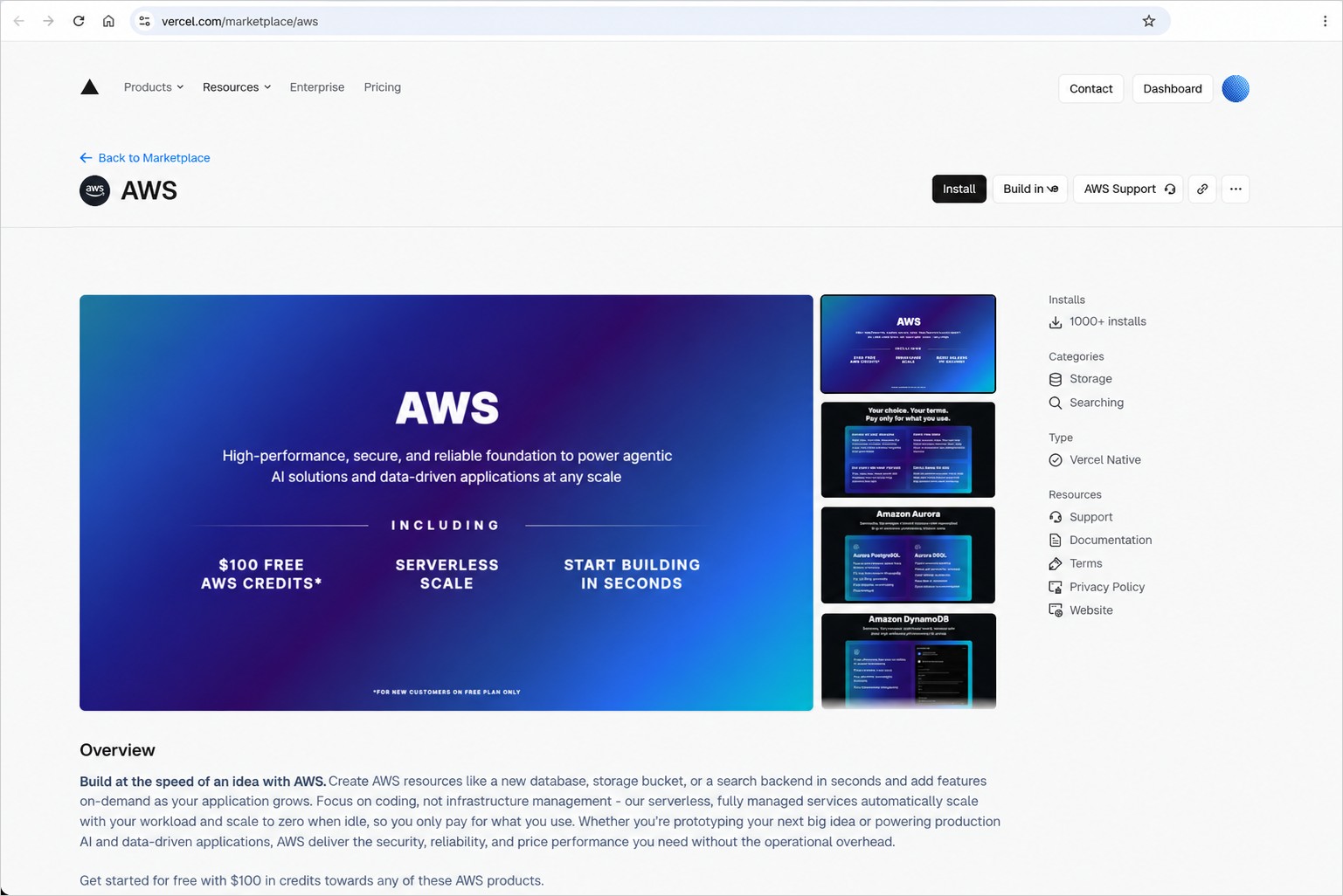
Paired with Vercel’s existing integrations for Amazon Aurora, Amazon DynamoDB, and Amazon OpenSearch Serverless, developers can now deploy a complete, enterprise-grade application stack from a single dashboard—all billed directly through a unified AWS account. Whether building dynamic image galleries, real-time analytics engines, or Retrieval-Augmented Generation (RAG) pipelines for AI agents, developers now have direct, programmatic access to AWS’s industry-leading storage durability, scalability, and performance.
Detailed Chronology
The journey toward this unified developer experience represents a multi-year evolution in how cloud primitives are consumed by modern web frameworks.
The Shift Toward Managed Frontend Infrastructure
Historically, frontend deployment platforms and cloud storage providers operated in strictly siloed domains. Developers built user interfaces on platforms optimized for serverless functions and edge rendering, while data persistence lived deep within hyperscale provider consoles like AWS. As web applications evolved into sophisticated, data-heavy systems driven by AI and real-time analytics, this architectural separation introduced friction. Developers spent countless hours orchestrating cross-platform permissions, configuring CORS policies, and writing custom wrapper services just to connect a web app to object storage.
Expanding the AWS-Vercel Partnership
The foundational groundwork for the S3 integration was laid through prior collaborations that brought AWS database and search infrastructure onto the Vercel platform. Integrations for Amazon Aurora, Amazon DynamoDB, and Amazon OpenSearch Serverless established trust and technical viability for secure, cross-platform resource provisioning. Developers grew accustomed to managing backend databases directly from their Vercel dashboards. However, object storage—the lifeblood of file uploads, media processing, and unstructured data lakes—remained a missing link.
The Introduction of S3 Tables and S3 Vectors
As AWS expanded its S3 ecosystem to address modern analytical and AI workloads, the nature of cloud storage shifted. The introduction of Amazon S3 Tables brought fully managed Apache Iceberg tables to object storage, automating compaction and maintenance for analytical queries. Concurrently, Amazon S3 Vectors introduced cost-optimized vector storage natively inside S3, empowering developers to execute semantic searches and support AI agents without spinning up separate, expensive vector databases. These architectural advancements made S3 the ideal candidate for a deep, native integration into Vercel’s ecosystem.
Native Launch on Vercel Marketplace and v0
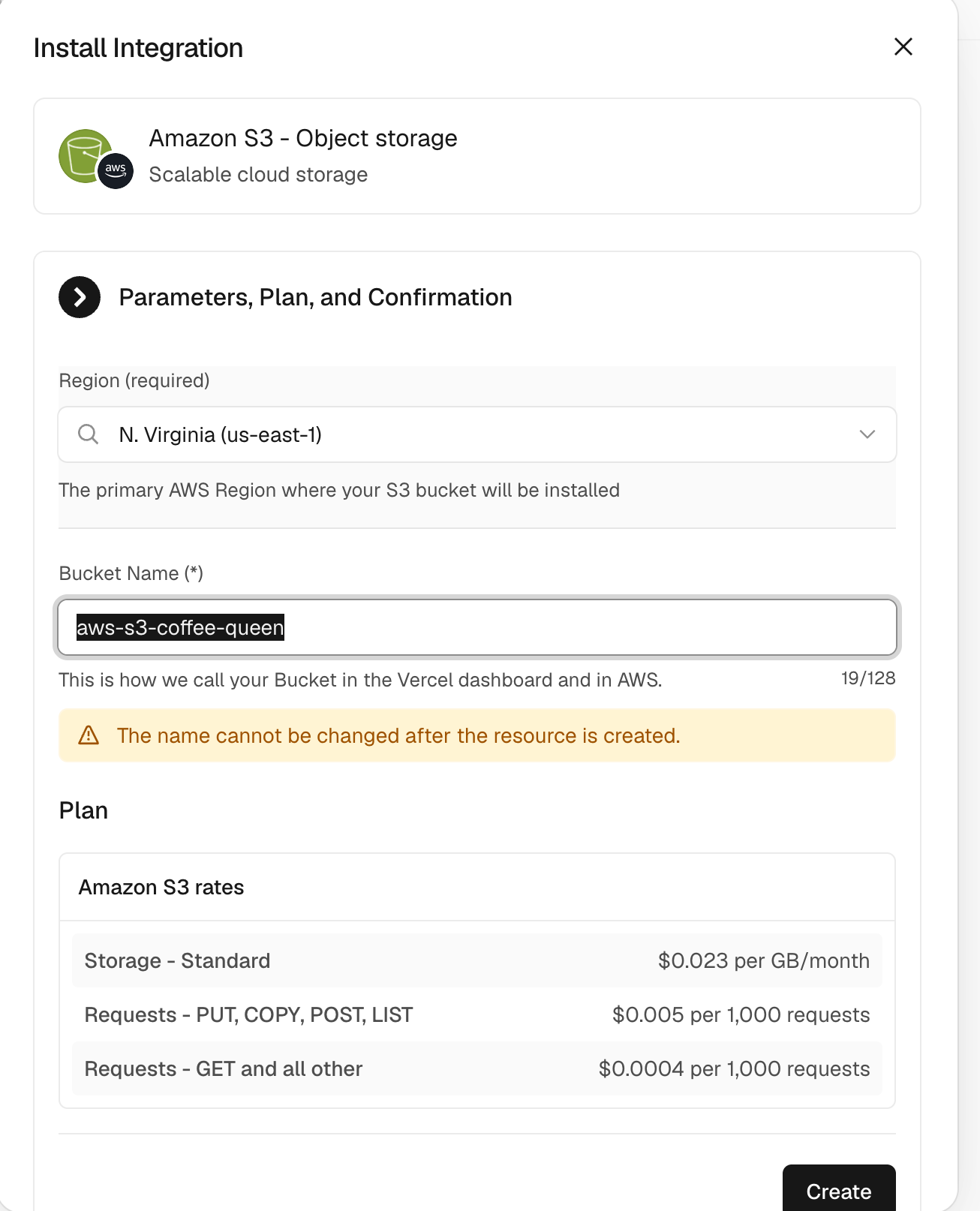
Today marks the formal realization of this vision. Amazon S3, S3 Tables, and S3 Vectors are now natively available across the Vercel Marketplace and v0 by Vercel. Developers can provision resources with a single click, instantly generate functional Next.js code blocks, and leverage natural language prompts within v0 to spin up complex, AI-driven applications complete with backend storage configurations.
Supporting Context & Metrics
To fully understand the impact of this integration, one must examine the technical mechanisms, architectural patterns, and economic incentives driving the adoption of S3 within the Vercel ecosystem.

Architectural Harmony: OIDC and Ephemeral Security
A critical engineering challenge in connecting serverless deployment platforms to hyperscale cloud providers is credential management. Traditional approaches relied on hardcoded access keys and secret keys stored in environment variables—a practice fraught with security risks.
The Vercel-AWS S3 integration eliminates static keys entirely. At runtime, the awsCredentialsProvider module from @vercel/functions/oidc communicates with AWS STS, exchanging a short-lived OIDC token for temporary, highly scoped credentials. The environment variables injected into the project—such as AWS_REGION, AWS_ROLE_ARN, AWS_RESOURCE_ARN, and bucket identifiers—contain no sensitive keys. This ensures that even if application environment variables are inadvertently exposed, the underlying AWS infrastructure remains secure behind temporary, least-privilege tokens.
Powering Three Distinct Workloads
1. General-Purpose Object Storage
Modern web applications constantly handle unstructured files, from user profile avatars and high-resolution photo galleries to video uploads and document archives. By provisioning a standard S3 general-purpose bucket through the Vercel dashboard and interacting with it via the AWS SDK for JavaScript (@aws-sdk/client-s3), developers can implement file upload and retrieval routes in Next.js with minimal boilerplate:
import  S3Client, PutObjectCommand  from "@aws-sdk/client-s3";
import  awsCredentialsProvider  from "@vercel/functions/oidc";

const s3 = new S3Client(
  region: process.env.AWS_REGION,
  credentials: awsCredentialsProvider(
    roleArn: process.env.AWS_ROLE_ARN,
  ),
);

export async function POST(request)
  const formData = await request.formData();
  const file = formData.get("file");

  await s3.send(new PutObjectCommand(
    Bucket: process.env.S3_BUCKET_NAME,
    Key: file.name,
    Body: Buffer.from(await file.arrayBuffer()),
    ContentType: file.type,
  ));

  return Response.json( success: true );
2. Analytical Workloads with S3 Tables
Data-intensive applications require robust analytical capabilities. S3 Tables provide native Apache Iceberg support, optimizing query performance automatically as data scales. By pairing S3 Tables with lightweight query engines like DuckDB running directly inside Vercel Functions, developers can execute complex analytical aggregations—such as querying real estate pricing trends or clickstream telemetry—without maintaining a separate data warehouse cluster.
import  DuckDBInstance  from "@duckdb/node-api";
import  awsCredentialsProvider  from "@vercel/functions/oidc";

const creds = await awsCredentialsProvider(
  roleArn: process.env.AWS_ROLE_ARN,
)();

const db = await DuckDBInstance.create();
const conn = await db.connect();

await conn.run("INSTALL aws; LOAD aws; INSTALL httpfs; LOAD httpfs; INSTALL iceberg; LOAD iceberg;");

await conn.run(`
  CREATE SECRET s3cred (
    TYPE s3,
    KEY_ID '$creds.accessKeyId',
    SECRET '$creds.secretAccessKey',
    SESSION_TOKEN '$creds.sessionToken',
    REGION '$process.env.AWS_REGION'
  );
`);

await conn.run(`
  ATTACH '$process.env.AWS_RESOURCE_ARN' AS s3tables (
    TYPE iceberg,
    ENDPOINT_TYPE s3_tables
  );
`);

const rows = await (await conn.run(`
  SELECT town_city, AVG(median_price) AS avg_price
  FROM s3tables."$process.env.S3_TABLES_NAMESPACE".town_monthly
  GROUP BY town_city
  ORDER BY avg_price DESC
  LIMIT 10
`)).getRowObjects();
3. AI and Semantic Search with S3 Vectors
As generative AI applications and intelligent agents dominate modern software development, efficient vector storage is paramount. Amazon S3 Vectors allows developers to store and query high-dimensional vector embeddings directly within S3. This eliminates the operational overhead of managing dedicated vector databases while supporting advanced semantic search and RAG workflows.
import  S3VectorsClient, QueryVectorsCommand  from "@aws-sdk/client-s3vectors";
import  awsCredentialsProvider  from "@vercel/functions/oidc";

const vectors = new S3VectorsClient(
  region: process.env.AWS_REGION,
  credentials: awsCredentialsProvider(
    roleArn: process.env.AWS_ROLE_ARN,
  ),
);

export async function POST(request)
  const  embedding  = await request.json();

  const result = await vectors.send(new QueryVectorsCommand(
    vectorBucketName: process.env.S3_VECTOR_BUCKET_NAME,
    indexName: "documents",
    queryVector:  float32: embedding ,
    topK: 5,
    returnMetadata: true,
  ));

  return Response.json( matches: result.vectors );
Natural Language Provisioning via v0
Beyond traditional dashboard provisioning, the integration shines within v0 by Vercel, the platform’s generative UI and application builder. Developers can use natural language prompts to describe what they want to build—such as "a photo gallery where users upload images using AWS" or "a support bot that answers questions from my PDFs"—and v0 automatically provisions the appropriate S3 resource (General Purpose Buckets or S3 Vectors), configures the necessary connections, and generates production-ready code.
Economic and Account Flexibility
The integration is offered at no additional platform charge; developers simply pay standard AWS pricing for the S3 resources consumed. Furthermore, teams have total flexibility regarding their cloud billing structure. They can create a brand-new AWS account directly through the Vercel integration (qualifying for $100 in AWS credits valid for six months) or link an existing enterprise AWS account to retain their current billing agreements and volume discounts. Because all S3 resources reside directly within the user’s AWS account, organizations retain full ownership, governance, and access to native AWS management and auditing tools.
Official Statements
Industry leaders from both organizations have emphasized the transformative nature of this collaboration, highlighting how it eliminates operational silos for software engineering teams.
"Developers want to focus on building delightful user experiences and intelligent AI applications, not wrestling with cloud infrastructure configurations and IAM policies," said a Vercel product spokesperson. "By bringing Amazon S3, S3 Tables, and S3 Vectors directly into the Vercel Marketplace and v0, we are providing a unified application stack where storage is as fluid and accessible as frontend code. Combined with our existing database integrations, developers now have an end-to-end serverless architecture entirely within a single AWS account."
AWS engineering leads echoed these sentiments, emphasizing the power of combining S3’s unmatched durability and analytical scale with Vercel’s rapid deployment workflows:
"Amazon S3 has long been the backbone of cloud storage, powering everything from web assets to massive data lakes and AI training datasets," noted an AWS storage specialist. "By integrating S3 Tables and S3 Vectors natively into Vercel and v0, we are unlocking new paradigms for serverless analytics and semantic search. Developers can now leverage enterprise-grade cloud capabilities with the speed and simplicity of modern frontend development, all while maintaining rigorous security standards through OIDC authentication."
Future Outlook
The launch of native Amazon S3 integration on Vercel marks a defining milestone in the convergence of frontend development and hyperscale cloud infrastructure. As web applications increasingly incorporate complex multi-modal AI agents, real-time analytics, and high-volume media processing, the traditional boundaries separating deployment platforms from cloud backends will continue to dissolve.
Looking ahead, we can anticipate deeper synergies between generative AI development tools like v0 and underlying cloud storage engines. As developers prompt applications into existence, intelligent provisioning systems will autonomously determine optimal storage tiers—shifting hot data to general-purpose buckets, analytical queries to S3 Tables, and embeddings to S3 Vectors—without requiring manual architectural intervention.
Moreover, this integration sets a new benchmark for developer experience (DevEx) across the enterprise software landscape. By prioritizing ephemeral, secure authentication via OIDC and unifying billing under single cloud accounts, Vercel and AWS have established a blueprint for how cloud primitives should be consumed in modern, cloud-native engineering environments.
For developers eager to explore these new capabilities, Amazon S3, S3 Tables, and S3 Vectors are available immediately across all commercial AWS regions supported by Vercel. Teams can begin building by visiting v0.app or navigating to the AWS page on the Vercel Marketplace. Additional technical documentation, API references, and troubleshooting guides can be accessed via the AWS MCP Server and the AWS re:Post community forums.