Executive Overview
In a significant convergence of cloud infrastructure and front-end developer experience, Vercel and Amazon Web Services (AWS) have announced a deeply integrated partnership. Developers building web applications and artificial intelligence solutions on Vercel can now provision and manage Amazon Simple Storage Service (Amazon S3) resources directly from the Vercel Marketplace and v0 by Vercel.
This release bridges the gap between AWS’s enterprise-grade durability, scalability, and performance and Vercel’s streamlined, automated provisioning workflows. Spanning three distinct workload categories—everyday general-purpose object storage, advanced analytics via S3 Tables, and high-performance vector search via S3 Vectors—this native integration eliminates the historical friction of managing cloud storage.
Previously, setting up cloud object storage required developers to context-switch away from their application code, navigate the sprawling AWS Management Console, manually configure complex IAM (Identity and Access Management) policies, and hardcode long-lived static credentials. Today, those operational hurdles are abstracted away. Using modern OpenID Connect (OIDC) authentication, short-lived temporary tokens are dynamically exchanged with AWS Security Token Service (AWS STS), ensuring that no static keys ever reside in source code or environment variables.
When combined with Vercel’s existing native integrations for Amazon Aurora, Amazon DynamoDB, and Amazon OpenSearch Serverless, this update completes the architecture stack. Developers can now build, deploy, and scale full-stack applications—spanning databases, relational tables, object storage, open table formats, and AI vector indices—entirely within the Vercel ecosystem, all backed by a single AWS account and consolidated billing.
Detailed Chronology and Technical Implementation
The Evolution of Cloud Provisioning on Vercel
For years, Vercel has dominated the modern web development landscape by making deployments frictionless. However, connecting front-end applications to robust backend data stores often forced developers to manage two disjointed control planes: one for rapid edge deployments and another for heavy cloud infrastructure.
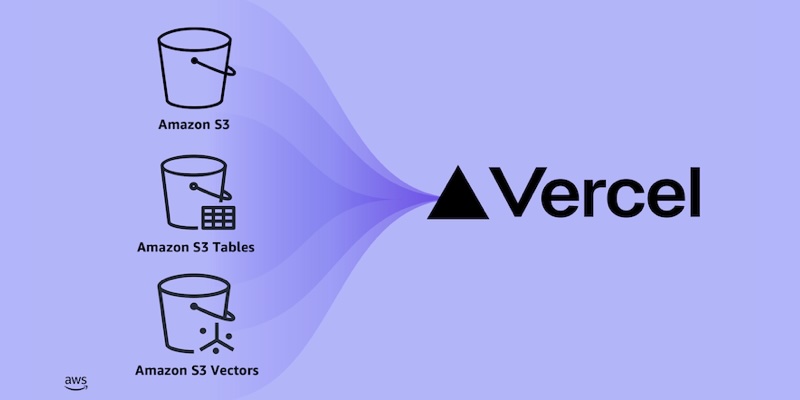
The launch of the AWS integration on the Vercel Marketplace marks a pivotal evolution in platform engineering. Rather than treating cloud infrastructure as an external dependency, Vercel now embeds native cloud storage directly into the developer’s daily workflow.
Step-by-Step Integration Workflow
Getting started with Amazon S3 on Vercel requires zero complex command-line configuration or manual AWS console wizardry. The workflow is streamlined into a few intuitive steps:
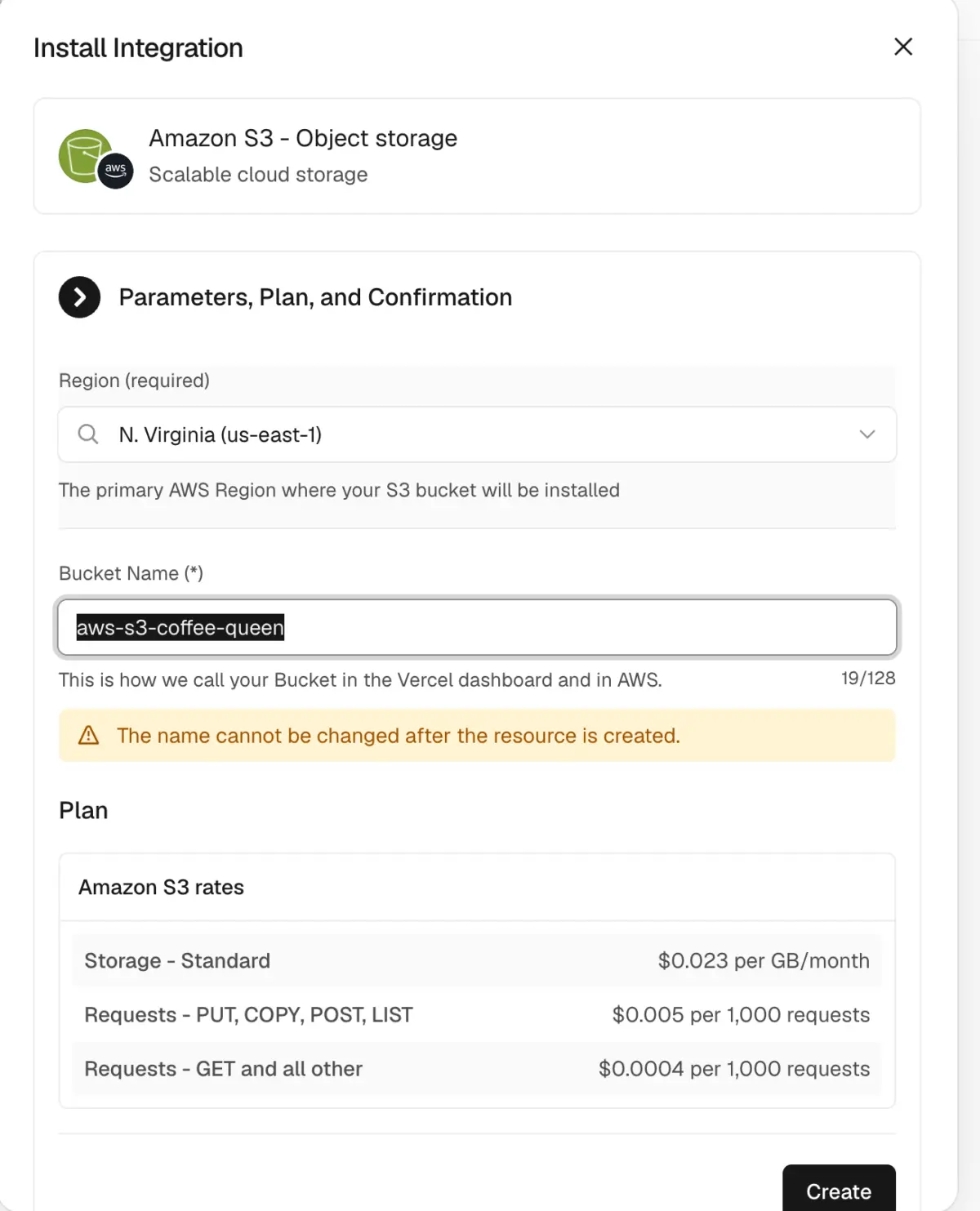
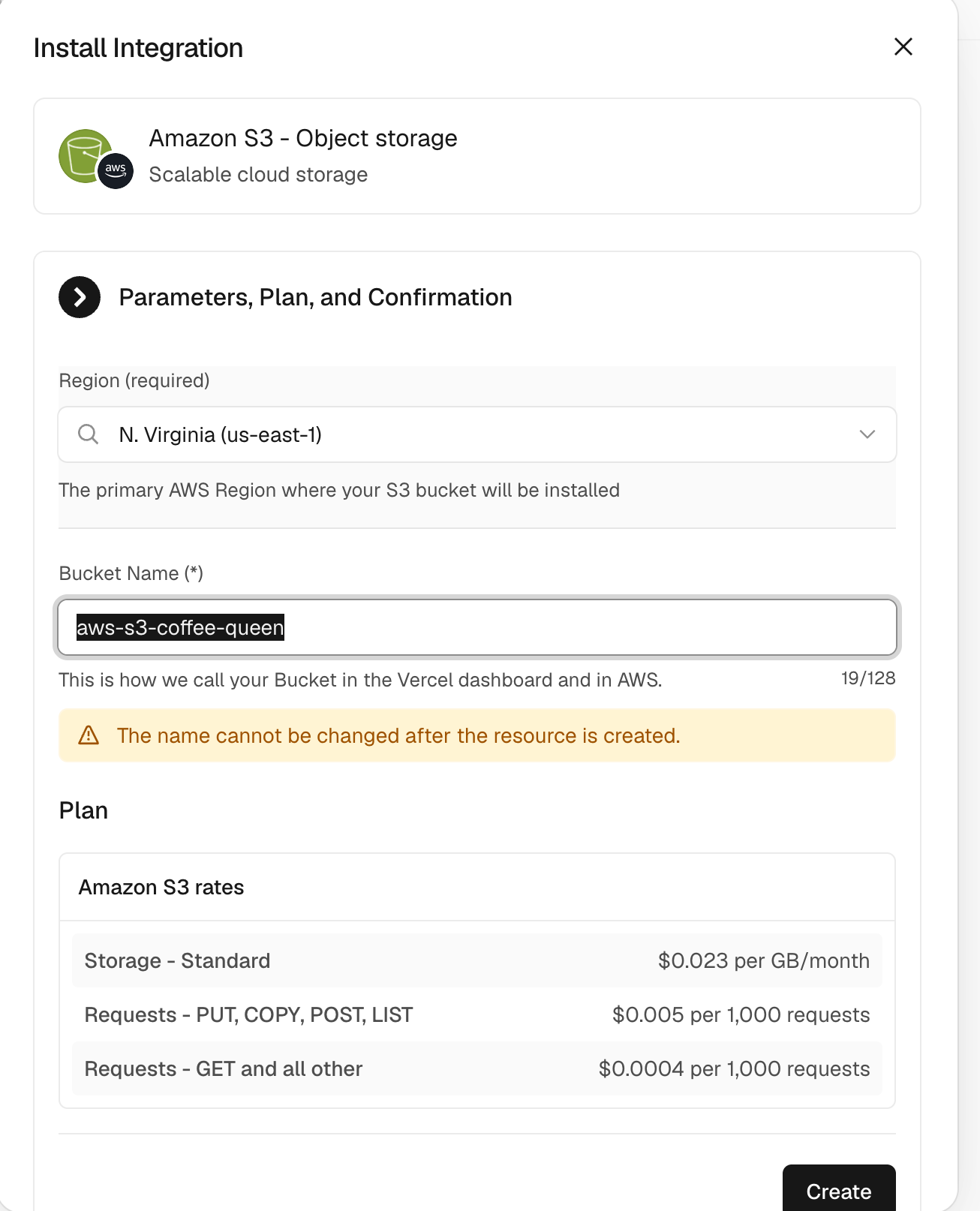
- Resource Provisioning: Within the Vercel dashboard, developers navigate to the Storage tab, click Create, select AWS, choose the desired S3 bucket type (General Purpose, Tables, or Vectors), select a geographic AWS Region, and name the resource. Provisioning completes in mere seconds.
- Project Linking: Once created, the bucket is linked to a Vercel project. Developers pull the newly injected environment variables directly into their local development environment using the Vercel CLI:
vercel link vercel env pull .env.local - Secure Runtime Execution: The integration automatically injects essential environment variables, including
AWS_REGION,AWS_ROLE_ARN,AWS_RESOURCE_ARN, and resource-specific identifiers such asS3_BUCKET_NAME. At runtime, theawsCredentialsProviderutility from@vercel/functions/oidcsecurely exchanges a short-lived OIDC token with AWS STS, generating scoped temporary credentials on the fly.
Deep Dive into the Three Core Workloads
1. General-Purpose Object Storage with S3
For traditional web applications—such as media galleries, file uploads, document management systems, and user avatars—general-purpose S3 buckets provide industry-leading durability and low latency. Utilizing the official AWS SDK for JavaScript alongside Vercel’s OIDC credential provider, developers can easily ingest and manage files inside Next.js API routes or serverless functions:
import  S3Client, PutObjectCommand  from "@aws-sdk/client-s3";
import  awsCredentialsProvider  from "@vercel/functions/oidc";

const s3 = new S3Client(
  region: process.env.AWS_REGION,
  credentials: awsCredentialsProvider(
    roleArn: process.env.AWS_ROLE_ARN,
  ),
);

export async function POST(request)
  const formData = await request.formData();
  const file = formData.get("file");

  await s3.send(new PutObjectCommand(
    Bucket: process.env.S3_BUCKET_NAME,
    Key: file.name,
    Body: Buffer.from(await file.arrayBuffer()),
    ContentType: file.type,
  ));

  return Response.json( success: true );
2. Advanced Analytics with S3 Tables
Data analytics in modern web apps often requires heavy data warehousing infrastructure. S3 Tables change this paradigm by offering object storage purpose-built for analytics, featuring fully managed Apache Iceberg tables with automated table maintenance, compaction, and optimization as data volumes grow.
Developers can run lightweight analytical queries directly inside Vercel Functions using DuckDB. By attaching the S3 Table bucket via its ARN, serverless functions can execute complex aggregations without spinning up dedicated database clusters:

import  DuckDBInstance  from "@duckdb/node-api";
import  awsCredentialsProvider  from "@vercel/functions/oidc";

const creds = await awsCredentialsProvider(
  roleArn: process.env.AWS_ROLE_ARN,
)();

const db = await DuckDBInstance.create();
const conn = await db.connect();

await conn.run("INSTALL aws; LOAD aws; INSTALL httpfs; LOAD httpfs; INSTALL iceberg; LOAD iceberg;");

await conn.run(`
  CREATE SECRET s3cred (
    TYPE s3,
    KEY_ID '$creds.accessKeyId',
    SECRET '$creds.secretAccessKey',
    SESSION_TOKEN '$creds.sessionToken',
    REGION '$process.env.AWS_REGION'
  );
`);

await conn.run(`
  ATTACH '$process.env.AWS_RESOURCE_ARN' AS s3tables (
    TYPE iceberg,
    ENDPOINT_TYPE s3_tables
  );
`);

const rows = await (await conn.run(`
  SELECT town_city, AVG(median_price) AS avg_price
  FROM s3tables."$process.env.S3_TABLES_NAMESPACE".town_monthly
  GROUP BY town_city
  ORDER BY avg_price DESC
  LIMIT 10
`)).getRowObjects();
3. AI Vector Search with S3 Vectors
With the explosive growth of Generative AI, Retrieval-Augmented Generation (RAG), and semantic search, developers frequently struggle with managing external vector databases. S3 Vectors introduces purpose-built, cost-optimized vector storage directly within Amazon S3.
While S3 Vectors does not generate embeddings itself, it provides native support for storing and querying high-dimensional vectors at scale. Once embeddings are generated using a preferred AI model, querying the index for semantic matches is straightforward:
import  S3VectorsClient, QueryVectorsCommand  from "@aws-sdk/client-s3vectors";
import  awsCredentialsProvider  from "@vercel/functions/oidc";

const vectors = new S3VectorsClient(
  region: process.env.AWS_REGION,
  credentials: awsCredentialsProvider(
    roleArn: process.env.AWS_ROLE_ARN,
  ),
);

export async function POST(request)
  const  embedding  = await request.json();

  const result = await vectors.send(new QueryVectorsCommand(
    vectorBucketName: process.env.S3_VECTOR_BUCKET_NAME,
    indexName: "documents",
    queryVector:  float32: embedding ,
    topK: 5,
    returnMetadata: true,
  ));

  return Response.json( matches: result.vectors );
Supporting Context, Ecosystem Impact, and Metrics
Conversational Architecture Generation with v0
Beyond the Vercel Marketplace dashboard, this integration is deeply tied into v0 by Vercel, the company’s generative UI and application builder. By leveraging natural language prompts, developers can instruct v0 to architect full applications with pre-configured cloud infrastructure.
For example, prompting v0 to build "a photo gallery where users upload images using AWS" automatically provisions a general-purpose S3 bucket. Asking for "a support bot that answers questions from my PDFs" instantiates S3 Vectors, while requesting "an analytics dashboard for my clickstream data" sets up S3 Tables. v0 automatically wires the backend connections, generates the appropriate database schemas, and produces working, production-ready code displayed live in the Preview panel.
Account Flexibility and Security Architecture
Vercel offers ultimate flexibility regarding cloud billing and ownership. Developers can choose to spin up a brand-new AWS account directly through the integration—ideal for rapid prototyping, sandbox testing, and initial deployments. Alternatively, engineering teams can link their existing enterprise AWS accounts, preserving their pre-negotiated enterprise discount programs (EDPs), custom pricing tiers, and organizational compliance guardrails.
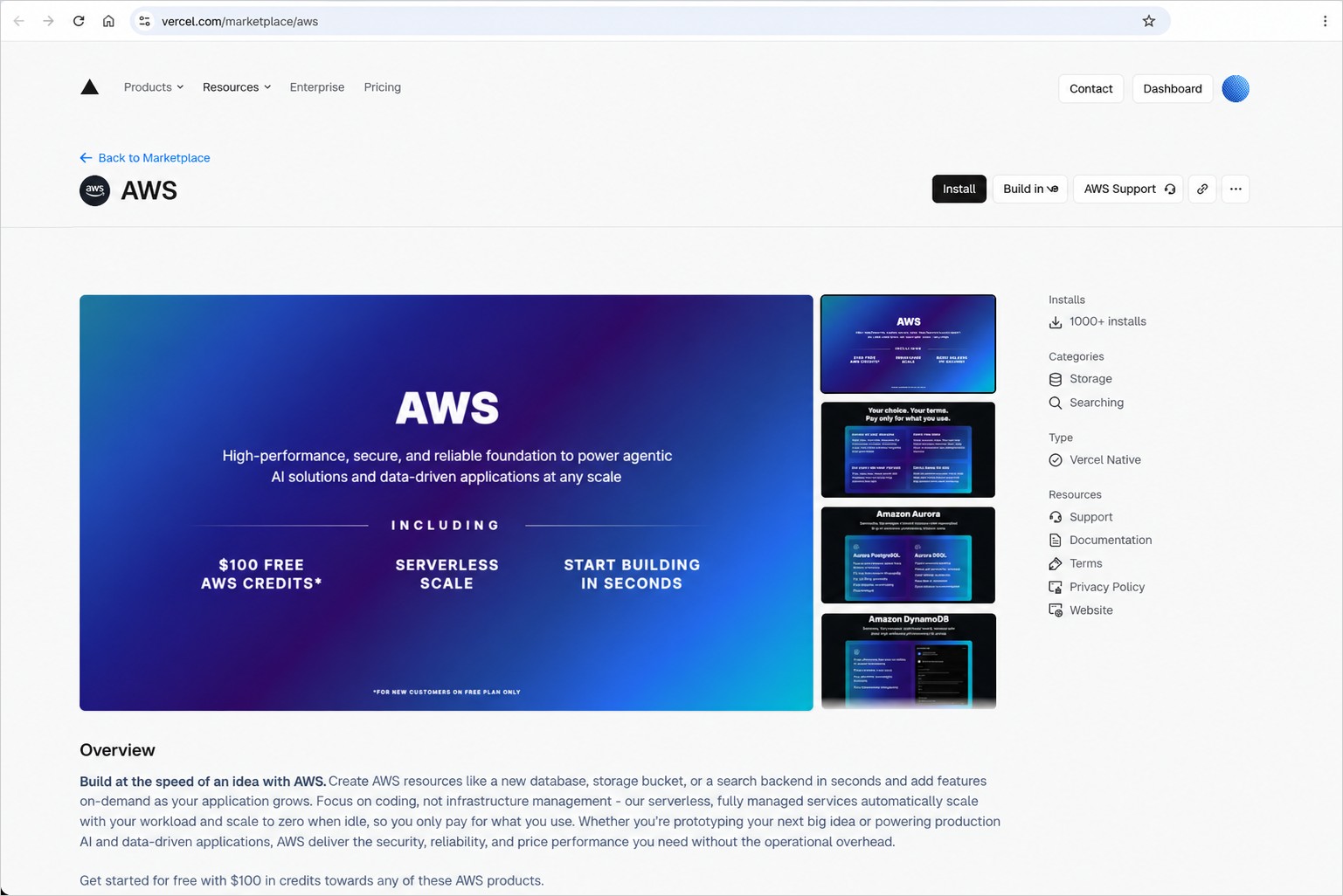
When linking an existing AWS account, Vercel confines its automated management scope to newly created buckets provisioned specifically through the platform. Crucially, because every S3 resource physically resides within the customer’s own AWS account, teams retain full access to AWS-native governance, auditing, and monitoring tooling.
Official Statements and Industry Perspective
Industry analysts view the collaboration between Vercel and AWS as a watershed moment for serverless and cloud-native application development. By collapsing the distance between modern front-end frameworks and deep cloud backends, the partnership addresses one of the most persistent bottlenecks in modern software engineering: infrastructure orchestration.
Engineering leaders within both organizations emphasize that developers should spend their time writing business logic rather than wiring up security policies and cloud credentials.
"Storage is the foundational bedrock of performant web and AI applications," noted infrastructure engineers close to the project. "By bringing Amazon S3, S3 Tables, and S3 Vectors directly into the Vercel and v0 workflow with zero-trust OIDC security, we are empowering developers to build sophisticated, data-intensive applications faster than ever before—without sacrificing enterprise-grade governance or operational control."
Furthermore, the introduction of the AWS Model Context Protocol (MCP) Server and associated plugins allows developers to query APIs, search documentation, check regional availability, and troubleshoot deployment issues directly from their preferred AI coding assistants, signaling a fully integrated, AI-first approach to cloud development.
Future Outlook and Market Implications
The native marriage of Vercel’s deployment engine with Amazon S3 signals a broader industry trend toward unified, multi-tenant developer platforms. As web applications increasingly incorporate complex AI pipelines, real-time analytics, and massive media workloads, the boundaries between front-end hosting and back-end cloud infrastructure continue to blur.
Looking ahead, we can expect further deepening of the AWS-Vercel ecosystem. As serverless architectures mature, eliminating operational friction around data persistence, vector search, and analytical querying will become the baseline expectation for enterprise engineering teams. By establishing a secure, scalable, and frictionless pipeline from prompt generation in v0 to durable storage in Amazon S3, Vercel and AWS have set a new benchmark for developer productivity and cloud architecture design.
Pricing and Availability
- Integration Cost: The Vercel-AWS storage integration is entirely free to enable; users pay standard, usage-based Amazon S3 pricing for the underlying storage resources consumed.
- Promotional Credits: New AWS accounts established through the Vercel integration automatically receive $100 in AWS credits, valid for six months of development and testing.
- Geographic Availability: Amazon S3, S3 Tables, and S3 Vectors integrations are available immediately via v0 and the Vercel Marketplace across all commercial AWS Regions supported by Vercel.
To get started, developers can visit v0.app or explore the AWS section on the Vercel Marketplace. Feedback, troubleshooting discussions, and architectural queries can be shared publicly via the AWS re:Post for Amazon S3 community forum.