Executive Overview
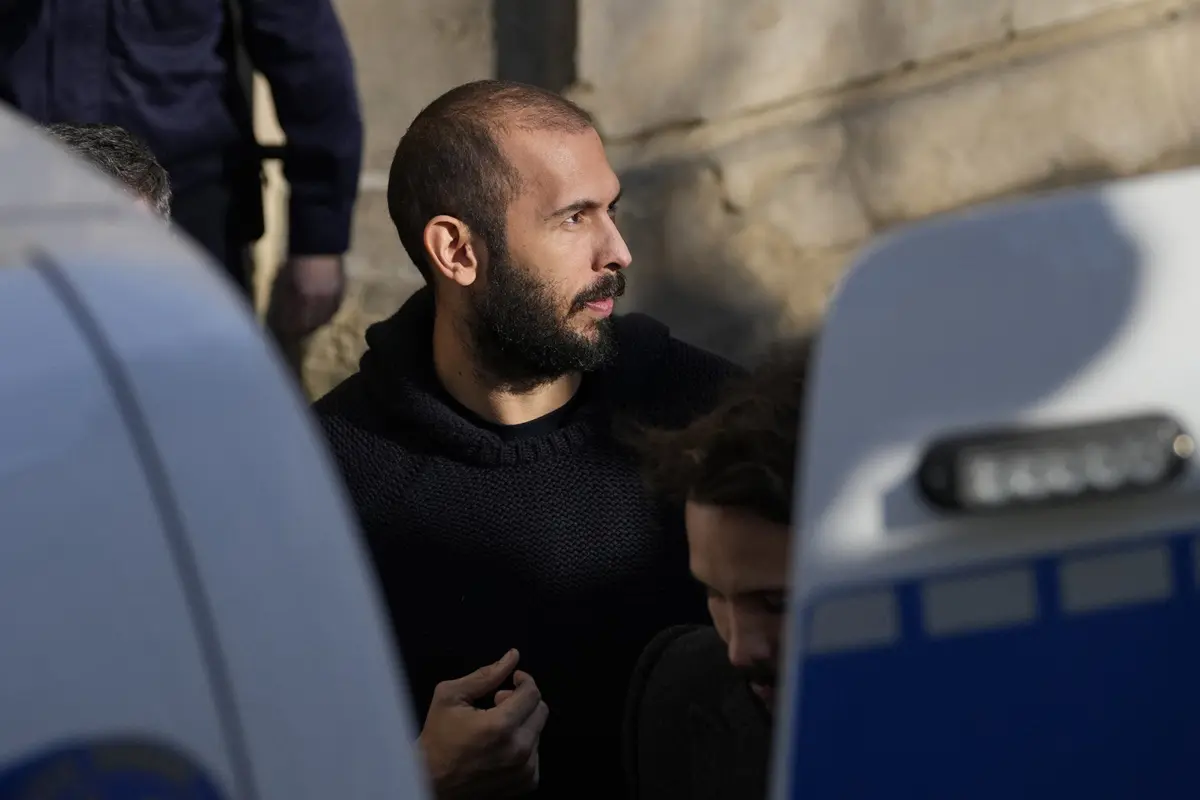
Months after their initial arrest in late December sent shockwaves through the digital landscape, controversial social media influencers Andrew and Tristan Tate secured a temporary legal victory. In late March, a Romanian appellate court transitioned the brothers—alongside two alleged accomplices, Georgiana Naghel and Luana Radu—from a high-security Bucharest detention facility to house arrest. The ruling permitted the siblings to reside in a heavily surveilled compound situated in an affluent northern suburb of the Romanian capital, offering a momentary reprieve ahead of an anticipated criminal trial.
However, a comprehensive review of court documents, freedom of information requests, and internal sources within the Romanian judiciary reveals a counterproductive narrative. While the move to house arrest was hailed by their defense teams as a vindication, prosecutors and legal experts argue that the defendants’ behavior throughout their time in custody has severely jeopardized their long-term legal standing. Rather than focusing solely on mounting a conventional defense against charges of human trafficking, organized crime, and rape, the Tates and their associates allegedly orchestrated a multifaceted campaign of obstruction, witness intimidation, and escape planning.
According to investigative files, wiretaps, and judicial summaries, the brothers attempted to engineer an escape to Dubai under the guise of urgent medical treatment, leveraged international legal mechanisms to pressure key witnesses, and allegedly exploited the institutional ties of their co-defendants to compromise classified police databases. Furthermore, attempts to court polarizing political figures and direct an online army of supporters against alleged victims have deeply alienated Romanian magistrates. Legal scholars warn that this persistent pattern of volatile and aggressive maneuvers has sown profound institutional distrust, creating a hostile judicial environment that could critically undermine any future testimony or legal defense the brothers attempt to present.
Detailed Chronology of Events
The Arrest and Initial Detention (December 2022)
The legal saga began on December 29, 2022, when Romanian law enforcement units raided properties associated with Andrew and Tristan Tate. The brothers were detained alongside Naghel and Radu on suspicion of forming an organized criminal syndicate, human trafficking, and sexual assault. Following their apprehension, the defendants were remanded to a central police arrest facility in Bucharest. From the outset, the high-profile nature of the case drew intense global scrutiny, pitting the influencers’ massive online following against the investigative efforts of Romanian organized crime prosecutors (DIICOT).
Escalation and Alleged Plots (January – February 2023)
As the weeks in detention stretched on, internal investigative documents indicate that the defendants engaged in a series of unauthorized maneuvers designed to destabilize the prosecution’s case. Wiretapped jailhouse communications cited in court papers revealed that Andrew Tate allegedly devised a plan to flee Romania for Dubai. To execute this, the influencer reportedly sought permission to travel under the pretext of addressing a critical medical condition—specifying a dark spot on his lung that a representative initially claimed was "most likely a tumor." Although Andrew later downplayed the severity via social media, describing the spot as scarring "from an old battle," Romanian authorities swiftly denied the travel request.
Concurrently, prosecutors uncovered evidence that the Tates’ supporters were being marshaled to target key participants in the legal proceedings. Court filings from a February 21 judicial session highlighted that the defendants had allegedly encouraged their online followers to direct threatening messages toward at least one alleged victim to coerce her into retracting her testimony. This climate of fear was further compounded by the dispatch of a U.S.-based cease-and-desist letter in December, urging a key witness residing in Florida to withdraw her statements or face aggressive defamation litigation.
The Shift to House Arrest and Lingering Anxieties (March 2023)
Despite the growing pile of evidence regarding witness tampering and flight preparations, a significant legal pivot occurred on March 31. Two appellate judges—reportedly newer to the intricacies of the case—overruled lower court reservations and approved the transition of the Tates, Naghel, and Radu to house arrest.
The decision sparked immediate concern among official circles. While the defendants relocated to their guarded compound in northern Bucharest, law enforcement agencies implemented round-the-clock surveillance to mitigate perceived flight risks. The ruling underscored a deep ideological and procedural divide within the Romanian judiciary, pitting lower court judges—who viewed the defendants as an unmitigated danger to public order—against appellate authorities willing to grant conditional physical freedoms.
Supporting Context & Metrics
The investigation into the Tate network extends far beyond the core human trafficking charges, uncovering a sprawling web of institutional vulnerabilities and strategic miscalculations.
The Breach of Classified Infrastructure
At the center of the secondary investigations is Luana Radu, a former police officer turned alleged accomplice. According to court files obtained via freedom of information requests, Radu is suspected of utilizing external support to unlawfully access classified databases belonging to the Romanian Ministry of Internal Affairs between April and December 2022. Investigators noted that accessing these secure networks while an active investigation was underway provided the defense network with an unauthorized tactical advantage. The presiding judge emphasized in court papers that breaching such databases would have been impossible without internal and external collaboration, expanding the scope of criminal culpability surrounding the group.
Historical Complaints and Unresolved Reports
Prosecutors also unearthed dormant police reports originating from the local precinct near the Tates’ compound. These records indicated that multiple women had previously filed complaints detailing allegations of physical violence, coercion, and abuse against the brothers predating the current legal action. Due to systemic factors or suspected undue influence—allegedly facilitated through Radu’s former law enforcement connections—these historical complaints remained unresolved, a factor prosecutors are now integrating into the broader organized crime framework.
Political Outreach and Failed Alliances
In an extraordinary bid to exert external control over the narrative, Andrew Tate allegedly instructed an associate to approach two prominent right-wing Romanian politicians: George Simion and Diana Șoșoacă. Known for their anti-Western rhetoric, provocative stances on gender and public health mandates, and occasional alignment with fringe geopolitical narratives (with Șoșoacă subsequently added to Ukraine’s national sanctions list), the politicians were targeted as potential mouthpieces.
According to a translated wiretap transcript, Tate allegedly instructed his assistant to offer political and social rewards: "If you take the side of the guys, when they get out of prison they will make sure you are rewarded for telling the truth." However, the strategy yielded zero dividends; when approached by local media outlets, both Simion and Șoșoacă flatly refused to comment or associate themselves with the Tate defense.
Official Statements & Legal Perspectives
The public-facing communications from the Tates’ legal and public relations teams stand in sharp contrast to the stark evaluations offered by Romanian legal scholars and prosecution insiders.
Defense Counterarguments and Clarifications
Representatives for the Tates have consistently pushed back against the narrative of evasion and intimidation. Defense attorney Eugen Vidineac minimized flight concerns during interviews with local media, stating: "They have a home and children in Romania, they are under criminal investigation, there is no reason to run away."
Addressing the leaked Dubai wiretaps, Tate spokesperson Mateea Petrescu issued a clarifying statement to the press: "Regarding their departure from the country, the partially published wiretaps omitted the context, [namely] Andrew discussing leaving to Dubai for medical inquiries only in the case that his status allows it."
Similarly, regarding the contentious U.S. cease-and-desist letter sent to the Florida-based witness, international defense counsel Tina Glandian stressed that her specific firm held no involvement in its dispatch. Petrescu reinforced this stance by categorizing the notification as a standard American legal maneuver, asserting that any lingering suspicions regarding intimidation were rendered obsolete by the appellate court’s decision to grant house arrest.
Judicial Irritation and Legal Repercussions
Independent legal experts, however, caution that the defense’s aggressive posture may ultimately backfire inside the courtroom. Mihai Mareș, a criminal defense lawyer in Bucharest and a lecturer at Alexandru Ioan Cuza University of Iași, explained that the palpable "irritation" of judges documented in court records will carry tangible consequences.
"Any subsequent statements they may give will be viewed with a certain amount of skepticism by the judicial bodies," Mareș noted, emphasizing that the introduction of aggressive communication strategies or direct pressure tactics widens the evidentiary scope against the defendants.
Mareș specifically warned that the U.S. cease-and-desist notification, if interpreted as an attempt to force the withdrawal of a criminal complaint, could directly substantiate an entirely new criminal charge: the crime of influencing statements. A source close to the prosecutor’s office confirmed that formally expanding the indictment along these lines remains a distinct possibility as the trial proceedings approach.
An anonymous insider within the Romanian justice system offered a blunt psychological assessment of Andrew Tate’s behavior throughout the detention period, attributing the self-sabotaging actions to an insatiable appetite for public controversy:
"I think Andrew Tate is not the most intelligent guy, but he probably can’t help himself."
Future Outlook
As the legal teams prepare for the formal commencement of the trial—expected to begin in late April—the dynamics surrounding the Tate brothers remain volatile. The transition to house arrest has afforded the defendants physical mobility within restricted parameters, but it has done little to placate an increasingly methodical prosecution team.
With supplementary investigations into alleged database breaches, historical abuse complaints, and witness tampering operating concurrently with the primary human trafficking and organized crime charges, the legal labyrinth facing the defendants is expanding rather than contracting. The persistent strategy of leveraging international public relations, political outreach, and aggressive legal warnings has fundamentally hardened the attitude of the Romanian judiciary.
Moving forward, the central trial will test whether the Tates’ high-profile defense strategy can withstand a deeply skeptical bench. Legal observers agree that the cumulative weight of the defendants’ actions during their months in detention—characterized by authorities as blatant disregard for legal boundaries—will form a critical subtext as the evidence is weighed in an open court of law. For Andrew and Tristan Tate, the battle to protect their empire has transformed into a high-stakes struggle for institutional survival within a legal system that has grown acutely intolerant of their digital-era playbook.