Executive Overview
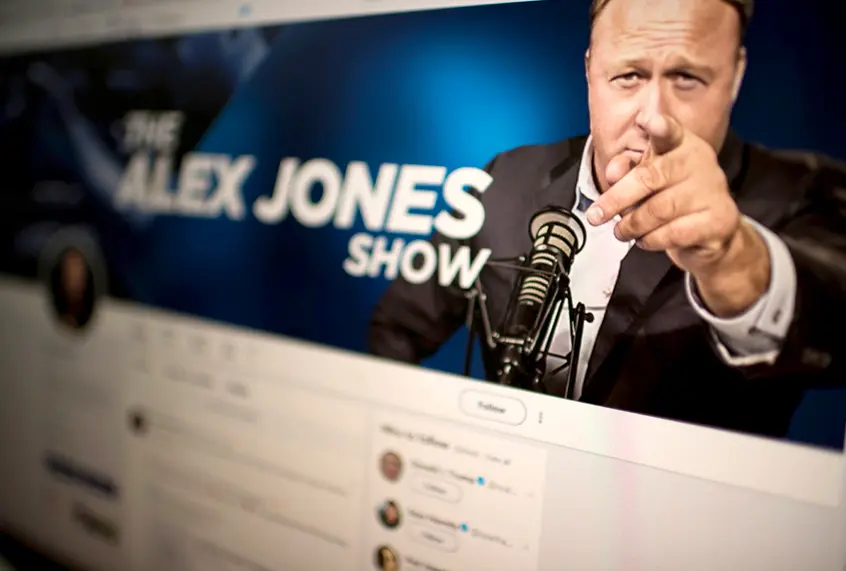
In August 2018, the digital landscape underwent a profound, long-overdue seismic shift regarding how major technology platforms governed extreme speech, harassment, and conspiracy theories. For years, far-right radio host and InfoWars founder Alex Jones operated with virtual impunity across the web, leveraging social media channels to broadcast baseless claims, harass grieving families, and target political adversaries. While a coordinated exodus by Apple, Facebook, Pinterest, Spotify, and YouTube systematically stripped Jones of his digital megaphones, one major holdout stubbornly resisted the pressure: Twitter.
That defense crumbled on Tuesday, August 15, 2018, when Twitter imposed a seven-day suspension—colloquially termed a "timeout"—on two accounts maintained by Jones. The catalyst for the reversal was a direct, explicit violation of Twitter’s safety policies: Jones had used his personal platform to urge followers to ready "battle rifles" against members of the mainstream media and other ideological opponents.
The suspension forced Twitter CEO Jack Dorsey into the national spotlight to defend a policy pivot that seemed to contradict his prior stance on absolute free expression. In an exclusive interview with NBC News, Dorsey articulated the delicate, highly scrutinized tightrope tech executives walk when balancing open public discourse against real-world harms. This in-depth retrospective examines the events leading up to Twitter’s landmark decision, the operational philosophy behind temporary social media bans, the broader industry-wide crackdown on InfoWars, and the long-term implications for content moderation in the digital age.
Detailed Chronology: The Fall of the InfoWars Empire
To understand the weight of Twitter’s August 2018 decision, one must examine the rapid, cascading sequence of events that isolated Jones across the digital ecosystem during the summer of 2018.
The Spring and Summer Escalation
By mid-2018, public pressure on Silicon Valley executives had reached a boiling point. Activists, civil rights groups, and concerned citizens increasingly documented how major platforms amplified dangerous misinformation under the guise of free speech. Alex Jones sat at the epicenter of this controversy. For over a decade, Jones had peddled malicious hoaxes, most notoriously claiming that the 2012 mass shooting at Sandy Hook Elementary School—where 20 children and six educators were murdered—was a "false flag" operation orchestrated by the government using "crisis actors."
These claims subjected the grieving parents of Sandy Hook victims to years of relentless harassment, death threats, and online abuse by Jones’s followers. In response, several parents filed high-stakes defamation lawsuits in Texas and Connecticut, threatening the financial viability of InfoWars and its parent company, Free Speech Systems.
Despite mounting legal troubles and public outcry, Jones escalated his rhetoric throughout the summer of 2018. He accused various public figures, including Special Counsel Robert Mueller and Facebook CEO Mark Zuckerberg, of severe crimes, and openly threatened physical violence.
The Industry-Wide Deplatforming Wave
In early August 2018, Silicon Valley made a coordinated, unprecedented move to purge Jones from mainstream digital infrastructure. Within a matter of days:
- Apple removed the vast majority of InfoWars podcasts from its Podcasts app, citing violations of guidelines prohibiting hate speech and incitement.
- Spotify pulled multiple episodes of the Alex Jones Show podcast for repeatedly violating its hate content policies.
- Facebook took down four pages controlled by Jones, including his personal page and official InfoWars pages, for glorifying violence and using dehumanizing language against transgender people and Muslims.
- YouTube (owned by Google) terminated the primary InfoWars channel, which boasted over 2.4 million subscribers, alongside several secondary channels, pointing to repeated strikes for hate speech and harassment.
- Pinterest eliminated InfoWars boards for violating anti-hate policies.
Through it all, Twitter remained an outlier. While competitors acted decisively, Twitter’s leadership argued that Jones’s past content, however abhorrent or conspiratorial, did not explicitly breach the letter of Twitter’s terms of service. That legalistic defense evaporated when Jones crossed a bright red line regarding physical violence.
The Triggering Tweet and the Seven-Day Timeout
On August 14, 2018, Jones published a video clip and accompanying posts on Twitter in which he aggressively called upon his supporters to get their "battle rifles" ready against journalists, critics, and the mainstream media.
This post constituted a direct, undeniable violation of Twitter’s core rules and safety policies, which explicitly prohibit individuals or organizations from using or promoting violence against civilians to advance ideological causes. Recognizing the immediate physical risk, Twitter’s trust and safety teams locked Jones’s accounts and imposed a mandatory seven-day suspension.
Supporting Context & Metrics: The Scale of the InfoWars Phenomenon
To fully grasp why the 2018 deplatforming of Alex Jones was a watershed moment for internet governance, it is essential to analyze the sheer scale and economic engine driving InfoWars at its peak.
| Metric / Platform Category | Pre-Ban Status (Mid-2018) | Action Taken (August 2018) |
|---|---|---|
| YouTube (InfoWars Main) | 2.4+ million subscribers; Billions of lifetime views | Permanently terminated |
| Facebook (InfoWars Pages) | Millions of followers across 4 primary pages | All 4 pages unpublished and removed |
| Apple Podcasts | Top-ranking news/politics podcast feed | Entire podcast catalog removed |
| Spotify | Multiple daily audio episodes | Selected episodes/feeds purged |
| Hundreds of thousands of followers | 7-day temporary suspension implemented | |
| Periscope | Active live-streaming channel | Retained streaming access temporarily |
The Economic Engine of Conspiracy
Before the 2018 bans, InfoWars was not merely a fringe media outlet; it was a multi-million-dollar e-commerce empire. Operating out of Austin, Texas, Jones monetized his audience primarily through the sale of proprietary dietary supplements, survivalist gear, tactical equipment, and branded merchandise.
The social media platforms served as the top of a vast digital conversion funnel. Free clips of sensationalized, outrage-driven content posted to YouTube, Facebook, and Twitter funneled millions of curious or sympathetic viewers back to InfoWars.com, where they were subjected to aggressive sales pitches for products like "Super Male Vitality" and colloidal silver.
When major platforms cut off his distribution channels, it severed the primary pipeline bringing new consumers into the InfoWars commercial ecosystem. While Jones attempted to pivot to alternative platforms like Gab and independent video hosts, the loss of mainstream algorithmic reach drastically diminished his cultural footprint and revenue generation capacity.
Official Statements and Institutional Discourse
The tension between open speech ideals and corporate responsibility sparked intense public debate, forcing tech executives to publicly account for their moderation frameworks.
Jack Dorsey’s Defense and Clarifications
In an interview with Lester Holt on NBC Nightly News on August 15, 2018, Twitter CEO Jack Dorsey addressed the company’s actions head-on. Dorsey revealed that he had personally resisted earlier calls from activists and users to ban Jones because, at that time, Jones’s content—though widely considered toxic and false—had managed to skirt direct rule violations.
"We can’t build a service that is subjective just to the whims of what we personally believe," Dorsey told NBC News, emphasizing the necessity of maintaining objective, predictable content guidelines.
Dorsey defended the seven-day timeout as a constructive measure designed to compel behavioral reflection. "I feel any suspension, whether it be a permanent or a temporary one, makes someone think about their actions and their behaviors," he stated.
However, when pressed by Holt on whether a weeklong ban would genuinely reform a seasoned conspiracy theorist, Dorsey was candidly uncertain: "Whether it works within this case to change some of those behaviors and change some of those actions, I don’t know. But this is consistent with how we enforce."
Following the broadcast, Dorsey took to Twitter to clarify his remarks, noting that temporary timeouts are standard operational procedure and that enforcement inherently escalates upon repeated violations:
"To clarify: I was speaking broadly about our range of enforcement actions, when asked why we timeout functionality on Twitter. I don’t assume everyone will change their actions. Enforcement gets tougher with further reported violations."
Criticisms from Civil Society
Media watchdogs and civil rights organizations viewed Twitter’s initial reluctance and subsequent lenient slap-on-the-wrist as insufficient. Critics argued that a seven-day timeout treated violent threats as mere policy infractions rather than criminal incitement.
As media reporter Amanda Marcotte noted regarding Jones’s long history of defamation and harassment: "Jones has been peddling mean-spirited hoaxes for years, including 9/11 ‘truther’ nonsense, false accusations of pedophilia aimed at a broad set of targets (including special counsel Robert Mueller), and hyping the idea that the bereaved parents of kids killed in the Sandy Hook massacre are fakers."
Critics maintained that treating bad-faith actors with procedural leniency ignored the real-world harm inflicted on vulnerable populations, pointing to the harassment campaigns suffered by Sandy Hook families as definitive proof that unchecked conspiracy theories carry lethal offline consequences.
Future Outlook: The Legacy of the 2018 Deplatforming
The coordinated deplatforming of Alex Jones in August 2018 established a new precedent for Silicon Valley moderation policies. It shattered the long-held Silicon Valley myth that platforms could remain entirely neutral public squares divorced from the societal consequences of the content they amplified.
The Shift Toward Platform Accountability
In the years following the 2018 watershed, tech companies increasingly recognized that hosting extreme misinformation and stochastic terror threats poses existential risks not only to public safety, but to corporate brand integrity. Policies regarding hate speech, coordinated harassment, and dangerous organizations were rewritten, tightened, and enforced with greater vigor across Twitter (later rebranded as X), Meta, Google, and others.
However, the debate remains fiercely polarized. Proponents of aggressive content moderation argue that private corporations have a moral and social obligation to police their platforms to protect democratic institutions and public health from toxic disinformation. Conversely, free-speech absolutists contend that empowering corporate executives to arbitrate truth creates a dangerous slippery slope toward censorship, where mainstream political discourse can be unfairly silenced under the guise of safety.
Conclusion
Twitter’s August 2018 suspension of Alex Jones—though modest in duration compared to the permanent bans levied by Apple, Facebook, and YouTube—marked a critical inflection point. It signaled that even the most reluctant tech giants could no longer hide behind absolute interpretations of free speech while bad-faith actors weaponized their infrastructure to incite violence. As the digital landscape continues to evolve in an era of artificial intelligence and hyper-polarized discourse, the lessons learned from the fall of InfoWars remain a foundational case study in the ongoing struggle to govern speech in the modern public square.