Executive Overview
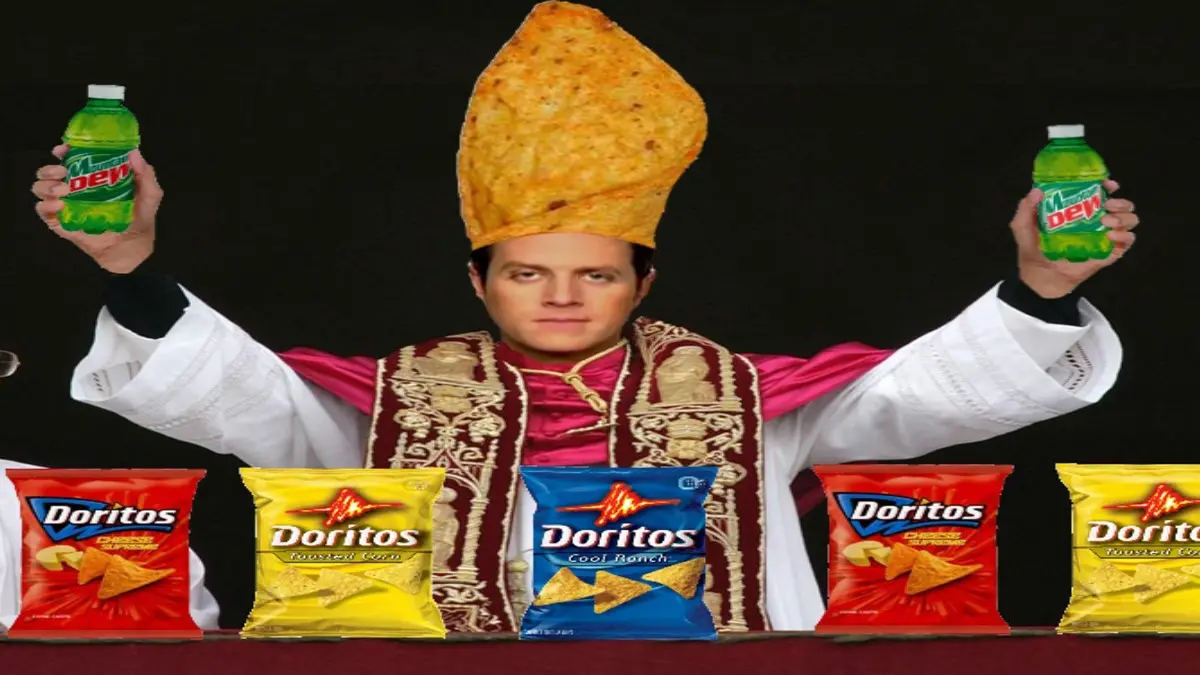
In the fast-evolving landscape of digital media, few cultural touchstones have left as enduring a mark on industry ethics as the October 2012 phenomenon known colloquially as the "Dorito Pope." This derogatory, yet unforgettable, moniker was bestowed upon prominent Canadian video game journalist Geoff Keighley following an ill-fated promotional interview with LevelSave.com. What was ostensibly intended to be a routine discussion about Halo 4, Comic-Con, and upcoming industry trends quickly devolved into a lightning rod for broader anxieties concerning the integrity, transparency, and corporate capture of games journalism.
Dominated visually and contextually by heavy-handed product placement for PepsiCo’s Mountain Dew and Frito-Lay’s Doritos—specifically tied to the Halo 4 "XP" cross-promotion—the interview became an overnight internet sensation for all the wrong reasons. The backlash was swift, widespread, and foundational to a broader internet movement that would come to be known as "Doritosgate."
This article provides an exhaustive retrospective of the incident, tracing its origins, the mechanics of its viral spread, the critical commentaries that immortalized it, and its enduring legacy on the relationship between corporate sponsors and the press.
Detailed Chronology
October 18, 2012: The Interview That Started It All
The controversy began on October 18, 2012, when video game journalist Geoff Keighley sat down for an interview with the gaming website LevelSave.com. The primary agenda of the discussion was to touch upon Keighley’s extensive experiences attending San Diego Comic-Con, his early hands-on impressions of Microsoft’s highly anticipated blockbuster shooter Halo 4, and the general state of the gaming industry.
However, viewers tuning into the video were immediately struck by the stage design and context of the broadcast. Keighley was framed against an uncomfortably prominent backdrop of Mountain Dew and Doritos merchandise. The interview served as an organic—yet starkly overt—extension of the "Mountain Dew and Doritos XP" promotion. This massive corporate crossover between PepsiCo and Microsoft allowed players to unlock double-XP bonuses in Halo 4 multiplayer by redeeming codes printed on specially marked snack bags and soda bottles.
Rather than maintaining an objective journalistic distance from the commercial product being leveraged, Keighley appeared deeply integrated into the marketing apparatus. The visual dissonance of a supposedly independent journalist discussing art and entertainment while literally walled in by junk food proved too much for the internet to ignore. The original interview video rapidly accumulated negative sentiment, ultimately garnering nearly 50,000 views paired with an overwhelming ratio of over 1,200 downvotes to a mere 125 upvotes.
October 24, 2012: Rab Florence and "Lost Humanity 18"
The internet meme machine might have simply laughed off the bizarre staging of the interview had it not been for a sharp, scathing critique published less than a week later. On October 24, 2012, Eurogamer.net writer and broadcaster Rab Florence published an opinion piece titled "Lost Humanity 18: A Table of Doritos."
Florence used Keighley’s interview as a stark emblem of a systemic rot within games journalism—one where the boundary between the journalist and the corporate PR machine had completely dissolved. Florence’s piece aggressively targeted the cozy relationships shared between major gaming publications, high-profile reporters, and massive publishers like Microsoft and Electronic Arts.
The article struck a profound chord within the online gaming community, serving as the official spark for what would be dubbed "Doritosgate." The term crystallized growing public suspicions that mainstream gaming journalism was fundamentally compromised, trading critical objectivity for exclusive access, review events, and corporate swag.
October 26, 2012: Satire and the Birth of the "Dorito Pope"
As public discourse intensified across forums like Reddit, NeoGAF, and Twitter, the internet did what it does best: it weaponized satire. On October 26, 2012, a YouTube content creator operating under the handle PewpewVIDEOGAMES uploaded a satirical video edit titled "Double your Gaming Journalism with Geoff Keighley™."
The video brilliantly targeted the absurdity of the cross-promotion by excising Keighley’s commentary on Halo 4 and the Mtn Dew and Doritos XP campaign, juxtaposing it directly with raw multiplayer footage from Halo 3 featuring a player repeatedly "tea-bagging" a virtual corpse. The biting juxtaposition cemented the disconnect between high-minded PR events and the crude realities of online gaming culture. Around this time, the nickname "Dorito Pope" began circulating widely across message boards, painting Keighley as the high priest of a hollow, snack-food-fueled consumerist church.
January 1, 2013: Mainstream Institutionalization of the Meme
The cultural footprint of the incident was cemented into internet history on January 1, 2013, when popular YouTube commentator AngryJoeShow released a comprehensive retrospective counting down the top 10 gaming controversies of 2012.

In his breakdown, the Doritosgate scandal and the "Dorito Pope" phenomenon ranked near the very top of the industry’s worst moments, beaten out only by massive systemic earthquakes such as the controversial endings of BioWare’s Mass Effect 3 and the real-world espionage arrests involving Bohemia Interactive developers during the development of Arma III. By securing a spot in a major community retrospective, the meme transitioned from a fleeting forum inside-joke into an institutionalized chapter of video game history.
Supporting Context & Metrics
To fully understand why the "Dorito Pope" resonance was so violent, one must examine the socio-cultural climate of gaming journalism in the early 2010s. For years, readers had harbored quiet suspicions regarding the independence of video game reviews and previews. The democratization of the internet had given rise to skeptical consumer bases who watched major outlets award glowing scores to heavily marketed AAA titles, only to find the final products buggy, derivative, or disappointing.
Quantitative Breakdown of the Phenomenon
- The Interview Metrics: Despite modest initial traffic—hovering around 50,000 views on archived versions—the engagement metrics tell the true story of public outrage. A 10:1 downvote-to-upvote ratio in 2012 was an exceptionally rare and intense expression of digital community disapproval.
- Search Interest & Virality: Search queries for "Dorito Pope" and "Doritosgate" experienced sharp upward spikes immediately following Rab Florence’s Eurogamer column, sustaining long-tail interest through user-generated remix culture, image macros, and forum discussions throughout 2013 and 2014.
- Meme Evolution: The iconography quickly expanded beyond Geoff Keighley himself. Image macros frequently superimposed Doritos bags and Mountain Dew bottles onto religious icons, papal imagery, and classic Renaissance paintings, mocking the sacred reverence with which corporate marketing campaigns were treated by mainstream outlets.
Official Statements and Industry Fallout
In the wake of "Lost Humanity 18" and the ensuing public backlash, the individuals and organizations caught in the crossfire faced intense pressure to respond.
The Press and PR Backlash
Rab Florence’s original Eurogamer piece did not merely critique Keighley; it directly referenced other industry figures and relationships, leading to swift legal threats, editorial edits, and institutional defensiveness. Eurogamer temporarily pulled and edited parts of Florence’s column to navigate potential libel concerns—a move that ironically poured more gasoline on the fire, as users accused the site of corporate censorship. Florence eventually parted ways with the publication, transforming him into a sort of journalistic martyr among disgruntled gamers.
Geoff Keighley’s Evolution
Geoff Keighley, for his part, weathered the storm by pivoting his career trajectory in a fascinating direction. Recognizing the shifting nature of how gamers consume news and announcements, Keighley gradually distanced himself from traditional print and web publishing formats. He doubled down on video production, ultimately conceiving, funding, and producing The Game Awards—an independent, digital-first awards ceremony designed to bridge the gap between Hollywood-style spectacle and direct-to-consumer developer reveals.
While Keighley has occasionally faced renewed ribbing from internet communities regarding his modern corporate partnerships (such as high-profile sponsorships during Opening Night Live broadcasts), he successfully transformed his brand from a traditional print journalist into the definitive master of ceremonies for the global video game industry.
Future Outlook: The Legacy of "Dorito Pope" in Modern Media
More than a decade after the fateful interview in October 2012, the shadow of the "Dorito Pope" still looms large over digital media ethics. The incident served as a profound wake-up call regarding the perils of native advertising, corporate sponsorships, and the illusion of journalistic independence.
1. The Death of Traditional Access Journalism
The era of the exclusive preview event tucked away in a luxury resort, funded by a publisher, and covered with unquestioning enthusiasm by captured journalists is largely a relic of the past. Today’s audiences demand radical transparency. Influencers, content creators, and independent reviewers operate under strict disclosure guidelines enforced by regulatory bodies like the Federal Trade Commission (FTC), requiring clear labeling of sponsored content, affiliate links, and gifted trips.
2. The Rise of the Creator Economy
The cynicism that birthed the "Dorito Pope" meme directly fueled the explosive growth of independent YouTubers, Twitch streamers, and self-funded podcasters. Gamers increasingly rejected institutional media outlets that felt beholden to corporate ad dollars, preferring instead to place their trust in individual personalities who wore their biases (and sponsorships) openly on their sleeves.
3. Irony as a Defensive Mechanism
Culturally, the "Dorito Pope" saga permanently altered how internet communities interact with corporate marketing. Modern marketing departments are now acutely aware that overt, try-hard corporate synergy can instantly backfire into viral ridicule. Memes like the "Dorito Pope" taught generations of internet users to aggressively deconstruct corporate media, turning clumsy product placements into self-sustaining comedic folklore.
Ultimately, while the image of Geoff Keighley framed by neon-green soda bottles and orange snack chips belongs strictly to the annals of early-2010s internet history, its lessons remain evergreen. In an age where digital media and corporate commerce are more inextricably linked than ever, the ghost of the "Dorito Pope" serves as a perpetual reminder that audiences value authenticity above all else—and that the internet will never, ever let you live down a truly bizarre backdrop.