Executive Overview
The explosive growth of generative artificial intelligence has brought with it an insatiable appetite for electricity, forcing Big Tech into a high-stakes race for power. In a move that highlights the widening chasm between corporate climate pledges and physical reality, Amazon has acquired a massive, off-grid power plant under construction in Texas to feed one of its growing data centers.
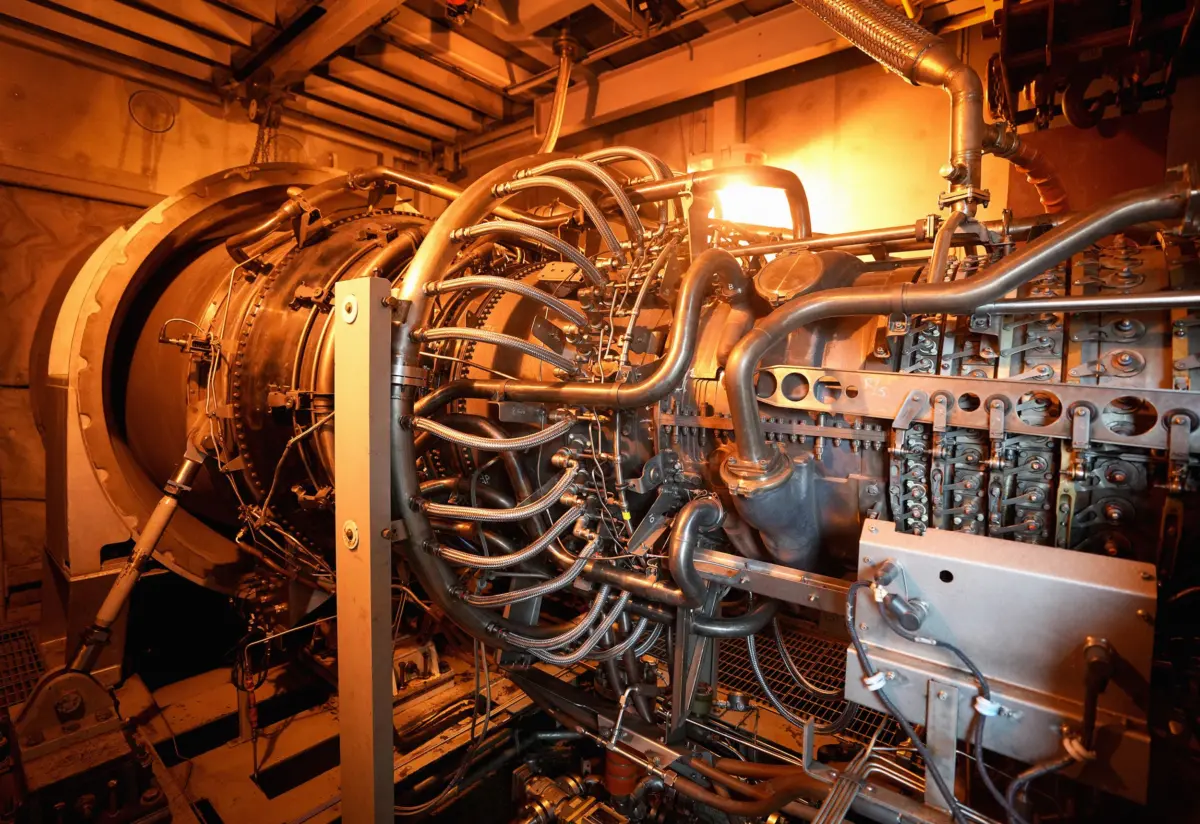
Permitted to emit up to 33 million tons of greenhouse gases annually, this singular energy facility represents one of the largest potential new sources of industrial carbon pollution in the United States. Yet, the environmental toll of Amazon’s project is driven not just by its sheer scale, but by the technology powering it. Rather than utilizing standard, highly efficient energy production frameworks tied to public infrastructure, the facility relies on simple-cycle gas turbines—an older, less efficient mechanism that vents significant waste heat directly into the atmosphere.
This facility is far from an isolated anomaly. Across the United States, a broad coalition of technology titans—including Meta, Microsoft, Google, and xAI—are increasingly turning to off-grid, gas-fired power generation to bypass sluggish public utility queues and fuel their massive AI infrastructure. By bypassing the public grid and turning to fleets of rapid-response simple-cycle turbines, Silicon Valley is inadvertently constructing a parallel, fossil-fuel-powered energy grid. This technological pivot threatens to derail national carbon reduction targets, placing immense strain on local ecosystems while locking in decades of heavy greenhouse gas emissions just as global regulators demand rapid decarbonization.
Detailed Chronology: The Race for Autonomous Power
The convergence of the tech sector and heavy fossil-fuel generation did not happen overnight; it is the culmination of a multi-year gridlock driven by the unprecedented compute demands of large language models (LLMs) and advanced machine learning infrastructure.
The Grid Connection Bottleneck
For years, data center developers relied on local public utility grids to power their massive server farms. However, the generative AI boom—accelerated aggressively through 2023, 2024, and 2025—shattered standard energy forecasting models. Traditional utility interconnection queues, which manage requests to hook new power-heavy facilities up to regional transmission organizations, quickly became backed up by years.
Faced with wait times stretching well into the late 2020s and early 2030s, technology companies realized that waiting for public grid upgrades was no longer a viable business strategy. To maintain their competitive edge in the global AI race, tech firms began looking outward, seeking out "behind-the-meter" or entirely off-grid "islanded" power solutions. This strategy allowed them to secure independent, dedicated energy sources completely outside traditional regulatory review processes for public capacity additions.
The Rise of Islanded Industrial Campuses
Amazon’s strategic acquisition in Texas marks a watershed moment in this movement. By taking ownership of a massive, dedicated fossil-fuel plant currently being built to exclusively serve its data center operations, Amazon has circumvented traditional public utility constraints.
Simultaneously, other major technology players have embarked on similar off-grid adventures. In Ohio, oil and gas giant Williams has filed permit applications for at least three power plants relying on simple-cycle units designed to feed Meta data centers. In Abilene, Texas, energy infrastructure firm Crusoe is constructing a sprawling power facility on its Stargate campus, packing it with 39 simple-cycle turbines to supply power directly to Microsoft.
Google has encountered similar energy bottlenecks; permit applications for its Goodnight data center site in Texas—also developed in partnership with Crusoe—outline a reliance on 20 simple-cycle turbines. Meanwhile, Elon Musk’s xAI has rapidly brought online dozens of simple-cycle turbines to power its Colossus 1 and Colossus 2 data center clusters in Memphis, Tennessee. Each of these facilities is permitted to release millions of tons of greenhouse gases annually, fundamentally reshaping the local emissions profile of every region they inhabit.
Supporting Context & Metrics: The Mechanics of Inefficiency
To understand why environmental scientists and energy market analysts are sounding the alarm over these corporate energy strategies, one must examine the fundamental engineering choices driving the current data center power boom.
Simple-Cycle vs. Combined-Cycle Turbines
Traditional, on-grid natural gas power plants overwhelmingly utilize combined-cycle turbines. In a combined-cycle setup, fuel and air are mixed in a combustion chamber to spin a primary gas turbine (the simple cycle). Crucially, these units capture the massive amounts of waste heat generated during combustion, routing it through an additional heat-recovery steam generator to power a secondary steam turbine. This recapturing mechanism dramatically boosts efficiency, squeezing significantly more electricity out of every single unit of natural gas burned.
In contrast, Amazon’s newly acquired Texas plant—and the vast majority of new data center-adjacent power installations—rely solely on simple-cycle turbines. These units create energy by burning fuel and air, but they let off the resulting waste heat directly into the atmosphere without a secondary capture mechanism.
"It’s not the most efficient way to use a gas turbine," notes Britt Burt, senior vice president at Industrial Info Resources, an energy market intelligence firm. Burt admits that energy analysts were caught off-guard by the tech sector’s heavy reliance on a technology widely considered outdated for utility-scale baseload power.
Quantifying the Carbon Footprint
The emissions metrics associated with these facilities are staggering. Amazon’s Texas plant is permitted to emit up to 33 million tons of greenhouse gases per year. While permitted emissions thresholds frequently exceed actual operational output, the scale remains alarming. According to calculations from the US Environmental Protection Agency (EPA), even if Amazon’s facility operates at just 50% of its permitted capacity, it will still generate more annual greenhouse gas pollution than 78 average-sized natural gas plants combined.
The Supply Chain Crunch and AI’s Volatile Load Profile
Why, then, are multi-trillion-dollar corporations opting for demonstrably inefficient technology? The answer lies in a toxic mix of global supply chain constraints and the unique, volatile energy demands of artificial intelligence workloads.
-
Supply Chain Delays: The global manufacturing supply chain for specialized power generation equipment suffers from a multi-year backlog. Heavy equipment essential for combined-cycle plants—such as large steam turbines and heat recovery boilers—is notoriously difficult to procure on short notice. "Right now, because of the way the supply chain is for turbines, they’re having to go with what they can get their hands on," explains Burt. Simple-cycle turbines, by comparison, are modular, commercially abundant, and significantly faster to manufacture and install.
-
Rapid Load Fluctuations: Training advanced AI models does not create a steady, predictable demand for electricity. Instead, AI training runs demand massive, sudden spikes of energy on-demand, followed by sharp drops. Because simple-cycle turbines feature fewer moving parts and lack complex steam-recirculation systems, they can start up and shut down far more rapidly than combined-cycle units.
This rapid cycling is uniquely suited to AI workloads, though it comes with severe physical costs. The spikes are so intense and volatile that industry reports indicate some data center operators are witnessing physical turbine failures due to the extreme thermal and mechanical stress of continuous rapid on-off switching.
"If you have a highly fluctuating load, it’s better to have 30 things that can individually turn on and off than to have one giant thing that doesn’t like to be turned on and off," notes Stephen Lynch, a professor of mechanical engineering at Penn State and director of the school’s Center for Gas Turbine Research, Education, and Outreach.
-
Water Conservation Advantages: Another surprising driver behind the simple-cycle trend is water consumption. Traditional combined-cycle and thermal power plants require immense quantities of water for cooling and steam generation. Burt estimates that a standard 250-megawatt combined-cycle plant can consume roughly 75,000 gallons of water per hour. In water-stressed regions like Texas, where local communities frequently clash with data center developers over resource depletion, the water-free operation of simple-cycle turbines is viewed as a major logistical and public relations win. Amazon’s permit application explicitly highlights the absence of water usage as an "environmental benefit."
Official Statements & Industry Perspectives
The rapid pivot toward off-grid fossil fuel generation has ignited a fierce debate among policymakers, environmental advocates, and corporate executives attempting to balance aggressive artificial intelligence expansion with long-term climate commitments.
Corporate Justifications and the Defense of Local Grids
Technology companies maintain that building dedicated, off-site power generation is ultimately beneficial for local populations because it shields everyday consumers from surging electricity bills.
"The Texas plant provides on-site generation that won’t raise electricity costs for Texas families," writes Amazon spokesperson Margaret Callahan in an email to WIRED. Callahan emphasizes that the facility will incorporate solar power and battery storage components alongside its fossil-fuel infrastructure, reiterating that Amazon remains fully committed to its overarching corporate pledge to reach net-zero carbon emissions across its operations by 2040.
Furthermore, tech companies suggest that these off-grid arrangements are not necessarily permanent. Callahan noted that Amazon’s Texas facility is "designed to transition to grid-connected service as interconnection timelines allow." Similarly, pipeline and midstream giant Williams informed WIRED that it may consider integrating its Ohio data center power plants into the public grid in the future, should regional transmission conditions improve.
Political and Regulatory Pressures
This corporate rationale finds a receptive audience among a growing number of state governors and federal officials across the political spectrum. Fearing that the massive electricity demands of data centers will trigger rolling blackouts or drive up retail electricity rates for ordinary voters, politicians are actively encouraging data center operators to bring their own power to the table.
However, energy market experts warn of a dangerous regulatory blind spot. Traditionally, power plants designed with simple-cycle turbines—often referred to as "peaker plants"—are operated sparingly to provide quick bursts of electricity to the public grid only during moments of peak demand (such as extreme heatwaves or winter freezes).
When private technology conglomerates build dedicated, islanded fleets of these exact same inefficient turbines to run at high capacity 24 hours a day, 7 days a week, it creates an entirely unregulated shadow utility sector. Many of these newly rushed plants are engineered to operate for decades, locking regional ecosystems into long-term carbon commitments that completely subvert state and federal climate goals.
Future Outlook: The Specter of Stranded Assets
As the artificial intelligence industry navigates a period of unprecedented capital expenditure, questions linger regarding the long-term viability of these massive, off-grid fossil fuel installations.
If the current generative AI investment wave cools, or if algorithmic efficiency gains dramatically reduce the raw computational power required to train future models, tech companies could find themselves saddled with monumental energy infrastructure that they no longer require.
Industry veterans like Britt Burt point out the harsh economic reality awaiting such projects if market conditions shift: "We call that a stranded asset."
Building multi-million-dollar, carbon-heavy industrial power plants to service a speculative technology boom carries profound financial and environmental risks. If the AI bubble bursts or if corporate sustainability commitments force a sudden pivot away from unabated natural gas, these sprawling Texas and Ohio facilities risk becoming rusting monuments to a frantic, short-sighted era of technological expansion—leaving behind millions of tons of avoidable greenhouse gas emissions and a fractured landscape for American energy policy.