The foldable smartphone landscape has been dominated by iterative upgrades, folding formats, and shifting consumer expectations for half a decade. Yet, as the tech industry looks toward the horizon, all eyes remain fixed on Apple’s calculated, deliberate entry into the foldable arena: the iPhone Duo.
Even though the debut iteration of the iPhone Duo has yet to hit mainstream retail shelves, supply chain whispers, patent filings, and insider leaks are already painting a vivid picture of Cupertino’s multi-year roadmap. According to recent insights shared by Bloomberg’s veteran tech journalist Mark Gurman on his Power On podcast, Apple is already deep into the developmental phases for second- and third-generation models.
Gurman’s latest intelligence points toward monumental hardware shifts arriving over the next few years. These include under-display Face ID integration, the potential implementation of an Action button, a marginally expanded internal display architecture, and the ultimate holy grail of mobile photography: a dedicated Telephoto lens for a foldable form factor. However, bringing advanced optics to a device designed to be razor-thin is not merely a financial hurdle for Apple—it is a formidable battle against the immutable laws of physics.
This comprehensive report delves into the leaked timelines, engineering hurdles, and strategic design philosophies shaping the future of Apple’s foldable ecosystem.
Detailed Chronology of the iPhone Duo Evolution
Understanding where the iPhone Duo is heading requires tracing the developmental milestones that Apple has laid out from its initial concept phases through its projected 2028 hardware cycles.
The Foundation: The First-Generation iPhone Duo
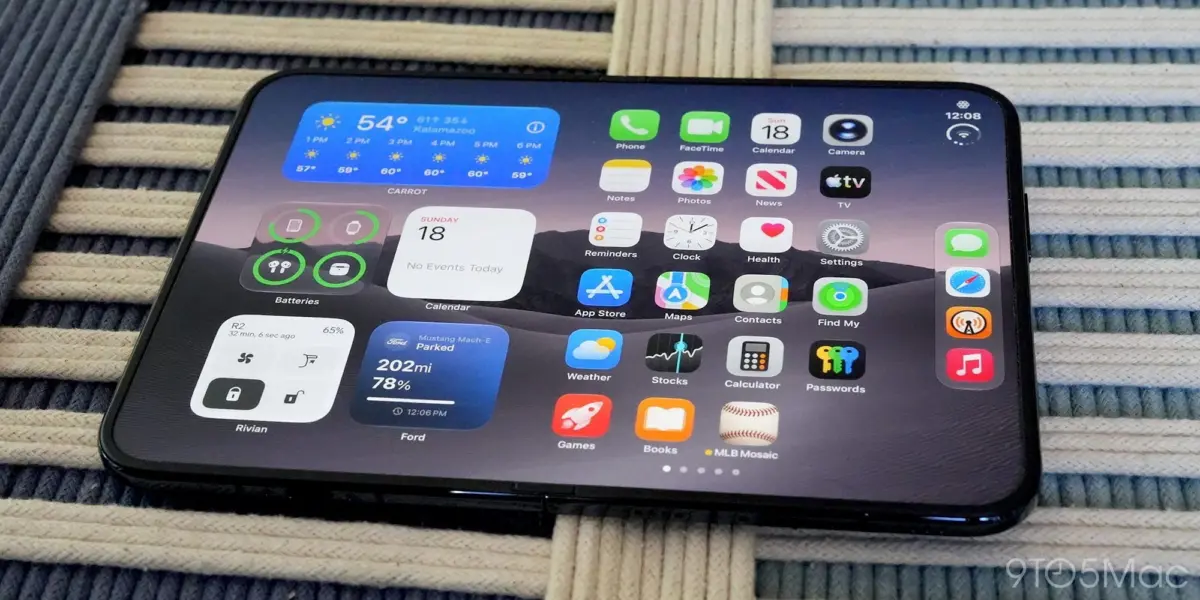
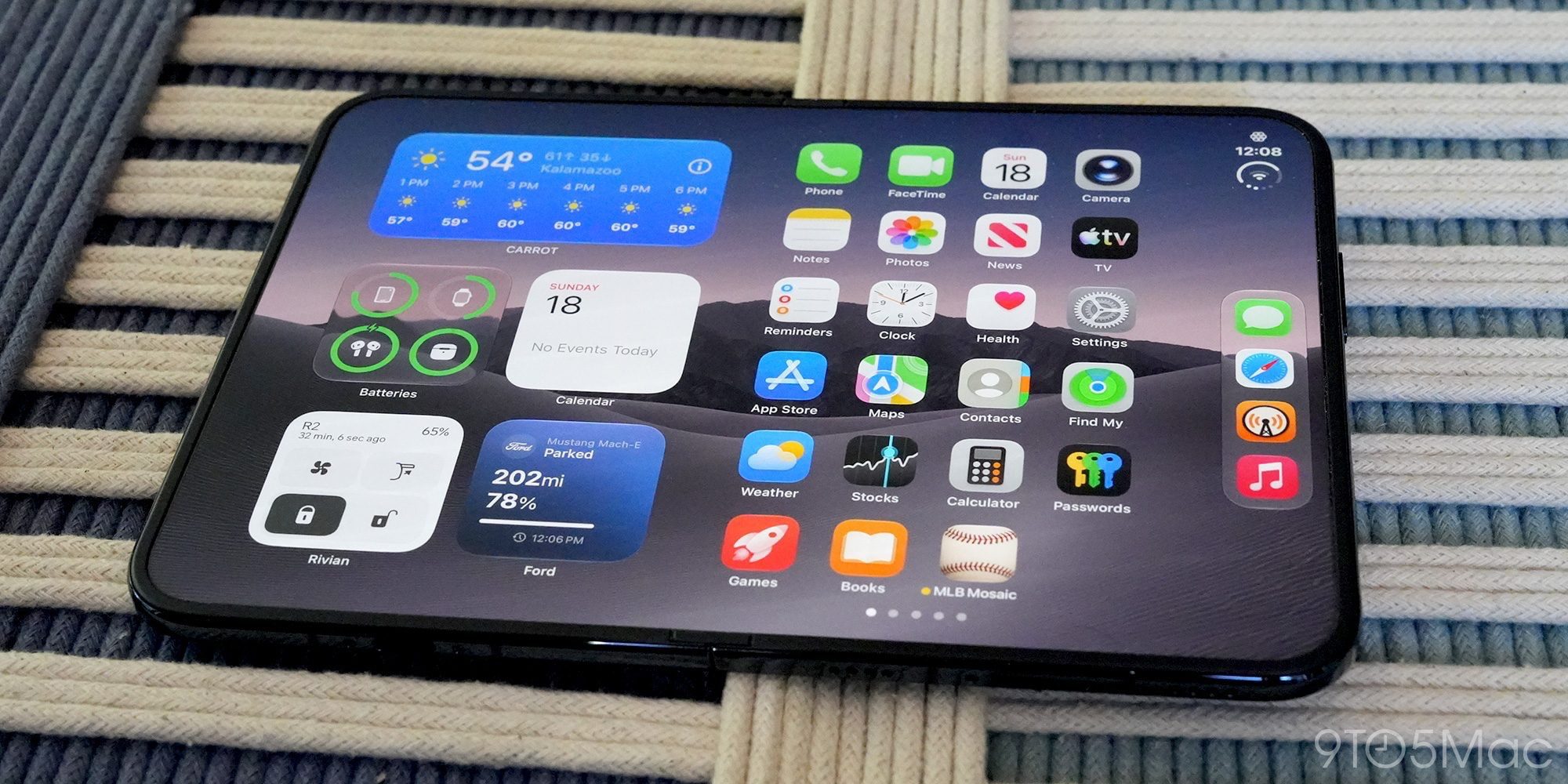
Before exploring the future, it is essential to establish the baseline. The initial iPhone Duo introduces Apple’s foundational foldable philosophy to the market, featuring a primary inner folding screen measuring roughly 7.6 inches. Built to compete directly with established folding powerhouses from Samsung, Google, and OnePlus, the first-gen device establishes Apple’s baseline for hinge durability, software multitasking via iPadOS-infused iOS features, and outer-display usability.
However, as is customary with first-generation Apple hardware—much like the original iPhone, Apple Watch, and Vision Pro—the debut model serves as a proof of concept. It leaves ample room for engineering refinement, cosmetic streamlining, and hardware feature additions.
The Near-Term Horizon: iPhone Duo 2 (Under-Display Tech and Hardware Controls)
Apple’s immediate successor, provisionally dubbed the iPhone Duo 2, is already moving through internal testing pipelines. Recent reports indicate that Apple is focusing heavily on interior cleanliness and exterior usability.
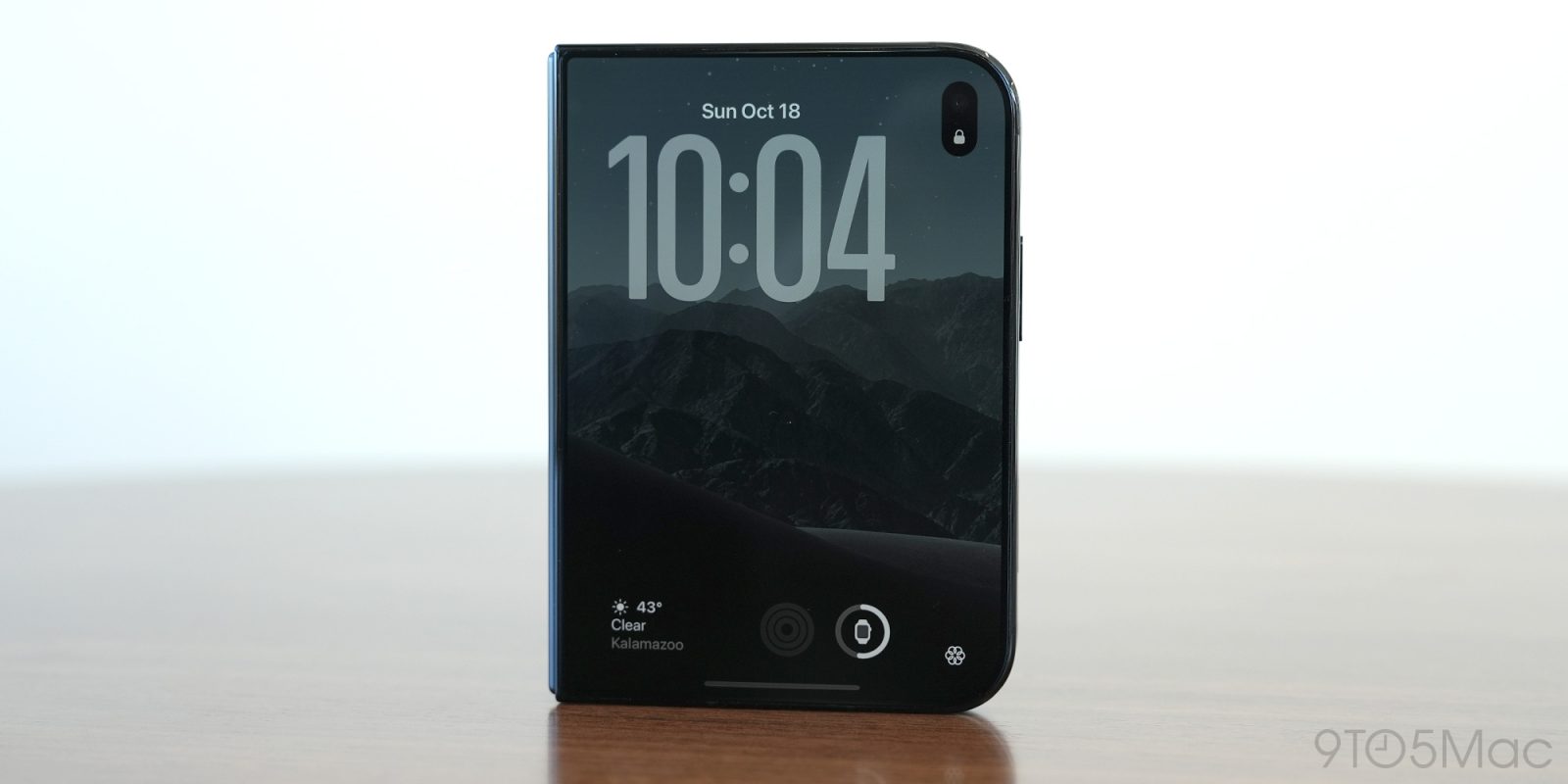
Under-Display Face ID: One of the most significant upgrades slated for the second-generation iteration is the migration of TrueDepth camera components beneath the outer display. By successfully embedding Face ID beneath the glass without sacrificing security or biometric recognition speed, Apple aims to eliminate visible cutouts on the exterior screen, delivering a truly uninterrupted viewing experience.
The Action Button: Following its rollout across the iPhone 15 Pro, iPhone 16 lineup, and subsequent devices, the customizable Action button is expected to find its way onto the iPhone Duo chassis. This physical interface change will give foldable users rapid access to shortcuts, accessibility features, camera triggers, and focus modes.
The Long-Term Horizon: iPhone Duo 3 and the 2028 Overhaul
Looking past the immediate roadmap, Gurman’s sources point toward a much larger structural overhaul projected for a third-generation model targeted at a 2028 release window. This device is expected to represent the first major physical redesign of Apple’s foldable line, introducing scaled-up display real estate and architectural adjustments designed to accommodate next-generation internal components.
Supporting Context & Metrics: Sizing Up the Foldable Future
When Apple makes physical adjustments to its hardware footprints, the changes are rarely arbitrary. They are calculated based on ergonomics, pocketability, battery capacity demands, and thermal efficiency.
The Display Expansion Strategy
When discussing the iPhone Duo 3, Gurman offered specific insight into how Apple plans to scale up the device’s screen dimensions. Rather than jumping into massive, tablet-sized hybrid territory, Apple is taking a measured approach.
"What I heard, just to be specific about the larger screen version of the Duo, is I heard… it’s marginal. It would be that the bigger screen, or the inside screen, increasing by, it’s like, this is rough, like very roughly half an inch. And so, that wouldn’t necessarily make the outer screen much bigger… we’re not talking about an 8.5-inch, 9-inch inner screen. We’re talking about like high sevens, very low eights."
To contextualize this strategy, one only needs to look at Apple’s recent playbook with the iPhone Pro Max product line. Over the last several hardware generations, Apple systematically nudged screen sizes upward—moving from the 6.7-inch standard established by the iPhone 15 Pro Max to the expansive 6.9-inch canvas seen on the iPhone 16 Pro Max.
By applying this exact philosophy to the iPhone Duo, Apple can increase internal workspace and battery real estate while maintaining an exterior form factor that comfortably fits inside a standard trouser pocket or small bag.
Dimensional Comparison Matrix
Device Generation
Projected/Actual Release
Inner Display Size
Outer Display Size
Key Feature Milestones
iPhone Duo (Gen 1)
Initial Launch
~7.6 inches
Standard Cover Screen
Foundational foldable architecture, standard punch-hole cutouts.
iPhone Duo 2
Near-Term Roadmap
~7.6 inches
Standard Cover Screen
Under-display Face ID integration, physical Action button exploration.
iPhone Duo 3
Projected ~2028
~7.8 to 8.1 inches
Marginally Expanded
First major physical overhaul, increased screen-to-body ratio.
Official Insights and Engineering Hurdles: The Physics of Telephoto
One of the most burning questions for mobile photography enthusiasts tracking the iPhone Duo lineage is whether Apple can squeeze high-end camera mechanics into a folding chassis. When directly asked whether a Telephoto lens is heading to future iPhone Duo models, Gurman offered a sobering reality check:
"That’s on their list. I don’t know when that’s coming, but that’s gonna be hard to do."
Why the Telephoto Lens is an Engineering Nightmare
Consumers often assume that hardware limitations in premium flagship devices stem strictly from component costs. However, in the realm of ultra-thin foldable smartphones, cost takes a backseat to structural physics.
Gurman emphasized that incorporating a true optical Telephoto or periscope-style zoom lens into the iPhone Duo is "purely a physics issue in terms of the depth needed."
Z-Height and Chassis Thickness: Foldable phones are defined by their thinness when unfolded—often measuring just a few millimeters across each half. When closed, they double in thickness, but space efficiency remains critical to avoid awkward bulges.
Optical Path Length: Telephoto lenses, particularly those offering 3x, 5x, or continuous optical zoom, require physical distance (focal length) between the glass elements and the sensor to bend and focus light correctly. Periscope prisms help fold light horizontally within a traditional slab phone, but a folding phone’s complex internal stacking of batteries, logic boards, and hinge mechanisms leaves virtually zero horizontal or vertical depth to spare.
The Sensor Assembly Compromise: To include a Telephoto camera today, engineers would either have to thicken the entire device—making it unwieldy when folded—or sacrifice battery capacity and structural rigidity to accommodate the camera module.
Solving this dilemma requires breakthroughs in folded-optics design, custom ultra-thin sensor manufacturing, or spatial re-engineering of internal components. How Apple’s hardware engineering teams plan to overcome these hurdles remains one of the industry’s most closely guarded secrets.
Future Outlook: What the iPhone Duo Means for the Mobile Market
Apple’s deliberate, evolutionary approach to the foldable market contrasts sharply with competitors who rushed out first-generation devices plagued by software instability, fragile displays, and lacklustre ecosystem support. By taking its time, Apple is positioning the iPhone Duo series to capture a massive share of the premium consumer segment once the technology matures.
As we look toward the 2028 horizon and the arrival of third-generation hardware, the trajectory is clear:
Hardware-Software Synergy: As inner screens edge toward the low-8-inch territory, iPadOS-level multitasking features will become increasingly vital. Expect Apple to double down on split-screen productivity, drag-and-drop workflows, and Apple Intelligence features tailored specifically to folding displays.
Biometric Evolution: The successful deployment of under-display Face ID on the iPhone Duo 2 will likely serve as a testing ground before this technology eventually trickles down to traditional slab iPhones, marking the definitive end of the Dynamic Island era.
The Camera Race: If Apple successfully cracks the physics problem holding back the Telephoto lens on foldables, it will instantly neutralize one of the few remaining hardware advantages currently held by traditional slab-style flagship phones.
The Consumer Verdict
For prospective buyers and tech enthusiasts, the unfolding roadmap of the iPhone Duo poses a classic dilemma: buy into the first-generation vision now, or wait for the mature, physically refined, and optically superior iterations scheduled for the late 2020s.
Where do you stand? Would you welcome a slightly larger iPhone Duo with refined screen real estate, or is the inclusion of a high-end Telephoto lens an absolute dealbreaker for your next upgrade? Share your thoughts in the comments below.