Executive Overview
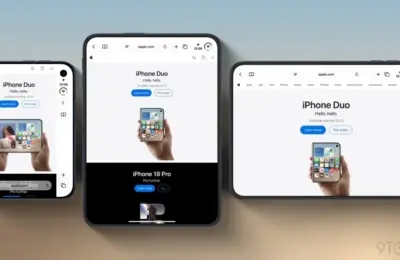
The global smartphone market stands at a definitive inflection point. As Apple Inc. officially rolls out its highly anticipated first foldable device—dubbed the iPhone Duo—the technology landscape is watching closely. Friday marks launch day for a product that represents the most radical physical redesign of Apple’s flagship product line in over a decade. Yet, the road to this moment has been anything but smooth.
Following a chaotic pre-order window that saw online allocations vanish within minutes and shipping estimates rapidly slip into next year, anxiety among consumers has reached a fever pitch. In an effort to calm market jitters and reassure eager buyers, Apple’s Senior Vice President of Worldwide Marketing, Greg “Joz” Joswiak, stepped forward to offer a vital glimmer of hope. In a revealing interview with TechRadar, Joswiak confirmed that Apple intentionally held back a dedicated allocation of inventory specifically for brick-and-mortar retail stores, ensuring that walk-in shoppers will have a fighting chance to secure the company’s revolutionary foldable device on day one.
This comprehensive report examines the dramatic buildup to the iPhone Duo launch, analyzing pre-order turbulence, retail inventory strategies, executive positioning, and what this pivotal hardware release signals for the future of mobile computing.
Detailed Chronology: From Rumor Mill to Launch Day
To truly understand the gravity of Friday’s iPhone Duo launch, one must trace the timeline of events that transformed a long-running industry rumor into a retail phenomenon.
Years of Speculation and Engineering Challenges
For nearly five years, supply chain analysts, patent watchers, and Apple enthusiasts debated whether the Cupertino tech giant would ever enter the foldable device category. Competitors like Samsung, Google, and Motorola carved out a nascent niche in the foldable market, iterating through multiple generations of book-style and clamshell foldables. Meanwhile, Apple remained notoriously tight-lipped, prioritizing durability, crease mitigation, and software optimization over a rushed market entry.
Rumors intensified throughout late 2024 and 2025, with leaked component orders pointing toward a dual-screen hinge mechanism. By mid-2026, industry insiders confirmed that Apple was finally ready to unveil its vision of a foldable smartphone: the iPhone Duo.
The September Unveiling and the Hype Cycle
At Apple’s Special Event in September 2026, executives took the stage to officially lift the veil on the iPhone Duo. The device promised to bridge the gap between a traditional pocket-sized smartphone and a compact tablet, featuring an advanced continuous-glass folding display, next-generation silicon, and a custom version of iOS optimized for dual-screen multitasking.
The tech world reacted with a mixture of awe and skepticism regarding the expected price tag. However, demand among Apple’s core user base proved immediate and overwhelming.
The Pre-Order Bottleneck
When the official pre-order window opened mid-October, the digital floodgates quickly overwhelmed Apple’s servers and partner carrier systems. Within less than an hour, launch-day delivery slots for the iPhone Duo evaporated completely. By day two of the pre-order cycle, online status trackers showed delivery dates slipping dramatically, with many orders pushed back weeks or even months into the following year.

The sudden and aggressive backordering triggered panic across social media platforms and tech forums. Consumers who had planned to upgrade smoothly found themselves facing extended waits, casting a shadow of doubt over whether ordinary buyers would be able to experience the device anytime soon.
Supporting Context & Metrics: Supply Chain Realities and Retail Strategy
The severe supply constraints surrounding the iPhone Duo are not indicative of a lack of manufacturing output, but rather a reflection of the profound complexities inherent in mass-producing a cutting-edge foldable display system.
Yield Rates and Manufacturing Complexities
Building a foldable phone requires tolerances measured in microns. The ultra-thin glass (UTG), the multi-torque hinge mechanism designed to eliminate the central crease, and the dual battery cells integrated into an ultra-slim chassis present formidable manufacturing hurdles. Throughout the summer of 2026, display supply chain partners reported lower-than-expected initial yield rates for the iPhone Duo’s internal folding panels.
Despite these production bottlenecks, Apple’s operations team—historically regarded as the best in the consumer electronics industry—managed to secure a steady cadence of unit assembly ahead of the holiday shopping season.
The Art of Inventory Partitioning
Rather than routing every single manufactured unit through online pre-order channels, Apple’s retail strategy relies heavily on historical data regarding foot traffic and physical store demand. By consciously holding back a substantial percentage of day-one stock from the online queue, Apple guaranteed that its global network of Apple Stores would have physical inventory ready for walk-in customers.
This strategy serves a dual purpose:
- Preserving Retail Theater: Long lines outside Apple Stores on launch morning remain one of the most powerful, free marketing tools in the tech industry. Seeing crowds wrap around blocks generates immense earned media coverage.
- Rewarding Persistent Consumers: It offers a tangible reward for dedicated buyers willing to brave early morning queues rather than relying solely on automated online ordering systems.
Official Statements: Greg Joswiak Clears the Air
Addressing the anxiety surrounding inventory availability, Greg Joswiak’s interview with TechRadar provided much-needed clarity.
"You know, we didn’t ship them all away during the pre-order, we have them available at the stores, we’re excited," Joswiak stated, offering direct reassurance to anxious consumers. "I’m sure we’ll have some happy customers."
Addressing the sheer volume of early demand, Joswiak emphasized that consumer comprehension of the product’s value proposition was exceptionally high.

"Well, I think you saw the pre-order demand last week was extraordinary," Joswiak added. "People got it. They understood what we were doing."
This sentiment was reinforced earlier in the week when Apple issued an official advisory to outlets like 9to5Mac, confirming that select retail locations worldwide would maintain "limited" walk-in inventory for the iPhone Duo. However, the company also cautioned that supplies would vary wildly by region, making early arrival an absolute necessity for those hoping to secure a unit without a reservation.
High-Profile Retail Appearances
In a nod to the historic nature of the release, Apple executives are hitting the ground running. Greg Joswiak is scheduled to make a personal appearance at Apple’s iconic Fifth Avenue flagship store in New York City on launch morning, greeting customers and observing the retail rollout firsthand. He is expected to be joined by other key corporate leadership figures, potentially including newly appointed CEO John Ternus, underscoring just how critical the iPhone Duo rollout is to the company’s overarching hardware strategy.
Future Outlook: What the iPhone Duo Means for the Industry
The launch of the iPhone Duo is far more than a routine product cycle refresh; it is a calculated bet on the maturation of foldable technology.
For years, critics dismissed foldables as fragile, overly expensive gimmicks plagued by visible screen creases and poor software integration. By entering the market with the iPhone Duo, Apple is signaling that foldable technology has finally reached enterprise-grade reliability and consumer-ready polish.
Market Implications
- Competitor Pressure: Rivals such as Samsung and Google, which have dominated the foldable space for years, now face a formidable competitor with unmatched ecosystem loyalty.
- App Ecosystem Evolution: The introduction of the iPhone Duo forces developers to rethink UI/UX design, accelerating the creation of adaptive, multi-pane applications that seamlessly transition from a compact outer display to an expansive canvas.
- Pricing and Accessibility: While the first-generation iPhone Duo commands a steep premium, historical precedent suggests that manufacturing efficiencies and supply chain scale will gradually drive down production costs in subsequent iterations, making dual-screen devices more accessible to mainstream consumers.
Looking Ahead to Friday and Beyond
As the sun rises on Friday morning, physical queues outside Apple Stores from Tokyo to New York will test the resilience of Apple’s retail strategy. For those who missed out on the digital pre-order frenzy, hope remains alive—provided they are willing to wake up early, stand in line, and test their luck against finite in-store allocations.
Whether the iPhone Duo becomes the catalyst that officially transitions foldables from a niche enthusiast category into the mainstream consumer standard will depend heavily on the real-world performance, durability, and user feedback generated in the days and weeks ahead. One thing is certain: the mobile computing landscape will never look quite the same again.