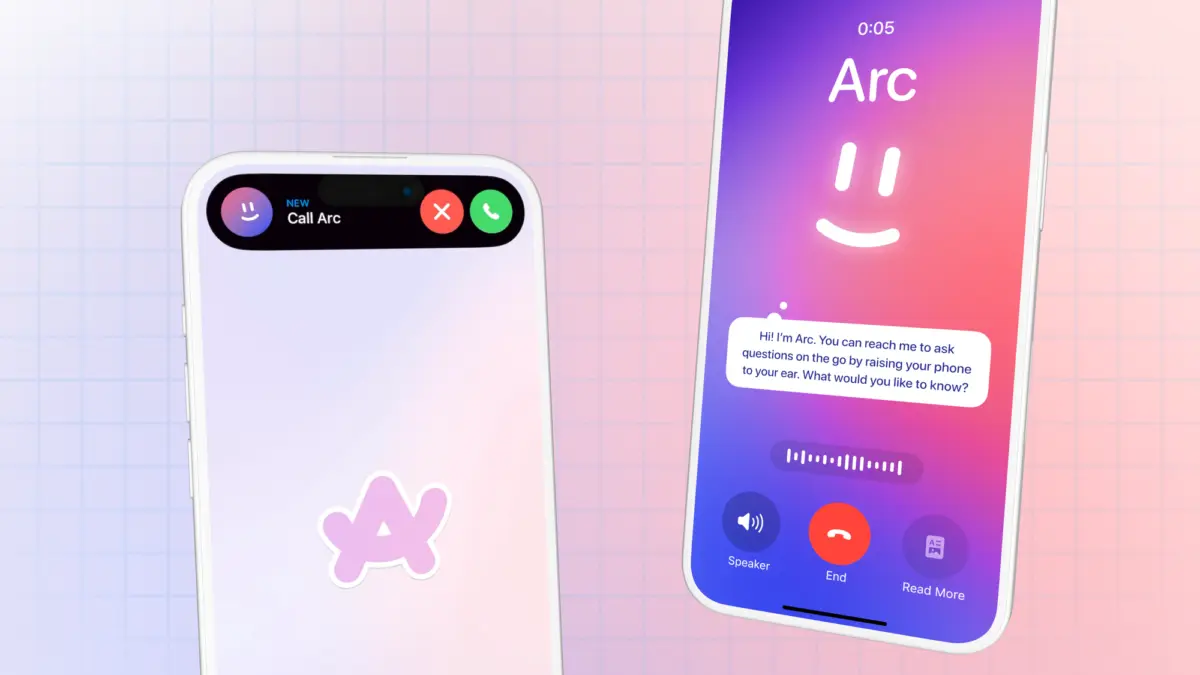
Executive Overview
In one of the most significant pivots in recent consumer software history, The Browser Company has officially announced the sunsetting of Arc, its design-forward, highly celebrated web browser. By December 22, 2026, Arc will be entirely decommissioned, marking the end of a product that captured the imagination of power users, designers, and tech enthusiasts worldwide. In its place, the company is directing its entire user base toward Dia, a newly engineered, AI-first browser designed to meet the evolving technical and security demands of modern web navigation.
The announcement marks a decisive strategic consolidation for The Browser Company, which was acquired by enterprise software giant Atlassian in 2025 for $610 million. According to official statements from leadership, maintaining a legacy browser architecture alongside a next-generation AI platform is no longer sustainable—particularly given the escalating security complexities introduced by artificial intelligence integrations.
While Dia promises to retain key UX hallmarks of Arc—including vertical tab management and environment switching—the decision has ignited intense debate across the developer and design communities. Many users have called on the firm to open-source Arc’s codebase. However, leadership confirmed that Arc’s underlying framework is inextricably tied to the Arc Development Kit (ADK), the proprietary internal engine that also powers Dia, rendering an open-source release impossible without forfeiting the company’s core intellectual property.
Detailed Chronology: The Three-Stage Wind-Down
The deprecation of Arc is structured across a three-stage phase-out plan designed to migrate active users to Dia while systematically dismantling Arc’s cloud synchronization infrastructure and mobile presence.
       [ PHASE 1 ]                      [ PHASE 2 ]                     [ PHASE 3 ]
   Announcement Day                  November 23, 2026              December 22, 2026
+-----------------------+        +-----------------------+       +-----------------------+
| • New account freeze  |  --->  | • Arc Search stripped | --->  | • Mac/Win desktop     |
| • Transition guidance |        |   of AI features      |       |   blackout            |
|   to Dia begins       |        | • Sync & login disabled|      | • Data purged within  |
+-----------------------+        | • Basic local browsing|       |   30 days             |
                                 +-----------------------+       | • Play Store removal  |
                                                                 +-----------------------+
Phase 1: Account Creation Freeze (Immediate)
Effective immediately as of the announcement, creation of new Arc accounts has been permanently disabled. Prospective users attempting to register are automatically redirected to register for Dia. Existing Arc members retain full access to desktop and mobile clients during this initial grace period.
Phase 2: Mobile Feature Stripping & Cloud Disconnection (November 23)
On November 23, Arc Search—the mobile client available on iOS and Android—will undergo significant feature reductions:
- Removal of AI Capabilities: Flagship generative tools, most notably "Browse for Me," will be decommissioned.
- Termination of Cloud Sync: Account authentication and tab synchronization across mobile and desktop environments will cease functioning.
- Fallback to Local Browser Mode: Mobile applications will continue to operate strictly as standalone, un-synced local WebKit/Chromium shells, stripped of smart features.
Phase 3: Total Desktop Blackout and Infrastructure Purge (December 22)
On December 22, Arc will reach end-of-life (EOL) status across macOS and Windows operating systems:
- Desktop Client Shutdown: Desktop applications will permanently lose connectivity and cease to function.
- Account Deactivation & Data Deletion: Personal user accounts will be permanently deactivated. The Browser Company has pledged that all associated user data held on remote servers will be purged within 30 days of deactivation.
- Store Delisting: Arc Search will be removed from the Google Play Store and Apple App Store, ending official support and distribution.
The Historical Context: From "Novelty Tax" to Atlassian Acquisition
To understand the retirement of Arc, one must examine the browser’s rapid rise and ultimate structural limitations. Launched to widespread critical acclaim, Arc introduced novel design paradigms: vertical sidebars, pinned tab spaces, color palettes, and integrated command bars designed to treat the web as an operating system rather than a series of static pages.
+---------------------------------------------------------------------------------+
|                                 ARC TIMELINE                                    |
+---------------------------------------------------------------------------------+
|  2025: Active feature development paused; company cites "Novelty Tax".          |
|  2025: Atlassian acquires The Browser Company for $610 Million.                |
|  2025: Beta launch of Dia, the AI-first successor built on ADK engine.          |
|  2026: Official EOL announcement and multi-stage sunset plan initiated.         |
+---------------------------------------------------------------------------------+
Despite earning a devoted, cult-like following among tech-forward power users, Arc struggled to penetrate the mainstream market dominated by Google Chrome, Apple Safari, and Microsoft Edge.
The "Novelty Tax"
By 2025, active feature development on Arc was halted. Leadership publicly acknowledged that while early adopters adored the interface, the radical redesign imposed a steep "novelty tax." For average non-technical consumers, the steep learning curve associated with vertical tab management, nested spaces, and non-standard keyboard shortcuts limited mass adoption. Arc never quite achieved the scale required to dethrone traditional web browsers.
The Atlassian Turn
In late 2025, enterprise software titan Atlassian acquired The Browser Company in a high-profile transaction valued at $610 million. Atlassian recognized the potential of the core platform to revolutionize enterprise productivity workflows, internal knowledge management, and AI-assisted task execution. Following the acquisition, resources were rapidly reallocated toward building Dia—a browser engineered specifically to merge generative AI agents directly into web environments without the interface friction that hindered Arc.
Supporting Context & Technical Benchmarks
Engineering Rationales: Benchmarks and Security Overhead
The primary technical driver behind sunsetting Arc is the operational burden of maintaining dual browser architectures in an environment where cybersecurity threats are increasingly accelerated by AI.
According to internal evaluations released alongside the announcement, Dia surpasses Arc across key performance, security, and stability metrics:
| Metric / Parameter | Arc Browser (Legacy Engine) | Dia (Next-Gen ADK Engine) | Strategic Impact |
|---|---|---|---|
| Architecture | Hybrid Custom Shell / ADK V1 | Native ADK Engine | Streamlined maintenance codebase |
| Security Framework | Legacy Patch Pipeline | AI-Native Threat Sandboxing | Reduced vulnerability exposure |
| Speed & Resource Usage | High RAM Footprint (Power Users) | Optimized Memory Allocation | Broader hardware compatibility |
| AI Integration | Overlay / Add-on Modules | Core System Integration | Lower latency, agentic capabilities |
| Market Target | Power Users / Creative Niche | Mass Market / Enterprise | Alignment with Atlassian strategy |
Maintaining legacy browser infrastructure requires continuous engineering effort to patch upstream Chromium vulnerabilities, update WebKit bindings, and manage real-time synchronization pipelines. As automated exploitation and AI-driven security vectors proliferate, attempting to secure two distinct browser architectures diluted the company’s focus.
Feature Translation Matrix: Migrating Arc to Dia
To soften the transition, The Browser Company has engineered a feature mapping strategy within Dia, ensuring that core workflows popularized by Arc are preserved in simplified, high-performance formats.
+--------------------------+                         +--------------------------+
|       ARC FEATURE        |                         |       DIA EQUIVALENT     |
+--------------------------+                         +--------------------------+
|  Spaces                  |  =====================> |  Profiles                |
|  Vertical Sidebar        |  =====================> |  Optional Sidebar Layout |
|  Folders                 |  =====================> |  Pinned Tab Groups       |
|  Arc Search / AI Modules |  =====================> |  Native AI Workspaces    |
+--------------------------+ +--------------------------+- Spaces $rightarrow$ Profiles: Users can continue swiping between context-specific work and personal workspaces using Dia’s re-engineered "Profiles" engine.
- Vertical Tabs: While Dia defaults to a mainstream horizontal layout, vertical tabs remain an easily toggleable option for legacy Arc users.
- Folders $rightarrow$ Pinned Tab Groups: Nested tab organizational structures have been refactored into "Pinned Tab Groups" for faster memory lookup and lower overhead.
- Data Portability: Browsing history, active extensions, stored credentials, and bookmarks transfer directly from Arc to Dia during the initial onboarding flow.
Crucially, features originating from Arc will remain free within Dia, with core AI capabilities operating as optional integrations rather than mandatory requirements.
Official Statements and Technical Architecture
Executive Rationale on Security Overhead
Addressing the decision to end support for Arc, the company highlighted the operational realities of securing web infrastructure in the current threat landscape:
"Keeping a browser secure takes constant, dedicated work that is only increasing in the age of AI. Dia was built from the ground up to meet today’s security standards, so that’s where our engineering and security teams will focus moving forward."
The Open-Source IP Dilemma
The announcement triggered significant pushback on social platforms, where vocal power users urged the company to release Arc’s source code to the community. CEO Josh Miller addressed the request, explaining why open-sourcing the browser is legally and technically infeasible:
"While we’d love to open-source Arc someday, we can’t do that meaningfully without also open-sourcing ADK. And ADK is still core to our company’s value."
+---------------------------------------------------------------------------------+
|                       PROPRIETARY CORE ARCHITECTURE                             |
+---------------------------------------------------------------------------------+
|                                                                                 |
|   +-------------------------------------------------------------------------+   |
|   |                  ARC DEVELOPMENT KIT (ADK ENGINE)                       |   |
|   |         (Proprietary SDK & Core IP / Powers Core Capabilities)           |   |
|   +-------------------------------------------------------------------------+   |
|                        |                               |                        |
|                        v                               v                        |
|           +-------------------------+     +-------------------------+           |
|           |       ARC BROWSER       |     |       DIA BROWSER       |           |
|           |    (Legacy Interface)   |     |    (AI-Native Shell)    |           |
|           +-------------------------+     +-------------------------+           |
|                                                                                 |
+---------------------------------------------------------------------------------+
Because both Arc and Dia share the proprietary Arc Development Kit (ADK) as their foundation, releasing Arc under an open-source license would expose the internal architecture powering Dia. In the wake of Atlassian’s $610 million acquisition, protecting this underlying software asset remains a paramount business requirement.
Future Outlook and Market Implications
The retirement of Arc and the total enterprise transition to Dia carries major implications for the software industry, user workflows, and browser development.
Atlassian’s Strategic ROI
With Atlassian’s backing, Dia is positioned to become a productivity engine designed to bridge web-based workflows with enterprise AI agents. By phasing out Arc, Atlassian consolidates its engineering talent around a single platform capable of integrating directly with Jira, Confluence, Trello, and broader enterprise ecosystems. The move shifts the strategic target from a design experiment for consumers to an AI productivity environment for corporate workforces.
The Evolution of AI-Native Browsing
Arc’s shutdown symbolizes a broader structural shift across the software landscape. The era of pure UI/UX innovation in web browsers—focusing heavily on workspace customization, sidebars, and visual aesthetics—is rapidly giving way to an era defined by agentic capability, security automation, and AI integration.
While power users may mourn the loss of Arc’s visionary interface, the migration to Dia represents a pragmatic alignment with where modern computing is headed: a future where the browser is no longer just a passive window to web pages, but an active, intelligent partner in managing digital work.