The intersection of human connection and heavy infrastructure defines the modern evolution of cloud computing. This week’s developments from Amazon Web Services (AWS) highlight a dual focus: fostering regional technical collaboration and extending high-performance cloud infrastructure directly to population and industry hubs where low latency and regulatory compliance are paramount.
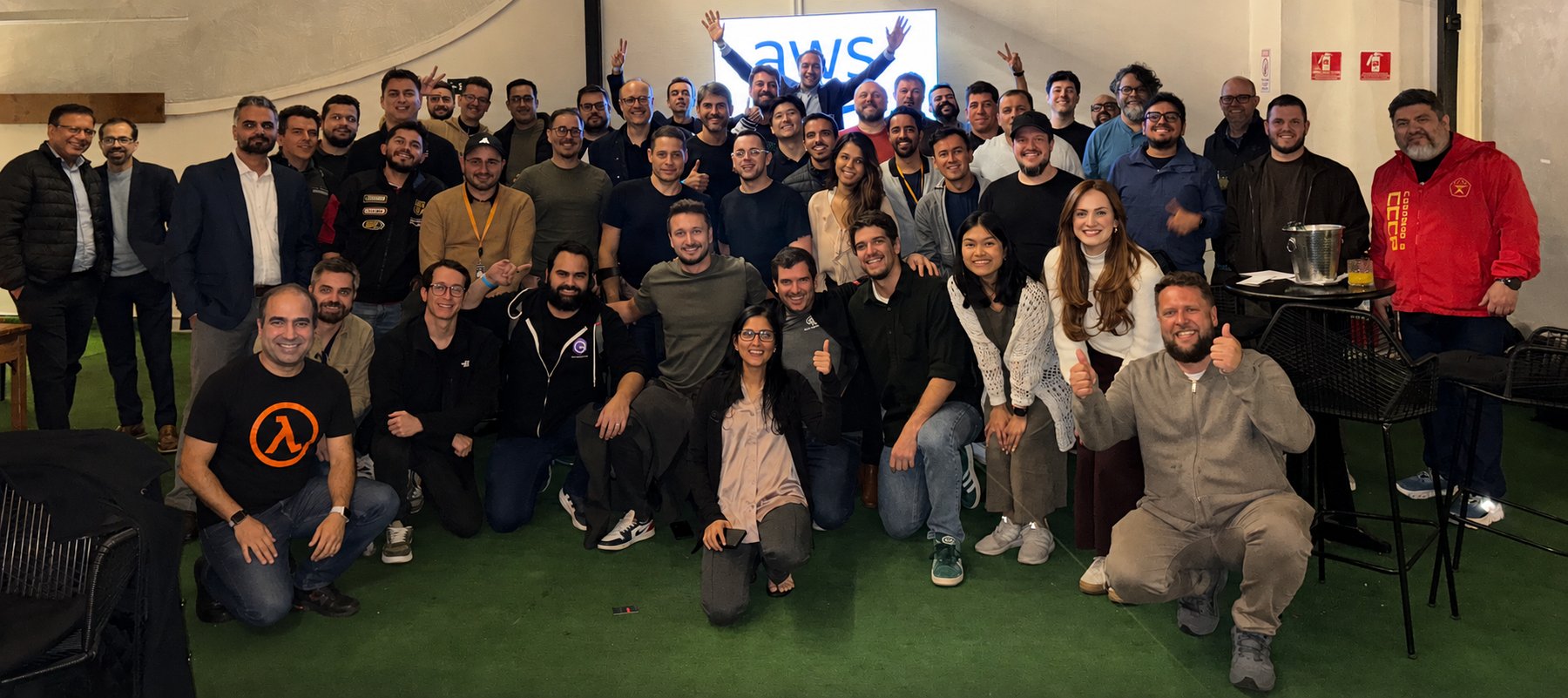
In late July 2026, AWS brought together technical builders from across Latin America for a three-day regional summit in São Paulo, Brazil. This event underscored a vital truth in the software engineering industry: despite the proliferation of advanced cloud tooling, automation, and generative AI systems, the physical and psychological energy of an in-person technical community remains irreplaceable. Architects traded ideas over coffee, brainstormed solutions on whiteboards, and collectively accelerated their technical roadmaps.
Directly mirroring this community-centric philosophy is AWS’s latest major infrastructure announcement: the official launch of a new AWS Local Zone in Athens, Greece. As the second Local Zone in the Europe, Middle East, and Africa (EMEA) region to support advanced local snapshot capabilities for Amazon Simple Storage Service (Amazon S3) and Amazon Elastic Block Store (Amazon EBS), the Athens facility represents a massive leap forward for organizations requiring stringent data residency compliance paired with single-digit millisecond latency.
This report provides an in-depth analysis of these developments, exploring how regional technical summits fuel global innovation, the granular technical specifications of the Athens Local Zone, the economic and regulatory drivers behind localized cloud deployments, and what these milestones mean for the broader enterprise landscape.
Detailed Chronology: From São Paulo’s Collaborative Sparks to Mediterranean Infrastructure
The rhythm of cloud engineering is dictated by continuous deployment, but major strategic milestones often unfold through a deliberate sequence of community engagement and infrastructure activation.
The São Paulo Technical Summit (Mid-July 2026)
Kicking off the weekly cycle, AWS hosted a multi-day technical gathering in São Paulo, Brazil. Bringing together software architects, DevOps engineers, systems administrators, and enterprise tech leaders from across Latin America, the event served as a melting pot for regional cloud innovation.
Deep-Dive Technical Tracks: Sessions focused on advanced container orchestration, serverless microservices architectures, and resilient database design.
Hands-On Labs: Builders engaged in direct, scenario-based workshops designed to test and refine edge computing and hybrid cloud deployment models.
Community Cross-Pollination: Unlike massive global conferences where attendees can easily remain anonymous, regional summits foster intimate collaboration. Engineers from diverse industries—ranging from fintech startups in São Paulo to logistics providers in Buenos Aires—exchanged architectural patterns, troubleshooting strategies, and best practices.
The Athens Local Zone Activation (July 2026)
Following closely on the heels of the Latin American builder summit, AWS announced the operational readiness of the AWS Local Zone in Athens, Greece.
The deployment of edge infrastructure of this magnitude requires rigorous engineering coordination, compliance auditing, and hardware provisioning. The Athens Local Zone bridges the gap between centralized hyperscale regions and local markets. By positioning compute, storage, and database services directly within Greece’s primary industrial and population hub, AWS enables local enterprises to bypass the inherent network hops of traditional multi-region architectures.
The launch sequence prioritized high-demand compute families—specifically the C7i, M7i, and R7i Amazon EC2 instances—alongside specialized storage tiers like Amazon S3 One Zone-Infrequent Access. By incorporating advanced local snapshot support for both S3 and EBS, AWS ensured that businesses operating under strict European data residency mandates could execute local data processing without sacrificing enterprise-grade durability or backup integrity.
Supporting Context & Metrics: The Mechanics of Edge Infrastructure
To fully appreciate the significance of the Athens Local Zone and the momentum of the Latin American developer ecosystem, one must examine the underlying metrics, architectural constraints, and market drivers shaping modern cloud consumption.
Overcoming the Latency Barrier
In industries such as real-time multi-player gaming, high-frequency financial trading, live media production, and remote patient monitoring, latency is the ultimate performance bottleneck. Traditional cloud regions, while expansive and highly resilient, often reside hundreds or thousands of miles away from end users.
The Physics of Data Transmission: Light traveling through fiber-optic cables experiences physical propagation delays of roughly 5 milliseconds per 1,000 kilometers.
The Local Zone Advantage: By placing AWS compute and storage resources within metropolitan centers like Athens, network round-trip times (RTT) plummet to single-digit milliseconds. This allows local applications to interact with heavy workloads seamlessly, delivering a desktop-like responsiveness to end users regardless of their physical proximity to a primary AWS Region.
Meeting Regional Compliance and Data Residency Demands
Data governance frameworks across the globe—most notably the European Union’s General Data Protection Regulation (GDPR)—impose stringent rules regarding where personal and sensitive data can be stored and processed.
In-Country Processing: Many organizations in Greece, spanning government agencies, healthcare providers, and banking institutions, are legally obligated to keep citizen and financial data within national borders.
Integrated AWS Tooling: The Athens Local Zone natively supports Amazon S3 and Amazon EBS Local Snapshots. This capability allows security and compliance officers to enforce strict boundary rules, ensuring that data never needlessly traverses international networks unless explicitly authorized, thereby minimizing regulatory exposure.
Hardware and Service Matrix in Athens
The Athens Local Zone is not a stripped-down edge node; it is equipped with modern, high-performance AWS infrastructure designed to run demanding production workloads:
Compute Instances: Powered by advanced Amazon EC2 instance families, including C7i (compute-optimized for high-performance computing, batch processing, and gaming servers), M7i (general-purpose workloads like web applications and enterprise software), and R7i (memory-optimized for heavy relational databases and real-time data analytics).
Storage and Containerization: Integration with Amazon ECS (Elastic Container Service) for containerized applications, alongside robust S3 and EBS storage classes that facilitate seamless hybrid workflows and local disaster recovery.
Official Statements and Industry Perspective
Industry leaders and community advocates have continually emphasized that the true power of cloud computing lies not just in the silicon and software, but in the human ecosystems that wield them.
Reflecting on the Latin American technical gathering, participating AWS representatives noted:
"What struck me most wasn’t any single session, it was the energy of a technical community that so rarely gets to be in the same room. People traded architecture ideas over coffee, sketched out solutions on whiteboards, and left with a longer list of things to try than they arrived with. It’s a good reminder that, for all the tooling we build, the community around it is what makes the technology stick."
This sentiment echoes the foundational philosophy behind AWS’s global infrastructure expansion. Bringing services closer to the customer—whether through regional community hubs in São Paulo or physical Local Zones in Athens—removes friction from the innovation pipeline.
When discussing the strategic importance of the Athens Local Zone, cloud architects and regional stakeholders highlighted the democratization of enterprise technology. Organizations that previously lacked the capital to build and maintain compliant, high-availability local data centers can now leverage hyperscale agility within their own municipal borders. This capability levels the playing field, allowing regional Greek enterprises to compete globally while adhering strictly to local sovereignty laws.
Future Outlook: The Next Horizon for Cloud Builders and Edge Infrastructure
As we look toward the remainder of 2026 and beyond, the trajectory of cloud computing points decisively toward greater decentralization, deeper community integration, and hyper-localized performance.
1. The Expansion of Edge and Local Zones
The successful rollout of the Athens Local Zone serves as a blueprint for future deployments in emerging metropolitan markets across EMEA and beyond. As industries increasingly adopt edge-dependent technologies—such as 5G-enabled IoT networks, smart city infrastructure, and localized generative AI inferencing—the demand for sub-millisecond cloud capabilities will only accelerate. We can expect AWS to continue broadening the service portfolio available within Local Zones, narrowing the feature gap between edge nodes and primary availability zones.
2. The Resurgence of In-Person Technical Communities
While remote work and digital collaboration tools have permanently transformed the software engineering landscape, events like the São Paulo technical summit prove the irreplaceable value of physical co-location. The cross-pollination of ideas that happens organically over coffee breaks and whiteboard sketches often sparks the next generation of cloud architectures. Future AWS community initiatives will likely lean heavily into regional, community-driven meetups, bridging the gap between global technology providers and localized developer talent.
3. Empowering Builders Through the AWS Builder Center
To sustain this momentum, platforms like the AWS Builder Center (builder.aws.com) and ongoing regional developer events will remain critical. By providing a centralized ecosystem for builders to share reference architectures, collaborate on open-source solutions, and access cutting-edge technical documentation, AWS ensures that the human capital matching its infrastructure is always moving forward.
Conclusion
The convergence of a vibrant Latin American developer community sharing ideas in São Paulo and the launch of robust, low-latency infrastructure in Athens encapsulates the modern mission of AWS: empowering builders everywhere, regardless of geography, with the tools, community, and performance they need to shape the digital future. As these regional networks strengthen and edge footprints expand, the boundaries of what local engineering teams can achieve will continue to widen.