Executive Overview
From the electric atmosphere of Madison Square Garden during a New York Knicks game to sipping a Honey Deuce at the US Open, or sing-screaming "Stupid Song" from a prime seat at Olivia Rodrigo’s Unraveled Tour, live entertainment has undergone a seismic shift. To the casual observer, these experiences appear wildly different, yet they share one undeniable, unifying characteristic: they are profoundly expensive.
Attending a live event has ceased to be a routine weekend outing and has transformed into a luxury purchase. Not all that long ago, in 2019, the average price of a concert ticket hovered around a relatively accessible $92. While seats at that price point may not have offered a direct line of sight to the stage, the average fan could still comfortably afford to be in the room. Today, that baseline has inflated to roughly $133 for face-value tickets, and consumers are routinely forced to spend exponentially more to see the biggest names in music and sports.
A combination of factors has driven this economic squeeze. Live Nation’s towering grip on the music and sports ticketing industry, ever-escalating service fees, dynamic pricing algorithms, and a ruthless secondary resale market have created a financial fortress around live entertainment. For millions of consumers, the reality of seeing top-tier acts is stark: if you cannot afford a $1,845 nosebleed ticket for the "Nova Knicks" or a $2,000 resale seat for Olivia Rodrigo, your options are limited to watching from a screen at home—or missing out entirely.
Examining a modern seating map and absorbing the eye-watering prices forces a fundamental change in how we perceive the people filling those venues. Observers are left to wonder: What kind of person spends thousands of dollars to sit in the very last row? How do they navigate an economy where they can justify such expenditures on bad seats? Is everyone secretly wealthy, or are we witnessing a mass exercise in fiscal irresponsibility?
To answer these questions, we pulled back the curtain on the modern fandom economy. While it is impossible to account for the financial habits of every concertgoer, we spoke candidly with one dedicated super-fan willing to share the true cost of his devotion.
Detailed Chronology: The Anatomy of a $15,000 Fandom
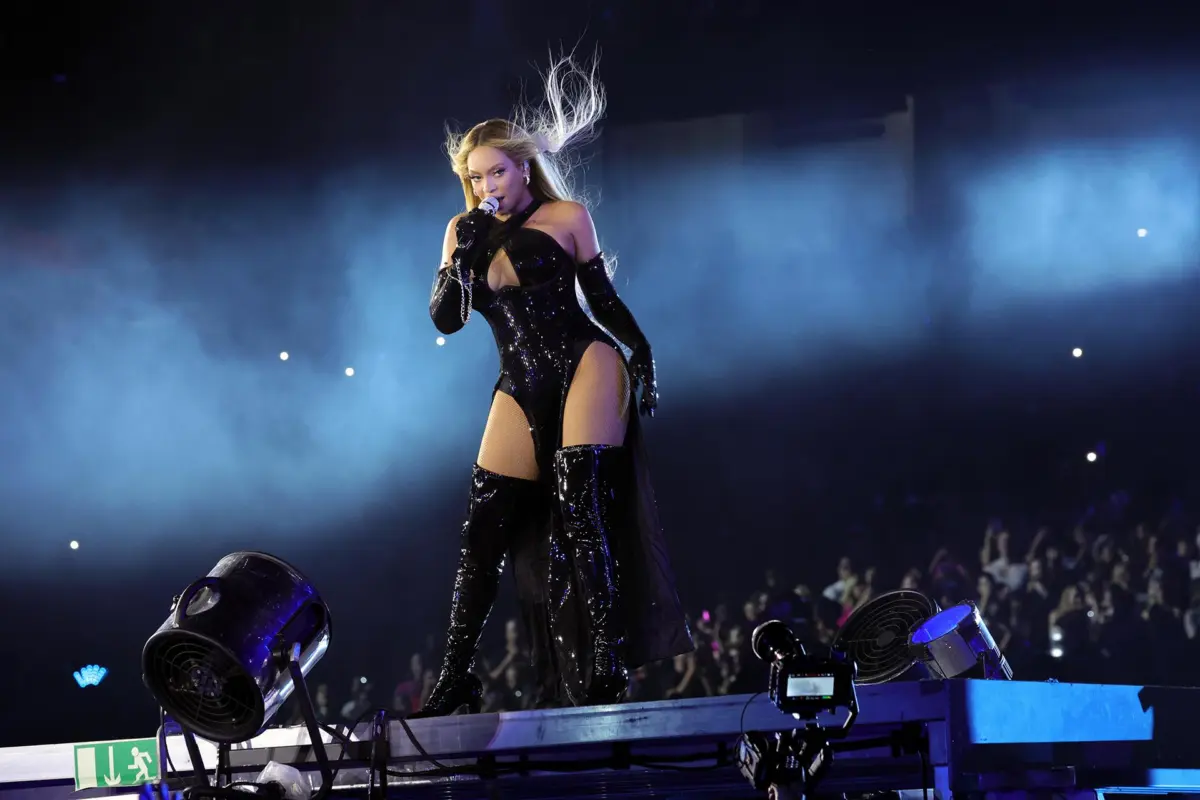
Enter Craig, a 44-year-old education sector worker living in the San Francisco Bay Area who earns roughly $180,000 per year. Over the course of a single tour, Craig spent upwards of $15,000 to see Beyoncé’s Cowboy Carter tour six times. His journey from a planned three-show itinerary to a multi-city, custom-wardrobe obsession offers a revealing case study into the psychological and financial mechanics of modern super-fandom.
The Spark and the Snowball Effect
Craig’s journey into the upper echelons of concert-going did not begin with calculated financial planning; it started as an emotional impulse. Initially, Craig and a former romantic partner planned to attend the first three shows of the Cowboy Carter tour, believing that would satisfy their appetite.
"I had planned with a boyfriend who’s now an ex that was part of this whole process," Craig explains. "I was going to go to the first show, the second show, and the third show, and then I was going to be done. But I knew in the back of my mind that I wasn’t probably done."
As the tour progressed, the experience morphed from a series of concerts into a lifestyle. Craig notes the stark evolution of his presentation: his first show featured a modest, homegrown outfit paired with a hastily purchased cowboy hat, while by the fifth and sixth shows, he had commissioned a custom-made gold stage-worthy ensemble. What began as a controlled three-night outing quickly snowballed into a six-show cross-country commitment.
The Financial Reality: Credit Cards and "Boy Math"
When asked about the financial planning behind a $15,000 expenditure on a single artist, Craig is disarmingly honest: there was none.
"The breakup that I had happened after my New York show," Craig shares. "And so I think my delusional sort of mania kicked in and I was like, ‘Fuck it, I’m going to spend $800 on an outfit that’s custom-made.’ I’m going to go to both shows at the end and just—it got me through a really tough summer, and it was something that I don’t regret."
Operating within the high cost-of-living environment of San Francisco, Craig relied heavily on credit cards to finance the endeavor. By the time his credit card balances reached $8,000, the psychological barrier to spending an additional $4,000 vanished. "Once you’ve got $8,000 on your credit card, what is $12,000?" he notes.
Crucially, Craig speaks openly about his background as a recovering addict with decades of sobriety. He recognizes certain behavioral parallels in how he fixates on live music, framing it as an intense, albeit exceptionally costly, source of genuine joy. It took him a full year to pay off the accumulated debt, utilizing a steady, modest income derived from a lifelong career in education. Despite the financial strain, Craig maintains he has no regrets, contrasting his choices with the staggering costs others face for domestic obligations. "I have friends where one spouse, their entire salary goes to childcare," he observes. "And I’m like, oh, that sounds not fun. But think of it this way: that’s so much Beyoncé that you could be experiencing instead of having a kid."
Supporting Context & Metrics: Why Live Events Cost So Much
Craig’s story is an extreme manifestation of a systemic issue plaguing the entertainment sector. The inflation of live event pricing is not an accident; it is the result of structural changes in how the music and sports industries operate.
The Numbers Behind the Madness
- $92: The average price of a concert ticket in 2019, prior to post-pandemic demand spikes and aggressive industry consolidation.
- $133+: The current average face-value price for a standard concert ticket, with top-tier acts commanding multiples of that figure.
- $1,845+: The cost of nosebleed tickets for high-demand sporting events, such as the NBA season opener featuring the "Nova Knicks."
- $2,200: The peak price Craig paid for a single close-proximity ticket to the final leg of the Cowboy Carter tour.
Key Drivers of Ticket Inflation
- Industry Monopolization: The dominance of conglomerates like Live Nation and Ticketmaster has reduced competitive pressure, enabling platforms to implement broad fee structures without fear of losing market share.
- Dynamic Pricing Algorithms: Much like airlines and hotels, ticketing platforms now utilize real-time demand algorithms that automatically inflate face-value prices the moment high traffic is detected, effectively capturing the secondary market’s profits directly for the primary seller.
- The Professionalized Resale Market: Advanced bot technologies and institutional brokers dominate the primary sales window, immediately siphoning inventory to secondary platforms (like StubHub and SeatGeek) at exorbitant markups.
- The "Experiential" Economy: Post-pandemic consumer behavior has shifted dramatically away from material goods and toward experiential spending. Consumers are increasingly willing to sacrifice long-term financial goals—such as property ownership or savings—to secure memories and communal moments.
Official Statements and Industry Perspectives
While fans grapple with the economic burden of their fandom, the music industry defends the high cost of touring by pointing to the staggering expenses required to mount modern productions. Artists today earn a fraction of what they once did from recorded music sales in the streaming era, making live touring their primary source of revenue. Simultaneously, the logistical costs of moving massive stage productions, paying union crews, securing insurance, and renting state-of-the-art arenas have skyrocketed.
Consumer advocacy groups, however, argue that opaque fee structures and anti-competitive practices artificially inflate these costs far beyond baseline inflation. Legal challenges from the Department of Justice targeting industry giants highlight a growing regulatory appetite to dismantle ticketing monopolies and restore transparency to the purchasing process.
Yet, for the super-fans caught in the ecosystem, economic arguments hold little weight against the emotional gravity of the live performance. As Craig notes, the concert venue is uniquely irreplaceable:
"It’s the only place where you can really have this communal experience with people that are in your same delusional mindset… When Shaboozey comes out or Jay-Z comes out or Destiny’s Child comes out—I’m getting chills just thinking about it."
Future Outlook: What Lies Ahead for Concert Economics?
As the live entertainment landscape looks toward the horizon—including rumored upcoming projects like Beyoncé’s speculative Act III—neither soaring prices nor debt-financed fandom show signs of slowing down.
For super-fans like Craig, financial strategizing for future tours has already begun. Armed with the hindsight of his Cowboy Carter expenditures, Craig plans to approach the next era with a hybrid strategy: mixing expensive, up-close floor experiences with cheaper, upper-level seating to balance his budget while maintaining his presence in the room.
"Beyoncé has set this financial bar that now I almost feel like I could spend that kind of money on anyone," Craig reflects. As long as artists continue to deliver once-in-a-lifetime spectacles, and as long as consumers prioritize ephemeral memories over traditional financial milestones, the live event market will remain a high-stakes arena where only the deeply committed—and the financially resilient—can play.