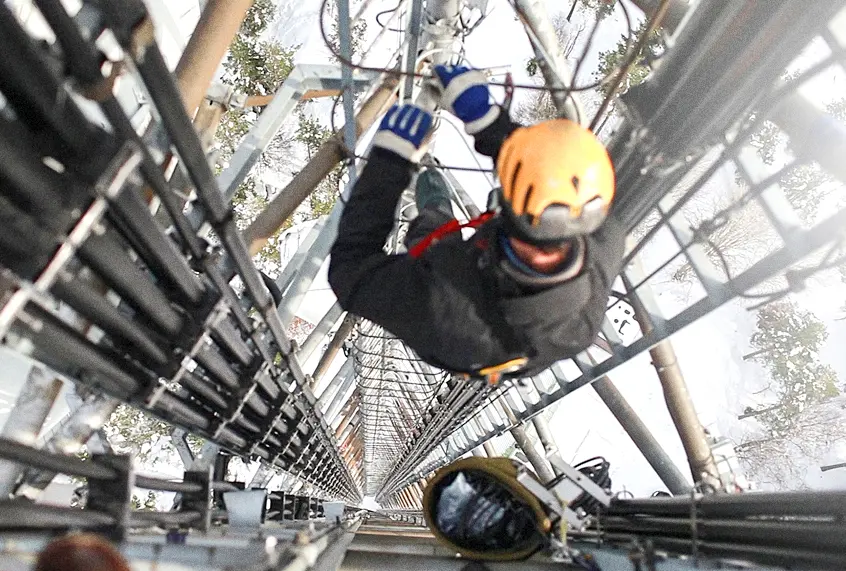
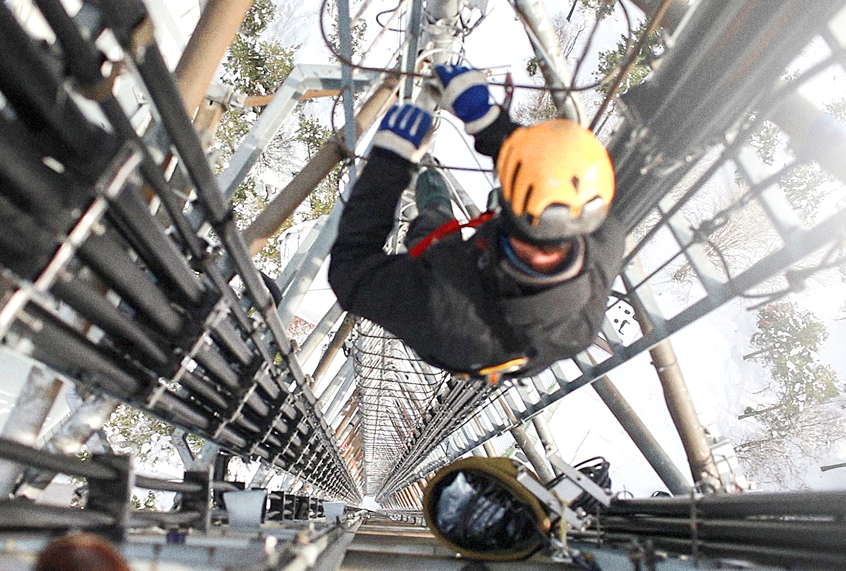
The rapid, government-mandated expansion of telecommunications infrastructure across the United States has triggered a silent crisis hundreds of feet in the air. As the Federal Communications Commission (FCC) pushes forward with an aggressive schedule to modernize broadcast channels and expand high-speed wireless networks, the nation’s communication tower workers—often referred to as tower climbers—are facing an unprecedented wave of occupational hazards.
Driven by strict regulatory deadlines, commercial pressures, and a multi-million-dollar lobbying apparatus, companies are rushing to upgrade thousands of broadcast towers. However, this breakneck pace has far outstripped the availability of properly trained personnel and robust safety oversight. The human toll of this infrastructural overhaul is devastating: workers are routinely falling to their deaths, structures are collapsing under the weight of hastily added equipment, and federal safety agencies continue to lag behind in implementing industry-specific protections.
While lawmakers and telecommunications executives champion the economic necessity of accelerated broadband deployment in a globally connected world, industry veterans and safety advocates issue a chilling warning. The message is unmistakable: in the race to blanket the nation in faster wireless service, the government and the private sector are gambling with human lives.
Detailed Chronology: Recent Tragedies and Structural Failures
The lethal consequences of the accelerated telecommunications overhaul are starkly illustrated by a series of high-profile accidents that have shaken the industry. The structural demands of the Federal Communications Commission’s post-auction "repack" and commercial wireless expansion have transformed routine maintenance into high-stakes peril.
September 2017: The Miami Gardens Tragedy
In September 2017, a routine antenna replacement project in Miami Gardens, Florida, turned fatal. Three young workers—23-year-old Brachton Barber of Longwood, Florida; 35-year-old Benito Rodriguez of Tampa, Florida; and 31-year-old Marcus Goffena of Sidney, Ohio—were killed while working on a communications tower for WSVN-Channel 7. The incident highlighted the devastating vulnerability of ground crews and climbers alike when complex rigging and heavy equipment replacement are compressed into tight schedules. The tragedy underscored that even major metropolitan broadcast hubs, backed by significant corporate resources, are not immune to catastrophic failures under pressure.
April 2018: The Fordland Tower Collapse
Less than a year later, the hazards of aging and overloaded infrastructure manifested in a terrifying structural collapse. In April 2018, a massive 1,980-foot broadcast tower in Fordland, Missouri, utilized by Ozarks Public Television, catastrophically failed. The collapse resulted in the death of 56-year-old Stephen Lemay of Blaine, Washington. Lemay, described by loved ones as a dedicated professional, was performing crucial infrastructure work when the monumental structure buckled. The Fordland collapse forced local stations into lengthy recovery efforts just to restore basic broadcast signals, launching prolonged investigations into how a tower of that magnitude could fail so catastrophically.
These incidents are not isolated anomalies; they represent the sharp end of an industry pushed to its absolute limits by regulatory mandates and economic incentives.
Supporting Context & Metrics: The Scale of the "Repack" and the Hazards of the Climb
To understand why accidents are surging, one must examine the monumental scope of the FCC’s initiative. Under current federal schedules, nearly 1,000 television stations are required to relocate to new broadcast frequencies. This massive logistical undertaking—commonly known as the spectrum "repack"—must be completed alongside the ongoing densification of cellular networks to support emerging technologies.
The Physics of Peril
Tower climbers routinely scale heights ranging from 100 feet to a staggering 2,000 feet—dwarfing iconic structures like the 1,776-foot One World Trade Center. At these elevations, workers are exposed to a volatile combination of environmental and structural dangers:
Gravity and Structural Stability: Falls remain the primary cause of fatalities, exacerbated by aging towers buckling under the strain of newly mounted, heavier digital antennae.
Electrical and RF Hazards: High-voltage equipment and radio frequency (RF) radiation present continuous, invisible threats.
Environmental Extremes: High winds, ice accumulation, and sudden weather shifts at extreme heights leave little margin for human error.
Statistical Disparities in Workplace Safety
The occupational risk associated with communication tower work is among the highest in the modern industrial world. According to data highlighted by former Assistant Secretary of Labor David Michaels, tower workers face a risk of fatal injury 25 to 30 times higher than the average American worker.
Despite these alarming statistics, the regulatory framework governing the industry remains fractured. Thomas Fuller, an occupational health expert at Illinois State University, has repeatedly emphasized that tower climbing operates with minimal federal oversight and inconsistent enforcement. Compounding the issue, workers and subcontractors are frequently reluctant to report unsafe structural conditions or faulty equipment for fear of being blacklisted or losing desperately needed contracts.
Official Statements and Industry Conflict
A profound ideological and operational battle line has been drawn between safety advocates, who demand a slower, more deliberate approach to infrastructure upgrades, and pro-expansion politicians allied with telecommunications giants.
Warnings from the Ground and the Boardroom
Industry leaders have been unequivocal in their assessment of the labor crisis. Jim Tracy, chairman of the National Association of Tower Erectors (NATE), issued a stark warning to Congress:
"There is one inescapable fact. There are not, at present, enough qualified workers to perform all the tower work we will be required to complete."
This sentiment is echoed by technical directors managing regional networks under extreme pressure. Bill Hayes, director of engineering for Iowa Public Television, captured the ethical dilemma facing station managers during the transition:
"You can be gambling at best with the reliability of your station’s service, and at worst you’re gambling with people’s lives."
Congressional Pressure and Corporate Lobbying
Despite industry warnings from safety experts, a powerful bloc of 56 members of Congress—including prominent figures such as Representative Steve Scalise (R-La.) and Representative Darrell Issa (R-Calif.)—aggressively lobbied FCC Chairman Ajit Pai. They demanded strict adherence to the July 3, 2020 deadline for completing the spectrum repack, arguing that rural broadband expansion brooks no delay. In official correspondence, proponents framed the accelerated timeline as an absolute economic imperative:
"Ultimately, it’s a matter of economic necessity in today’s globally-connected world."
This legislative push aligns closely with heavy financial investments from the media and telecommunications sectors. Commercial TV and radio stations poured nearly $29 million into federal lobbying efforts in 2017 alone, ensuring that regulatory momentum favored rapid technological deployment over extended safety reviews.
Future Outlook: Regulatory Blind Spots and the Path Forward
As the telecommunications landscape continues its relentless evolution toward 5G integration and expanded digital broadcasting, the structural integrity of the nation’s towers and the safety of the workforce hanging from them remain deeply vulnerable.
The Regulatory Void
A central point of contention is the Occupational Safety and Health Administration’s (OSHA) historic struggle to police the industry. OSHA lacks comprehensive, industry-specific standards tailored explicitly to the unique perils of communication tower construction and maintenance. Although the agency initiated steps toward specialized standards following a devastating spike in fatalities in 2013—when 13 workers died in a single year—comprehensive, enforceable rules have been slow to materialize or prove difficult to enforce across a fragmented network of subcontractors.
Looking Ahead
Experts like Thomas Fuller warn that as communication towers continue to age and support an ever-increasing density of third-party antennae, the baseline hazard level will only escalate. Without a centralized federal reporting mechanism for unsafe structural conditions, and absent a willingness from lawmakers to prioritize human safety over arbitrary corporate and regulatory deadlines, tower climbers will continue to bear the heaviest cost of America’s digital progress.
The drive toward universal connectivity is an undeniable modern necessity, but the ongoing loss of life on the nation’s transmission towers signals an urgent need for reform. Until federal regulators, lawmakers, and corporate stakeholders treat tower safety with the same urgency as broadband deployment, the high-altitude climb toward a fully connected future will remain paved with avoidable tragedies.