Executive Overview
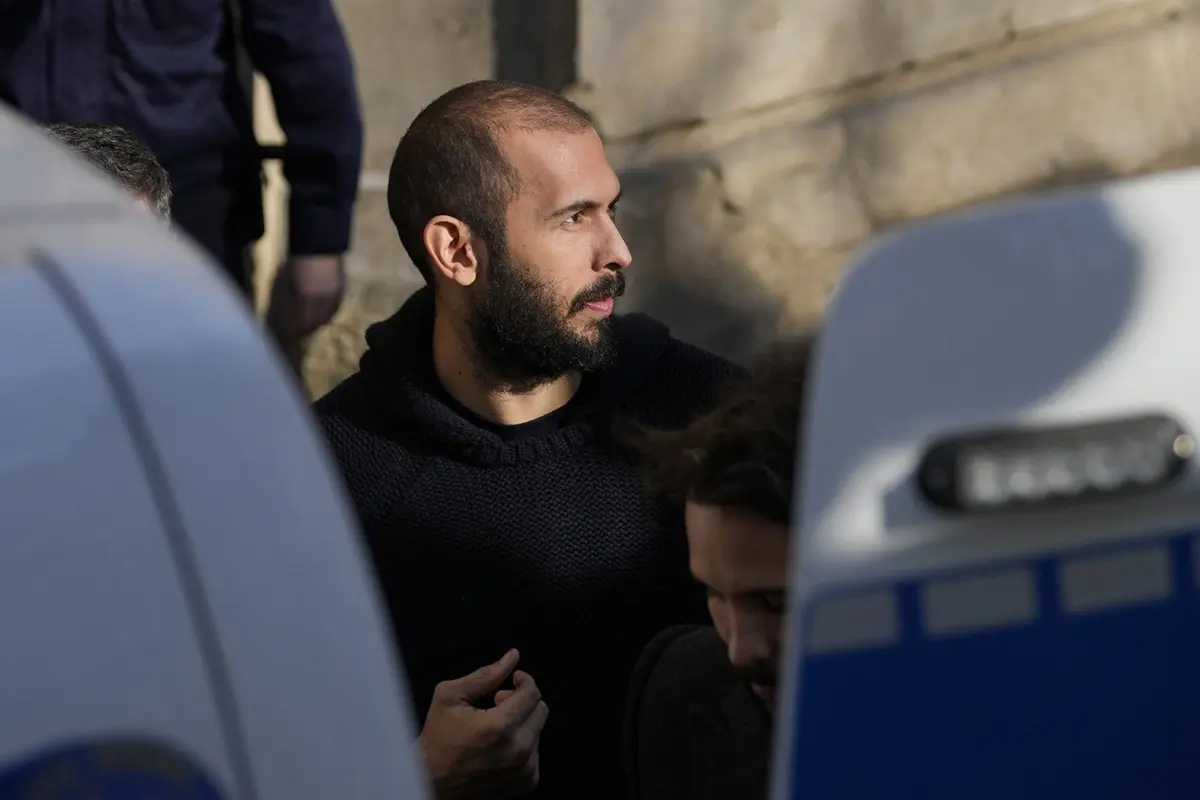
Controversial misogynistic influencer Andrew Tate, alongside his brother Tristan and two alleged accomplices, Georgiana Naghel and Luana Radu, transitioned from a Bucharest detention facility to high-security house arrest following a decisive late-March court ruling. While the shift from a jail cell to a residential compound was widely hailed by their defense teams as a major legal victory, judicial authorities, prosecutors, and independent legal experts tell a vastly different story.
Far from signaling a weakening of the state’s case, confidential court documents, freedom-of-information requests, and leaks from the Romanian Directorate for Investigating Organized Crime and Terrorism (DIICOT) reveal a pattern of aggressive, panicked, and potentially criminal missteps by the defendants. Rather than quietly awaiting their imminent trial on charges of organized crime and human trafficking, the Tates and their associates allegedly embarked on an extensive campaign to obstruct justice.
From plotting an escape to Dubai under the guise of treating a fabricated medical emergency to attempting to silence key witnesses through US-based civil litigation and online intimidation, the group’s actions have severely alienated Romanian magistrates. According to legal scholars and prosecutors, this relentless need to command the narrative and exert external pressure has deeply irritated the judiciary. As a result, the defendants have inadvertently constructed a secondary layer of criminal liability that threatens to expand the scope of their prosecution and permanently poison their credibility in the eyes of the court.
Detailed Chronology: From the Raid to House Arrest and Beyond
December 29, 2022: The Raids and Initial Detention
The legal saga in Romania escalated dramatically when heavily armed special forces units raided the Tates’ sprawling compound north of Bucharest. Andrew and Tristan Tate, along with Romanian nationals Georgiana Naghel and Luana Radu, were detained on suspicion of forming an organized criminal group, human trafficking, and rape—allegations the brothers have consistently denied. Following their initial 24-hour hold, a Bucharest court granted prosecutors a 30-day preventive arrest warrant, a period that was repeatedly extended as investigators combed through seized electronic devices, financial records, and victim testimony.
February 21, 2022: The "New Reasons" Ruling
As the investigation deepened, prosecutors presented a comprehensive summary of emerging threats to a Bucharest judge. The court formally rejected the Tates’ petitions for release, citing a catalog of alarming new developments. The presiding judge explicitly noted that the accused presented a "clear danger for public order," had made concrete preparations to evade the criminal investigation by fleeing Romania, and were actively attempting to influence witnesses and exert psychological pressure on victims.
Late March 2022: The Dubai Plot and Medical Pretexts
Wiretaps of jailhouse phone calls obtained by investigative journalists revealed that Andrew Tate had allegedly devised a plan to escape to Dubai. Recognizing that the United Arab Emirates does not maintain an extradition treaty with Romania, Tate purportedly planned to request medical leave for a pulmonary condition. While a Tate representative initially floated to the British press that a dark spot on Andrew’s lung was "most likely a tumor," Andrew himself later contradicted this claim on social media, admitting the scar was merely the result of "an old battle." Romanian authorities promptly denied the travel request.
March 31, 2022: The Transition to House Arrest
Despite the extensive catalogue of obstruction allegations, a newly assigned panel of appeals court judges approved the transfer of the Tates, Naghel, and Radu from the central arrest facility to house arrest. The ruling sent ripples of anxiety through official and legal circles. Security was immediately tightened, placing the Tates’ suburban Bucharest compound under constant surveillance to preempt any clandestine escape attempts.
Supporting Context & Metrics: The Mechanics of Obstruction
The state’s case against the Tate brothers extends far beyond the foundational human trafficking and organized crime charges. Prosecutors have meticulously documented a multi-pronged offensive designed to undermine the integrity of the judicial process.
The Witness Intimidation Network
According to court filings, the Tates leveraged their vast online ecosystem to direct cyber-harassment campaigns against individuals cooperating with authorities. Judges highlighted specific instances where the influencers’ followers targeted at least one alleged victim with abusive messages designed to induce fear and force a public retraction of her testimony.
This digital pressure campaign was complemented offline. On February 18, pro-Tate online personality Sulaiman Ahmed announced via social media that he had traveled to Palm Beach, Florida—the hometown of a key witness in the case—purportedly "for a major story." Although Ahmed did not establish contact with the witness or her family, Romanian prosecutors view this international travel as part of a coordinated intimidation matrix.
Furthermore, in December, a US-based law firm representing the brothers dispatched a formal cease-and-desist letter to the same witness in Florida, demanding she retract her statements or face crippling defamation litigation. While the Tates’ defense teams have scrambled to distance themselves from the letter—with US attorney Tina Glandian stressing that her specific firm had no involvement—Romanian authorities view the document as direct, actionable evidence of witness tampering.
Luana Radu and the Compromised Police Database
Adding a sinister dimension to the conspiracy, Luana Radu—a former police officer turned alleged accomplice—is facing separate inquiries regarding institutional infiltration. Court documents allege that between April and December 2022, while under active investigation, Radu illicitly accessed classified databases belonging to the Romanian Ministry of Internal Affairs. Investigators noted that such high-level data breaches would have been impossible without external collusion from active-duty personnel, suggesting a compromised internal network designed to give the Tates an unfair legal advantage.
Overtures to Radical Politics
In a desperate bid for political leverage, wiretaps reveal that Andrew Tate instructed an assistant to approach two prominent, right-wing Romanian politicians: George Simion and Diana Șoacăoacă. Known for their anti-Western rhetoric, skepticism toward public health mandates, and alignment with fringe geopolitical narratives, both politicians were offered future political and financial rewards if they publicly defended the Tates.
The intercepted message translated from the wiretaps instructed: "If you take the side of the guys, when they get out of prison they will make sure you are rewarded for telling the truth." Both Simion and Șoacăoacă ultimately declined to intervene, with Șoacăoacă facing separate international censure after being added to Ukraine’s national security sanctions list.
Official Statements and Legal Perspectives
The collision between high-profile social media infamy and traditional European jurisprudence has generated profound commentary from legal scholars and institutional representatives.
Mihai Mareș, a prominent criminal defense lawyer in Bucharest and law lecturer at the Alexandru Ioan Cuza University of Iași, underscored the severe ramifications of the defendants’ post-arrest conduct. Speaking on the palpable frustration evident in court filings, Mareș warned:
"Judges’ irritation at the Tate brothers was evident from the court papers, and it is something that could come back to bite the siblings. Any subsequent statements they may give will be viewed with a certain amount of skepticism by the judicial bodies."
Addressing the legal status of the US-issued cease-and-desist letter, Mareș added that it could independently widen the scope of the indictment:
"If the notification concerned a withdrawal of the criminal complaint, it could lead to a widening of the criminal investigation scope under the aspect of a new crime—that of influencing statements."
A confidential source within the DIICOT prosecutor’s office corroborated this assessment, noting that the Tates had fundamentally miscalculated their standing within the European legal framework:
"The Tates have played an extremely dangerous game. Every aspect of the case that touches on the victims is very sensitive. From their tweets, it appears they are encouraging it [harassment]."
Conversely, the defense has steadfastly maintained their clients’ innocence while attempting to reframe the prosecution’s narrative. Eugen Vidineac, lead counsel for the Tates, dismissed the notion of an impending flight risk in statements to local media:
"They have a home and children in Romania, they are under criminal investigation, there is no reason to run away."
Mateea Petrescu, the Tates’ official spokesperson, sought to downplay the significance of the leaked wiretaps concerning the Dubai trip, telling reporters that media reports had "omitted the context"—specifically, that Andrew Tate was discussing medical travel only under conditions explicitly permitted by his legal status. Regarding the American cease-and-desist letter, Petrescu characterized it as standard "LEGAL action in the USA," asserting that any lingering suspicions were rendered obsolete by the appeals court’s decision to grant house arrest.
Future Outlook: The Road to Trial
As the final weeks tick down toward the official commencement of the trial in late April, the legal landscape surrounding Andrew and Tristan Tate remains profoundly volatile.
While house arrest offers the brothers a veneer of restored mobility and access to their digital platforms, the long-term legal toll of their detention-period maneuvering is coming due. Independent justice system insiders suggest that Andrew Tate’s compulsion for controversy and digital engagement has overridden his tactical self-preservation. As one seasoned Bucharest legal insider succinctly observed: "I think Andrew Tate is not the most intelligent guy, but he probably can’t help himself."
When the formal proceedings begin, prosecutors are widely expected to introduce the secondary evidence of witness intimidation, database breaches, and attempted political subversion into the primary human trafficking and organized crime framework. Rather than successfully evading justice or shaping public opinion to their advantage, the Tates may find that their aggressive off-court tactics have united the Romanian judiciary in a shared resolve to secure maximum accountability. The upcoming trial will ultimately test whether digital infamy and algorithmic defiance can withstand the methodical, unyielding mechanics of a European courtroom.