Executive Overview
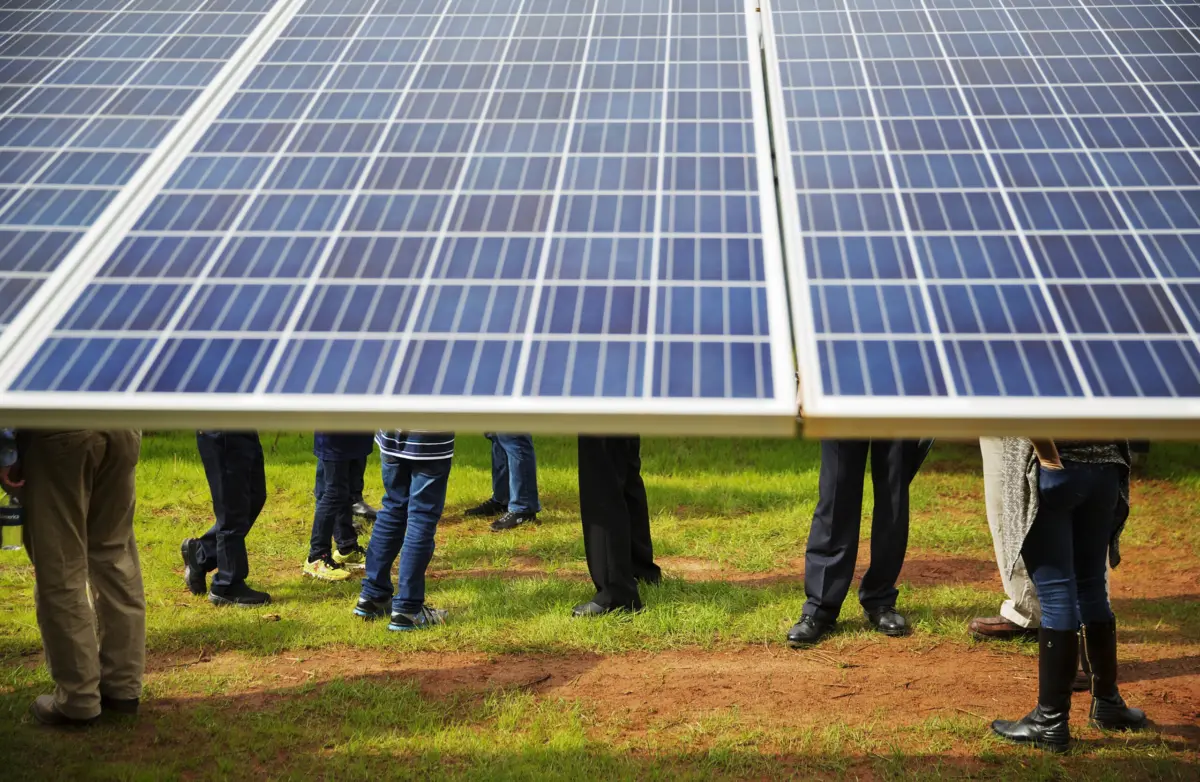
As the United States clean energy sector stands at a critical juncture, the domestic solar industry is waiting anxiously for executive action that could reshape the nation’s energy landscape. At the heart of this tension is a high-stakes trade dispute originating from a rarely invoked legal mechanism: a safeguard petition filed by foreign-owned domestic panel manufacturers under Section 201 of the Trade Act of 1974. The core dilemma facing the federal government is whether to impose punitive tariffs and strict quotas on imported solar panels and photovoltaic modules or to seek alternative paths that safeguard domestic manufacturing without kneecapping the broader renewable energy economy.
While proponents of import duties argue that protective barriers are necessary to shield domestic producers from unfair foreign competition—predominantly originating from China, Taiwan, and other rapidly industrializing nations—energy economists and industry
analysts warn of catastrophic collateral damage. The domestic solar sector is overwhelmingly skewed toward installation, logistics, and system design, rather than upstream manufacturing. Consequently, introducing heavy tariffs on imported hardware is projected to artificially inflate installation costs, drastically depress market demand, and threaten tens of thousands of American jobs.
Rather than utilizing blunt, protectionist instruments that risk provoking retaliatory trade wars and stalling the green energy transition, a more sophisticated policy framework is urgently required. By implementing targeted subsidies financed through existing trade duties—or by establishing an auction system for import licenses—the United States can successfully foster domestic innovation, fortify local supply chains, and bolster long-term competitiveness. This comprehensive analysis explores the multifaceted dimensions of the solar tariff debate, evaluates job metrics, examines global market dynamics, and outlines strategic policy alternatives designed to secure America’s clean energy future.
Detailed Chronology: The Path to the Section 201 Solar Trade Case
The sequence of events leading to the presidential determination on solar imports traces back to foundational shifts in global manufacturing dynamics and specific legal petitions brought before trade authorities.
- The Genesis of the Dispute: The regulatory process began when two U.S.-based subsidiaries of foreign solar manufacturing companies—Suniva and SolarWorld—filed a trade complaint with the U.S. International Trade Commission (USITC). Utilizing Section 201 of the Trade Act of 1974, the petitioners bypassed standard anti-dumping and countervailing duty frameworks, instead seeking broad safeguard relief. They argued that an influx of inexpensive foreign solar panels caused serious injury to domestic manufacturing capabilities.
- The USITC Investigation and Recommendations: Following an exhaustive, months-long investigation, the independent USITC determined that surging imports were indeed a substantial cause of serious injury to the domestic solar manufacturing industry. In late 2017, the agency submitted its official remedy recommendations to the White House, setting the stage for executive intervention.
- The Presidential Decision Window: Under statutory timelines, the case was handed over to President Donald Trump, who was given until mid-January 2018 to accept, modify, or reject the USITC recommendations. The stakes were magnified by the broader implications for U.S. foreign trade policy and bilateral relations with major economic partners, particularly China.
- The Supplemental Review Extension: Demonstrating the administration’s cautious approach to the potential global fallout, U.S. Trade Representative Robert Lighthizer formally requested that the USITC draft a supplemental report. This procedural maneuver effectively extended the statutory deadline for the final tariff decision into late January 2018. Industry observers and trade analysts widely interpreted this delay as a sign that the administration recognized the risk of triggering a broader, multi-sector trade dispute.
Supporting Context & Metrics: The Boom, the Jobs, and the Supply Chain Reality
To understand why punitive tariffs represent an existential threat to the current U.S. solar trajectory, one must examine the fundamental economic structures governing the industry. The American solar sector has enjoyed unprecedented, double-digit growth over the past decade, transforming from a niche market into a cornerstone of modern American power generation.
+--------------------------------------------------------------------------+
|                       U.S. Solar Job Distribution                        |
|                                                                          |
|   [=========================>            ] Installation (~50%+)        |
|   [=======                               ] Development & Sales         |
|   [==                                    ] Manufacturing (<15%)        |
+--------------------------------------------------------------------------+
The Cost Revolution and the Import Reliance
In 2010, the average cost of installing solar photovoltaic systems hovered around $6.00 per watt. By 2016, that figure had plummeted to approximately $1.50 per watt. This dramatic price deflation was catalyzed by two primary forces: technological innovation that reduced production expenditures globally, and a steady influx of affordable imported photovoltaic modules.
By 2016, roughly 87 percent of all solar installations completed in the United States relied on foreign-produced panels, with the vast majority imported from China. Strategic industrial policies enacted by Beijing—including low-interest state-backed loans, technology development grants, and subsidized industrial land—allowed Chinese manufacturers to achieve unprecedented economies of scale. Similar state-supported manufacturing models emerged in South Korea and Taiwan, driving down global hardware costs and accelerating the clean energy transition worldwide.
Employment Dynamics: Installation Versus Manufacturing
The human cost of potential tariffs lies in the stark asymmetry of the solar workforce. According to annual demographic and economic censuses conducted by The Solar Foundation and labor market statistics:
- Explosive Workforce Expansion: Between 2010 and 2016, total U.S. solar employment surged from fewer than 95,000 workers to more than 260,000 professionals.
- The Installation Engine: Manufacturing accounts for less than 15 percent of total domestic solar jobs. In stark contrast, installation, project development, engineering, and sales account for more than 85 percent of the sector’s employment footprint.
- Pace-Setting Growth: According to the U.S. Bureau of Labor Statistics, solar photovoltaic installers were projected to rank among the fastest-growing professions in the nation, with employment expected to more than double over a ten-year horizon.
When hardware prices rise artificially due to import duties, project economics deteriorate. Commercial, industrial, and residential developers cancel or postpone installations, directly suppressing labor demand and threatening tens of thousands of high-paying American jobs in construction, electrical work, and project management. The Solar Energy Industries Association (SEIA) estimated that severe safeguard tariffs could double installed solar prices and place up to 88,000 jobs in immediate jeopardy.
Official Perspectives and Economic Arguments
The debate over how to balance domestic industrial protection with clean energy expansion has fractured the energy policy community, pitting traditional protectionist philosophies against modern economic and environmental realities.
The Protectionist Rationale
Proponents of import tariffs, championed by manufacturing petitioners and select labor organizations, argue that a great industrial power cannot allow its domestic manufacturing capacity to be entirely outsourced to geopolitical rivals. From this perspective, reliance on foreign adversaries for critical energy infrastructure introduces severe national security vulnerabilities. Advocates maintain that without artificial pricing floors or import quotas, domestic manufacturers cannot compete against heavily subsidized foreign entities operating in environments with lower labor standards and environmental compliance costs.
The Economic Counter-Perspective
Conversely, economic researchers and academic experts specializing in energy policy—such as Professors Edward Barbier and Terry Iverson of Colorado State University—argue that blunt tariffs are counterproductive. They contend that penalizing imports does not fix the structural deficiencies of U.S. manufacturing; rather, it penalizes the downstream majority of the industry that generates the vast majority of American economic value.
Furthermore, standard economic theory dictates that subsidies and tariffs should be avoided unless specific market failures justify government intervention. In the case of solar energy, however, three unique economic externalities justify targeted public intervention:
- Spillover Climate Benefits: When one nation subsidizes solar deployment and drives down global hardware costs, it makes green energy adoption cheaper worldwide, accelerating international greenhouse gas mitigation.
- Global Public Goods: Carbon emissions respect no national borders. Deploying clean energy in the United States yields atmospheric benefits shared by the entire global population.
- Knowledge Spillovers: Research and development (R&D) investments made within any single economy permanently enrich the global technological knowledge base, advancing human capability across international boundaries.
Future Outlook: Smarter Subsidies and Alternative Policy Frameworks
If the overarching policy goal is to foster domestic manufacturing excellence while preserving the momentum of the clean energy transition, the federal government must reject simplistic protectionism in favor of precision-engineered industrial policies.
+--------------------------------------------------------------------------+
|                  Recommended Policy Architecture                         |
|                                                                          |
|  +--------------------------+        +-------------------------------+  |
|  | Targeted Supply-Chain    |        | Import License Auctions       |  |
|  | Subsidies                |   OR   | (Freezing Imports at 2016     |  |
|  | (R&D & Capital Grants)   |        | Market Share Levels)          |  |
|  +--------------------------+        +-------------------------------+  |
|               |                                      |                   |
|               +------------------+-------------------+                   |
|                                  |                                       |
|                                  v                                       |
|                  Funded by Existing Tariff Revenues                      |
|                  & WTO-Compliant Domestic Frameworks                     |
+--------------------------------------------------------------------------+
1. Targeted Supply-Chain Subsidies
Rather than imposing punitive border taxes that punish consumers and installers, the U.S. government should channel financial support directly into domestic supply-chain development. By establishing targeted subsidies for advanced manufacturing equipment, localized raw material processing, and technological innovation, the U.S. can build competitive manufacturing clusters. These subsidies can be directly funded by revenues collected from existing tariffs or through dedicated clean energy innovation bonds.
2. Private R&D Enhancement
Federal financing for private solar research and development currently lags significantly behind funding levels observed in China and the European Union. Expanding public-private partnerships and R&D tax credits will enable domestic firms to leapfrog current manufacturing bottlenecks, developing proprietary technologies—such as next-generation perovskite cells and high-efficiency modules—that compete on technological superiority rather than artificially inflated prices.
3. Import Quotas and License Auctions
Should policymakers determine that quantitative import restrictions are strictly necessary to prevent market destabilization, a managed quota system provides a superior alternative to blanket tariffs. Under this approach, imports would be frozen at 2016 market share levels, and the federal government would auction off import licenses to domestic installers. The substantial capital generated from these auctions could then be recycled directly back into domestic manufacturing subsidies, effectively making foreign competitors pay for the modernization of America’s industrial base.
4. WTO Compliance and Global Stability
Critically, these targeted domestic support mechanisms are designed to remain compliant with World Trade Organization (WTO) rules. Because their explicit objective is to foster competitiveness within the domestic market in response to established dumping practices—rather than illegally subsidizing exports in global markets—they insulate the United States from retaliatory trade litigation while establishing a resilient, sustainable, and forward-looking American clean energy economy.