Executive Overview
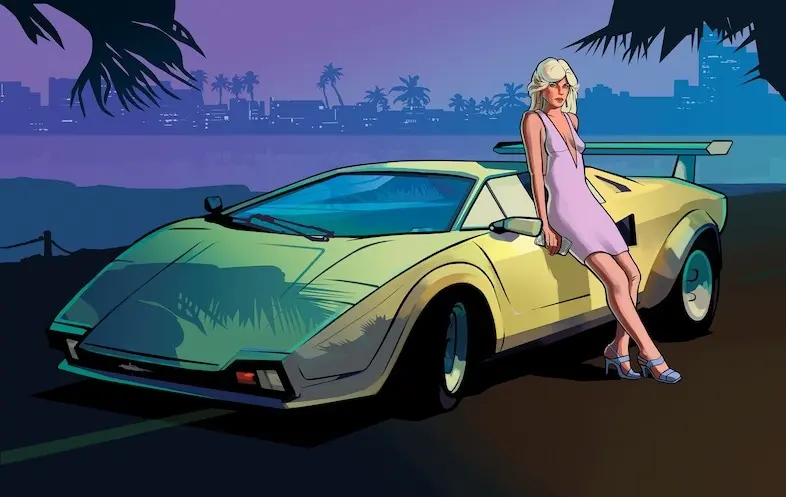
Mention Grand Theft Auto (GTA) to anyone who came of age during the PlayStation 2 era, and a very specific sensory archive awakens. It is a mental montage of sprawling, satirical urban sandboxes, chaotic police chases, neon-drenched twilight skies, and an unmistakable visual style that bridged the gap between gritty indie comic books and high-gloss pop art. For over 15 years, the master architect behind this iconic aesthetic was Stephen Bliss.
As the lead artist for Rockstar Games, Bliss did not merely design game covers; he forged the visual shorthand of a cultural phenomenon. His idiosyncratic blend of Andy Warhol-esque pop art, British punk subculture, and classic Americana defined the promotional and in-game artwork for a generation-defining franchise, spanning from GTA III through GTA IV, alongside other Rockstar heavyweights like Red Dead Redemption, Bully, and The Warriors.
Yet, Bliss’s journey to becoming one of the most influential video game artists in history is as unconventional as the series he helped build. From his formative years modeling in 1980s Tokyo to designing grimy dub-remix record sleeves for Massive Attack, Bliss’s career reads like a masterclass in cross-pollinating countercultural movements. In 2016, after cementing his legacy at Rockstar, he stepped away from the corporate giant to pursue fine art, independent intellectual properties, and urban mixed-media experimentation.
Today, as the gaming industry looks ahead to the monumental release of Grand Theft Auto VI—a title that proudly preserves the very grid-system art direction Bliss invented over two decades ago—this retrospective examines the life, career, and enduring legacy of the man who gave visual form to modern gaming’s most notorious anti-heroes.
Detailed Chronology: From Wiltshire to the Neon Lights of Tokyo and New York
The Roots of a Countercultural Eye
Born in Scotland and raised in rural Wiltshire—just a stone’s throw away from the ancient monolithic stones of Stonehenge—Stephen Bliss developed an early fascination with the unconventional. Long before digital art dominated the commercial sphere, Bliss immersed himself in the tactile worlds of fine art, illustration, and printmaking, eventually attending art school in Brighton. There, he honed an aesthetic heavily informed by the rebellious currents of 1960s and 70s pop culture, punk rock, mythology, and the bold, mass-media iconography of Andy Warhol.
Seeking a wider canvas for his creative ambitions, Bliss embarked on what was supposed to be a brief two-month trip to Japan in the 1980s to work as a fashion model. Captivated by Tokyo’s high-octane energy, he ended up staying for four years.
During this Japanese sojourn, Bliss crossed paths with avant-garde fashion designer Nobuhiko Kitamura. Sharing a mutual obsession with countercultural references—spanning bondage gear, drag culture, New Romantic bands like Adam and the Ants, and historical mythology—the pair formed a fertile creative partnership.
"If I painted a picture, Nobu would make a repeat pattern of it for fabric or a pair of socks. It was very open," Bliss recalls.
This cross-disciplinary approach—seamlessly translating fine art into wearable fashion and graphic design—laid the foundational methodology for Bliss’s later commercial success.
The Massive Attack Breakthrough and the Rockstar Call
Upon returning to the United Kingdom, Bliss applied his distinct visual voice across a diverse array of mediums. He crafted comic strips for Sega, generated illustrations for Nintendo, and picked up commercial commissions for prominent record labels such as BMG.
One of his most defining early milestones arrived when he was commissioned to create the album artwork for Massive Attack’s critically acclaimed 1995 dub remix album, No Protection. The resulting sleeve was urban, grimy, industrial, and deeply indebted to underground comic books and pop art. It was this exact piece of graphic storytelling that caught the attention of Samuel Houser, the co-founder and president of Rockstar Games.
At the turn of the millennium, the video game industry was still widely perceived as a juvenile medium meant primarily for children. Rockstar, however, had grander, more cinematic ambitions. They were assembling the creative team for Grand Theft Auto III, a revolutionary 3D open-world crime simulator that would change the trajectory of interactive entertainment forever. Recognizing that Bliss’s edgy, sophisticated, and countercultural sensibilities aligned perfectly with their transgressive vision, Rockstar brought him into the fold.
Supporting Context & Metrics: Defining an Era of Interactive Art
When Grand Theft Auto III launched in October 2001, it was an immediate cultural earthquake. For Bliss, the release marked a surreal turning point. For the first time in his career, his artwork was not confined to galleries or record sleeves; it was plastered across entire city blocks.

"Very few artists continually see their artwork plastered up around a city, or on billboards and murals and buses and magazine covers," Bliss notes.
The Birth of the Iconic Grid System
Bliss’s entry into the franchise began with a high-stakes baptism by fire. Samuel Houser approached him with a specific brief for GTA III: craft a James Bond-style collage for the game’s cover art.
"It was a white background with a collage of flames and guns and everything," Bliss remembers. The piece took six months of painstaking traditional painting. Then, the tragedy of September 11, 2001, unfolded, forcing an immediate, sensitive re-evaluation of media depicting urban violence in America.
Rockstar issued a new, urgent brief for the North American market: strip away the violence.
"I chopped out the buildings on fire, chopped out the guns and the car on fire," Bliss explains. "That’s when I came up with the grid system. I chopped out all the nonviolent images from that cover and put them into boxes."
This pragmatic, crisis-born design choice—arranging disparate character portraits, vehicle vignettes, and atmospheric icons into a dynamic comic-book-style grid—became the visual signature of the entire Grand Theft Auto franchise for the next twenty years. It allowed Rockstar to present a sprawling ensemble cast and chaotic narratives with clean, instantly recognizable branding.
Expanding the Rockstar Universe
Following GTA III, Bliss’s role at Rockstar expanded exponentially. He contributed key artwork and visual direction to every major installment up to and including Grand Theft Auto IV (2008). His portfolio within the company extended far beyond the streets of Liberty City, Vice City, and San Andreas:
- Red Dead Redemption (2010): Translating the sweeping, dusty vistas and rugged outlaws of the dying American frontier into the signature illustrative style.
- Bully (2006): Capturing the satirical, nostalgic chaos of private school life through dynamic character portraits.
- The Warriors (2005): Adapting Walter Hill’s cult-classic 1979 film into a gritty, atmospheric beat-’em-up video game companion piece.
In a strategic shift prior to the development of Grand Theft Auto V, Rockstar appointed Bliss to spearhead the company’s newly minted lifestyle department. Liberated from the direct production cycle of individual game titles, Bliss was given unprecedented creative autonomy. He utilized this freedom to design merchandising lines, promotional posters, and physical artifacts that embodied the cynical, hyper-consumerist satire of the Rockstar brand.
Official Statements & Industry Impact
Despite his monumental contributions to one of the most lucrative entertainment properties in human history, Bliss chose to step away from Rockstar Games in 2016. The motivation was rooted in a desire for artistic reinvention.
"I wanted to create my own IP and do fine art," Bliss states plainly.
Upon his departure, Bliss threw himself into large-scale mural projects, including a striking portrait of Blondie icon Debbie Harry unveiled at Art Basel in Miami. He also began experimenting with what he terms "urban palimpsests." By taking thousands of macro-photographs of decaying, layered street posters and weathered graffiti in metropolitan alleyways, he uncovered accidental abstract paintings hidden in plain sight.
Bliss integrated these tactile textures into his fine art practice, delivering a TEDx talk detailing how he painted realistic cartoon illustrations—featuring gangs of female bikers, classic American diners, and deep dives into Americana—directly onto these urban foundations.
Navigating the Digital Wild West
Not every post-Rockstar venture proved smooth sailing. Bliss ventured into blockchain technology, developing Fear City, an NFT-backed project that eventually morphed into a comic book series. His reflections on the cryptoverse are starkly pragmatic and cautionary.

"There’s a lot of bad players trying to fuck people over and steal from you," he warns. "The reality of being immersed in that is it can make you really neurotic, thinking that every email you get is a scam."
An accompanying meme coin project, Looby, similarly failed to achieve mainstream traction, sending the artist into a period of deep introspection.
"I was in a depression for about two years because I believed I was going to ascend to heaven or something," he reflects with candid self-deprecation. "That didn’t happen."
Yet, out of this tumultuous digital experiment emerged a renewed creative spark. The development of independent intellectual properties like Fear City and Looby successfully rekindled his pure love for illustration. Stripped of corporate constraints or the pressure of high-art gallery politics, Bliss found joy in returning to the basics:
"I wasn’t aspiring to be high art. It was just pure drawing with silly jokes, and that was a lot of fun because I felt like a kid again."
Future Outlook: Legacy, GTA VI, and Beyond
As Stephen Bliss looks toward the horizon, his schedule is filled with ambitious storytelling and artistic endeavors. He has concrete plans to expand both Fear City and the Looby universe into expansive comic book series. Additionally, he is currently authoring a retrospective book chronicling his formative years living and working in 1980s Japan, alongside illustrative monster-design commissions for publishing house Usborne.
Meanwhile, the video game industry continues to turn the page toward its next monumental milestone: the launch of Grand Theft Auto VI, scheduled for release on November 19, 2026. For an artist who helped construct the visual foundations of the series, watching Rockstar prepare for the next chapter evokes a mixture of pride and nostalgia.
Observing Rockstar’s promotional rollout for GTA VI, Bliss expresses genuine admiration:
"I really loved seeing that they’re still using the grid system and I love the artwork."
Reflecting on his broader artistic journey—balancing the aspirations of the high-art gallery world with commercial design—Bliss maintains a grounded, emotionally resonant perspective on his cultural impact:
"I’m still aspiring to do something equally important in my own work, and maybe that might be futile. But in moments when I feel like I’m not successful enough or that I should be making it in the galleries, when I get 25 kids a day telling me that they love my work on GTA and that it moves them, I love it."
Stephen Bliss may have left the offices of Rockstar Games behind, but every time a player boots up a Grand Theft Auto title and encounters that unmistakable grid of cinematic chaos, they are stepping directly into a world of his making—a permanent monument to countercultural cool etched into the digital history books.