Executive Overview
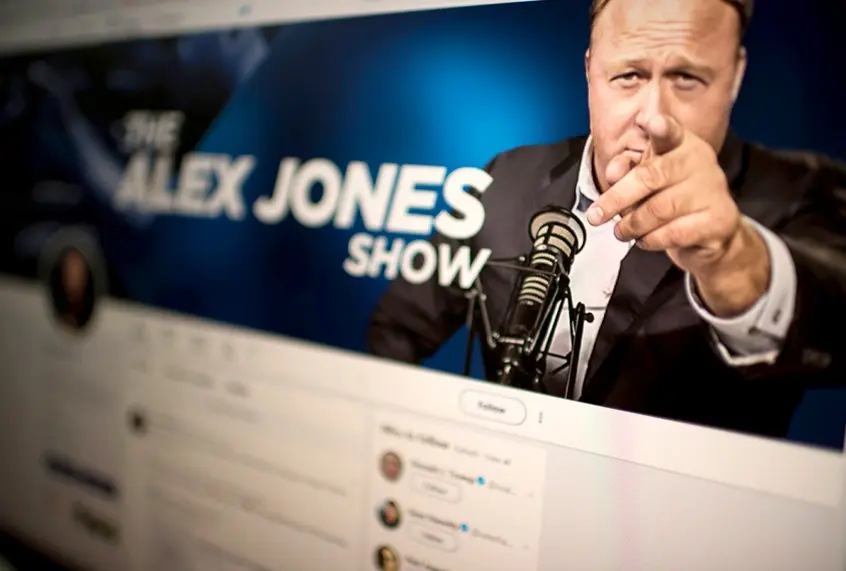
In a watershed moment for online content moderation, Twitter enacted a seven-day suspension of Infowars founder and far-right conspiracy theorist Alex Jones in August 2018. This pivotal enforcement action marked an abrupt and significant about-face for the microblogging platform. For months, Twitter leadership had fiercely defended its hands-off approach toward Jones, consistently maintaining that his controversial broadcasts and posts—despite widespread public condemnation—did not explicitly breach the platform’s terms of service.
The decision to place Jones in a weeklong digital "timeout" followed a cascade of sweeping bans across nearly every other major technology conglomerate. Silicon Valley giants including Apple, Facebook, YouTube (owned by Google), Pinterest, and Spotify had already stripped Jones and Infowars of their digital infrastructure, citing severe and repeated violations of hate speech and harassment policies.
Twitter CEO Jack Dorsey found himself at the epicenter of a fierce national debate regarding free speech, corporate responsibility, and the systemic platforming of dangerous misinformation. In subsequent media appearances, Dorsey defended the temporary suspension as a measured enforcement step designed to compel behavioral change, while simultaneously asserting that platform governance must not be dictated by the subjective whims of individual executives.
This retrospective examines the complex mechanics of Twitter’s policy shift, the immense external pressure exerted on tech executives, the broader ecosystem of deplatforming that defined the era, and the enduring questions surrounding online accountability.
Detailed Chronology: The Escalation and Enforcement
The Pre-Ban Landscape and Industry Precedents
Throughout mid-2018, Alex Jones and his media outlet, Infowars, operated largely unhindered on Twitter, even as a coordinated public reckoning began to sweep through Silicon Valley. For years, critics, watchdog organizations, and civil rights groups documented Jones’s extensive history of promoting malicious hoaxes. These included claiming that the tragic 2012 Sandy Hook Elementary School massacre was an elaborate government hoax staged by "crisis actors," pushing baseless 9/11 conspiracy theories, and leveling erratic, unverified accusations of pedophilia against public figures, including Special Counsel Robert Mueller.
Despite these inflammatory broadcasts, Twitter remained an outlier among major tech platforms. While companies like Facebook and YouTube faced mounting pressure to address the real-world harms amplified by algorithmic recommendation engines, Twitter’s executive leadership clung to a purist interpretation of free expression. Executives repeatedly argued that preserving an open, unedited public square was paramount, even when that square accommodated deeply offensive and polarizing figures.
The Turning Point: Deplatforming Across Silicon Valley
The dam broke in early August 2018. Within a matter of days, a coordinated wave of private corporate actions dismantled the core digital infrastructure of Infowars:
- Apple: Removed multiple Infowars podcasts from its iTunes and Apple Podcasts directories, citing violations of guidelines prohibiting content that encourages hatred or harassment.
- Facebook: Took down four primary pages associated with Alex Jones and Infowars, removing content that glorified violence and used dehumanizing language against transgender people, Muslims, and immigrants.
- YouTube (Google): Terminated multiple channels tied to Jones and Infowars, effectively erasing millions of subscribers and thousands of hours of video archives for repeated violations of hate speech policies.
- Spotify and Pinterest: Swiftly followed suit, purging audio libraries and curated boards connected to the network.
As these tech giants united to excise Jones from their ecosystems, Twitter became the final major frontier for his digital outreach, intensifying scrutiny on CEO Jack Dorsey and his moderation team.
The Breaking Rule: "Battle Rifles" and the Seven-Day Suspension
Twitter’s defensive posture crumbled on Tuesday, August 14, 2018, when Jones crossed a definitive red line explicitly prohibited by the platform’s safety guidelines. Following a contentious congressional hearing in Washington, D.C., Jones posted a video link to his Twitter account in which he directly called upon his followers to get their "battle rifles" ready against various perceived adversaries, specifically targeting the mainstream media and political opponents.
This direct incitement to violence violated Twitter’s core rules and policies, which explicitly prohibit individuals or organizations from using or promoting violence against civilians to advance ideological causes.
Prompted by this direct violation—and facing relentless public and internal pressure—Twitter abruptly reversed its defensive stance. The company suspended Jones’s personal account and the official Infowars account for a duration of seven days, cutting off his ability to tweet, retweet, or like content.
Supporting Context & Metrics: The Anatomy of Modern Deplatforming
The coordinated expulsion of Alex Jones from major technology platforms in August 2018 represented a quantitative and qualitative shift in how digital infrastructure companies viewed their legal and moral responsibilities. For over a decade, Web 2.0 platforms had operated under Section 230 of the Communications Decency Act in the United States, shielding them from liability for user-generated content while granting them broad immunity to moderate their spaces.
However, the offline consequences of online radicalization forced a reckoning. Academic researchers and watchdog groups, such as Media Matters for America and the Southern Poverty Law Center, cataloged the direct human toll of Jones’s rhetoric. Most notably, the families of children killed at Sandy Hook Elementary School filed multiple multi-million-dollar defamation lawsuits against Jones in Texas and Connecticut, demonstrating that online harassment campaigns frequently translated into severe real-world trauma, including death threats and stalking directed at grieving parents.
| Platform | Action Taken (August 2018) | Primary Policy Cited |
|---|---|---|
| Apple | Removed Podcasts | Hate Speech & Harassment Guidelines |
| Deleted Pages & Profiles | Dangerous Individuals & Organizations | |
| YouTube | Terminated Channels | Hate Speech & Terms of Service Violations |
| Spotify | Removed Audio Libraries | Hate Speech Policies |
| Deleted Boards | Harassment & Misinformation Rules | |
| 7-Day Temporary Suspension | Promotion of Violence ("Battle Rifles" Incident) |
The metrics surrounding the deplatforming demonstrated an immediate, catastrophic drop in Infowars’ web traffic and digital reach. Deprived of the algorithmic amplification provided by Facebook news feeds and YouTube recommendations, the network experienced steep declines in audience engagement, illustrating just how heavily alternative media empires relied on mainstream tech infrastructure to sustain their economic and cultural footprint.
Official Statements and Leadership Dilemmas
The public relations fallout surrounding Twitter’s handling of the Alex Jones saga put CEO Jack Dorsey in an extraordinarily difficult position. On Wednesday, August 15, 2018, Dorsey sat for an exclusive, high-profile interview with Lester Holt of NBC News, where he was pressed extensively on the philosophical underpinnings of Twitter’s moderation strategies.
Jack Dorsey’s NBC News Interview
During the interview, Dorsey defended the decision to implement a seven-day suspension, explaining that the penalty aligned with internal enforcement protocols. However, he openly admitted that he had previously resisted calls to ban Jones because the fringe broadcaster had meticulously danced along the razor’s edge of Twitter’s rules without crossing into unambiguous violations.
"We can’t build a service that is subjective just to the whims of what we personally believe," Dorsey told NBC News, articulating the libertarian ideals that heavily influenced early Silicon Valley platform governance.
When questioned about whether a temporary one-week suspension would realistically alter Jones’s deeply entrenched behavior, Dorsey offered a candid and pragmatic assessment:
"Whether it works within this case to change some of those behaviors and change some of those actions, I don’t know. But this is consistent with how we enforce… I feel any suspension, whether it be a permanent or a temporary one, makes someone think about their actions and their behaviors."
The Clarifying Social Media Thread
Recognizing that his televised remarks could be misconstrued as taking a soft stance on hate speech, Dorsey took to Twitter shortly after the interview aired to clarify his statements to the public. In a structured thread, he emphasized that timeouts were part of a graduated enforcement framework rather than a guaranteed cure for bad behavior:
"To clarify: I was speaking broadly about our range of enforcement actions, when asked why we timeout functionality on Twitter. I don’t assume everyone will change their actions. Enforcement gets tougher with further reported violations."
This clarification underscored a growing realization among tech executives: content moderation could not rely solely on reactive, ad-hoc interventions. Platforms needed structured, transparent, and progressively severe enforcement mechanisms to address persistent bad actors.
Future Outlook: The Lingering Battleground of Digital Governance
The seven-day suspension of Alex Jones in August 2018 was never viewed as the definitive conclusion of the controversy; rather, it served as a profound stress test for the future of digital speech and platform accountability.
Even as mainstream platforms systematically locked Jones out of their core services, critical blind spots remained. At the conclusion of his seven-day ban from Twitter, Jones retained access to Periscope—Twitter’s native live-streaming video subsidiary. This glaring loophole highlighted the complex, patchwork nature of multi-product tech conglomerates, where policies implemented on a parent platform did not always automatically translate to subsidiary services.
Furthermore, the events of August 2018 triggered a fierce, ongoing ideological battle that continues to shape modern politics and technology. Critics from across the political spectrum voiced divergent concerns:
- Civil Liberties Advocates warned that the coordinated deplatforming of a prominent media figure by private corporate monopolies set a dangerous precedent, threatening to turn Silicon Valley executives into arbiters of acceptable public discourse.
- Public Health and Safety Advocates argued that private corporations had a moral and social imperative to protect the public sphere from coordinated disinformation campaigns, stochastic terrorism, and malicious harassment.
Ultimately, the 2018 Twitter suspension of Alex Jones proved to be a historic inflection point. It shattered the illusion that social media networks could remain neutral, passive conduits for human communication. Instead, it forced tech companies to accept their active role as editors, moderators, and governors of the digital public square—a transformation whose shockwaves continue to reverberate across the global media landscape.