Executive Overview
In a seismic development that signals the definitive end of the SaaS-as-usual era, Brian Halligan announced his return as CEO of HubSpot, officially declaring that he and co-founder Dharmesh Shah are completely re-founding the company as the "Customer Harness Company."
This dramatic reinvention is more than a branding exercise. It is an acknowledgment of a profound, structural shift in how businesses operate. For over two decades, the architecture of B2B software has been anchored to a singular premise: the human user. Software was priced by "seats," evaluated by login frequency, and navigated via complex graphical user interfaces (GUIs). Dashboards, manual data entry, and rigid workflows formed the bedrock of enterprise software utility.
Today, that architecture is rapidly becoming obsolete.
As forward-thinking organizations transition from human-operated software to agent-driven workflows, the entire software value chain is breaking apart. Drawing on real-world operational insights from tech-forward organizations like SaaStr—where a lean team of three humans orchestrates more than 20 autonomous AI agents in production—this article explores what it means to build a headless enterprise. We examine the demise of traditional marketing automation, the rise of multi-agent ecosystems, the absolute fluidity of software loyalty, and what HubSpot’s high-stakes pivot means for the future of the $500 billion enterprise software industry.
Detailed Chronology
The Return of the Founders and the Birth of the "Customer Harness"
The tectonic plates of the CRM market shifted when Brian Halligan took to social media to announce his return to the helm of HubSpot:
"I’m back as CEO of HubSpot today. @dharmesh and I are completely re-founding the company. It’s day 1. We’re now the Customer Harness Company. In the next few days, I’ll post about why I’m coming back and what my plans are. LFG!"
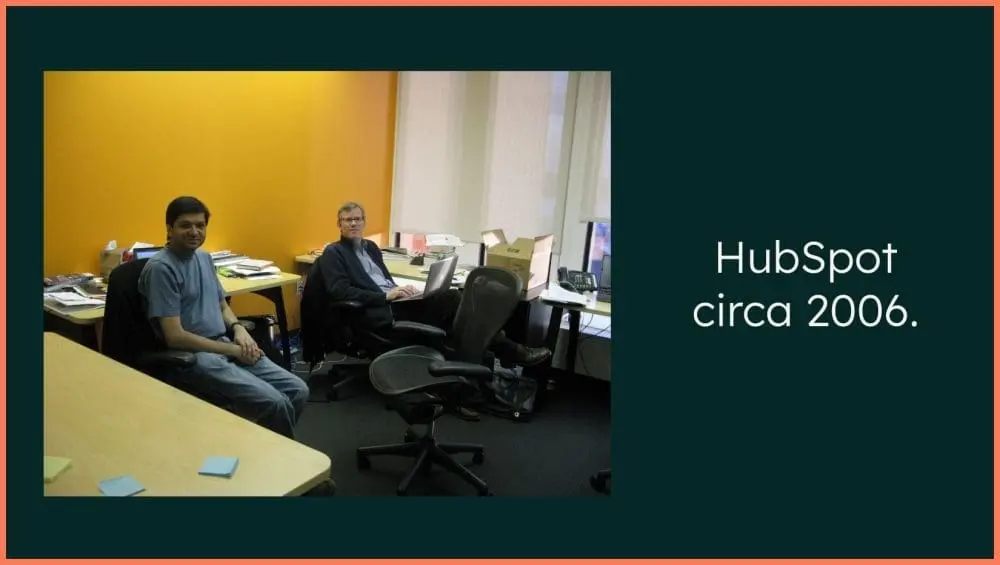
For industry veterans, this move echoes HubSpot’s playbook from the late 2000s and 2010s. Back then, Halligan and Shah coined the term "inbound marketing," effectively naming a nascent industry and completely dominating it for a decade. By redefining HubSpot as a "Customer Harness," the co-founders are signaling that the next decade will not belong to companies that help humans manage customer relationships manually, but to platforms that harness artificial intelligence agents to execute go-to-market (GTM) operations autonomously.
The Headless CRM Revolution: When Humans Stop Logging In
The reality of this shift is already visible on the ground. At organizations operating at the bleeding edge of the AI transition, the traditional login model has been entirely discarded.
Consider the operational reality at modern media and venture platforms like SaaStr: not a single human team member logs into the CRM anymore.
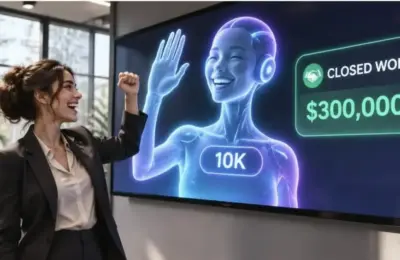
Instead, autonomous entities—such as "10K," an AI Vice President of Revenue—interact with core infrastructure exclusively through Model Context Protocols (MCP) and APIs. These agents read data, write updates, manage pipelines, and execute complex sequences without human intervention. The underlying CRM has not lost its value; it remains the authoritative system of record. However, its user interface has been bypassed entirely.
For SaaS vendors, this presents an existential crisis. If the value of a B2B application is tied to its UI, and the UI is no longer being viewed by humans, the product’s perceived utility plummets toward zero. The battleground has shifted entirely to the data layer and the intelligence running on top of it.
The Collapse of Traditional Marketing Automation
Parallel to the transformation of the CRM is the sudden and total obsolescence of legacy marketing automation suites.
Over a compressed 60-day window, forward-thinking organizations managing massive databases (upwards of 450,000+ contacts and millions of monthly communications across events, content, and products) have entirely dismantled their traditional marketing automation tech stacks.
The rationale is simple: legacy marketing automation tools were built for human operators to click through visual campaign builders, segment lists manually, and manage template libraries within monolithic platforms. In an agent-driven enterprise, templates, logic, and dynamic personalization are dynamically generated by AI models, while high-volume sending is handled via headless, top-tier API services.
Because compliance, explicit consent, and inbox deliverability remain paramount at scale, organizations no longer need bundled marketing suites that lock them into proprietary ecosystems. Once an agent owns the messaging logic and dispatch is commoditized via API, the traditional vendor lock-in vanishes overnight.
Supporting Context & Metrics
To understand the mechanics of the "Customer Harness" era, one must examine how day-to-day operations function when AI agents dictate software consumption.
The Emergence of the Central Orchestration Agent ("10K")
While consumer and developer ecosystems debate whether Claude, ChatGPT, or Slack will serve as the ultimate universal interface, advanced enterprise teams are finding that custom, purpose-built orchestrators work best.
At SaaStr, the primary operational surface is not a generic chatbot, but an internal agent framework dubbed "10K." This agent maintains persistent context across the entire business stack—synthesizing data streams from the CRM, financial platforms like QuickBooks and Bill.com, and communication channels.
- Multiplayer Context: Both human operators and autonomous agents work within the same shared context window.
- Continuous Execution: The agent operates 24/7/365, managing lead routing, operational bottlenecks, and reporting without fatigue.
- Error Tolerant: Just like human employees, agents make mistakes, but their capacity for rapid iteration and continuous learning redefines execution velocity.
Modular Agent Selection vs. Monolithic Suites
The traditional enterprise software motion relied heavily on platform standardization: buy a single vendor’s suite and use every bundled module (email marketing, customer support ticketing, customer success analytics) whether it was best-in-class or not.
The agentic model shatters this paradigm. Modern tech stacks operate on a strict meritocracy:
- Identify the Operational Bottleneck: Determine the specific GTM or operational task requiring optimization.
- Evaluate Standalone Agents: Test specialized third-party AI agents against the task, regardless of their origin.
- Integrate via API: Deploy the winning agent directly into the workflow orchestration layer.
If a CRM vendor ships an internal agent that underperforms compared to a specialized standalone competitor, the vendor’s agent is bypassed. For legacy enterprise software giants, this is the ultimate threat: owning the database no longer guarantees that you will own the workflow applications built on top of it.
The Death of Brand Loyalty
Perhaps the most startling behavioral shift in the agentic enterprise is the complete absence of brand loyalty among AI workers.
For decades, enterprises identified proudly as "Salesforce shops," "HubSpot shops," or "Shopify shops." Human inertia, long-term vendor relationships, and fear of migration friction kept companies locked into legacy ecosystems even during outages or performance dips.
AI agents, however, are utterly pragmatic. When a core vendor experiences a prolonged outage, human loyalty might dictate waiting it out. An autonomous agent, conversely, dynamically routes around the bottleneck to keep business operations flowing.
Once an agent finds an alternative path that works, it rarely looks back. As SaaStr founder Jason Lemkin noted regarding agentic tool switching (such as workflows migrating from Canva to Higgsfield):
"Humans don’t really want to switch apps unless they have to… The same with agents. Once they make a change, they may not switch again. Would they switch back now? I doubt it. No matter how good…"
Conversely, this lack of loyalty cuts both ways. Once an enterprise agent settles on a high-performing tool, friction prevents it from casually switching away. The evaluation costs, context migration, and retraining overhead make the winning agent exceptionally sticky. Consequently, the window for vendors to capture agentic mindshare is extraordinarily narrow.
Official Statements
The urgency of this transition has been underscored by industry leaders publicly acknowledging that the rules of software engagement have been rewritten.
Brian Halligan’s re-founding declaration frames the existential nature of the moment:
"I’m back as CEO of HubSpot today. @dharmesh and I are completely re-founding the company. Its day 1. We’re now the Customer Harness Company."
This sentiment is echoed by operational leaders navigating the trenches of agentic deployment. The consensus across the B2B landscape is unanimous: traditional software interaction models are fading into history, replaced by autonomous architectures where software talks to software, and humans act as strategic overseers rather than manual data-entry clerks.
Future Outlook
As the dust settles on HubSpot’s strategic pivot, the implications for the broader technology ecosystem are profound.
- The Race for the "Harness": The vendor that successfully builds the ultimate customer harness—a platform that unifies contextual data, orchestrates multi-agent workflows, and seamlessly interfaces with external tools—will capture the next generation of enterprise value. HubSpot’s decision to bring its founders back to drive this transformation positions the company to move with startup-like velocity.
- Devaluation of the GUI: Software companies that rely heavily on complex, human-navigated user interfaces to justify their pricing models face an urgent imperative to refactor their products into headless, API-first, agent-ready architectures. If an enterprise software product cannot be operated efficiently by an LLM via API or MCP, its addressable market will shrink rapidly.
- The Rise of Zero-Churn Disruption: Customer churn in the B2B space will no longer manifest as dramatic, end-of-year contract cancellation negotiations. Instead, it will happen silently and invisibly in the background, as autonomous agents dynamically route tasks away from underperforming platforms to superior alternatives.
Conclusion
The transition to the "Customer Harness Company" model marks a generational turning point. The era of human-driven software is giving way to the era of autonomous orchestration. For HubSpot, re-founding the company around this reality is a bold, necessary, and perfectly timed gamble. For the rest of the software industry, the message is unmistakable: adapt to the headless, agent-first world immediately, or risk becoming obsolete in a marketplace where software no longer cares about human brand loyalty.