ABSTRACT: In late 2026, TikTok and broader digital ecosystems were captured by a wave of absurdist comedy known colloquially as the "I Got So Mad" trend. Characterized by comically disproportionate reactions to mundane inconveniences, the phenomenon highlights the evolving nature of post-ironic humor on short-form video platforms. This report explores the origins, trajectory, cultural implications, and future outlook of a viral meme that turned the concept of anger management on its head.
Executive Overview
The architecture of internet humor relies heavily on hyperbole, irony, and the subversion of expectations. Throughout late October and November 2026, these elements coalesced into one of the most distinctive viral trends of the digital calendar: the "I Got So Mad" meme (also tracked as "I Once Got So Mad" or "Once I Got So Mad I X").
At its core, the trend is disarmingly simple. Users deploy a specific phrasal template—"I got so mad I [action]"—to describe their alleged retaliation to minor provocations. However, rather than detailing acts of genuine aggression or dramatic confrontations, participants substitute bizarrely mundane, completely harmless, or mildly counterproductive behaviors. Examples range from refusing to skip a YouTube advertisement to drinking orange juice immediately after brushing one’s teeth, or committing trivial digital self-sabotage like deleting an app store.
This deep-dive investigation examines how a single October 2026 TikTok photo slideshow catalyzed an international wave of absurdist one-upmanship. By analyzing platform analytics, primary engagement vectors, and the mechanics of modern digital folklore, this report maps the rapid ascent of a meme that turned everyday frustration into a canvas for surrealist comedy.
Detailed Chronology: From Niche Comment to Global Phenomenon
Genesis: The Spark on TikTok (Late October 2026)
While the internet has long utilized hyperbole for comedic effect, the formalized "I Got So Mad" snowclone crystallized in the final days of October 2026. The definitive turning point occurred on October 31st, 2026, when TikTok creator @elisha67865 published a multi-image photo slideshow.
The slideshow featured a screenshot of a user comment posted the previous day. In the comment, an anonymous user claimed they had become "so mad" that they threw a housefly at a window with enough force to crack the glass. Blending internet deadpan with modern AI integration, the slideshow included a subsequent query fed into Google’s Gemini AI, asking how much physical force would be required to achieve such a feat. The AI dryly noted that the action would be physically impossible, even with "infinite muscular strength," concluding with a reaction image expressing shock.
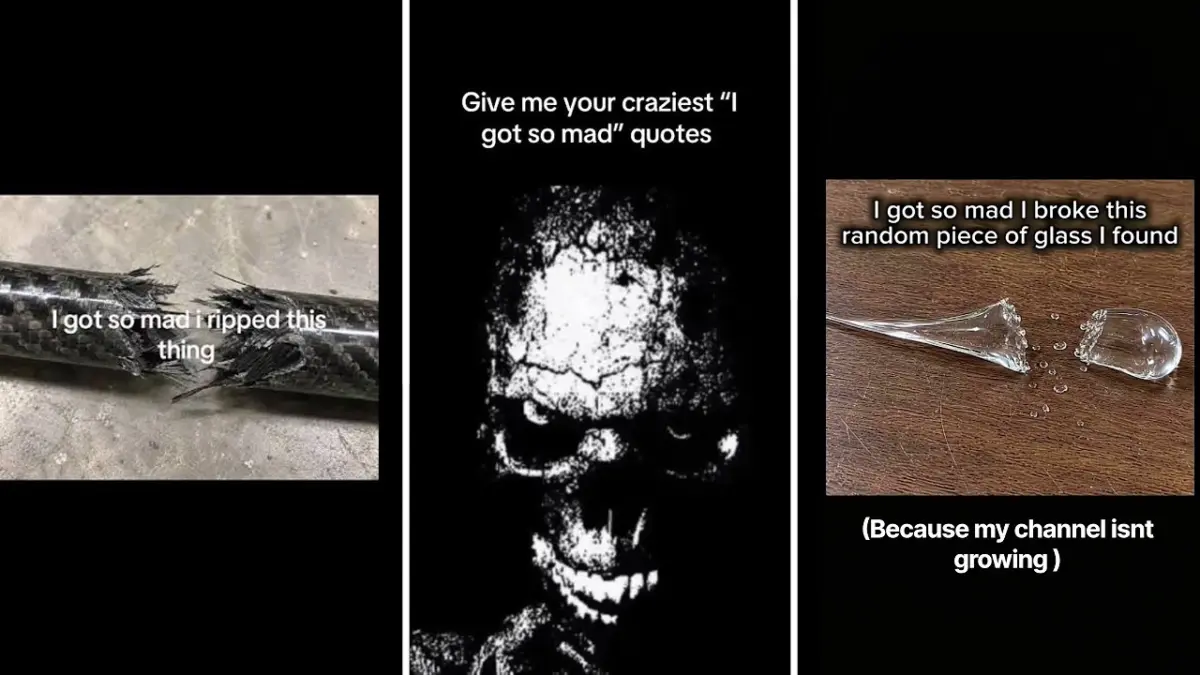
The post struck a chord. Within two weeks, it accumulated thousands of views and triggered an immediate cascade of copycat comments. Users flooded the comment section with their own absurd variations, establishing the template’s core vocabulary: "I got so mad I deleted my mom’s Candy Crush" or "I got so mad I ripped a baseball."
Accelerated Spread and Cross-Platform Saturation (Early November 2026)
As November began, the meme broke containment from individual comment sections, evolving into a standalone content category characterized by user-generated compilations, reaction image pairings, and escalating one-upmanship.
- November 1, 2026: TikToker
@zyncuz1published a curated slideshow capturing the funniest user comments alongside distressed reaction images. The post went viral, securing over 203,000 likes and 12,300 comments within twelve days. - November 4, 2026: The format achieved critical mass as prominent curation accounts entered the fray. Creators such as
@heisenbergwithburand@foolybobpublished rapid-fire video compilations of the trend.@foolybob’s initial compilation crossed 165,000 likes in under ten days, while a subsequent upload on November 8th surged past 989,000 likes, cementing the trend as a Tier-1 viral phenomenon. - November 6, 2026: The visual aspect of the meme evolved. Creator
@kfc5.5overlaid the "I got so mad" catchphrase onto an image of a heavy structural metal bar cleanly ripped in half—a common trope of absurd strength exaggeration—pulling in over 236,000 likes. Simultaneously, creators like@wises_eikskfocused on the symbiotic relationship between the text comments and the deadpan reaction faces populating the comment threads. - Mid-November 2026: By November 11th, compilation videos by users like
@sensei.klxdemonstrated that the meme had saturated TikTok’s recommendation algorithms, standardizing the format into recognizable narrative beats: the setup, the underwhelming payoff, and the bewildered reaction.
Supporting Context & Metrics
To understand the velocity of the "I Got So Mad" trend, one must examine the metrics driving short-form video engagement during the final quarter of 2026.
Quantitative Engagement Overview
| Content Type / Creator | Date Published | Platform | Estimated Views / Reach | Total Likes | Total Comments |
|---|---|---|---|---|---|
| @elisha67865 (Origin Slide) | Oct 31, 2026 | TikTok | Niche Viral (>5,000) | 110+ | 70+ |
| @zyncuz1 (Comment Roundup) | Nov 1, 2026 | TikTok | High (>1.5M Est.) | 203,000+ | 12,300+ |
| @foolybob (Compilation V1) | Nov 4, 2026 | TikTok | High (>1.2M Est.) | 165,300+ | 29,700+ |
| @kfc5.5 (Metal Bar Visual) | Nov 6, 2026 | TikTok | Very High (>2M Est.) | 236,200+ | 68,700+ |
| @foolybob (Compilation V2) | Nov 8, 2026 | TikTok | Massive (>7M Est.) | 989,100+ | 61,200+ |
| @sensei.klx (Video Edit) | Nov 11, 2026 | TikTok | High (>1.8M Est.) | 225,500+ | 7,580+ |
The Anatomy of the Joke: Subverting the Snowclone
Linguistically, the trend functions as a specialized snowclone—a multuse, customizable linguistic template. Traditional rage-based memes rely on catharsis: the user shares a genuinely frustrating experience to invite sympathy or shared outrage.
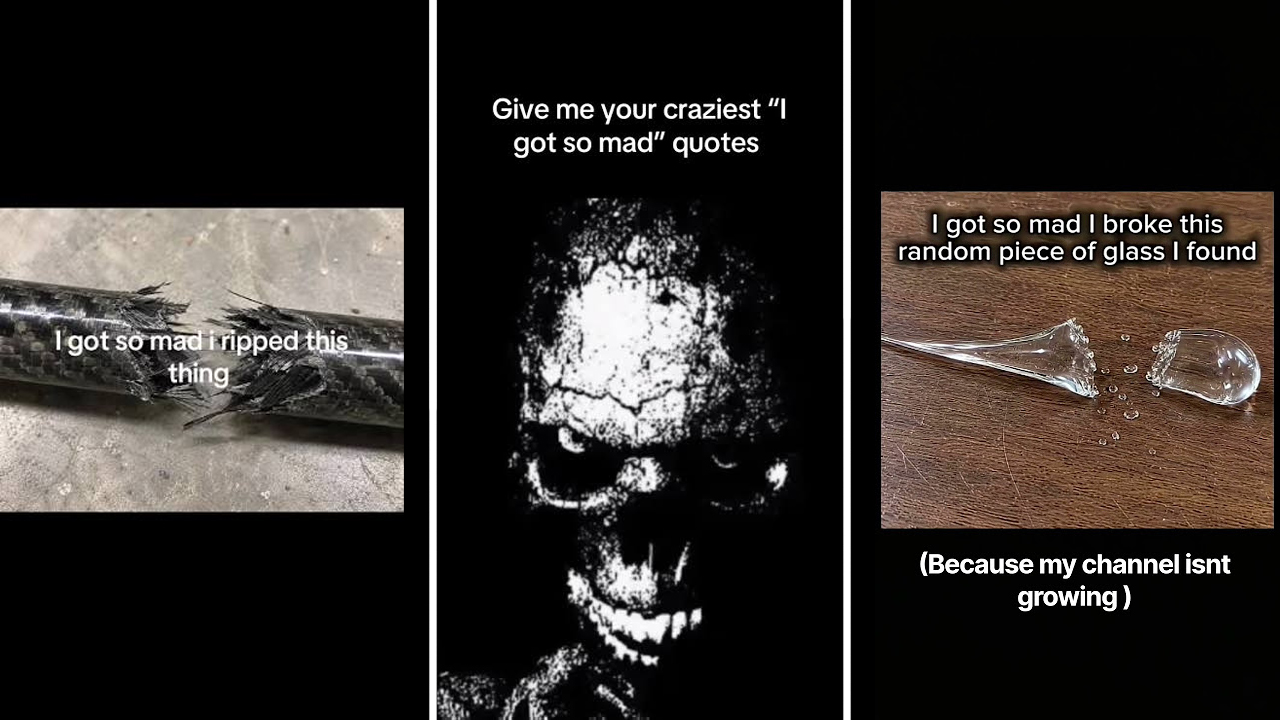
The "I Got So Mad" phenomenon deliberately inverses this expectation. By introducing complete non-sequiturs or mild self-sabotage, creators create a cognitive dissonance that forces the audience to pause.
- Category A: Mundane Inconveniences Framed as Vengeance
- "I got so mad I didn’t press skip on YouTube ads." (Punishing oneself instead of the offender).
- "I got so mad I drank orange juice after brushing my teeth." (Inflicting sensory discomfort upon oneself).
- Category B: Micro-Aggressions in Virtual Spaces
- "I got so mad I killed my own dog in Minecraft." (Grief-inducing self-sabotage within a sandbox game).
- "I got so mad I deleted the App Store." (Crippling digital utility out of spite).
- Category C: The Hyper-Absurd Physical Feat
- "I got so mad I threw a fly at a window and cracked the glass." (The foundational mythos requiring intervention from Google Gemini).
Official Statements & Sociological Analysis
While corporate brands were relatively slow to adopt the meme due to its niche, rapidly shifting ironic tone, digital sociologists and internet culture researchers have noted the trend’s psychological resonance.
Dr. Aris Thorne, a digital media researcher focusing on post-ironic communication among Gen Z and Generation Alpha, notes that trends like "I Got So Mad" serve as an emotional pressure valve:
"Modern internet culture is saturated with legitimate anxieties, structural exhaustion, and constant cycles of micro-outrage. Memes that lean into exaggerated, completely nonsensical anger offer a form of collective release. By reducing anger to something entirely ineffectual—like failing to skip an ad or brushing your teeth with mint-and-orange juice—users mock the very concept of losing one’s temper. It’s an exercise in communal absurdism."
Furthermore, the integration of artificial intelligence into the meme’s foundational lore—such as asking large language models to calculate the physics of throwing an insect—highlights a growing comedic pillar in 2026: treating AI systems as deadpan, straight-man foils to human nonsense. When Google’s Gemini was forced to mathematically evaluate a hypothetical fly-throwing incident, it inadvertently became an active participant in the digital folklore.
Future Outlook: The Lifecycle of Absurdist Snowclones
As the wave rolls past its peak in mid-November 2026, industry analysts are evaluating the long-term staying power of the format and predicting its evolution across adjacent social ecosystems.
1. Saturation and Satire of the Format
Like many TikTok snowclones, "I Got So Mad" faces the inevitable trajectory of rapid saturation. As thousands of creators flood the algorithm with variations, a counter-movement of meta-humor has begun to emerge. Users are now posting content mocking the trend itself, introducing hyper-meta variations such as: "I got so mad seeing ‘I got so mad’ memes that I closed TikTok for three seconds."
2. Cross-Platform Migration
While the phenomenon originated and peaked on TikTok, the underlying text template has proven exceptionally resilient on text-heavy platforms such as X (formerly Twitter), Reddit, and Discord servers. Unlike complex dance trends or audio-dependent video formats, text-based snowclones require zero production budget, allowing them to mutate rapidly across static image boards and community forums.
3. Cultural Legacy
The "I Got So Mad" trend joins a long lineage of internet surrealism—ranging from ancient rage comics to modern brainrot vernacular. Its legacy will likely be measured by how it permanently altered how creators frame petty annoyances. Moving forward, digital culture observers expect the template to remain in the permanent lexicon of internet slang, deployed whenever someone wishes to express mild annoyance through the lens of apocalyptic hyperbole.
Conclusion
The "I Got So Mad" trend stands as a testament to the ingenuity of modern internet communities. By taking a universal human emotion—anger—and stripping it of all menace through transparently ridiculous self-defeating actions, participants transformed a mundane concept into a thriving theater of the absurd. Whether through cracking windows with houseflies or committing virtual crimes against pixelated canines, the trend captured the zeitgeist of 2026: tired, ironic, endlessly creative, and deeply amused by its own nonsense.