Executive Overview
The landscape of American democracy is undergoing a seismic, technology-driven transformation. As artificial intelligence (AI) accelerates from a speculative Silicon Valley novelty into a ubiquitous economic and social force, its convergence with the political sphere has become one of the defining narratives of the modern electoral era. Far from existing merely as a tool for digital advertising or automated voter outreach during the recent midterm elections, AI emerged as a complex, multi-dimensional political issue. It became inextricably linked to the mechanics of campaign finance, the cozy and sometimes contentious alliances between tech industry giants and government regulators, and the disruptive physical footprint of data centers imposed upon resistant local communities.
In the wake of the recent midterms, political analysts and strategists have been forced to reckon with a stark reality: artificial intelligence proved to be a potent, winning electoral issue, particularly for the Democratic Party. By framing the conversation around economic security, the ethics of automated labor, and corporate accountability, progressive campaigns tapped into a deep well of voter anxiety. However, the midterms were merely a prologue. According to leading
political strategists like Rob Flaherty—former White House official and founder of Tomorrow Together, a tech-focused political action committee (PAC)—the intersections of artificial intelligence, campaign finance, corporate-governmental collusion, and job displacement are poised to expand exponentially. They will form the central battlegrounds of the 2028 presidential and congressional elections.
This comprehensive report investigates how artificial intelligence transformed from a fringe tech topic into a central electoral flashpoint. It examines the deep-seated tensions between corporate tech ambitions and local community resistance, evaluates the legislative and financial implications of these dynamics, and provides a forward-looking analysis of how AI will redefine American political campaigns over the next four years.
Detailed Chronology: The Evolution of AI as an Electoral Flashpoint
To understand how artificial intelligence became a defining issue of the recent midterms and why it commands such high stakes for 2028, it is necessary to trace the rapid escalation of AI within the American sociopolitical consciousness over the past half-decade.
2020–2022: The Incubation and Generative Boom
The journey of AI into mainstream politics began in earnest with the commercialization of generative AI models, most notably the public launch of OpenAI’s ChatGPT in late 2022. Initially, political operatives viewed the technology through a relatively narrow lens: a tool for rapid content generation, copywriting, and preliminary data analysis.
However, political strategists quickly realized the darker potential and the broader socio-economic implications of the technology. Early experiments in the 2022 midterms saw minor deployments of AI-generated imagery and deepfakes, primarily in localized races. These early instances triggered immediate alarms among election security experts, civil rights advocates, and federal regulators regarding disinformation and the erosion of voter trust.
2023–Early 2024: The Infrastructure Gold Rush and Local Friction
As tech companies raced to secure dominance in the generative AI space, the physical and economic reality of the technology began to manifest across the American landscape. Building and training large language models (LLMs) required unprecedented amounts of computational power, leading to a massive construction boom of data centers.
This infrastructure push brought Silicon Valley directly into collision with Middle America. Towns and rural counties across states like Virginia, Ohio, Texas, and Oregon found themselves targeted by tech conglomerates seeking cheap land, lax zoning laws, and massive amounts of electrical power and water.
- The Energy Crisis: Local utility grids strained under the projected energy demands of these facilities, forcing local governments to subsidize or negotiate complex power-sharing agreements that often favored multi-trillion-dollar corporations over residential ratepayers.
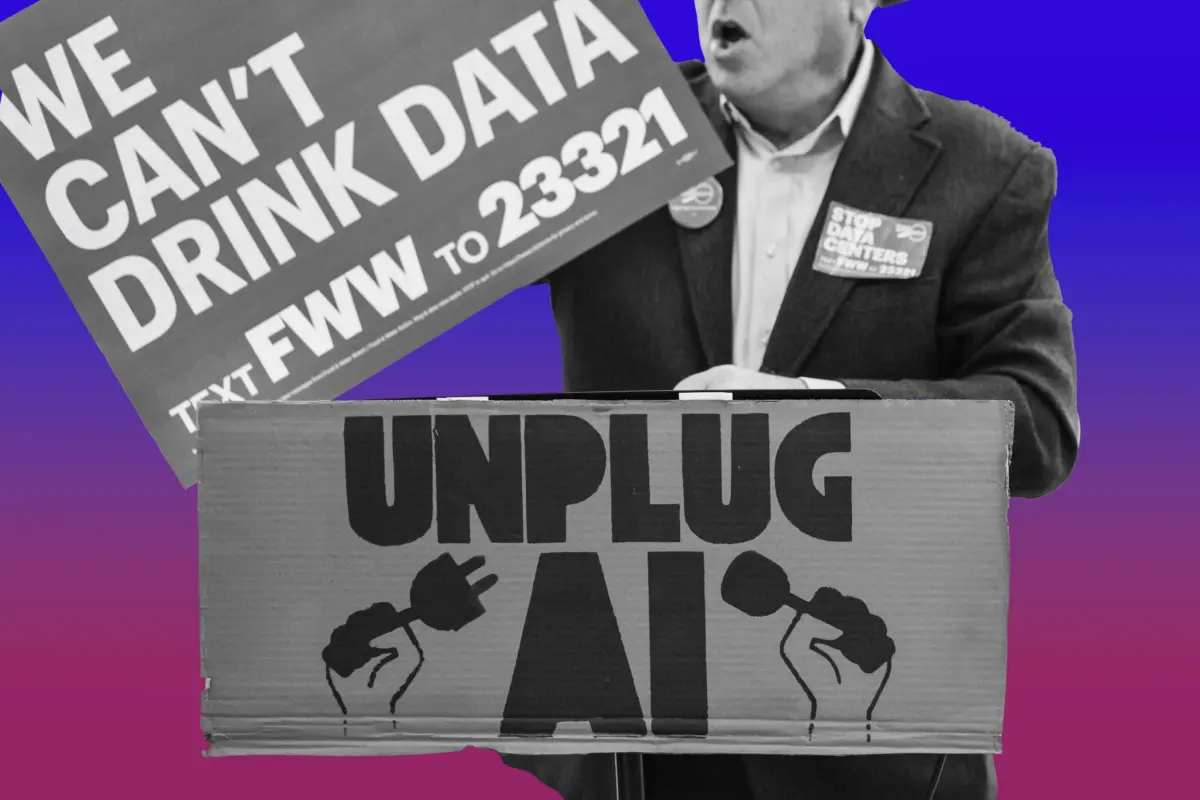
- Environmental and Quality of Life Concerns: Residents near proposed data center sites organized grassroots opposition movements, citing noise pollution, massive water consumption for cooling systems, and the industrialization of rural horizons.
Rather than viewing these developments purely as local zoning disputes, astute political campaigns began to recognize that data centers were becoming powerful symbols of corporate overreach and government indifference—themes ripe for political mobilization.
The Recent Midterm Elections: AI as a Political Winning Ticket
During the most recent midterm cycle, artificial intelligence ceased to be a mere policy niche and became a frontline electoral battleground. Political strategists on both sides of the aisle grappled with how to address the technology, but Democrats, in particular, found remarkable success by weaving AI narratives into broader populist economic arguments.
Campaigns leveraged voter anxieties surrounding:
- The "Cahoots" Factor: The perception—and often reality—of a revolving door and deep financial symbiosis between major tech companies and government regulatory bodies. Voters increasingly questioned whether Washington was regulating Big Tech or serving as its rubber stamp.
- Economic Anxiety and Job Displacement: As automation and generative AI tools began threatening white-collar and creative labor markets, candidates used the issue to address working-class and middle-class fears about the future of employment.
- Infrastructure Imposition: Localized anger over forced data center construction became a proxy battle for bodily and community autonomy against corporate encroachment.
By successfully framing these issues around accountability, worker protection, and community preservation, progressive candidates weaponized public skepticism toward AI, turning it into a decisive electoral winner.
Supporting Context & Metrics: The Intersection of Capital, Community, and Labor
The political salience of artificial intelligence is anchored in hard economic realities, staggering financial investments, and profound structural shifts in the American labor market.
The Financialization of Politics and Tech
The relationship between money in politics and the artificial intelligence sector has reached unprecedented heights. Venture capital, corporate PACs, and mega-donors from the technology sector have poured hundreds of millions of dollars into lobbying efforts and political campaigns.
[Tech Conglomerates / Big Tech]
       │ (Capital & Lobbying)
       ▼
[Federal & Local Government] ──(Zoning/Subsidies)──► [Data Center Construction]
       │                                                       │
       ▼                                                       ▼
[Campaign Finance / PACs] ──────────────────────────► [Voter Backlash / Grassroots Resistance]
As Rob Flaherty and other political analysts have noted, the financial entanglement between industry leaders and governmental actors creates a dangerous feedback loop. Tech companies rely on government contracts, permissive antitrust enforcement, and state-level infrastructure subsidies (such as tax breaks for data center construction). In return, political campaigns—particularly those reliant on modern digital fundraising ecosystems—draw heavily from tech-aligned wealth.
However, this top-down alignment has triggered a formidable bottom-up backlash. Communities forced to bear the environmental and infrastructural costs of the AI revolution are organizing outside traditional party lines, creating a volatile new voting bloc characterized by anti-corporate sentiment.
Labor Market Disruptions: The White-Collar Reckoning
Historically, technological revolutions (such as manufacturing automation) primarily threatened blue-collar industrial labor. The AI revolution, however, has uniquely targeted the knowledge economy, administrative support, legal services, coding, media, and creative industries.
- The Productivity Paradox: While corporate executives tout AI-driven productivity gains, surveys indicate growing anxiety among middle-income earners who fear their skills are being devalued or rendered obsolete.
- The Trust Gap: Voters are increasingly skeptical of economic indicators that show low unemployment while individual job security feels more precarious than ever. Campaigns that successfully addressed these fears during the midterms captured vital segments of the suburban and working-class electorate.
Official Statements and Strategic Insights
The strategic importance of artificial intelligence in modern politics cannot be overstated. Industry observers and political insiders have increasingly sounded the alarm regarding the speed at which technology is outstripping legislative oversight.
In recent discussions surrounding the political implications of AI, political strategist and Tomorrow Together founder Rob Flaherty highlighted the multi-layered nature of the issue:
"As an electoral issue during the midterms, artificial intelligence was tied up with money in politics, with industry and government in cahoots, and with data centers feeling forced into communities. It was a big winner for Democrats this year, and all of these—plus the implications for employment—are going to be bigger issues in 2028."
This perspective underscores a fundamental shift in political communication. Voters are no longer viewing artificial intelligence as an abstract gadget; they see it as a tangible force shaping their local environments, their job security, and the integrity of their democratic institutions.
Furthermore, regulatory bodies and congressional committees have increasingly found themselves gridlocked over how to draft comprehensive AI governance. While some lawmakers advocate for rigorous safety guardrails, copyright protections, and labor safeguards, others—fearful of losing the geopolitical AI race to international competitors like China—push for deregulation and rapid deployment. This tension has created a vacuum that political campaigns are more than willing to fill with populist rhetoric and policy proposals.
Future Outlook: The Road to the 2028 Presidential Election
As the dust settles on the midterms, political strategists across the ideological spectrum are already turning their sights toward the 2028 election cycle. If artificial intelligence was a defining undercurrent of the midterms, it is projected to be the defining tidal wave of 2028.
Several key trends and battlegrounds will shape how AI intersects with American politics over the next four years:
1. The Weaponization of the "Tech-Government Complex"
By 2028, the cozy relationship between technology monopolies and regulatory agencies will likely face intense public scrutiny. Populist candidates from both the left and the right are expected to run anti-monopoly, anti-tech-cronyism platforms. The debate will center on whether public resources—such as electrical power, water grids, and public land—should be diverted to fuel private AI ambitions at the expense of everyday citizens.
2. Deepfakes, Synthetic Media, and Election Integrity
The integrity of the electoral process itself will face unprecedented stress tests. By 2028, generative AI tools will be capable of producing hyper-realistic, real-time audio and video deepfakes capable of mimicking candidates, election officials, and journalists with terrifying precision.
- The Regulatory Race: Congress and the Federal Election Commission (FEC) will face mounting pressure to establish enforceable guardrails regarding synthetic media in campaign advertising.
- The Verification Economy: Campaigns, news organizations, and tech platforms will have to invest heavily in cryptographic provenance tools (such as digital watermarking and blockchain verification) to prove the authenticity of political media.
3. The Employment Crisis as a Presidential Wedge Issue
As artificial intelligence matures, its impact on the labor market will move from speculative anxiety to lived economic reality. The displacement of white-collar workers, customer service agents, administrative staff, and creative professionals will create a massive constituency of voters demanding economic protection.
- Candidates in 2028 will be forced to present comprehensive platforms addressing job retraining, corporate accountability for automation layoffs, and potentially radical economic interventions such as universal basic income (UBI) or robot taxes.
4. Local Infrastructure as a National Battleground
The physical friction caused by data centers, semiconductor fabrication plants, and energy grids will no longer remain localized zoning issues. Grassroots opposition movements will increasingly coordinate on a national scale, demanding federal intervention to protect local communities from the ecological and infrastructural burdens of the tech boom. Candidates who successfully champion these local grievances on the national stage will capture vital swing constituencies.
Conclusion
The intersection of artificial intelligence and American politics has evolved past the point of no return. What began as a novel tool for campaign optimization has transformed into a complex nexus of campaign finance corruption, economic anxiety, labor displacement, and environmental friction.
As demonstrated by recent electoral outcomes, parties and candidates who successfully channel voter skepticism toward unchecked corporate power and technological disruption can achieve significant political success. However, the stakes for 2028 are infinitely higher. As AI reshapes the American economy and the very fabric of information integrity, the political winners and losers of the next presidential cycle will be determined by who can most effectively navigate the promises and perils of the artificial intelligence revolution.